
Annual fair teaches safety in bear country
CAROLINE LOBSINGER | Hagadone News Network | UPDATED 1 year AGO
I grew up in the Tri-Cities, Wash., and have always loved to write. I attended the University of Washington, where I earned a double major in journalism and political science, with an area of emphasis in history. I am the fifth out of six kids — don't believe any of the stories that my siblings tell. To be able to tell others stories and take photos for a living is a dream come true — and I considered myself blessed to be a community journalist. When I am not working, I enjoy spending time with family and friends, hiking and spending time outdoors, genealogy, reading, and watching the UW Huskies and the Seattle Seahawks. I am a servant to my cat, Frankie, who yes, will eat anything and everything in sight … even wedding cookies. | October 2, 2025 1:00 AM
SANDPOINT — Just where is bear country?
In North Idaho, pretty much everywhere, organizers of the annual North Idaho Bear Fair said.
“All of North Idaho is bear country,” said Austin Terrell of the Idaho Governor’s Office of Species Conservation. “We get calls from all over, almost year-round.”
Among them: a call from a residential area in central Sandpoint, where a bear had gotten into an unpicked plum tree and was making itself at home, said Rob Morris, a bear conflict biologist with Idaho Fish and Game.
How to keep both people — and bears — safe in bear country was the focus of the third annual North Idaho Bear Fair. Held Saturday at the Bonner County Fairgrounds, the event attracted more than 400 people.
The goal of the fair is to teach residents how to coexist with bears, with a variety of stations offering tips to keep both people and bears safe. Among the stations were ones on electric fencing, bear identification and bear spray training.
“Really, it’s about keeping the public safe,” Terrell said. “That’s our number one priority.”
The fair originated from a conversation between Terrell and Morris about how to reduce conflicts between the public and bears — keeping both safer and contributing to a better quality of life.
“We thought it would be neat to have an educational event on how to camp in bear country, how to protect your livestock, how to pick huckleberries without bear conflicts,” Terrell said. “And so we kind of came up with this idea.”
In its first two years, the fair attracted several hundred people. It was relocated to Bonner County this year to give those who recreate in Bonner and Boundary counties but live elsewhere a chance to take part and boost their bear country skills and knowledge.
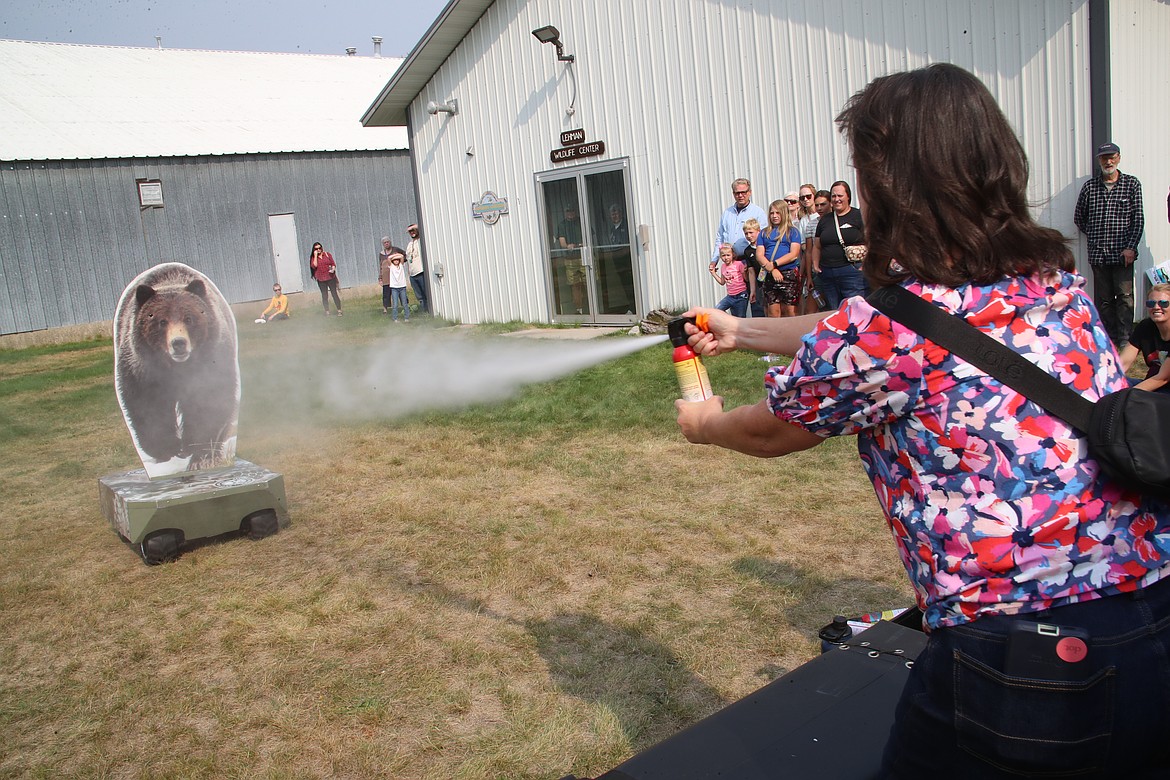
The fair offered everything from bear identification instructions to bear spray training. The training, held in two sessions, included information on bear behavior and home safety, and gave participants a chance to test their skills on a fast-moving, remote-controlled “bear” capable of “charging” toward them.
“Most people have never had the opportunity to try using bear spray,” Terrell said. “They go to the store, buy it, and then never use it. How do you get the safety off? How do you deploy it in time?”
When camping or hunting, both experts said storing food — or anything a curious bear might think is food, such as toothpaste — appropriately helps limit conflict.
Temporary electric fencing is available on a short-term basis to help property owners protect livestock, bees and orchards. In addition, Terrell said there are programs to help people pay for permanent fencing.
A cider press was on hand at the fair, giving homeowners a chance to bring apples to be pressed into fresh cider.
A mock campsite showed both correct and incorrect ways to set up camp, quizzing participants on how to recreate safely in bear country.
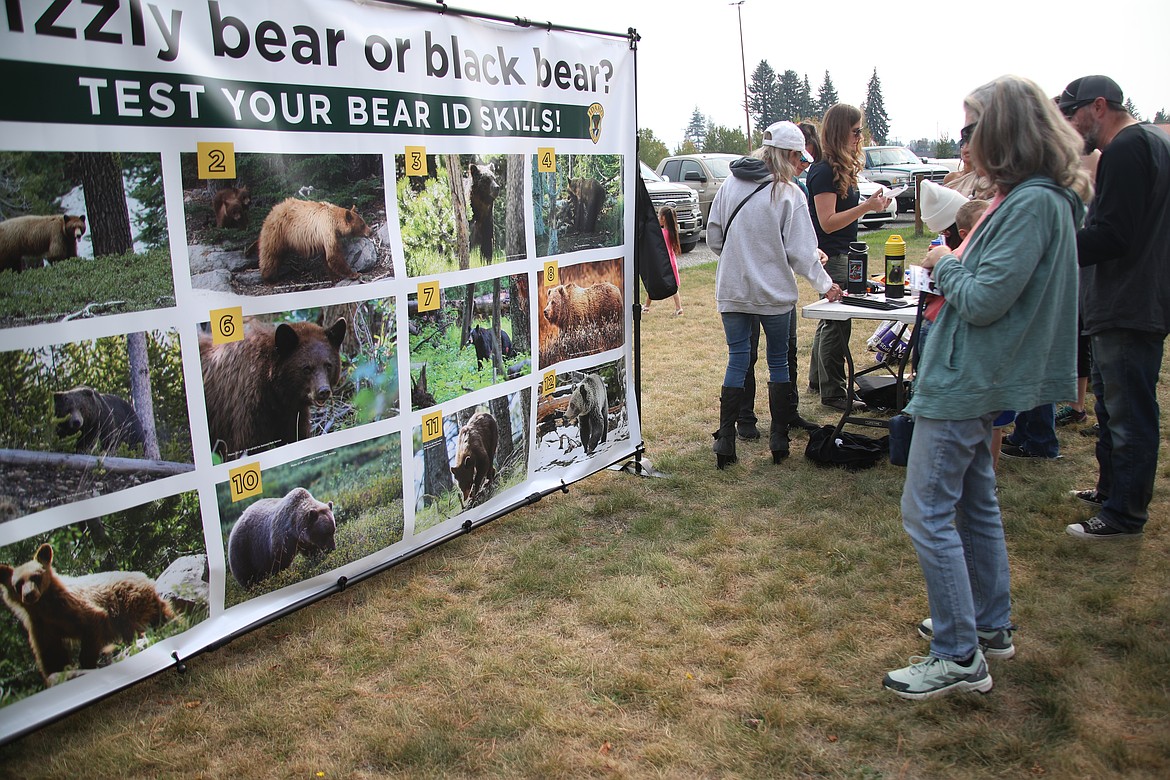
Another station featured a dozen photos of black and grizzly bears from various angles, including young and old bears and various coat colors.
“It seems like every year there’s a black bear hunter who mistakenly shoots a grizzly bear — at least the past two or three years in North Idaho,” Terrell said. “We really want to show people how to tell the difference when you’re out hunting or even just recreating.”
How to react depends on whether the bear is a black bear — common throughout North Idaho — or a grizzly, which are typically found north of Lake Pend Oreille, Terrell said.
“Being able to tell the difference is really important up here,” he said.
Morris agreed, noting that both black and grizzly bears come in a variety of colors and sizes. Key features of grizzlies include a pronounced shoulder hump, longer claws and puffball, “teddy bear” ears. Black bears tend to have shorter claws, dog-like ears and a straight face profile.
“We really emphasize that color is not a reliable indicator of species,” Morris said. “Not all black bears are black, and both species come in all colors.”
Common bear attractants include garbage, fruit trees, dog food and chicken feed.
“We call chickens the gateway drug for bears,” Terrell said. “They’ll get into your coop for the chicken scratch, then kill the chickens. Then they’ll see your pig next to it, and they like bacon — and soon they’ll start eating everything else they can.”
The key to living safely in bear country, Terrell and Morris said, is to be bear aware — both at home and when recreating.
Live in a remote area and only take trash to the dump every few weeks? Keep pet food on the back porch? Leave fruit on trees? All can attract bears and lead to conflict.
“The biggest thing is to be safe,” Terrell said. “Bear country is huge, and everybody has a different way they recreate here in North Idaho. With almost every activity, you run the risk of encountering a black bear or a grizzly bear. It’s important to prepare for that and know what resources are available.”
For information on living in bear country, visit the Idaho Fish and Game website at idfg.idaho.gov.
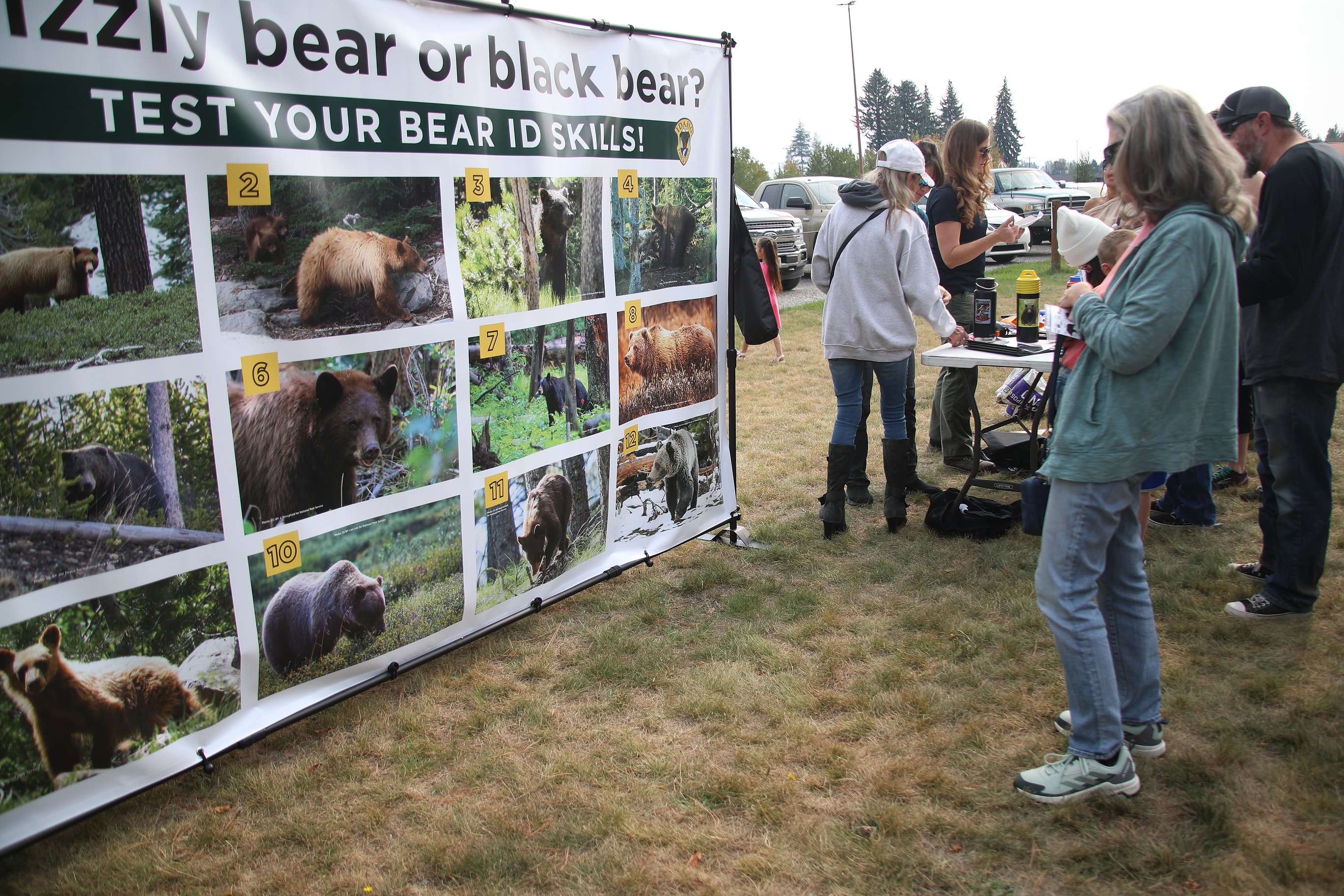 A resident works to identify which pictures show black bears and which show grizzly bears at Saturday's North Idaho Bear Fair in Sandpoint.
ARTICLES BY CAROLINE LOBSINGER

Wellness fair puts focus on health
The Wellness & Connection Fair is bringing together local health and wellness professionals together in Sandpoint for a day of presentations, activities and community resources.

BCSD pays share of ISBT shortfall
District opts to make lump sum payment
Boundary County School District paid $217,000 to cover its share of the Idaho School Benefit Trust's $13 million shortfall.

Deadline extended for 'Valor' stories
The Valor publication is gathering photos, military service details and personal stories from Boundary County veterans and military families. Featured profiles highlight local service members' contributions, achievements and sacrifices across generations.