
Tips on keeping hungry bears at bay
EMILY MESSER | Hagadone News Network | UPDATED 5 months, 1 week AGO
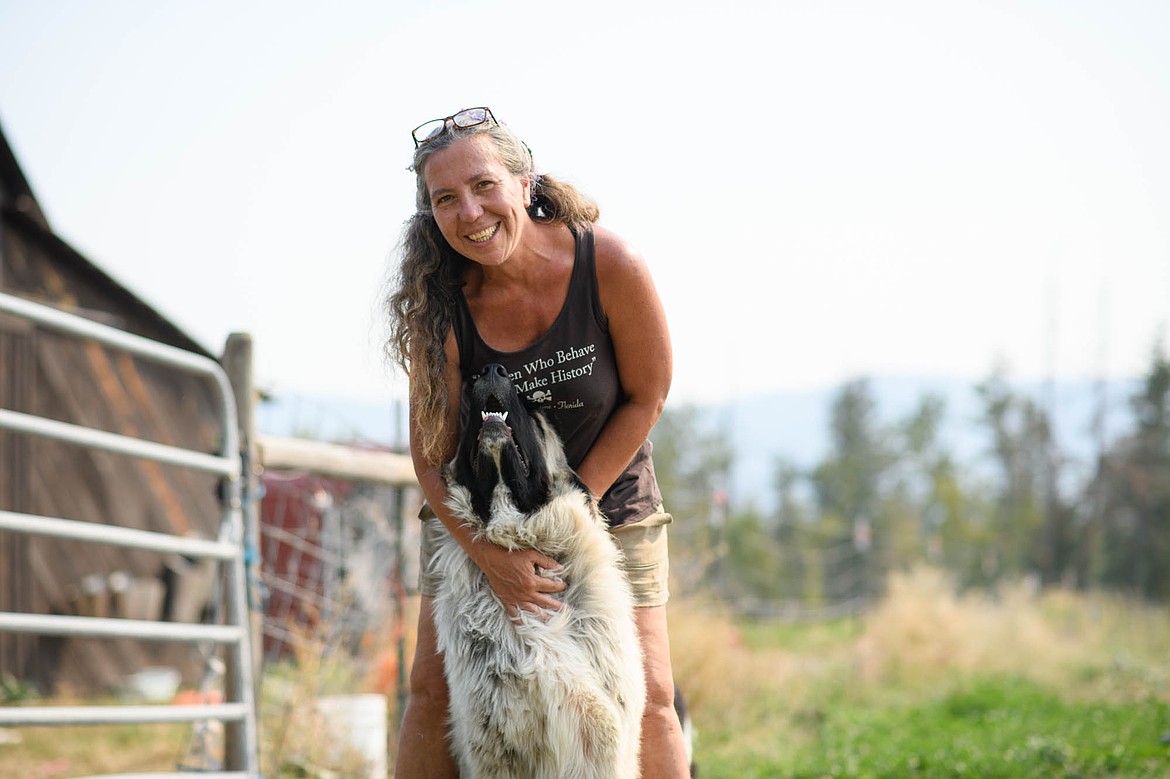
Gizem Nance pets her guard dog in the pasture chicken field. Nance said the guard dog is her second level of defence to keep the bears away from the animals and fruits. (Emily Messer / Leader)
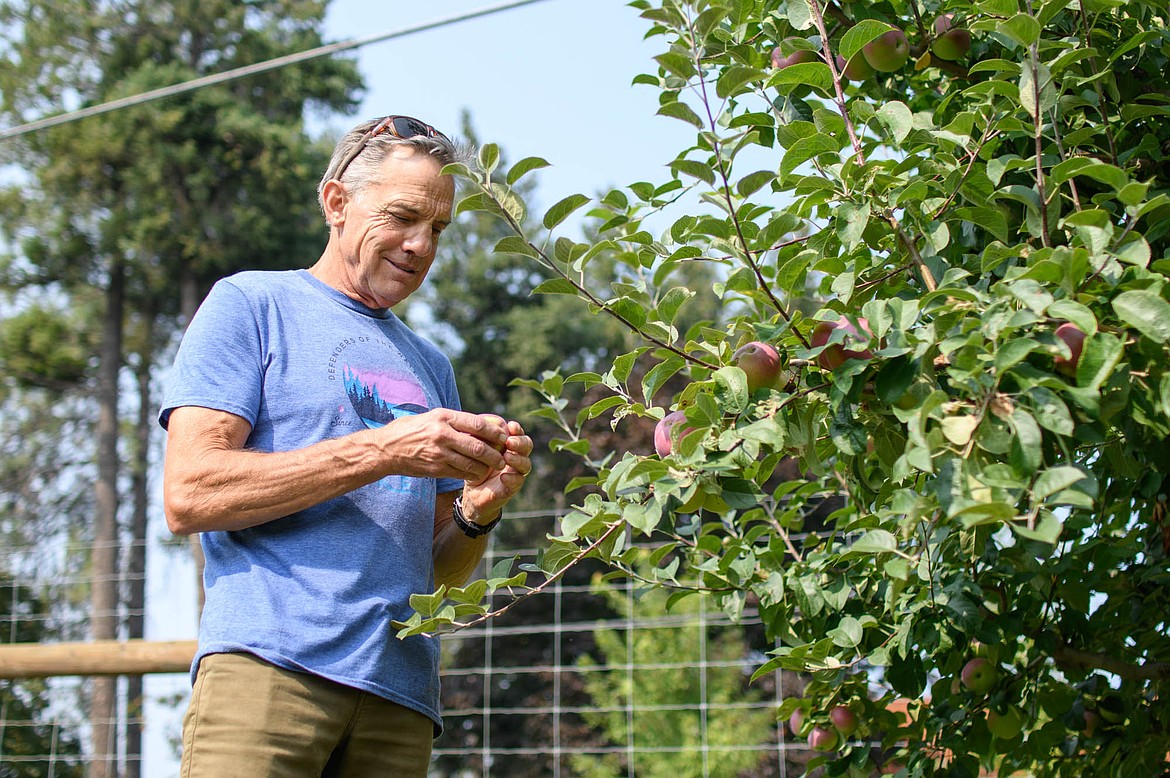
Brian Campbell holds an apple next to his tall deer and bear fence that surrounds his orchard. (Emily Messer / Leader)
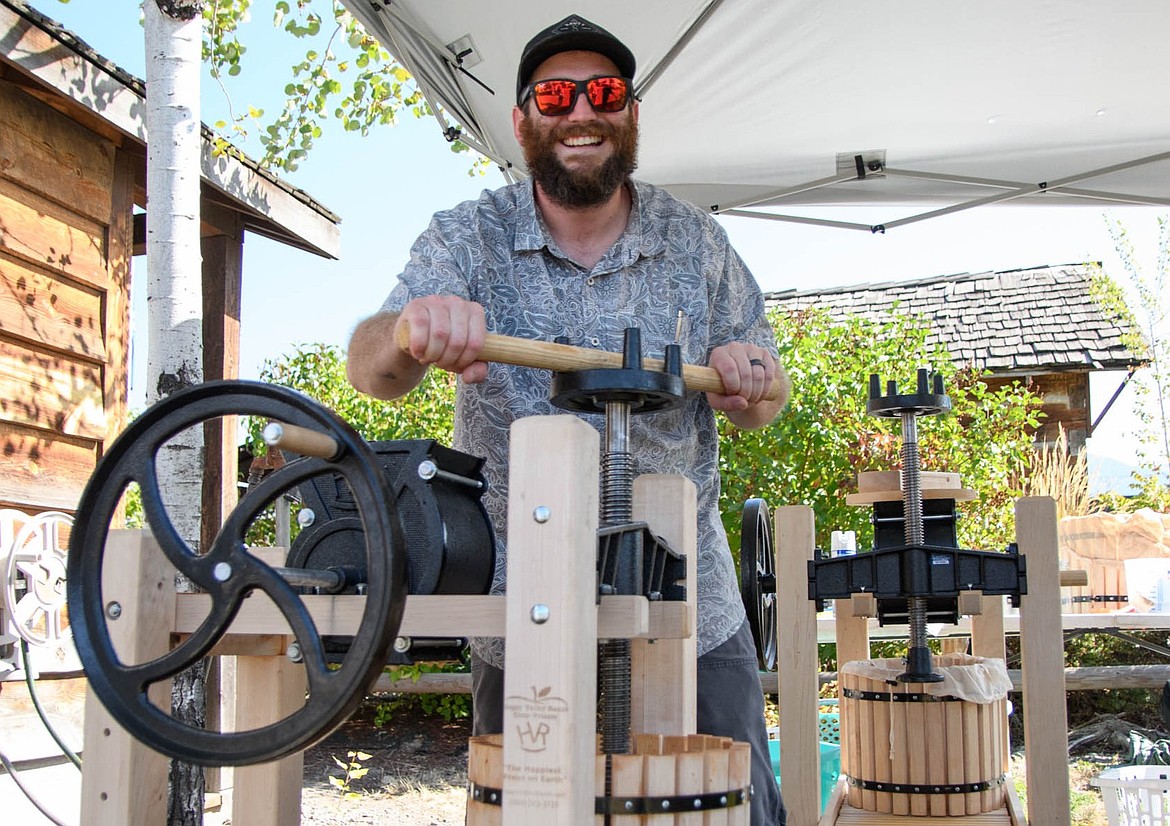
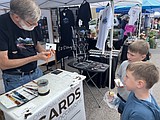
CSKT wildlife biologist Carter Clinkenbeard helps a couple press apples with a new cider press the CSKT Wildlife Program received. (Emily Messer/Leader)
Emily Messer joined the Lake County Leader in July of 2025 after earning a B.A. degree in Journalism from the University of Montana. Emily grew up on a farm in the rolling hills of southeast Missouri and enjoys covering agriculture and conservation. She's lived in Montana since 2022 and honed her reporter craft with the UM J-School newspaper and internships with the RMEF Bugle Magazine and the Missoulian. At the Leader she covers the St. Ignatius Town Council, Polson City Commission and a variety of business, lifestyle and school news. Contact Emily Messer at [email protected] or 406.883.4343 | October 2, 2025 12:00 AM
As the temperatures chill and the crisp leaves start to fall to the ground, the burly black and brown creatures known as bears start to enter hyperphagia.
Gorging and foraging through the berries and cherries, they’re on the hunt for anything to stuff their faces and fat reserves before winter. Hyperphagia is the state that bears go through during late summer into late fall as they prepare for hibernation.
In the mountains and forests around the valley black bears and grizzlies are often tucked away until their hunt for food leads them to apple trees, trash or garden remains.
“As the berries in the mountains season have started to end, we're getting into the time of the year where apples and plums and all the lower elevation fruits are starting to ripen,” said Carter Clinkenbeard, a wildlife biologist for the Confederated Salish and Kootenai Tribes Wildlife Management Program. “Especially this time of year, that's just a great source of food, source of calories and it's readily available.”
According to Montana Fish Wildlife & Parks 2022 annual bear report there were almost 1,200 bear-related calls during 2022 within just the south Flathead Valley. According to the report, more than 800 of these were conflict calls and the top three causes were garbage, unsecured fruit and poultry.
On top of this, CSKT Wildlife manager, Kari Kingery reports their program receives hundreds of calls each year about bear conflicts.
To help keep bears out of the orchards or gardens across the Flathead Reservation, CSKT Wildlife created a program called the Mission Valley Fruit Gleaning Program, which offers tips, tricks and equipment.
Gleaning is the act of gathering fruit off new or old trees or bushes to remove the potential attraction to wildlife. CSKT Wildlife manages a Facebook page which serves as a platform people can use to notify each other of fruit in need of harvest or to find trees to harvest.
This program also includes access to free equipment such as fruit pickers, which are left at businesses or organizations in Polson, Ronan and St. Ignatius. Clinkenbeard said the locations are not set for this year yet, but he will be getting the fruit pickers out by mid-September, and they are currently available to check out at the CSKT Wildlife office in Polson.
Through the gleaning program, Clinkenbeard said they promote fruit preservation at their fall festival. But due to low attendance, he explained that this year they will be at the Ronan Chamber of Commerce Harvest Festival on Sept. 20.
Last year CSKT Wildlife received a grant to buy three cider grinders, apple grinders and cider presses. Clinkenbeard said they will be available at the festival to use and hopes it will be an incentive for people to remove excess fruit around the valley.
“It really is just kind of like to keep the conversation going with the public,” Clinkenbeard said.
CSKT Wildlife promotes donating excess fruit to local food banks, preserving it by cider pressing or baking with it.
Another type of bear defense
Many local producers around the valley have chosen a tougher method. Gizem Nance, who owns a farming operation in St. Ignatius, decided to build an electric fence around her property when she and her husband bought it four years ago.
There was an old orchard on her property, and the previous owner had let bears access the fruit. But her first decision was to fix that problem to avoid a bear conflict.
“The bears had already imprinted this area as a food source, so they keep coming. I have kids, maybe I don't want bears on my property,” Nance said. “Then what happens? It's just not sustainable.”
She found a partnership opportunity through Defenders of Wildlife – a non-profit that aims to protect native animals and wildlife – to split the cost of an electric fence. Nance said this was an affordable way to build the fence and with help from Defenders of Wildlife, Montana Fish Wildlife & Parks and CSKT Wildlife they had the fence built in one day.
“Sometimes people think it's a good idea to feed wildlife. It makes them feel good,” Nance said. “But I'm a naturalist and it's almost never a good idea to feed wildlife.”
In the four years she’s owned the property, Nance said she’s only had a bear get in once when they lost power. She believes this is the right solution to keep the bears out while not relocating a bear, which has a low success rate.
“Relocation almost always fails and then it's just a dead animal,” Nance said. “And I think it's very sad.”
On top of her electric fence, Nance also has two livestock guardian dogs to keep predators away from her animals.
Even the cherries aren’t safe from the bears
Even on the peninsula of Finley Point the bears are out and hunting for snacks. Brian Campbell owns a cherry and apple orchard called Wishing Rock Orchard and he has also decided that his best bear defense is an electric fence.
Within the area, Campbell explained a handful of people have old orchards that they don’t harvest. This has led to a number of marauding bears.
Campbell said he picks most of his fruit to sell, but this year he lost some of his crops to a rainstorm. This caused the older variety of cherries to rot on the tree, leaving them inedible.
“So, removing the fruit really helps, but the only way to keep them out is to do electric fence,” Campbell said.
Bears visits highest in Polson, Mission
Clinkenbeard said the highest number of calls come from the Polson area, but that counts off peoples addresses which go all the way to Big Arm. However, St. Ignatius also has a high number of conflicts as well.
“Mission does have very high conflict on the reservation and a lot of that has to do with the fact that Mission Creek runs right through downtown Mission,” Clinkenbeard said. “Because these bears typically travel in the waterways, the streams, canals, rivers, creeks. They use those to travel across the valley.”
Clinkenbeard said when there are bear conflicts, CSKT Wildlife or Tribal game wardens respond. He said they try to avoid removing bears, but they have multiple tools to help keep the bears out. CSKT Wildlife carries temporary electric fence kits, bear resistant garbage cans or noise deterrents.
For non-emergency wildlife conflicts people can call 406-275-2774. However, if someone is in harm CSKT Wildlife advises calling 911 or Tribal Dispatch at 406-675-4700.
 CSKT wildlife biologist Carter Clinkenbeard helps a couple press apples with a new cider press the CSKT Wildlife Program received. (Emily Messer/Leader)
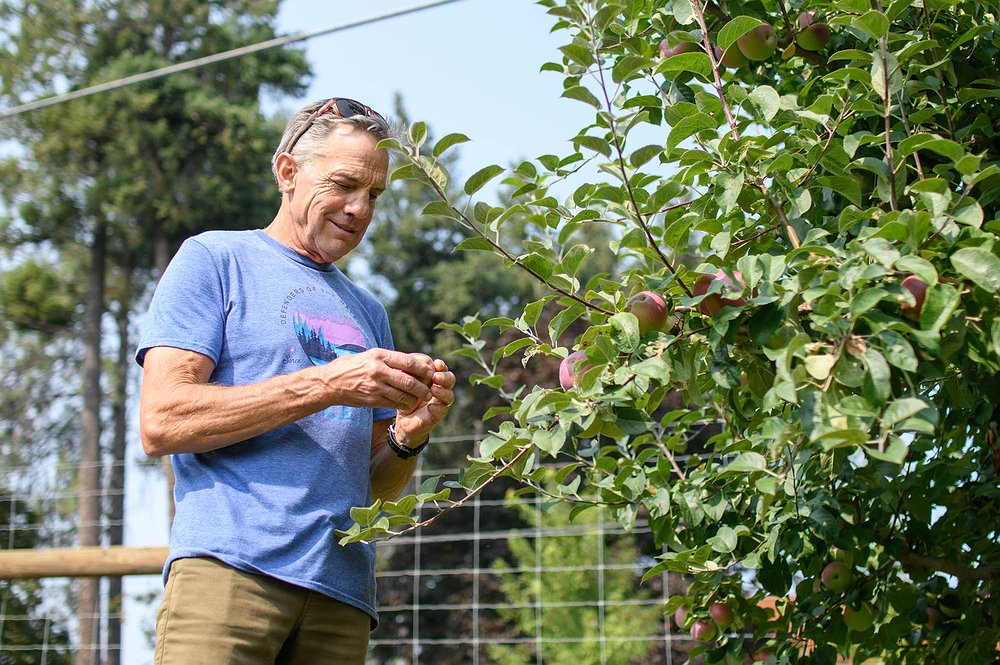 Brian Campbell holds an apple next to his tall deer and bear fence that surrounds his orchard. (Emily Messer / Leader)
ARTICLES BY EMILY MESSER

Polson commissioners hear plan for reducing E. coli in Flathead Lake
Representatives from the Flathead Lakers and the Polson Bay Golf Course presented a plan to the Polson City Commission last Wednesday to reduce stormwater runoff, which had caused increased levels of E. coli in Flathead Lake near Boettcher Park.
City Commission finalizes Salt Cafe grant, hears from market vendors
The Polson City Commission council chambers were full of support Monday night for Andrew Perkins, owner of Salt Cafe, who has been awaiting funding from the Tax Increment Finance District grant he received nearly three years ago.

Foundation established for Polson Police
A non-profit called the Polson Police Foundation was launched at the end of 2025 to support the department by contributing to training, officer wellness, critical equipment and community initiatives.