
‘This has changed our lives’
JOEL MARTIN | Hagadone News Network | UPDATED 1 year AGO
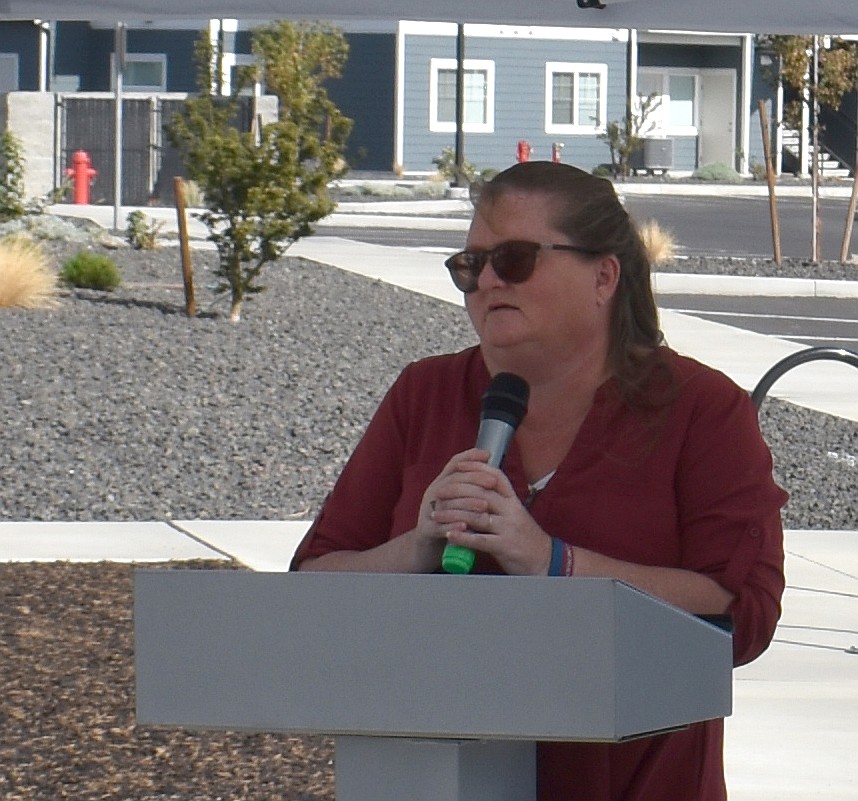
Dani Smith, a resident at The Cape at Interlake, chokes up a little Tuesday as she describes her family’s move from a motel into permanent housing.
JOEL MARTIN/COLUMBIA BASIN HERALD

The Cape at Interlake Community Manager Nancy Hernandez, with a little help from State Rep. Alex Ybarra, cuts the ribbon on the new apartment complex Tuesday surrounded by Moses Lake Chamber of Commerce ambassadors and members of the community.
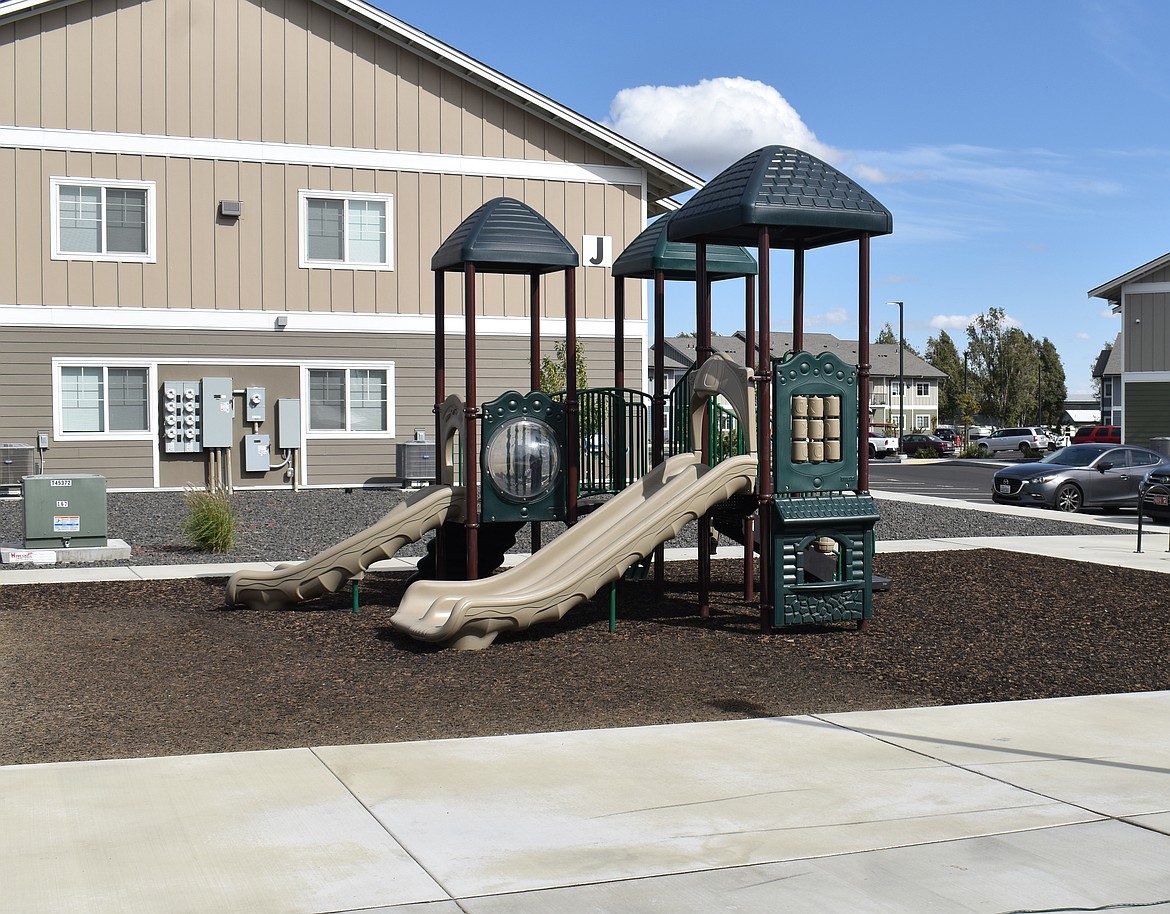
The Cape at Interlake features a playground for the children, as well a a media room and a community garden.
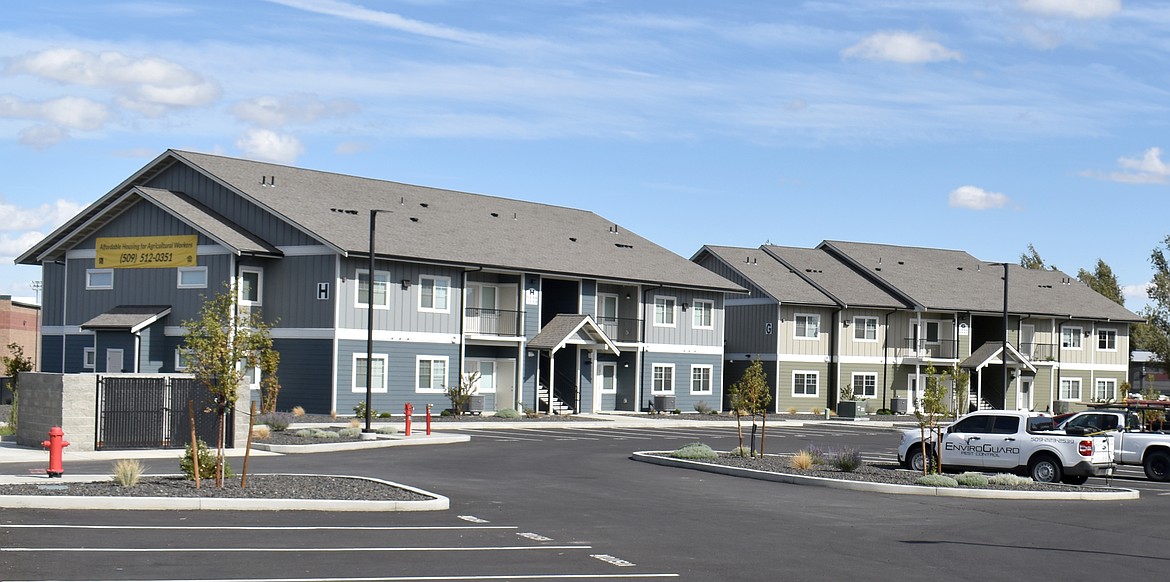
The 72-unit Cape at Interlake complex is about 40% occupied and accepting more low-income and farm worker tenants.
Joel Martin has been with the Columbia Basin Herald for more than 25 years in a variety of roles and is the most-tenured employee in the building. Martin is a married father of eight and enjoys spending time with his children and his wife, Christina. He is passionate about the paper’s mission of informing the people of the Columbia Basin because he knows it is important to record the history of the communities the publication serves. | October 3, 2025 3:00 AM
MOSES LAKE — The Cape at Interlake had its grand opening Tuesday, with a ribbon-cutting and an open house for the community.
“This property is primarily targeted for farm workers, folks who are in the agriculture industry, but we also have additional set-asides for people who are disabled or families with children,” said Taylor Hunt, development manager for Vaughn Bay Construction, which built the Cape at Interlake.
The Cape at Interlake is a complex of 72 apartments, located on Interlake Road behind Lep-re-Kon Harvest Foods in Moses Lake. It’s income-restricted, which means tenants can earn no more than 30%, 40% or 50% of the area median income, or AMI, depending on the size of the unit. In Moses Lake, the AMI is $94,800 per year, according to Fannie Mae. The Cape at Interlake has two-, three- and four-bedroom units available.
“One thing that sets this property apart is the four-bedroom offerings,” said Austin Hicks, a Vaughn Bay representative. “That's very hard to find at an affordable level on the market.”
The Cape at Interlake was about 40% occupied Tuesday, Hunt said, with about another 15 tenants in the screening process.
The need for farm worker housing in the Moses Lake area is great, Hunt said, and having a stable place to live is good both for the workers and for the community.
“One of the concepts that I like behind permanent affordable housing is it incentivizes folks to stay and grow their families within the communities,” Hunt said. “I've … seen the trailers and the conditions (many farm workers live in), and it's pretty rough. I think to get farm workers into a more clean, safe community with stability will help their families plant roots in the communities, and that speaks to them going to school, getting access to health care and community services.”
State Rep. Alex Ybarra, R-Quincy, recalled growing up in a farmworker family.
“My family were migrant workers, and we traveled across the United States,” Ybarra said. “Just in one year, we moved from Texas to California, Oregon to Washington to Chicago, Illinois and ended up back in Texas … Back in the day, we never had this. And now the folks that are doing all that hard work in the fields can afford to live in a place like this.”
Sen. Maria Cantwell’s Central Washington Director Rick Evans read a letter from the senator.
“Moses Lake, like much of Washington state, faces a critical housing shortage as demand continues to outpace supply, but developments like this … (represent) tangible steps towards addressing those affordable housing challenges and helping to build a stronger community,” Cantwell wrote.
The units range from 936 to 1,55 square feet and come with forced air heat and air conditioning, a microwave and a dishwasher. There are hookups for a washer and dryer, and the laundry appliances are available to rent for families that don’t have their own. There’s also a playground for the children, a media room and a community garden available to all the tenants.
Dani Smith, a resident of the complex, fought back tears as she described how her family had found its new home after living in a motel.
“I've got two special needs kids, and having to explain to them why we were having to live in a hotel was the hardest thing I've had to do,” Smith said. “We couldn't get into anywhere else, and this has absolutely changed our lives. I feel safe here with children … We don't feel that we have to have our doors locked 24 hours a day, and hearing bad things happen the way we do in hotels.”
Smith, who is permanently disabled, grew up in Moses Lake, she explained later, but had moved to Australia, where her children were born. Because the children had no Social Security numbers, they’d been unable to get housing assistance through the usual government channels, but Community Manager Nancy Hernandez had made sure they got into a unit as quickly as possible, she said.
“We took a chance and applied, and (Nancy) made sure that we got in here, which (meant) being able to tell the kids that we have a home again,” Smith said. “I cried a lot. I've had many nights of crying, (but) we love it here. The apartment is great, and Nancy is wonderful, and we feel safe.”
 The Cape at Interlake Community Manager Nancy Hernandez, with a little help from State Rep. Alex Ybarra, cuts the ribbon on the new apartment complex Tuesday surrounded by Moses Lake Chamber of Commerce ambassadors and members of the community.
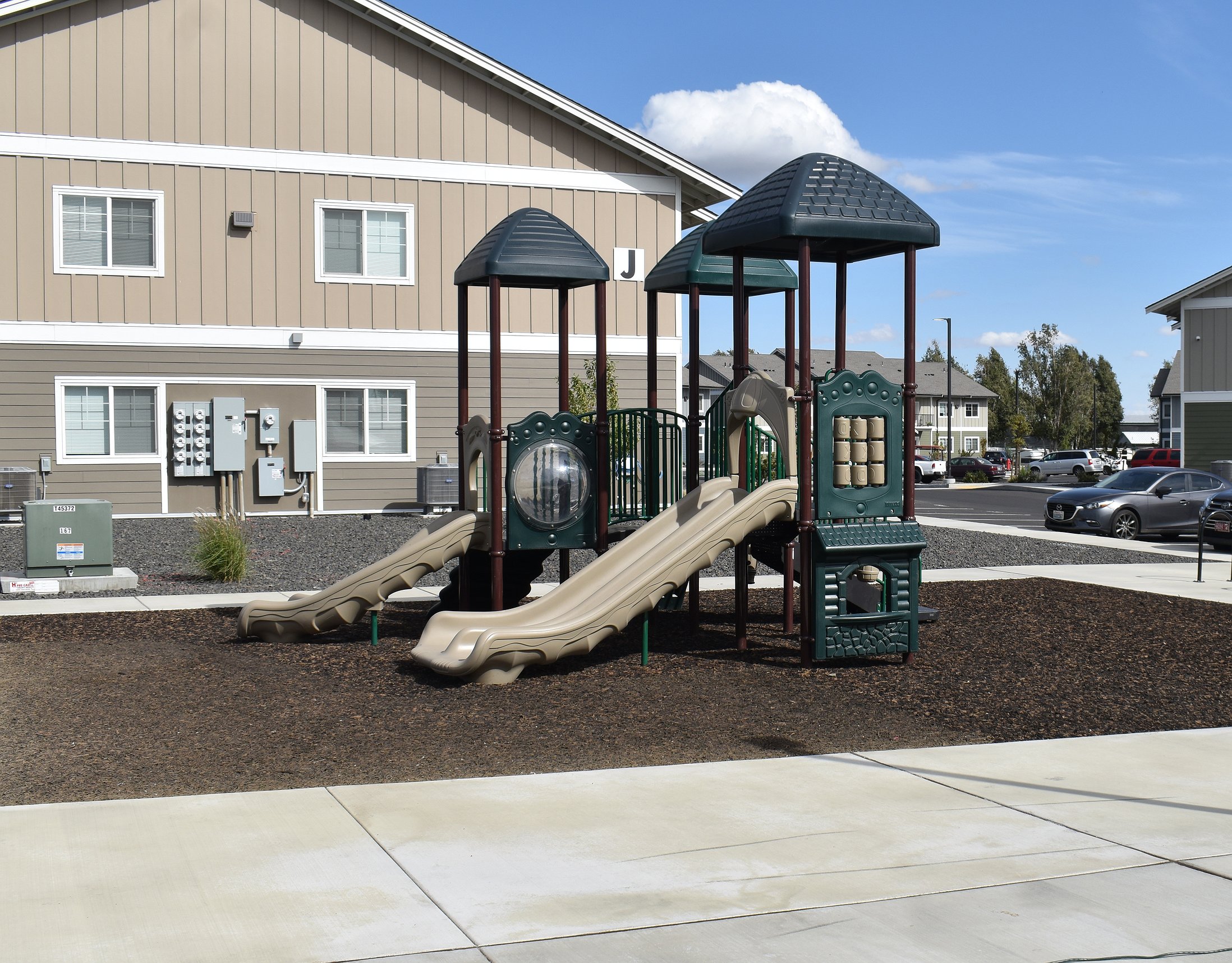 The Cape at Interlake features a playground for the children, as well a a media room and a community garden.
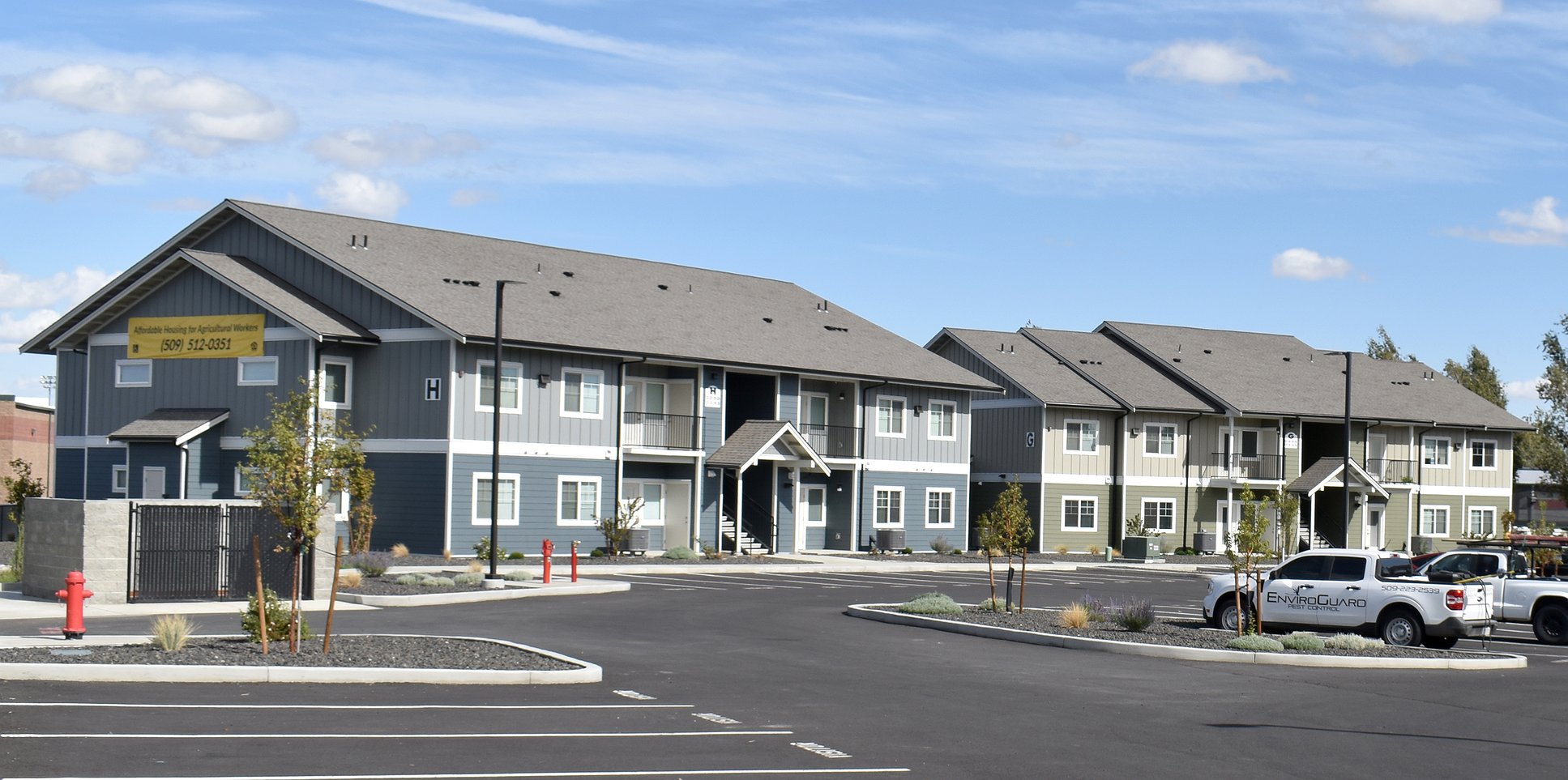 The 72-unit Cape at Interlake complex is about 40% occupied and accepting more low-income and farm worker tenants.
ARTICLES BY JOEL MARTIN

Endless battle
Noxious Weed Control Board works to keep invasive plants under control
MOSES LAKE — Some of the nastiest plants in Grant County were the topic of a class led by Jay Johnson, a consultant with the Grant County Noxious Weed Control Board, Tuesday. The Noxious Weed Control Board, as its name would suggest, is tasked with keeping weeds under control in Grant County. That’s not a small job; the board’s website lists 129 species of noxious weeds that are found around Grant County. A noxious weed is defined as an invasive, non-native plant that threatens agricultural crops, local ecosystems or fish and wildlife habitat, according to the Noxious Weed Control Board. Washington state law requires that these weeds be identified and their spread kept to a minimum, if not completely eradicated. “We’re one of those agencies a lot of people don’t really understand,” Johnson said. “We’re a county office and … our funding is tax-based assessment. When you get your tax bill and you look down at all the expenses that you pay for, there we are.”

BASIN EVENTS: Oct. 16-24
COLUMBIA BASIN — Whether you feel like shopping, crafting, learning or seeing a show, there’s something happening for you this week in the Basin. Oct. 16 ‘My Family (Mi Familia)’ screening Spanning three generations, “My Family (Mi Familia)” is a heartfelt drama that follows the Sánchez family as they build their lives in East Los Angeles. Through love, hardship, triumph, and sacrifice, the film explores the immigrant experience, the strength of family bonds, and the traditions that connect one generation to the next. Lowrider show and taco truck before the screening. Sponsored by Columbia Basin Allied Arts, EDUBS C/S and the Moses Lake Creative District. $12 per person. Doors open at 6 p.m., film begins at 7 p.m. at the Moses Lake Civic Center Auditorium, 401 S. Balsam St. Tickets and info: www.cba-arts.org.

Moses Lake author encourages women to look beyond church culture norms
MOSES LAKE — A Moses Lake author’s book, “A Christian Woman Striving to Live Her Faith in a Man-Controlled World,” takes aim at the role to which many churches relegate the female half of their congregations. “It’s to encourage women in the faith,” Linda Curran said. “A lot of churches say, ‘Teach Sunday school, do this, do that, but don’t (evangelize.)’" In her book, Curran recounts a time when she moved to a new community and joined a church there. She was surprised to learn that, as a new female member, she had been automatically assigned church cleaning duties. When she questioned it, she wrote, she was met with condescension and her objections were brushed aside. In other churches, she said, women who were capable of teaching were relegated to “women’s ministry.”