
Lifelong rancher discusses agricultural lands, climate impacts, more
DEVIN WEEKS | Hagadone News Network | UPDATED 2 months, 2 weeks AGO
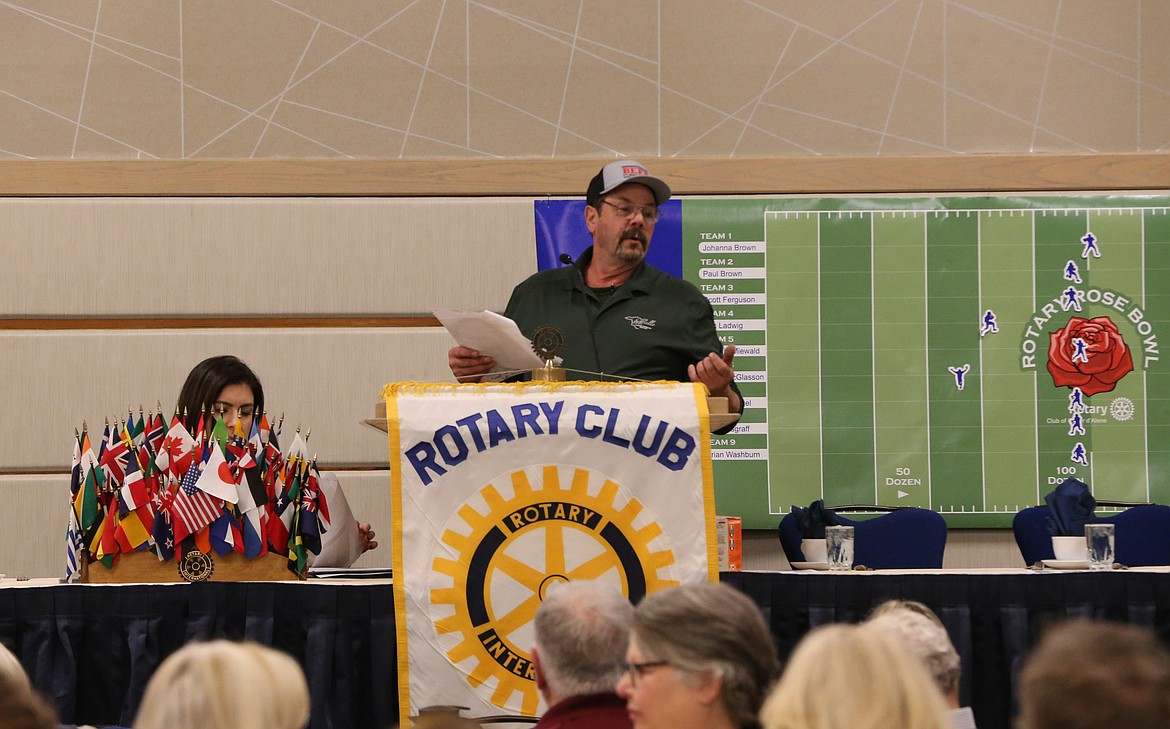
Lifelong rancher, farmer and Rathdrum resident Laurin Scarcello discusses population growth, weather and climate impacts on agricultural lands Friday during Coeur d'Alene Rotary's meeting at The Coeur d'Alene Resort.
DEVIN WEEKS/Press

Laurin Scarcello shared this image from Rathdrum Mountain that shows houses encroaching on farmland across the Rathdrum Prairie.
Devin Weeks is a third-generation North Idaho resident. She holds an associate degree in journalism from North Idaho College and a bachelor's in communication arts from Lewis-Clark State College Coeur d'Alene. Devin embarked on her journalism career at the Coeur d'Alene Press in 2013. She worked weekends for several years, covering a wide variety of events and issues throughout Kootenai County. Devin now mainly covers K-12 education and the city of Post Falls. She enjoys delivering daily chuckles through the Ghastly Groaner and loves highlighting local people in the Fast Five segment that runs in CoeurVoice. Devin lives in Post Falls with her husband and their three eccentric and very needy cats. | October 5, 2025 1:09 AM
COEUR d'ALENE — Kootenai County lost 23% of its farmland from 2017 to 2022 as the population continued to grow.
“If this trajectory continues, there could be no farmland in Kootenai County in 20 years," lifelong farmer, rancher and Rathdrum resident Laurin Scarcello said, speaking at the Coeur d'Alene Rotary Club's Friday meeting at The Coeur d'Alene Resort.
"I find that unacceptable," he said.
This bodes ill for North Idaho and the very thing protecting the Spokane Valley-Rathdrum Prairie Aquifer: Soil.
"Soil is your filter," Scarcello said. "You also need to think about soil as your reservoir, because soil or organic matter traps moisture. An inch of topsoil spread out over an acre holds like 7,000 gallons of water."
“Soil is everything,” he said. “That’s your life. Soil isn’t much good without water, of course. But we are taught to value that resource, bar none. It’s the foundation of everything.”
He said researchers at the University of Idaho are working to understand plant density and water retention.
"I recently attended a soil symposium and the main topic was, 'It's not the rain you get; it's the rain you keep,' which, more and more, rain is getting to be a factor," Scarcello said. "We used to have timely, sustainable, general rains. Now we exist more on sporadic showers."
Storms that do come through the region are often accompanied by extreme winds, he said. Weather is a main topic at Farm Service meetings, Scarcello said, as it impacts crop success and failure, crop insurance and overall yields.
When farmland is lost, or just one producer is no longer able to produce, it has a domino effect, Scarcello said.
"We can no longer act like water is an unlimited resource," he said, quoting Lt. Gov. Scott Bedke's words in a November 2024 Press opinion.
Scarcello said climate is a little like religion, with its believers and deniers.
"But it is a fact, it’s quite real," he said. "This year is a prime example of that. This is our fifth drought in 10 years; 2015 and 2021 were megadroughts and I said all along this year was every bit as dry as those megadroughts, partially because during ’21 and 2015, the inflow to Fish Creek, which is a primary inflow of Twin Lakes, was 3 cubic feet per second.
“That’s exactly where we are today,” he said. "This is serious stuff."
The U.S. is on a trajectory similar to the Dust Bowl era, he said. Droughts run in cycles, but as they return to "normal" levels, those normal levels are not so normal. It's not a favorable trend, he said.
"We see this in the Twin Lakes drainage, that our snowpacks are not as resilient, they're not as dense and the timing of the melt," Scarcello said.
Scarcello serves on several boards, including the Kootenai-Shoshone Soil and Water Conservation District, Kootenai County Rathdrum Prairie Aquifer Protection District, Kootenai-Shoshone Farm Bureau, Kootenai Stockmen’s Association, the Kootenai-Shoshone 4-H Stock Sale Committee and the Farm Service Agency board of the USDA Department of Agriculture, among others. He also runs a calf and cattle operation on his 113-year-old ranch.
He said one doesn't have to look far to find issues with the aquifer, which is closely tied to farmland and open space.
"This is a gravity-based water system — you get out of it what you put in," he said. "More and more we are increasingly reliant on the resiliency of a resource, being the aquifer, that may become increasingly less (reliable), in terms of our snowpack or in terms of our drought, temperatures, evaporation, wildfires, etc."
"To continue as if our watersheds and aquifers are too big to fail is shortsighted at best," Scarcello said. "We need now more than ever to think long term and be proactive, not reactive."
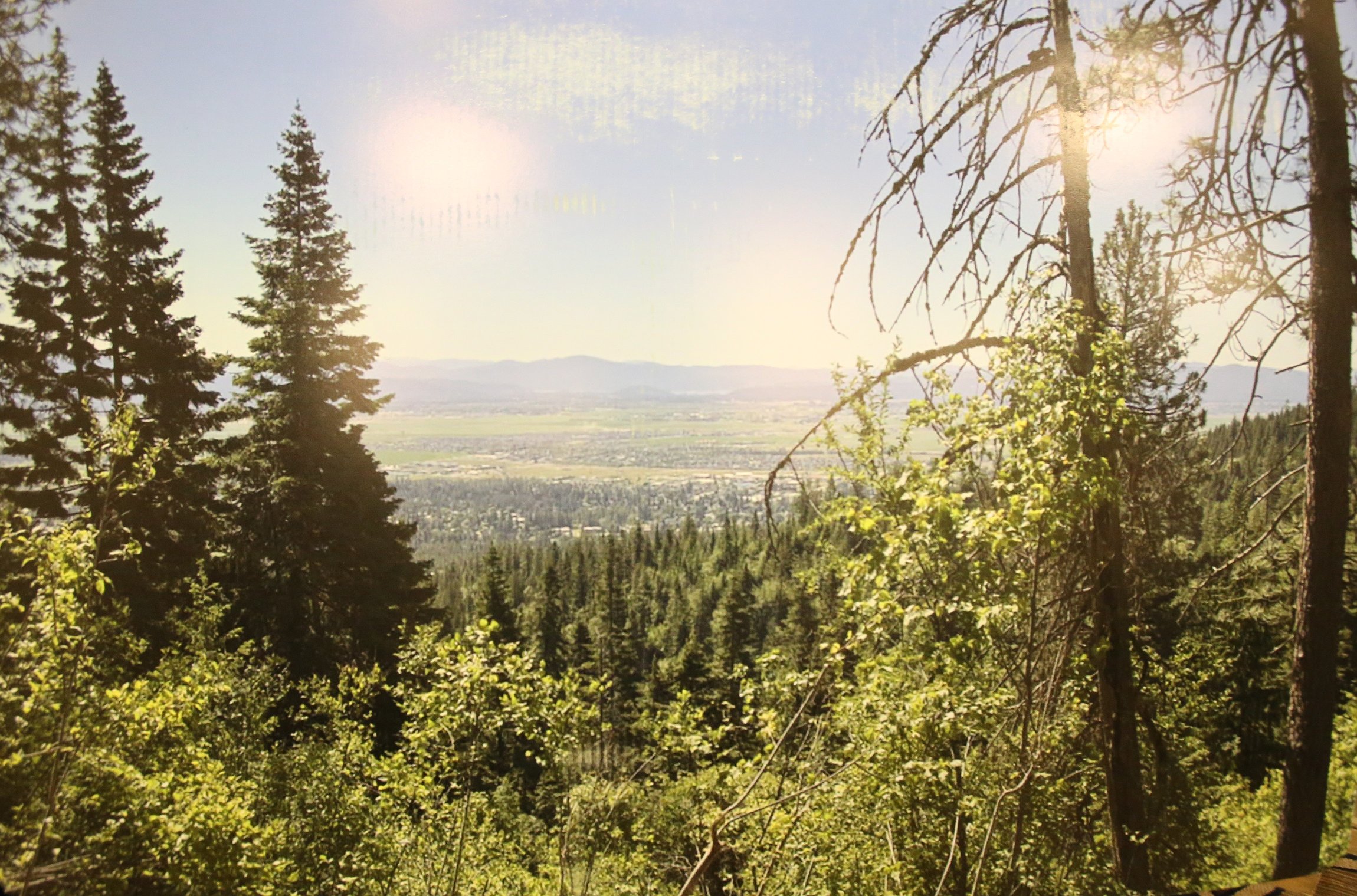 Laurin Scarcello shared this image from Rathdrum Mountain that shows houses encroaching on farmland across the Rathdrum Prairie.
ARTICLES BY DEVIN WEEKS
Hayden Canyon students work with nonprofit to build beds for youths in need
Hayden Canyon students work with nonprofit to build beds for youths in need
Wearing safety gloves and magenta headphones with a galaxy design, Autumn Parks rested a long piece of lumber on a picnic table as she smoothed out the edges. “I’m sanding it down so nobody gets splinters when they go to bed," she said. As an American Heritage Girl, Autumn already had some experience working with lumber. “I made a staff this August, a walking stick, and it taught me how to sand,” she said. “I thought, 'I can sand, let’s do that!” The Hayden Canyon Charter seventh grader shared how she thought it was really cool that her school was building beds for kids in need.

Steve Casey left his mark as dedicated educator, friend, family man
Steve Casey left his mark as dedicated educator, friend, family man
Solid leadership. A dedicated educator. A friend to everyone. Steve Casey lived a big, beautiful life and embraced every single person who came across his path. "Children, men, women, students, it didn't matter their walk of life," Casey's daughter, Tara Nelson, said Friday. "His arms were wide open and his heart was open to everyone."

Controversial AI exhibit at Art Spirit Gallery runs through Dec. 24, community event Saturday
Controversial AI exhibit at Art Spirit Gallery runs through Dec. 24, community event Saturday
Mike Baker installed his exhibit at the Art Spirit Gallery hoping it would generate conversations in the community. And wow, did it ever. "No Permission Needed," featuring pieces created using artificial intelligence, debuted Nov. 14 at the downtown gallery. It quickly became a subject of social media discussion and scrutiny in the arts community and the community at large for the use of AI and female experiences being brought into focus by a male, with some accusing Baker of misogyny, art theft or posing as an artist while others defended the intention behind the project and the exploration of a new technology-based medium. "At the end of the day it’s focused on women’s health, all rooted in the work we’ve done around endometriosis and tied to the experiences people have shared with me and that I’ve seen walking through the health care system,” Baker said Thursday. “I was just trying to capture all of that within it."