
Heartache to hope
JOEL MARTIN | Hagadone News Network | UPDATED 1 year AGO
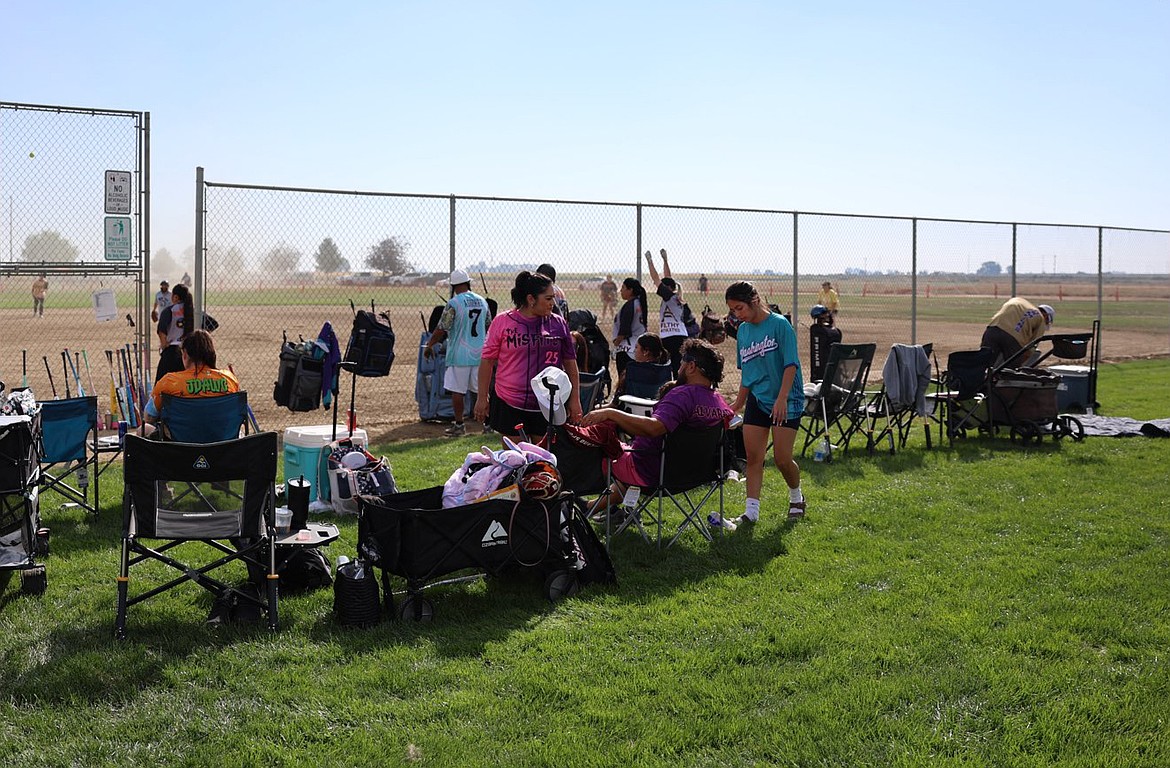
The Mario J. Guzman Memorial Baseball Tournament raises money for scholarships in Quincy. Since 2014, 18 Quincy High School students have benefited from the tournament.
COURTESY PHOTO/LINDA GUZMAN
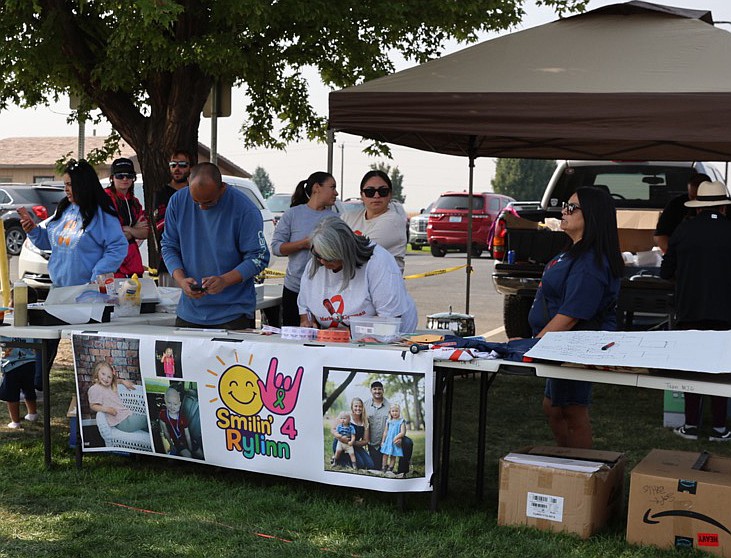
Volunteers sign up players for this year’s Mario J. Guzman Memorial Baseball Tournament raises money for scholarships in Quincy. The annual tournament is held the last week of September.
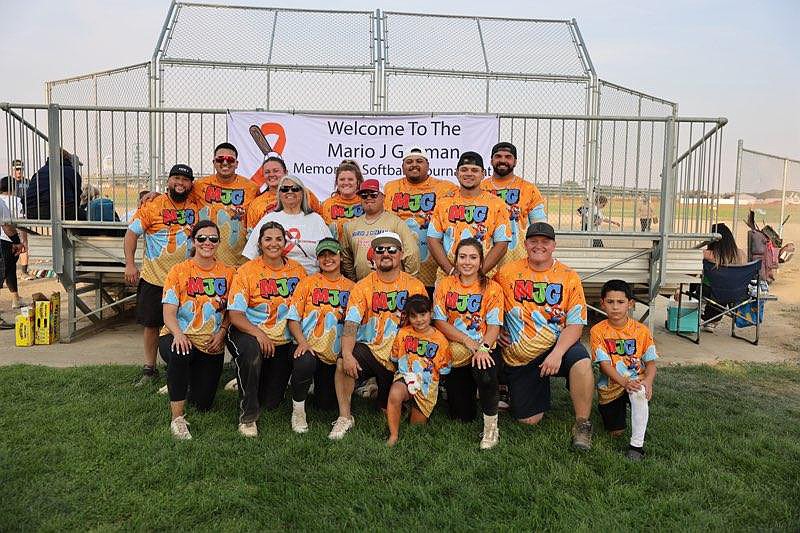
The winning team in this year’s Mario J. Guzman Memorial Baseball Tournament. The tournament raised about $9,000 this year before expenses.
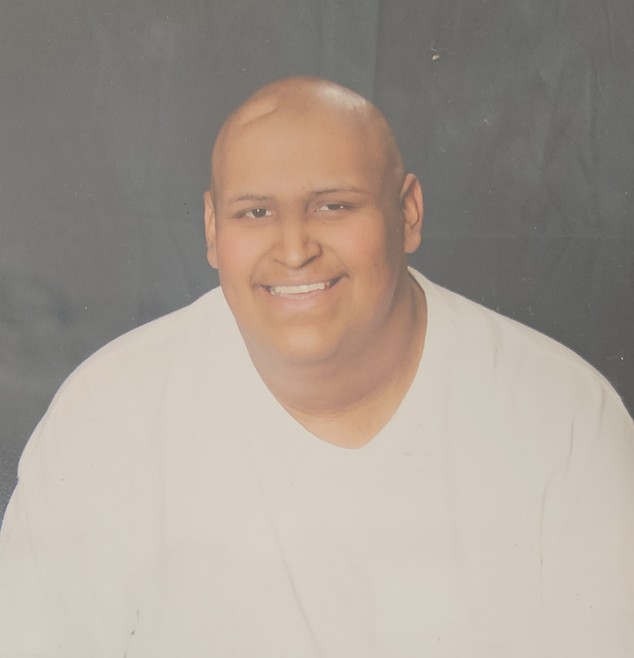
Mario J. Guzman passed away in 2012 at the age of 23 after a five-year battle with leukemia.
Joel Martin has been with the Columbia Basin Herald for more than 25 years in a variety of roles and is the most-tenured employee in the building. Martin is a married father of eight and enjoys spending time with his children and his wife, Christina. He is passionate about the paper’s mission of informing the people of the Columbia Basin because he knows it is important to record the history of the communities the publication serves. | October 9, 2025 3:00 AM
QUINCY — Some Quincy students are getting a boost with their educations because of a young man who never got to finish his own.
“My son got leukemia when he was 18 years old, a senior in high school,” said Linda Guzman, president of the Mario J. Guzman Foundation. “For five years he went back and forth. He relapsed a couple of times, (had) a bone marrow transplant, but it didn't take and he lost his life Sept. 6, 2012.”
Mario Guzman enrolled in Columbia Basin College in Pasco right out of high school to study automotive technology, Linda said, but when he was diagnosed with leukemia, he had to give that dream up, instead spending his time shuttling back and forth between Quincy and Seattle Children’s Hospital for radiation. He managed to attend Wenatchee Valley College for a year, his mother said, but by then he was too sick to keep going. So, two years after he passed away, Linda Guzman established the foundation in his name to help Quincy High School students continue their education.
Since 2015, the Mario J. Guzman Foundation has given $1,000 scholarships to 18 QHS students. One of those was 2020 graduate Abigail Castillo, who went on to attend Whitworth University in Spokane. She has since withdrawn and moved on to pursue a degree in psychology from Grand Canyon University.
“It was a lot of help for me,” Castillo said. “I was pretty grateful for anything I could get.”
The application included questions about the student’s school plans, and also asked for any memories of Mario the student might have. A family friend of the Guzmans, Castillo remembered Mario and his dad, Rafael Guzman, taking her and her brother fishing. Even so, she nearly didn’t get the scholarship, she said.
“I had a lot of health issues in high school, so I was absent a lot,” she said. “I turned in the scholarship (application) the very last day of the deadline, and the counseling office wouldn't take it, because I got there exactly at three, and they said I was too late.”
The principal intervened, she said, and got her application filed.
“I saw it as sort of a God thing,” she said.
The scholarships are paid for through the proceeds of an annual baseball tournament, Linda Guzman said. Twelve-player teams pay an entrance fee of $350 to participate, either out of their own pockets or through a business sponsor. This year’s tournament originally had 12 teams, but three had to drop out prior to the late-September event.
Inserted into the tournament, Guzman said, there’s a home run derby with a $10 entry fee.
“We get a men’s bat and a women’s bat and whoever hits the ball the farthest gets the bat,” she said. “These people love baseball. This year we had 27 men who participated and 19 women.”
Besides the scholarships, the foundation donates every year to a family that has to go back and forth to Seattle for the same sort of treatments Mario had. This year the foundation gave $700 to the family of a 4-year-old girl with lymphoma, Guzman said.
Mario Guzman loved baseball, his mother said, and although he rooted for the Mariners, he was never able to play very much himself.
“When he was 14 years old, he had something going on in the spine, in his first vertebra, and we didn't even know it,” she said. “Apparently, it was not fused with the other vertebrae … He was in one of those bouncy houses and landed on his head. So, they took him to the hospital, and that's where they found it. They said he had had it since birth, and had he ever played ball or done anything like that and had an accident, it could have killed him.”
Mario never became a father, but he left behind a sister who has two children to carry on the family legacy, Linda Guzman said. His first nephew, also named Mario, was born three years to the day after his passing.
“It was a Sunday, and there was a gal at church who had kind of mentored my kids when they were a little bit younger,” she said. “I went straight to her, and I said, ‘They're taking (my daughter) to the hospital today. And she said, ‘Linda, what a blessing.’ I looked at her like she was nuts and said ‘What do you mean, a blessing?’ She said, ‘Well, this is kind of a bittersweet day for you. You don't have to be sad now that your son passed because now you’ve got your grandson’s birthday.’ I’d never thought of it like that, but … it was really an eye-opener for me. So now we celebrate both.”
The next Mario J. Guzman Memorial Baseball Tournament will be held Sept. 26-27, 2026. To learn more or to register a team, call 509-289-9523.
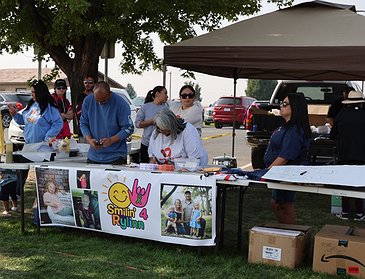 Volunteers sign up players for this year’s Mario J. Guzman Memorial Baseball Tournament raises money for scholarships in Quincy. The annual tournament is held the last week of September.
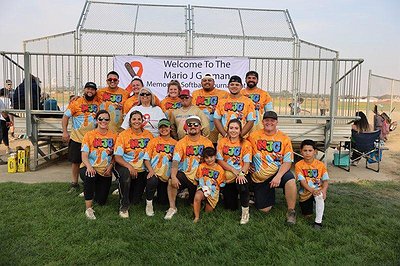 The winning team in this year’s Mario J. Guzman Memorial Baseball Tournament. The tournament raised about $9,000 this year before expenses.
 Mario J. Guzman passed away in 2012 at the age of 23 after a five-year battle with leukemia.
ARTICLES BY JOEL MARTIN

Endless battle
Noxious Weed Control Board works to keep invasive plants under control
MOSES LAKE — Some of the nastiest plants in Grant County were the topic of a class led by Jay Johnson, a consultant with the Grant County Noxious Weed Control Board, Tuesday. The Noxious Weed Control Board, as its name would suggest, is tasked with keeping weeds under control in Grant County. That’s not a small job; the board’s website lists 129 species of noxious weeds that are found around Grant County. A noxious weed is defined as an invasive, non-native plant that threatens agricultural crops, local ecosystems or fish and wildlife habitat, according to the Noxious Weed Control Board. Washington state law requires that these weeds be identified and their spread kept to a minimum, if not completely eradicated. “We’re one of those agencies a lot of people don’t really understand,” Johnson said. “We’re a county office and … our funding is tax-based assessment. When you get your tax bill and you look down at all the expenses that you pay for, there we are.”

BASIN EVENTS: Oct. 16-24
COLUMBIA BASIN — Whether you feel like shopping, crafting, learning or seeing a show, there’s something happening for you this week in the Basin. Oct. 16 ‘My Family (Mi Familia)’ screening Spanning three generations, “My Family (Mi Familia)” is a heartfelt drama that follows the Sánchez family as they build their lives in East Los Angeles. Through love, hardship, triumph, and sacrifice, the film explores the immigrant experience, the strength of family bonds, and the traditions that connect one generation to the next. Lowrider show and taco truck before the screening. Sponsored by Columbia Basin Allied Arts, EDUBS C/S and the Moses Lake Creative District. $12 per person. Doors open at 6 p.m., film begins at 7 p.m. at the Moses Lake Civic Center Auditorium, 401 S. Balsam St. Tickets and info: www.cba-arts.org.

Moses Lake author encourages women to look beyond church culture norms
MOSES LAKE — A Moses Lake author’s book, “A Christian Woman Striving to Live Her Faith in a Man-Controlled World,” takes aim at the role to which many churches relegate the female half of their congregations. “It’s to encourage women in the faith,” Linda Curran said. “A lot of churches say, ‘Teach Sunday school, do this, do that, but don’t (evangelize.)’" In her book, Curran recounts a time when she moved to a new community and joined a church there. She was surprised to learn that, as a new female member, she had been automatically assigned church cleaning duties. When she questioned it, she wrote, she was met with condescension and her objections were brushed aside. In other churches, she said, women who were capable of teaching were relegated to “women’s ministry.”