
WISe treatment
JOEL MARTIN | Hagadone News Network | UPDATED 12 months AGO
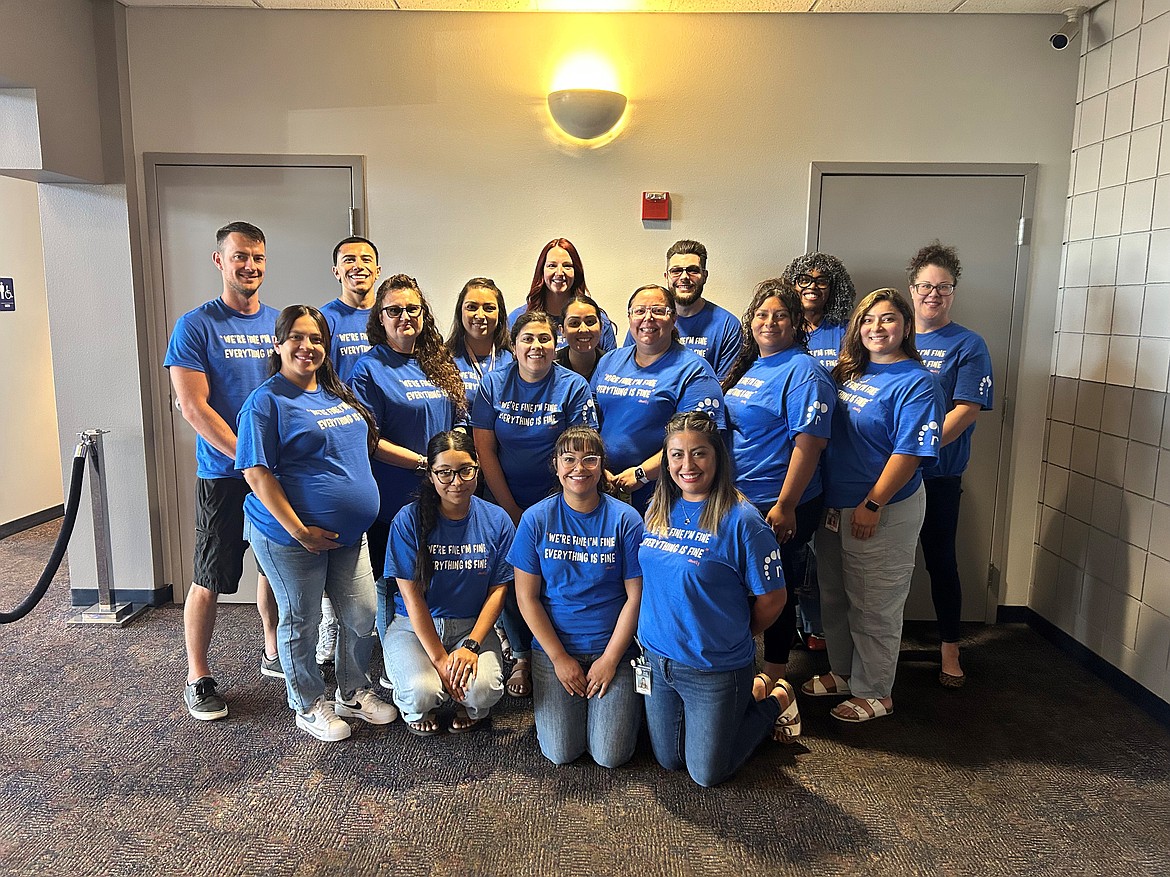
Grant County’s WISe team. Top from left: Samuel Scheelke, Family Peer; Joseph Melo-Zavala, Youth Peer; Taylor Schrodt, LMHC, Therapist; Tyler Napiontek, Youth Peer; Angela Clay, Therapist; Jessica Carlson, Care Coordinator.
Middle row from left: Cinthia Llamas, Youth Peer; Amber Castilleja, Family Peer; Veronica Gonzalez, Family Peer; Anakaren Vazquez, Care Coordinator; Tatiana Hernandez, Care Coordinator; Selene Acosta-Gonzalez, Family Peer; Rosario Xochicali Cortez, Youth Peer; Tanya Núñez, LICSW, Clinical Manager;
Bottom row left: Arlene Beltran, Care Coordinator; Deeanna Sandova…
COURTESY PHOTO/RENEW
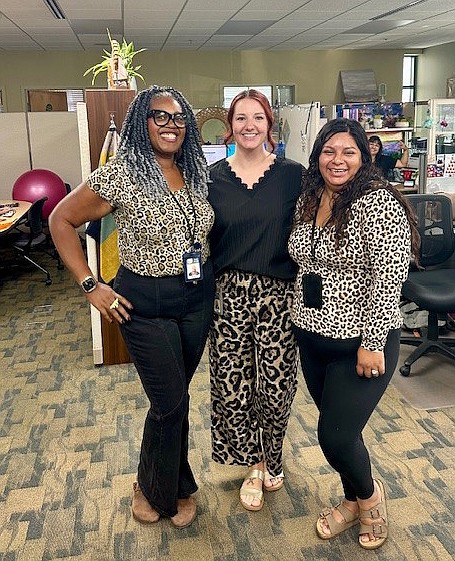
From left: Angela Clay, Taylor Schrodt and Rosario Xochicali Cortez at the WISe day camp.
Joel Martin has been with the Columbia Basin Herald for more than 25 years in a variety of roles and is the most-tenured employee in the building. Martin is a married father of eight and enjoys spending time with his children and his wife, Christina. He is passionate about the paper’s mission of informing the people of the Columbia Basin because he knows it is important to record the history of the communities the publication serves. | October 21, 2025 3:30 AM
MOSES LAKE — Sometimes, a child or teen with problems needs to take a different approach.
“This is designed to be completely different than the traditional ‘Come to therapy for 50 minutes, sit on my couch, we'll talk about it, and off you go. We'll see you in a month,’” said Andrea Peyton, a WISE program director in Kennewick. “This is a much more intensive service.”
Wraparound with Intensive Services, or WISe, is kind of a last resort for children and teens with multifaceted problems, said Velma De La Rosa, WISe supervisor at Renew, formerly Grant Integrated Services. The idea behind it is to surround the child with people who care about them and are invested in their success, and fill in the cracks that the child has fallen through in the past.
“We tend to see kids who are involved in multiple crises or multiple community partners, such as CPS, juvie, truancy from school,” De La Rosa said. “We see the kids with the high emotional needs that are not being met. A lot of times, our kids are foster kiddos as well, and they are going from one foster placement to another with a lot of trauma. They’re failing school, things like that.”
To qualify for WISe services, a child needs three things, according to Renew’s website: They must be 20 or younger, they must qualify for Medicaid, and they must have complex mental or behavioral health needs. Then they go through a screening process called CANS – Child Assessment of Needs and Strengths – to determine exactly what they need.
Those needs can be difficult to pigeonhole, Peyton said, which is exactly why WISe is needed.
“One thing that (WISe) especially tries to do is get away from a diagnostic understanding: it’s ADHD, it’s depression, it's PTSD,” she said. “It's good to know those things, but at the end of the day, we have to understand patterns. We have to understand why behavior happens. We have to get creative on how we respond.”
The youth themselves drive WISe, said Renew Clinical manager Tanya Nunez, rather than parents, counselors or authority figures. It’s strictly a voluntary program and the child is the one who determines what needs are going to be addressed.
“That's what makes it successful,” Nunez said. “If a youth (says) ‘I want to spend more time with my mom,’ we try to focus on that and how we can support the family system. If they (say they) want to get better grades, then we switch it up. Versus an adult coming in and saying, I think he needs to work on this, or she needs to work on this.”
Each client is assigned a four-person team to track and encourage them, De La Rosa said. There’s a therapist to provide traditional counseling. Then there’s a youth peer, who partners with the child to build trust and rapport.
“Sometimes our youth have a hard time trusting professionals or clinicians,” De La Rosa said. “That's where our youth peers come in. They share that lived experience with them: ‘This is something I went through when I was your age … and now I'm here to instill hope and tell you it can get better.’”
For the rest of the family there’s a family partner, to work with the parents, guardians or caregivers to implement a safe, structured home environment. And supporting all of them is the care coordinator, who keeps tabs on the clients’ needs and acts as a liaison between the team and the outside world, talking not just with the family but also with teachers, counselors, CPS or anyone else who plays a part in the child’s life. With the schools, Nunez said, that can include anything from attending Individualized Education Program, or IEP, meetings to actually going to the school and sitting with the student in class.
Grant County has four care coordinators now, De La Rosa said, and recently hired a fifth. The rest of the team members switch off between care coordinators. Each team can handle a maximum of 15 cases, a point she said they haven’t reached yet. The teams are stationed in Moses Lake, Quincy and Ephrata to cover the whole county. Every summer, De La Rosa said, Renew gathers all its young WISe clients together for a week-long day camp.
No program has a 100% success rate, De la Rosa said, but WISe’s is somewhere in the high 80s. She cited a case where a fourth-grader with sleep problems was failing in school. He had it written into his IEP that he was to have a 30-minute nap every day, but that wasn’t doing the trick.
“Getting him out of nap time created chaos,” she said. “This kid was literally sleeping all day long … He had already been labeled as a problem child by the school. The school did not want to deal with him anymore. They were actually to the point that as soon as he took a nap, they would leave him to sleep all day, and they would just take wake him up and say, OK, it's time to go to (home), because of the escalations of behavior.”
The WISe team contacted the child’s doctor and helped get him a referral to a sleep specialist, which in turn revealed that not only did he suffer from sleep apnea, but he also had diabetes.
“That was causing the extreme exhaustion in him,” she said. “By taking care of that need, getting him on insulin, getting him machines for the sleep apnea, his sleep improved so much that he could go successfully to school all day long.”
 From left: Angela Clay, Taylor Schrodt and Rosario Xochicali Cortez at the WISe day camp.
ARTICLES BY JOEL MARTIN

Endless battle
Noxious Weed Control Board works to keep invasive plants under control
MOSES LAKE — Some of the nastiest plants in Grant County were the topic of a class led by Jay Johnson, a consultant with the Grant County Noxious Weed Control Board, Tuesday. The Noxious Weed Control Board, as its name would suggest, is tasked with keeping weeds under control in Grant County. That’s not a small job; the board’s website lists 129 species of noxious weeds that are found around Grant County. A noxious weed is defined as an invasive, non-native plant that threatens agricultural crops, local ecosystems or fish and wildlife habitat, according to the Noxious Weed Control Board. Washington state law requires that these weeds be identified and their spread kept to a minimum, if not completely eradicated. “We’re one of those agencies a lot of people don’t really understand,” Johnson said. “We’re a county office and … our funding is tax-based assessment. When you get your tax bill and you look down at all the expenses that you pay for, there we are.”

BASIN EVENTS: Oct. 16-24
COLUMBIA BASIN — Whether you feel like shopping, crafting, learning or seeing a show, there’s something happening for you this week in the Basin. Oct. 16 ‘My Family (Mi Familia)’ screening Spanning three generations, “My Family (Mi Familia)” is a heartfelt drama that follows the Sánchez family as they build their lives in East Los Angeles. Through love, hardship, triumph, and sacrifice, the film explores the immigrant experience, the strength of family bonds, and the traditions that connect one generation to the next. Lowrider show and taco truck before the screening. Sponsored by Columbia Basin Allied Arts, EDUBS C/S and the Moses Lake Creative District. $12 per person. Doors open at 6 p.m., film begins at 7 p.m. at the Moses Lake Civic Center Auditorium, 401 S. Balsam St. Tickets and info: www.cba-arts.org.

Moses Lake author encourages women to look beyond church culture norms
MOSES LAKE — A Moses Lake author’s book, “A Christian Woman Striving to Live Her Faith in a Man-Controlled World,” takes aim at the role to which many churches relegate the female half of their congregations. “It’s to encourage women in the faith,” Linda Curran said. “A lot of churches say, ‘Teach Sunday school, do this, do that, but don’t (evangelize.)’" In her book, Curran recounts a time when she moved to a new community and joined a church there. She was surprised to learn that, as a new female member, she had been automatically assigned church cleaning duties. When she questioned it, she wrote, she was met with condescension and her objections were brushed aside. In other churches, she said, women who were capable of teaching were relegated to “women’s ministry.”