
Encounters with a ruffed grouse
CHRIS PETERSON | Hagadone News Network | UPDATED 1 month, 1 week AGO
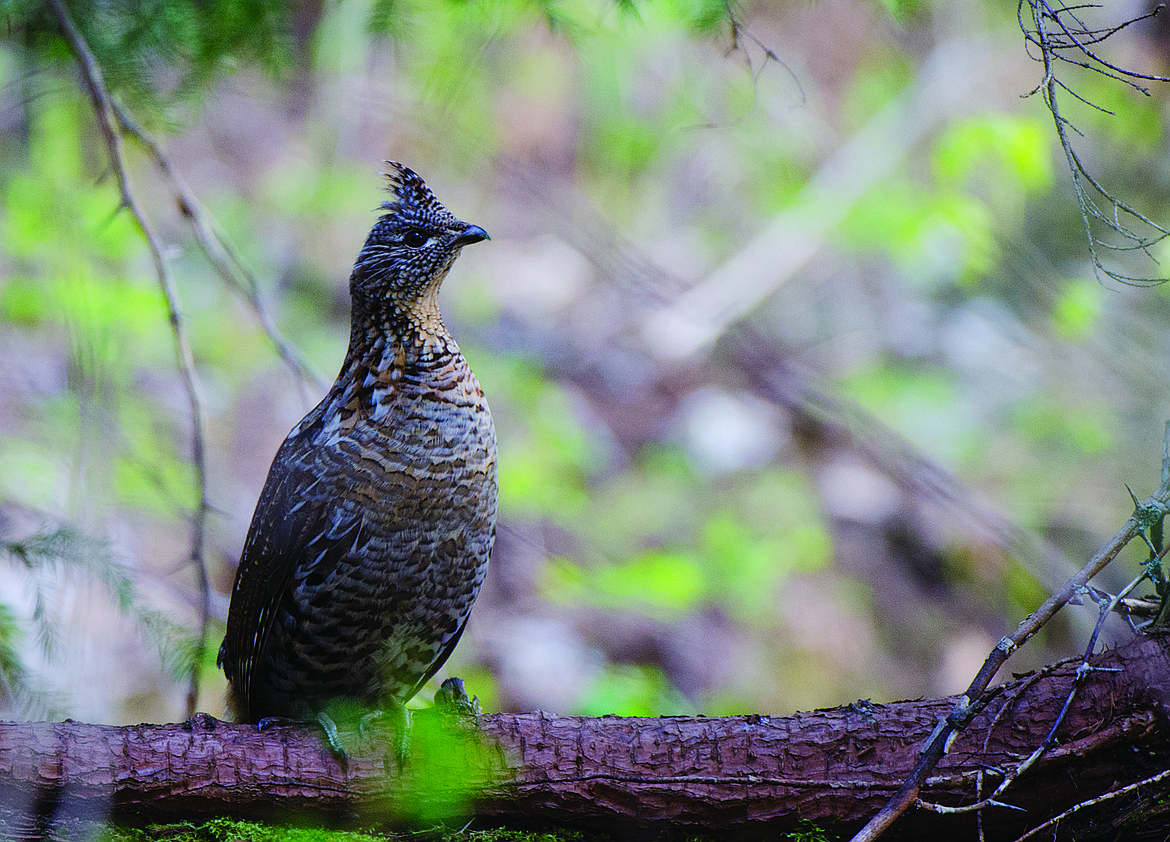
A ruffed grouse in Glacier National Park. (Chris Peterson/Hungry Horse News)
Chris Peterson is the editor of the Hungry Horse News. He covers Columbia Falls, the Canyon, Glacier National Park and the Bob Marshall Wilderness. All told, about 4 million acres of the best parts of the planet. He can be reached at [email protected] or 406-892-2151. | October 26, 2025 12:00 AM
If you didn’t know what you were listening to, you might suspect a larger creature was stirring in the brush.
The explosion of feathers and wings and all thing bird both will startle you and, in a second or so, relieve you of that concern.
Such are encounters with a ruffed grouse. Grouse are common in the woods of Northwest Montana, particularly in the lower elevations of the region’s mountains.
But their myriad of calls, including a sort of whine when they have young ones in the summer, at first sound like a creature in distress in the woods. Which is sort of the point. The hen grouse’s defense mechanism is to feign a broken wing and flap through the woods squawking while the young, which are all legs and fuzzy feathers not long enough yet to fly, run away in a zig-zagging pattern.
Said predator goes after the big fat hen. The young zip through the trees and once the predator is close enough to the hen, it bursts into flight, if it has to, only to return later to round up the brood and carry on with life, pecking at the forest floor for seeds, insects and worms to eat.
Perhaps the most interesting call comes from the male, though. During breeding season (and we’ve even seen them do it well after breeding) a male grouse will jump up on a log and beat its wings to call in in a female.
It all sounds like drumming, slow at first, then more rapidly. You can mimic it by beating on your own chest.
During the drumming they put on a magnificent display, fanning their tails and ruffling the feathers around their neck (thus the name).
Ruff grouse are a medium-sized game bird, with a range that spans across the northern U.S. and Canada from the West Coast to the East Coast.
Ruffed Grouse’s ability to digest foods high in cellulose make it possible for them to survive harsh winter conditions in the northern part of their range, where they feed on buds and twigs of aspen, birch, and willow.
The typical clutch size of eggs is between 9 and 14, though far fewer young make it to maturity.
In Glacier National Park, for example, they’re dined on by a host of predators, including other birds like hawks and owls and mammals like fox.
In the winter, the grouse’s habit of burying itself in soft snow to roost can lead to surprising encounters for snowshoers or skiers when the birds explode from the snow and take off.
Ruffed Grouse are fairly common and widespread, and their populations have held steady between 1966 and 2019, according to the North American Breeding Bird Survey.
They’re a popular game bird outside of Glacier Park. Inside the park they’re common. While some are fairly used to people due to the sheer number of hikers in the park, most don’t stick around very long before either running away or bursting into the skies on a fast, but low journey through the trees.
ARTICLES BY CHRIS PETERSON

Night of Lights is now in its 40th year, parade Friday
The annual Night of Lights Parade and celebration is Friday night in Columbia Falls. Sponsored by the Lions Club, this year’s theme is “Super Hero Christmas,” so floats should have a super hero theme.

Police capture McGarry after high speed chase
A man well-known to Columbia Falls and Flathead County law enforcement is now behind bars after a high-speed chase from Columbia Falls to Whitefish Dec. 3.
Law would restrict e-bikes, e-motorcycles in Columbia Falls
The City of Columbia Falls is looking to place some significant restrictions on electric motorcycles, bicycles and other motorized use on its bike paths and sidewalks after a teen collided with a car earlier this year and went through the windshield while driving down a sidewalk on Highway 2 at more than 30 mph.