
The grunt to Fifty Mountain is worth it
CHRIS PETERSON | Hagadone News Network | UPDATED 5 months, 1 week AGO
Chris Peterson is the editor of the Hungry Horse News. He covers Columbia Falls, the Canyon, Glacier National Park and the Bob Marshall Wilderness. All told, about 4 million acres of the best parts of the planet. He can be reached at [email protected] or 406-892-2151. | October 26, 2025 12:00 AM
It was barely light enough to take a photo as I strapped on my pack and peered into the brush. At first, I saw a cow moose in the brush and then what was really making a racket: A big bull moose, one of the largest I’ve seen in Glacier National Park in quite a few years.
The big bull grunted and looked at me, as if to say, “stay away from my girl.”
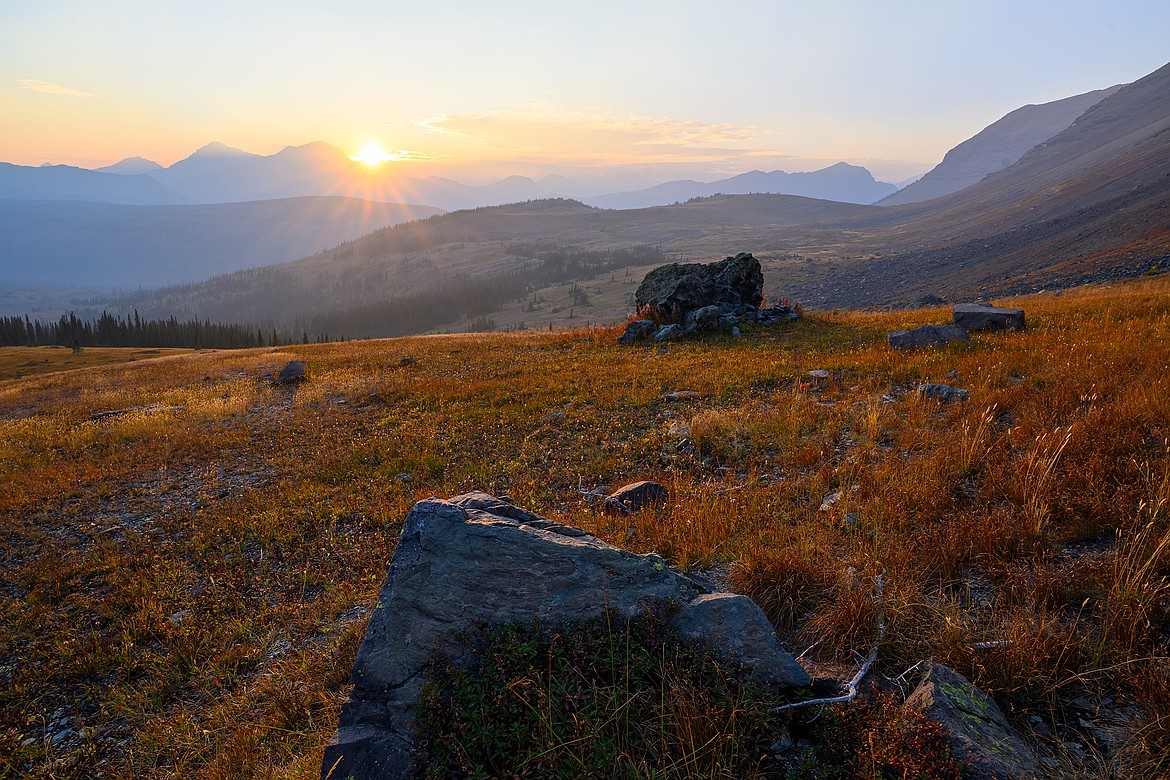
I grabbed a few photos in silence and then strapped on my pack and headed up the trail at Packer’s Roost. There was a long day ahead and it promised to be smoky and warm, way too warm for late September, with a high about 80, when it should be spitting snow, or at least thinking about it.
Fifty Mountain is a coveted campsite in Glacier, but by late September/early October, the crowds thin considerably in Glacier’s backcountry, especially if the nights are cold and there’s a skiff of snow.
That wasn’t the case this trip, but even so, I didn’t see that many people along the 12-mile route going in, and for good reason: The hike is a bit of a grunt, with more than 4,000 feet of elevation gain.
Most of that elevation gain is just getting to West Flattop Campground, which is just under halfway. West Flattop burned over a little more than 20 years ago and isn’t nearly as popular as Fifty Mountain, but I still like it, as you can set up camp there and then do some-off-trail excursions to get better views.
From West Flattop the route to Fifty is gentler, but there is a steep little pitch at the end after you come down the ridge headed toward camp, which can be a bit miserable on a hot day.
In the early summer the route is rife with wildflowers, but on this day, everything was baked after virtually no rain in August and September. There were huckleberries everywhere, however, and in the heat, it was like walking through a warm huckleberry pie.
Still, the bears, at least one at any rate, had turned to ground squirrels. They like to dig them up this time of year and one bear had dug up a burrow a good five feet deep looking for squirrels. It was the biggest squirrel hole I think I’ve ever seen in Glacier, about the size of a typical campsite.
Fortunately, there was no sign of the hungry griz, outside of a purple pile of poop on the edge of the hole. I wonder if the squirrels managed to get away. I doubt it.
Once at camp I hung my food, set up the tent and took a quick break before finishing off part II of the journey, which was the trek up the ridge to the Sue Lake Observation Point, which is about another 1,000 feet of elevation gain and three more miles round trip.
The hike is definitely worth it; though with the heat and smoke from Western wildfires, the normally outstanding views to the east and west were obscured by smoke.
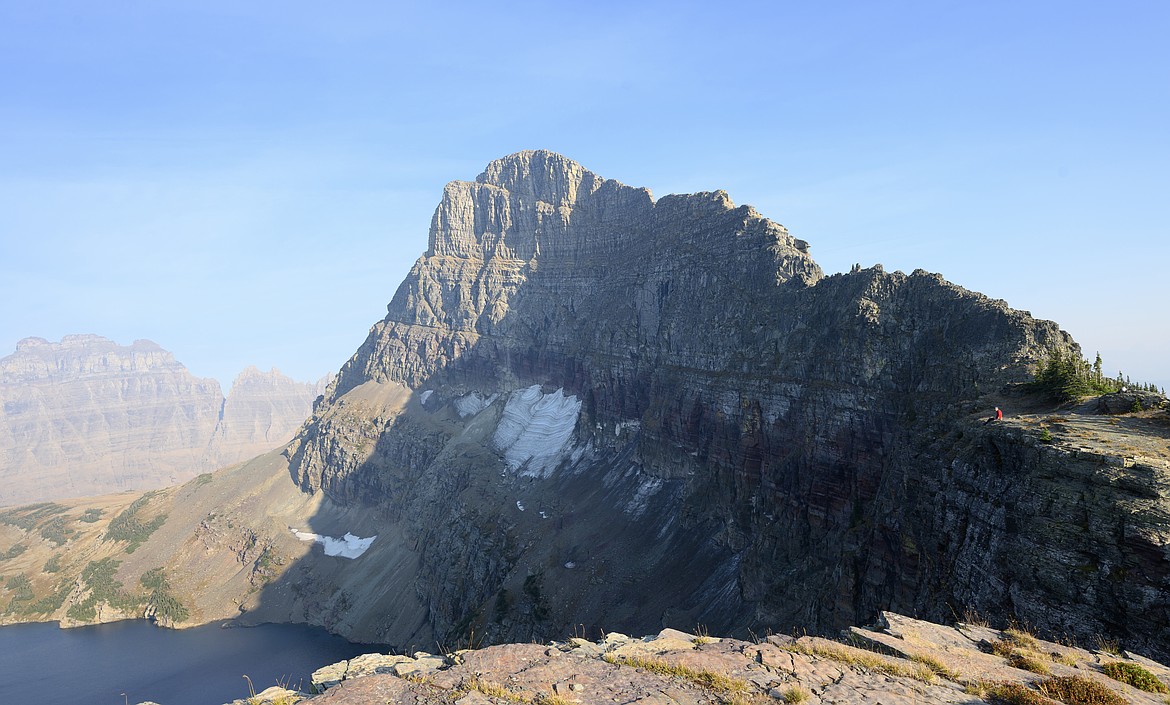
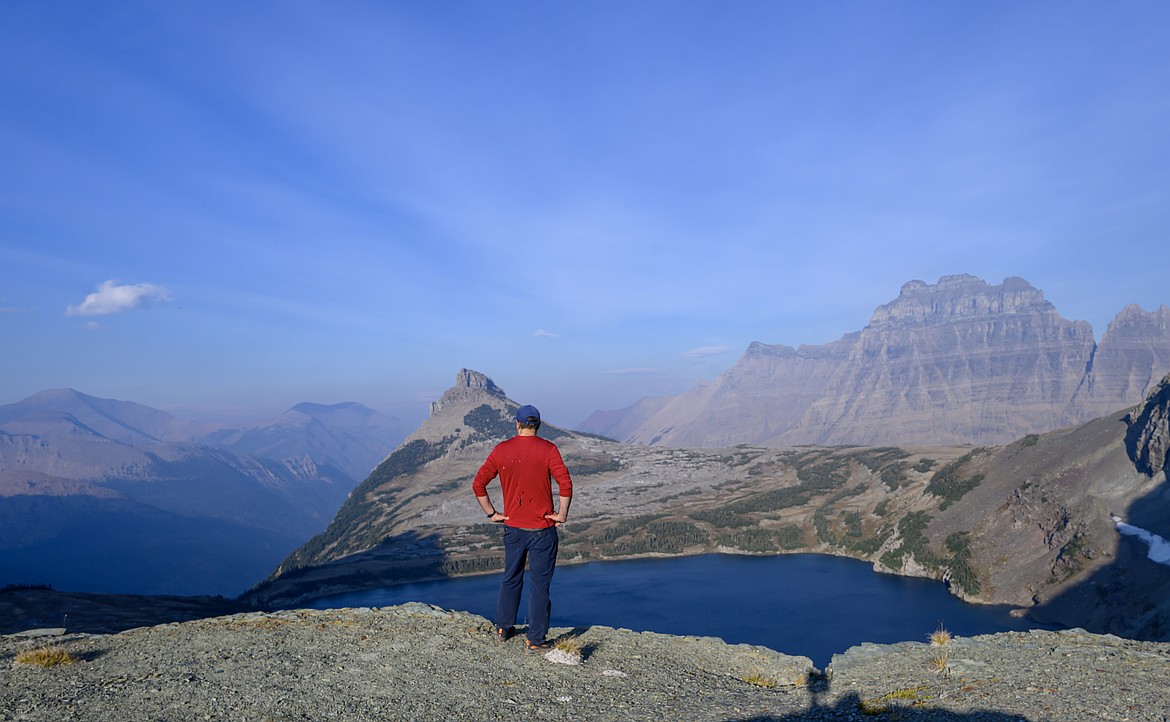
Typically, one sees mountain goats and bighorn sheep at the point, but I saw nothing but a withering glacier which was actually pulling away from the sheer cliffs of Mount Kipp. At the Observation Point one looks nearly straight down at Sue Lake, an easy 1,000 feet below.
The smoke cleared by late evening a bit and the stars shown bright. The Milky Way hung above camp, and it sounded like a grizzly on the trail not too far from my tent. I could hear its footsteps and a few woofs, but when I shined my headlamp around it was nowhere to be seen.
The rest of the evening was still and very quiet and I slept hard, bear or not.
The following morning the fog had rolled in and made for a chilly start to the day, a reminder that the weather here can turn on a dime. I was happy to have brought a winter coat and gloves as I walked through the wind-whipped fog.
And then it was over. The fog lifted. The sun shone and while it was still way too warm for September it was a pleasant stroll out to say the least. All told, about 27 miles round trip, with more than 5,000 feet of elevation gain and loss. It’s a classic Glacier Park journey for those fit enough to enjoy it.
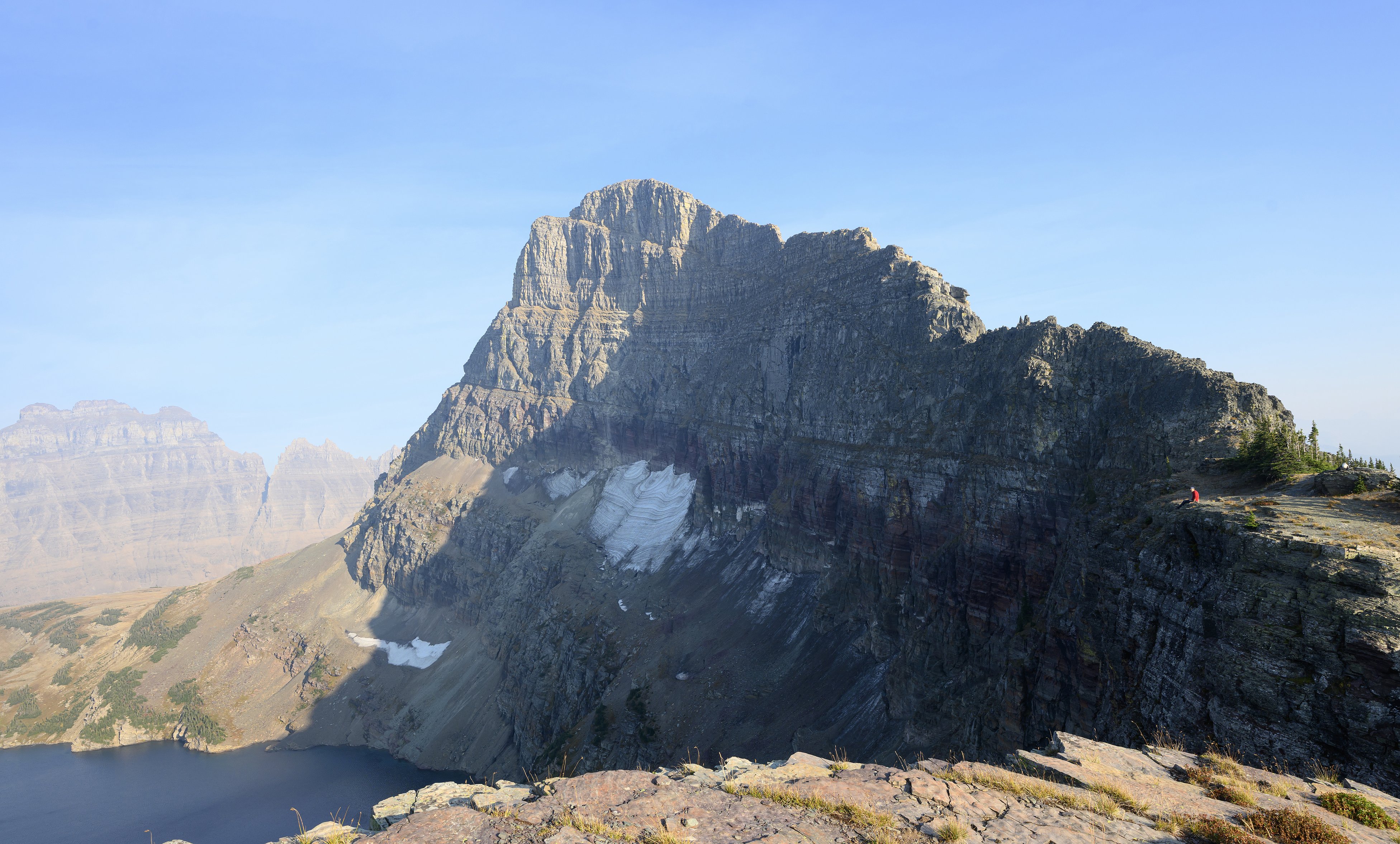 The Sue Lake Observation Point is about 1,000 feet above camp.
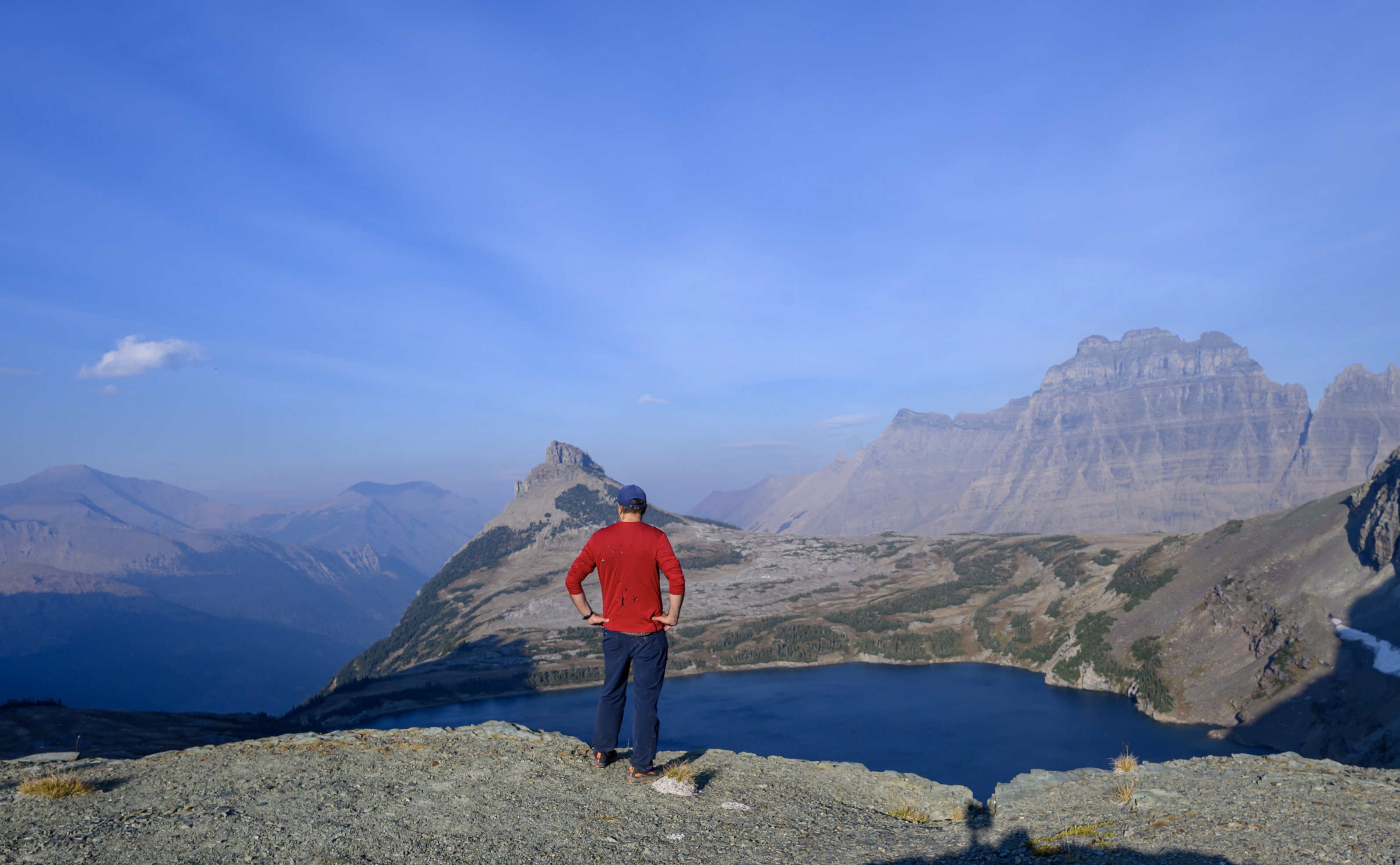 A self portrait looking down at Sue Lake. (Chris Peterson photo)
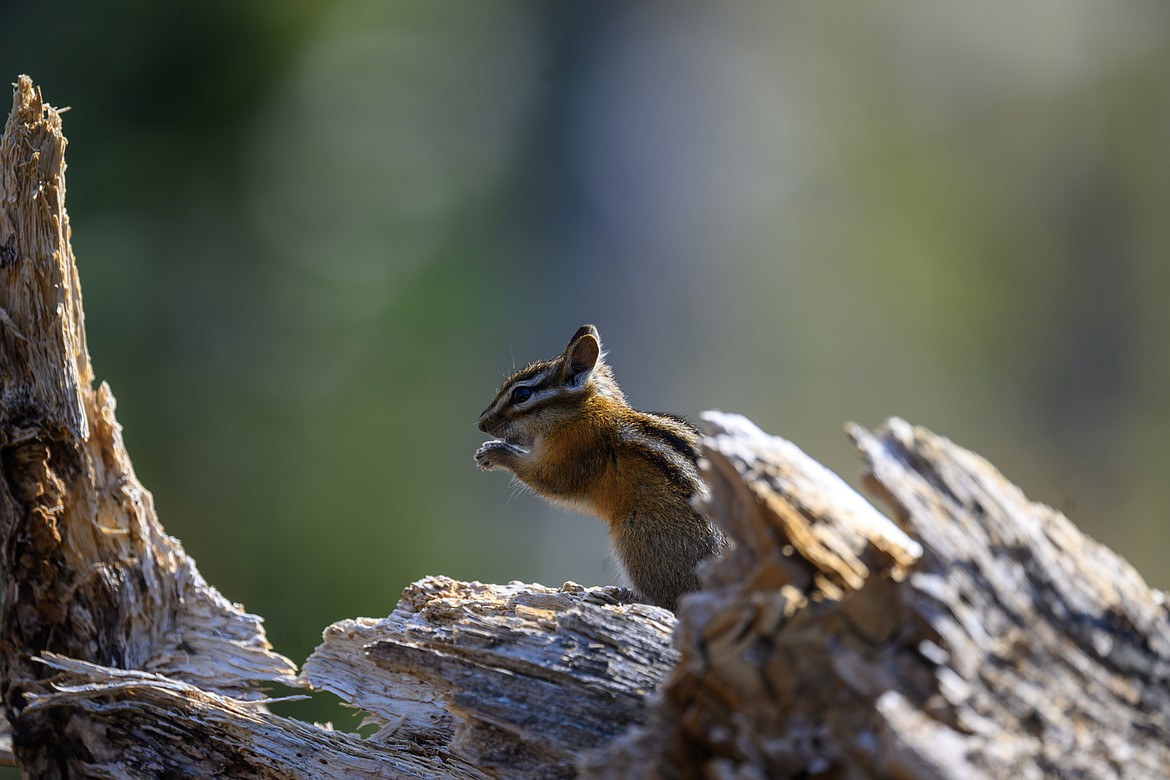
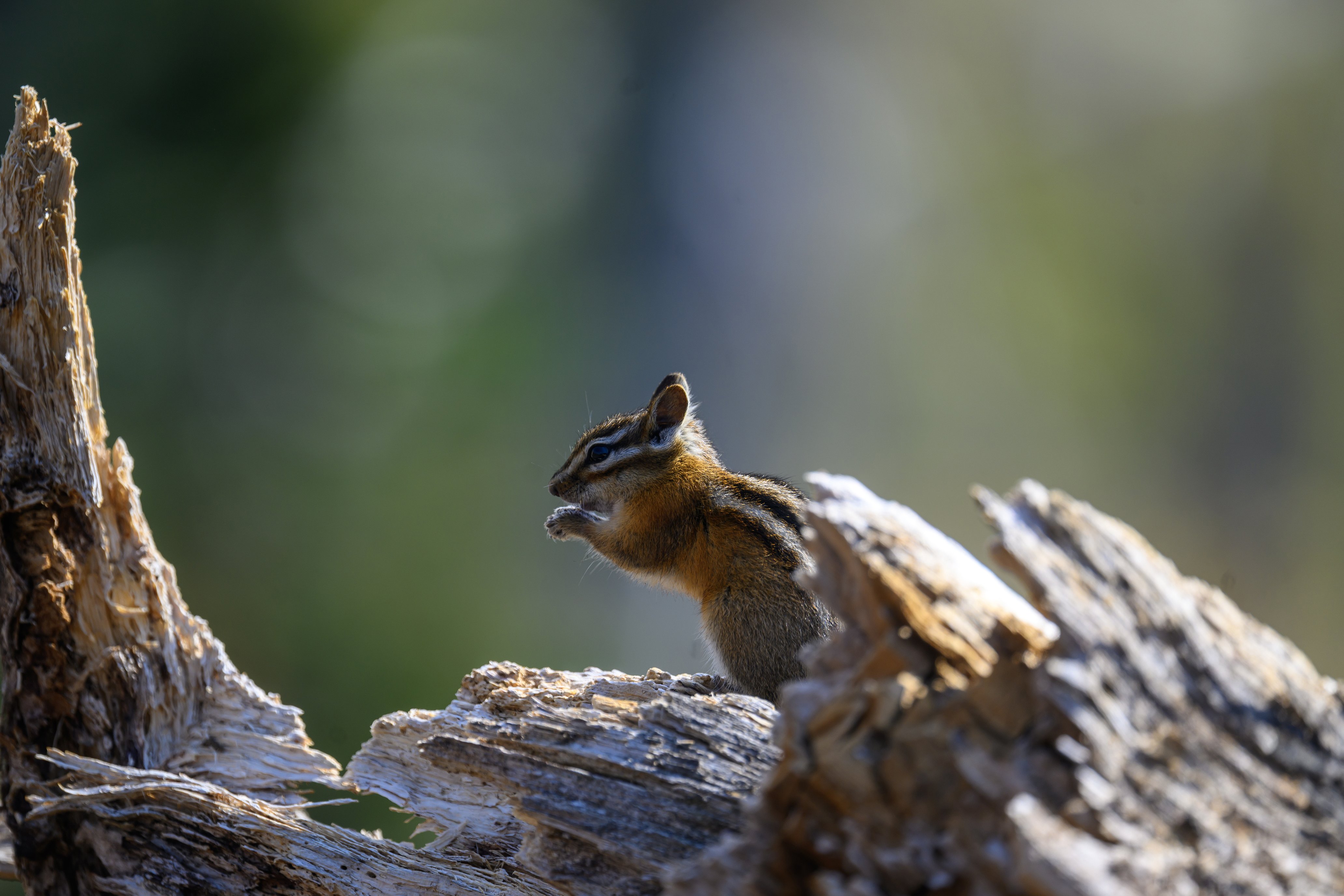 Chipmunks were common along the trail.
ARTICLES BY CHRIS PETERSON
Camas Road, Quarter Circle Bridge Road now open for the season
With virtually no snow at lower elevations, Glacier National Park announced Wednesday that the Camas Road and the Quarter Circle Bridge Road are open for the season to all traffic.
Cats suffer tough loss in opener to Bigfork, beat Polson at home
The Columbia Falls baseball team suffered a tough loss on the road against Bigfork in its season opener, 7-6 in a game that went nine innings .But on Tuesday at home they righted the ship and beat Polson 3-1 in a pitcher's duel.
Camas Road, Quarter Circle Bridge Road now open for the season
With virtually no snow at lower elevations, Glacier National Park announced Wednesday that the Camas Road and the Quarter Circle Bridge Road are open for the season to all traffic.