
FIRE REPORT: Sept. 12, 2025
NANCE BESTON | Hagadone News Network | UPDATED 7 months AGO
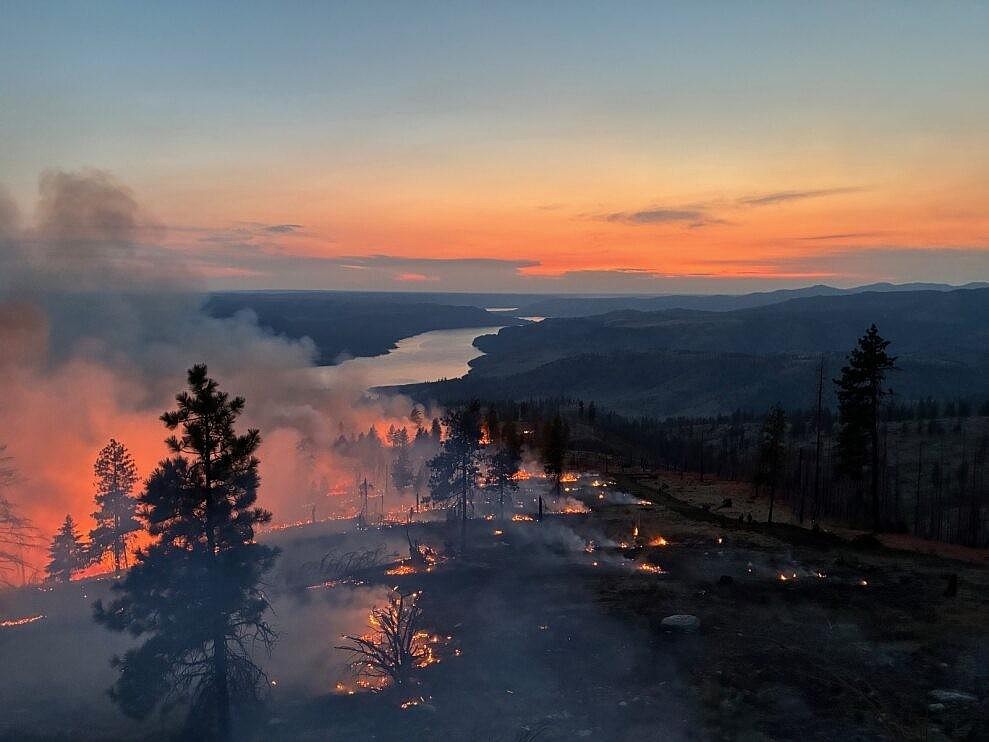
The Rattlesnake Fire remains the largest blaze in Washington at around 21,000 acres. The fire, located in Lincoln County, is around 50% contained as of Thursday.
COURTESY PHOTO/INCIWEB
MOSES LAKE – The fires below are burning around 91,400 acres across Washington as of Thursday afternoon. The blazes were causing air quality concerns regionally.
Three largest fires:
Rattlesnake Fire: 21,338 acres. 50% contained. Lincoln County. Started Sept. 2. Undetermined cause.
Lower Sugarloaf Fire: 14,323 acres. No containment. Chelan County. Started Sept. 1. Lightning-caused.
Crown Creek Fire: 14,235 acres. 20% containment. Stevens County. Started Aug. 29. Lightning-caused.
Other fires:
Bear Gulch Fire: 10,629 acres. 9% contained. Mason County. Started July 6. Human-caused.
East Creek Fire: 44 acres. No containment. Whatcom County. Started July 20. Unknown cause.
Katy Creek Fire: 3,573 acres. 5% contained. Stevens County. Started Aug. 30. Lightning-caused.
Labor Mountain Fire: 4,000 acres. No containment. Kittitas County. Started Sept. 1. Lightning-caused.
Lynx Mountain Fire: 5,033 acres. 6% contained. Ferry County. Started Sept. 2. Under investigation.
Martin Fire: 175 acres. 5% contained. Chelan County. Started Aug. 27. Under investigation.
Perry Fire: 1,763 acres. No containment. Whatcom County. Started Aug. 27. Under investigation.
Pomas Fire: 3,533 acres. No containment. Chelan County. Started June 13. Lightning-caused.
Red Mountain Fire: 58.3 acres. No containment. Snohomish County. Started Aug. 28. Unknown cause.
Snow Peak Fire: 700 acres. No containment. Stevens County. Started Sept. 1. Lightning caused.
Sugar Fire: 96 acres. 75% contained. Okanogan County. Started Sept. 6. Unknown cause.
Tacoma Creek Fire: 3,796 acres. No containment. Stevens and Pend Oreille counties. Started Sept. 1. Under investigation.
Tunnel Creek Fire: 180 acres. No containment. Jefferson County. Started Sept. 6. Unknown cause.
Wildcat Fire: 7,930 acres. 8% contained. Yakima County. Started Aug. 25. Under investigation.
Air quality:
Air quality labels are decided by the air quality index number. Between zero and 50 is good, 51-100 is moderate, 101-150 is unhealthy for sensitive groups, 151-200 is unhealthy, 201-300 is very unhealthy and above 301 is hazardous.
Ephrata – Thursday: moderate, 63 Air Quality Index. Friday: moderate. Saturday: moderate. Sunday: moderate. Monday: moderate.
Moses Lake – Thursday: moderate, 61 Air Quality Index. Friday: moderate. Saturday: moderate. Sunday: moderate. Monday: moderate.
Othello – Thursday: good, 50 Air Quality Index. Friday: moderate. Saturday: moderate. Sunday: good. Monday: good.
Quincy – Thursday: moderate, 63 Air Quality Index. Friday: moderate. Saturday: moderate. Sunday: moderate. Monday: moderate.
Ritzville – Thursday: moderate 55 Air Quality Index. Friday: moderate. Saturday: moderate. Sunday: moderate. Monday: good.
SOURCES: INCIWEB, WATCHDUTY, AIRNOW.
ARTICLES BY NANCE BESTON
1 arrested after Highway 17 stop; detectives recover fentanyl, firearms
MOSES LAKE — The Moses Lake Street Crimes Unit conducted a traffic stop on Highway 17 near Randolph Road and executed a search warrant Friday morning as part of an ongoing narcotics investigation.
4th-year drought declaration in WA, subtle effects in the Columbia Basin
EPHRATA — Washington’s fourth straight year of drought is expected to hit some regions hard, but in Grant and Adams counties, the impacts will look different – quieter, less visible and centered underground. Statewide, the Department of Ecology issued an emergency drought declaration after a warm winter left Washington with about half its usual snowpack, raising concerns about low summer streamflows, stressed fish populations and heightened wildfire risk. Seven of the past 10 years have included drought somewhere in the state. “If you look at our mountains, the challenge we are facing is clear,” Gov. Bob Ferguson said during a press conference Wednesday. “We’re taking emergency action to protect fish, farmers and communities across Washington.”
Sleep Diagnostic Center to close after doctor’s sentencing
MOSES LAKE — The Central Washington Sleep Diagnostic Center announced it will be closing its doors effective April 30. This includes locations in Moses Lake, Spokane Valley, Brewster and Wenatchee. The announcement follows the March 25 guilty plea from Dr. Eric Edward Haeger, 57, in United States District Court to adulterating and misbranding medical devices with the intent to defraud or mislead, according to a statement from the U.S. Attorney’s Office. “The adulterations by Dr Haeger show a dangerous disregard for the safety of his patients,” Washington Attorney General Nick Brown said in a statement. “This is a win for patient safety, for protecting public dollars from fraud, and for ensuring citizens of Washington get necessary healthcare. This case exemplifies the great work our team is doing in collaboration with our federal partners to fight fraud and protect Washingtonians.”