
Bears in hyperphagia: A seasonal strategy for winter survival
Jessica Reyes | Bigfork Eagle | UPDATED 1 year, 1 month AGO
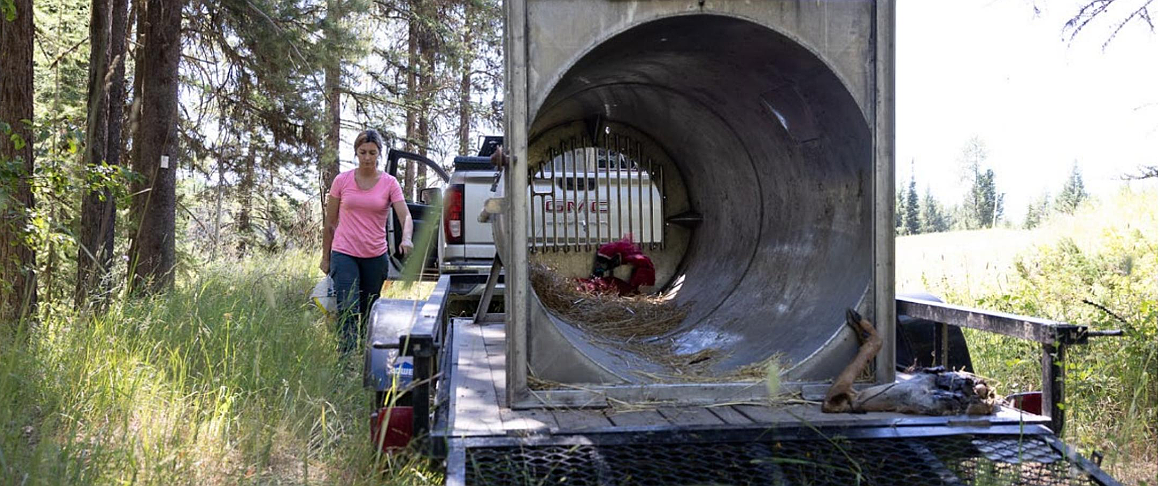
FWP’s Conflict Technician, Mackenzie Taylor, setting a culvert trap to capture a grizzly bear that broke into a grain shed in the Swan Valley. (Courtesy photos)
The first cool mornings of fall have many Montanans reaching for coats and hats. Bears, too, are preparing for winter, but instead of adding layers of clothing, they add hundreds of pounds of fat reserves to prepare for hibernation—more accurately called torpor.
Torpor is a months-long state of reduced activity, metabolism, and body temperature that allows bears to endure harsh winter conditions without eating. To build these fat reserves, bears enter a phase called hyperphagia, or “excessive eating,” beginning in late summer through fall. During this time, they may consume up to 20,000 calories a day — nearly 10 times a human’s daily intake — and spend as much as 20 hours foraging. Bears will become selective, prioritizing high-calorie foods.
Natural high-calorie foods in our region can include berries, roots, seeds, and scavenged carcasses, but bears will also consume fruits, grasses and flowers, and insects while relying on a seasonal memory of where food is found. As bears increase their search for calories, securing attractants around homes becomes critical. Garbage, chickens, orchard fruit and bird feeders are all easy meals (attractants) that can draw bears into residential areas.
Although natural foods like choke cherries and mountain ash berries remain abundant this year, unsecured human foods can still draw a bear into conflict with humans. A single bird feeder, for example, can provide hundreds of calories in just a few minutes, compared to hours of foraging in the wild. One cup of millet birdseed equals 756 calories, whereas one cup of huckleberries equals 83 calories.
Unsecured attractants are like fast food for bears — convenient, unhealthy, and habit-forming. Once rewarded, bears quickly learn to associate neighborhoods with easy food, leading to food-conditioned bears.
Unfortunately, food-conditioned bears often end up in dangerous situations that can be fatal for them. While the valley has seen fewer residential conflicts this summer thanks to abundant natural food production, residents are urged to remain vigilant. Preventing access to human-associated foods reduces the risk of bears becoming food-conditioned and helps keep both bears and people safe.
The good news is that human-bear conflicts can largely be avoided with proper precautions. By making small changes to how we manage attractants in bear country, we can reduce the likelihood of attracting bears to our properties and public spaces.
Here are some quick tips to ensure you're being bear-aware around your home:
1. Secure Garbage: One of the easiest and most effective ways to secure garbage is by using a bear-resistant trash container. Contact Swan Valley Connections at (406) 754-3137 for a free bear-resistant trash can.
2. Secure Chickens and Other Livestock: Electrify your chicken coop or other livestock and their grain to ensure their safety and prevent depredations. Contact Swan Valley Connections at (406) 754-3137 to learn more about our electric fencing program.
3. Remove Bird Feeders: Take down bird feeders during the months when bears are active on the landscape. In our region, the window of activity for bears is roughly March - December.
4. Glean Fruit Trees: Remove all fruit from orchard trees and consider donating unwanted fruit to local food banks or animal sanctuaries. Check with your local Fish, Wildlife& Parks office to learn about potential drop-off sites for fruit gleaning season. Electric fences can also be installed around orchards to protect trees and fruit while also deterring bears.
5. Store Pet Food Indoors: Store pet food inside and bring any uneaten food indoors each night if animals are fed outdoors.
6. Clean Grills and Outdoor Cooking Areas: After using a grill, clean it thoroughly to remove leftover food and grease.
With the committed actions of community members to live responsibly in bear country, we can minimize potential human-bear conflicts, ensuring that bears remain wild and humans stay safe! Swan Valley Bear Resources (SVBR) is a collaborative group that promotes coexistence between humans and bears and provides resources to anyone in the Bigfork, Ferndale, Swan Lake and Condon communities.
SVBR indefinitely loans out bear-resistant garbage containers for free and offers a cost-share program for electric fencing around attractants such as small livestock and orchards. We provide free property consultations to identify attractants and will design an electric fence to suit the needs of the landowner, maintaining proper specifications to deter grizzly bears.
Swan Valley Connections' trained staff will even install the electric fence free of charge. Call Swan Valley Connections at (406) 754-3137 or email [email protected] to learn more about the resources available through Swan Valley Bear Resources.
To report bear sightings and conflicts, contact our local MT Fish, Wildlife & Parks Bear and Lion Specialist, Erik Wenum, at (406) 250-0062.
Jessica Reyes is the bear conflict prevention coordinator for Swan Valley Connections.