
Public Health Advisory Issued for Black Lake
Shoshone News-Press | UPDATED 11 months, 1 week AGO
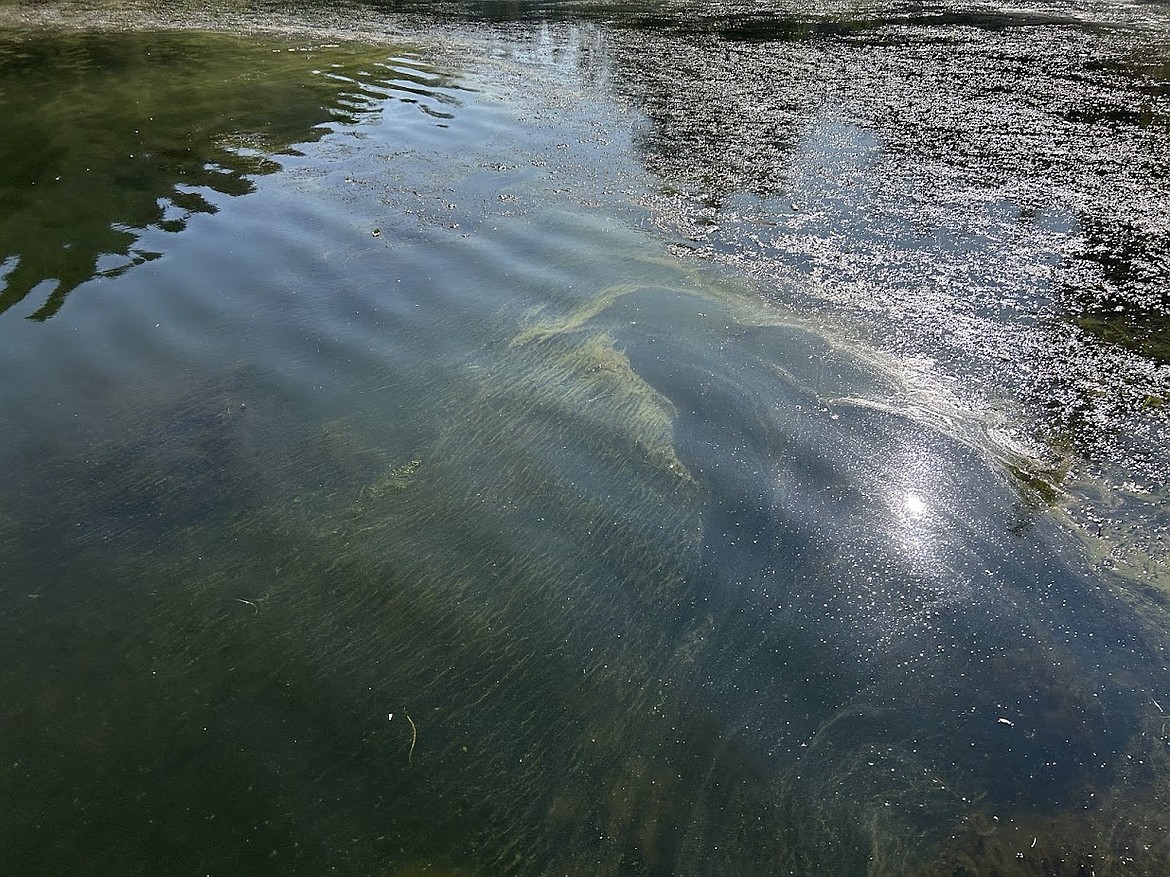
Courtesy photo
MEDIMONT – Panhandle Health District (PHD), in collaboration with the Coeur d’Alene Tribe, the Idaho Department of Health and Welfare (IDHW), and the Idaho Department of Environmental Quality (DEQ), has issued a public health advisory for Black Lake following the detection of a harmful algal bloom (HAB).
Tribal biologists recently observed the presence of cyanobacteria in the lake. The advisory is based on field observations, water sample analysis through microscopy, potential public health impacts, and recommendations from DEQ and the Tribe. The public is advised to exercise caution throughout the lake, as HABs can spread and move with wind and water traffic.
A list of Idaho’s active HAB advisories is available at gethealthy.dhw.idaho.gov.
Private domestic water system owners who use the lake as a drinking water source are cautioned that boiling or filtering the water will not remove cyanobacteria. Individuals who come into contact with affected water through swimming, bathing or showering should rinse off with fresh water.
Those who choose to eat fish from the lake are advised to remove all fat, skin and organs before cooking, as toxins are more likely to accumulate in those tissues.
Symptoms of exposure to HABs vary depending on the type and level of contact. They may include rashes, hives, diarrhea, vomiting, coughing or wheezing. Ingesting contaminated water may lead to more severe symptoms affecting the liver and nervous system. Individuals experiencing symptoms should contact their health care provider. Pet owners should consult a veterinarian if their animals show signs of exposure.
Cyanobacteria are naturally occurring in Idaho’s water bodies. Warmer temperatures can cause blooms that release toxic compounds, known as cyanotoxins, into the water. HABs may appear as discolored water, streaks or globs of scum, or thick green mats along shorelines. The public should be cautious in areas where the water appears discolored or murky. Pets, children, the elderly and individuals with weakened immune systems are at higher risk of harmful exposure.
The public is urged to use caution when recreating in or near water where a HAB may be present.
For more information about harmful algal blooms, visit the DEQ website at deq.idaho.gov.