
Study: CFAC cleanup will have no lasting impact on Endangered Species
CHRIS PETERSON | Hagadone News Network | UPDATED 2 hours, 17 minutes AGO
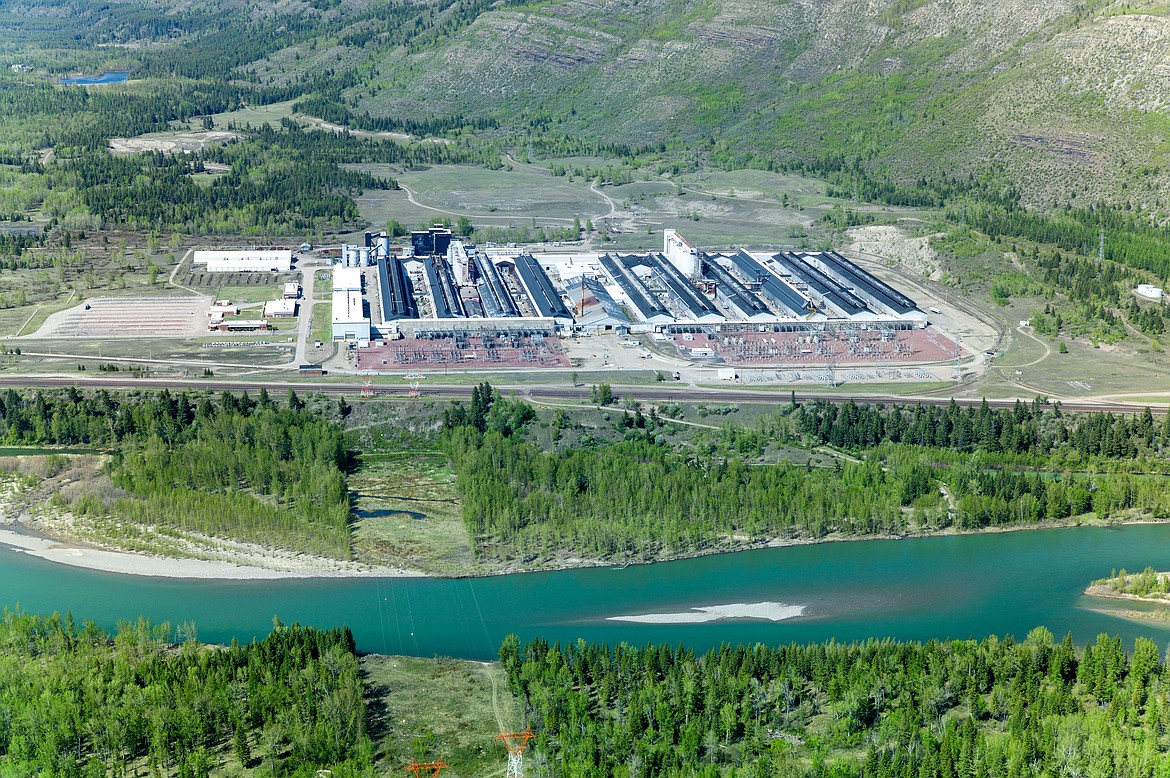
An aerial view of the CFAC plant in Columbia Falls before the plant was torn down. (Chris Peterson photo)
Chris Peterson is the editor of the Hungry Horse News. He covers Columbia Falls, the Canyon, Glacier National Park and the Bob Marshall Wilderness. All told, about 4 million acres of the best parts of the planet. He can be reached at [email protected] or 406-892-2151. | April 1, 2026 7:25 AM
A supplemental biological assessment on the Columbia Falls Aluminum Co. Superfund site cleanup found the effort is not expected to have any long-term impacts on several endangered species.
The assessment, prepared by Morrison Maierle, was required by the Environmental Protection Agency under the Unilateral Administrative Order for Remedial Design, which delves into the cleanup at the site that is expected to start next year.
The report looked at possible impacts to threatened bull trout, grizzly bears, Canada lynx, monarch butterfly, wolverine, suckley’s cuckoo bumblee and spalding’s catchfly and other species.
The report noted that it may affect some of those species, but wasn’t likely to adversely effect any of them. In the case of the catchfly, which is a plant, it would have no effect, as none are on the site and there is no suitable habitat.
The company previously has done some work in the Flathead River, removing old backwater ponds adjacent to the river. The assessment found that if anything, removal of that backwater would likely be beneficial to bull trout. It determined that it was not a bull trout spawning area and that the fish would likely be just moving through en route to typical spawning streams anyway.
“The Backwater Seep Area ... represents the zone with the highest potential for exposure to contaminants of concern, where groundwater containing cyanide enters the river. Surface water concentrations of cyanide (total and free), barium, and aluminum are elevated in this area but attenuate rapidly with distance downstream and during higher river flows (EPA 2025). Outside the Backwater Seep Area and immediately adjacent, cyanide concentrations remain below chronic National Recommended Water Quality Criteria Tables and DEQ-711 benchmarks ... Given that bull trout in the project area primarily use the Flathead River as a migration corridor and for seasonal holding rather than summer rearing, potential exposure to site-related constituents is spatially limited and unlikely,” the report noted.
As for grizzlies, wolverines and lynx, while there was grizzly habitat, they would only be displaced in the time it took to do the remediation.
The report also notes there will be testing every five years after cleanup.
“To address concerns that the landfills may contain wastes unknown at this time, the EPA will require a full suite of contaminants parameter analysis from the down-gradient monitoring every five years, prior to the EPA’s five-year review. Direct effects to adult and sub-adult bull trout are possible as bull trout use the action area reach as a migratory corridor.
“While the potential for soil contamination migration to surface water via stormwater runoff exists, the contribution, if present, appears to be minimal. The proposed action takes steps to reduce stormwater runoff mixing with contaminants, such as lining of Cedar Creek ditch. Furthermore, because the area is likely not used for spawning, the proposed project will have no direct effect on incubation, fry emergence, or juvenile rearing of bull trout in the Flathead River watershed. Following the completion of project construction activities, impacts to bull trout are not anticipated to occur,” the study found.
ARTICLES BY CHRIS PETERSON

Study: CFAC cleanup will have no lasting impact on Endangered Species
A supplemental biological assessment on the Columbia Falls Aluminum Co. Superfund site cleanup found the effort is not expected to have any long-term impacts on several endangered species.

Students get a taste of school life in 1895
The students stood in rows, hands over their hearts, “My country tis of thee, sweet land of liberty ...” they sang as teacher Melissa Barker pointed at the words on the poster board.
Glacier National Park starts spring plowing
March has been wet and saw some good snowfalls, particularly in the higher terrain, but it has since gotten into the 50s and near 60 in the past week, and low elevation snows, with no compaction, have been melting rapidly. As such, the Camas Road also has little to no snow. The overall snowpack in the Flathead River Basin , however, did reach 100% of median earlier in March, but has since slipped a few percentage points to 92% as of this writing.