
The problem with biological age
SETH SCHNEIDER / Health Columnist | Bonner County Daily Bee | UPDATED 1 month, 2 weeks AGO
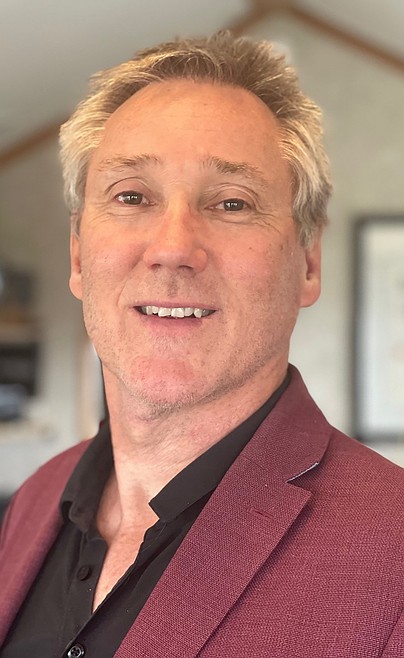
Seth Schneider
Ever hear someone say their biological age is twenty years younger than their actual age?
The idea is attractive. A single number that seems to cut through the confusion and tell you how well you are really aging. It suggests that health can be read, measured, and compared with a kind of precision that feels reassuring.
That confidence rests on something more fragile than it appears.
Biological age is not a direct reading of the body. It is an interpretation. Researchers study large groups of people and look for patterns in blood markers, proteins, and other signals that tend to shift over time. From those patterns, they build models. When your data is analyzed, it is placed along that curve.
If your biology resembles what was common for a certain age group, that age is assigned.
The number is a comparison to what has become typical within a population that is, in many ways, unwell. Being “younger” than average may simply mean being less affected than others in that same environment. The number suggests vitality, but it is anchored to a shifting and often lowered baseline.
Different models produce different answers because they rely on different assumptions. The newer approach of assigning ages to individual organs adds detail but does not resolve the underlying issue. The body does not age evenly, and recognizing that can be useful. But the body is not a collection of separate systems moving independently. It is an integrated whole. What affects one system influences others. The appearance of precision can obscure that reality.
There is a deeper problem. These measurements describe a position. They do not describe a life or show how it adapts, recovers, or maintains stability under stress. Nor do they capture resilience, reserve, or the capacity to regulate.
Those qualities are closer to what people actually experience as health. The ability to return to balance after challenge. The steadiness of energy across the day. The quiet reliability of sleep. The flexibility of the nervous system. These are not easily reduced to a number, which is why they are often pushed aside in favor of what can be measured quickly.
Even this does not reach far enough.
None of these tools capture lived experience. They do not measure whether a person is becoming more coherent or more divided. They do not see whether long-standing conflicts are being faced and resolved or avoided and carried forward. They do not register whether a life is moving toward clarity, responsibility, and alignment, or toward distraction and fragmentation.
These movements are not secondary. They are central.
It is possible for the body and the inner life to move in different directions. We can face physical decline and still become more ordered, more grounded, clearer about what matters. Relationships can deepen. Priorities can simplify. There can be less internal division, not more.
In those moments, something important becomes visible. The condition of the body does not determine the condition of the person’s mind and spirit.
Modern health culture has centered its attention on what can be tracked. It has become highly skilled at measuring the body and far less attentive to what those measurements leave out. The result is a subtle but significant misdirection. The focus settles on what is temporary and passing, while what endures is left largely unexamined.
The body will age. It will weaken. It will not remain intact. That is not a failure to be solved. It is a condition of being human.
What is formed within that process follows a different order. A person can become more integrated or more divided. More truthful or more avoidant. More aligned with what is real or more detached from it. These are not captured in any biological model, yet they carry greater weight in the shape of a life.
When health is defined primarily through the body, the center is misplaced. The measurable becomes the standard, and the enduring is treated as an afterthought. That inversion quietly shapes how people think, what they pursue, and what they neglect.
A reordering is needed. The body matters. Its care supports clarity, action, and presence. It is not the final measure. It cannot be.
Health cannot be reduced to how young the body appears.
The body will follow its course until the end.
What endures is something else.
Seth Schneider is a health columnist for the Bonner County Daily Bee.