
'It was surreal': How two Flathead Valley engineers launched into NASA history with the Artemis II Mission
HANNAH SHIELDS | Hagadone News Network | UPDATED 7 hours, 57 minutes AGO
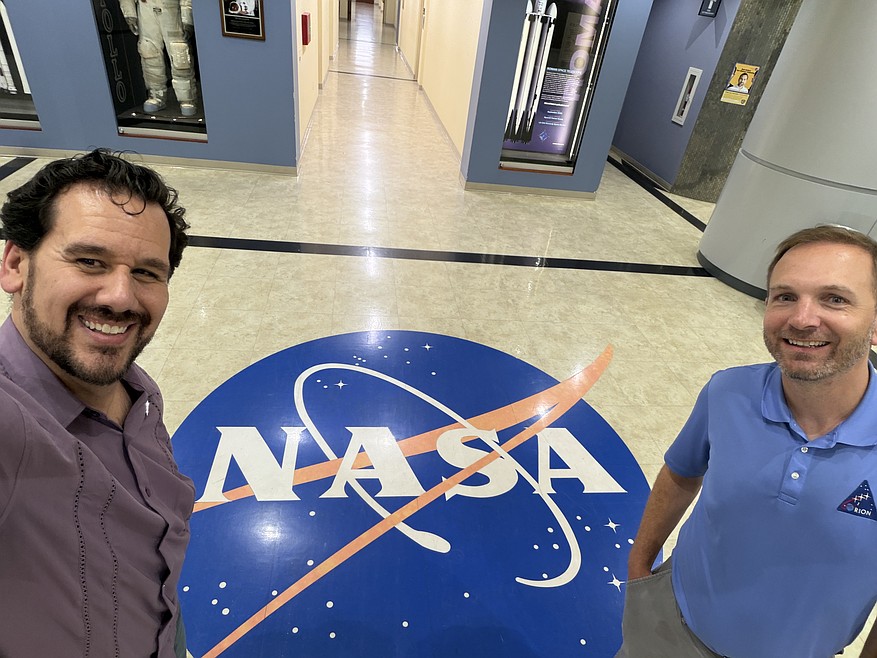
Aerospace engineers Daniel Baca and Jeremiah Hall pose for a photo at the Kennedy Space Center. (Courtesy of Daniel Baca)
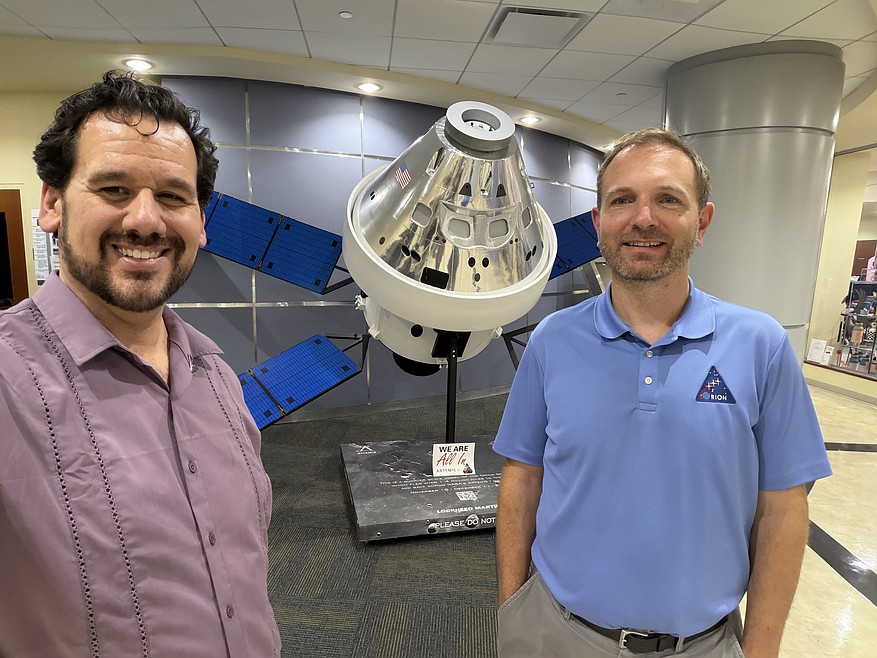
(Left to right) Aerospace engineers Daniel Baca and Jeremiah Hall pose in front of model scale of the Orion Spacecraft at the Kennedy Space Center. (Courtesy of Daniel Baca)
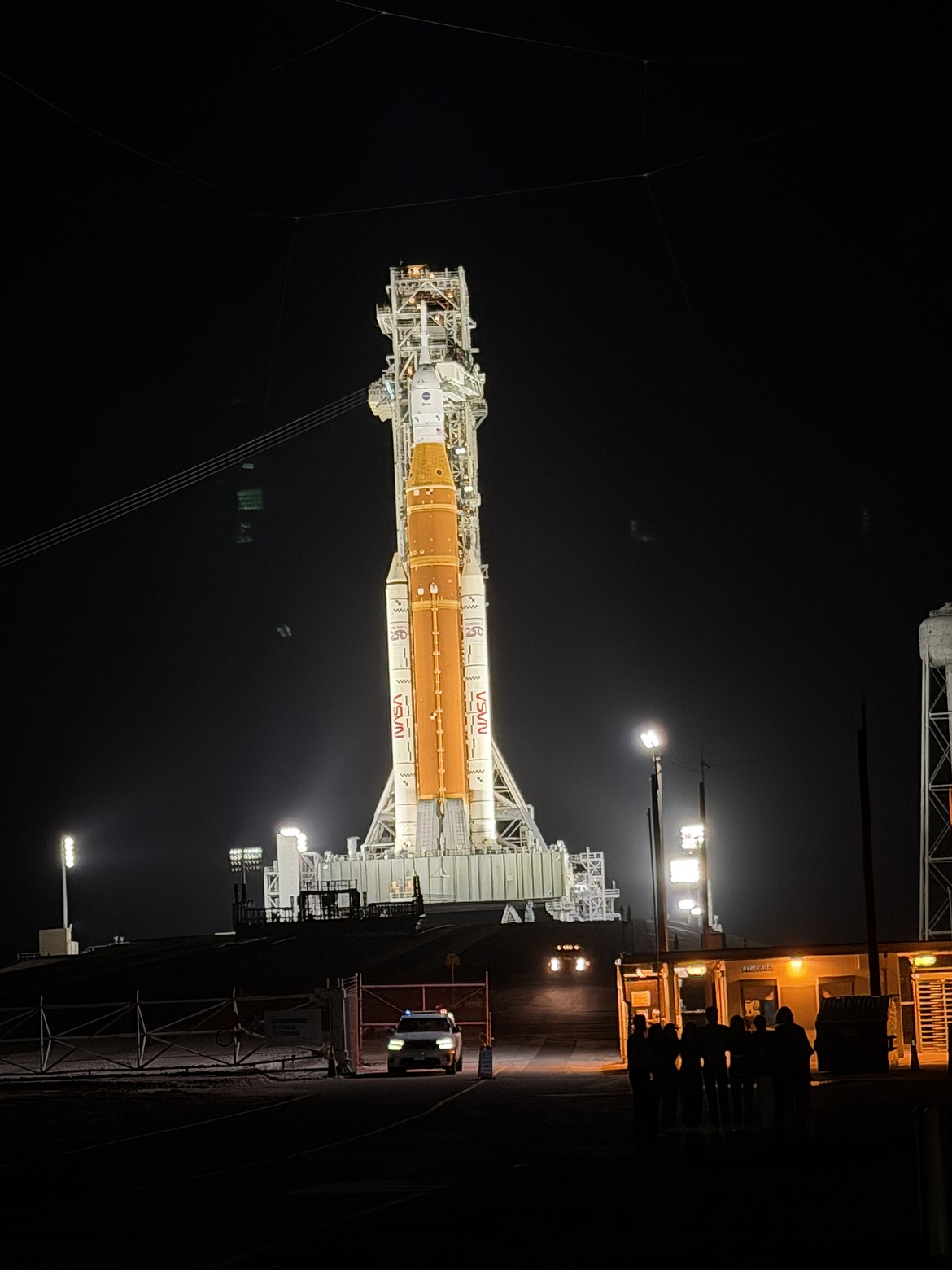
Crews ready Artemis II on the launch pad outside the Kennedy Space Center the night before launch. (Courtesy of Daniel Baca)
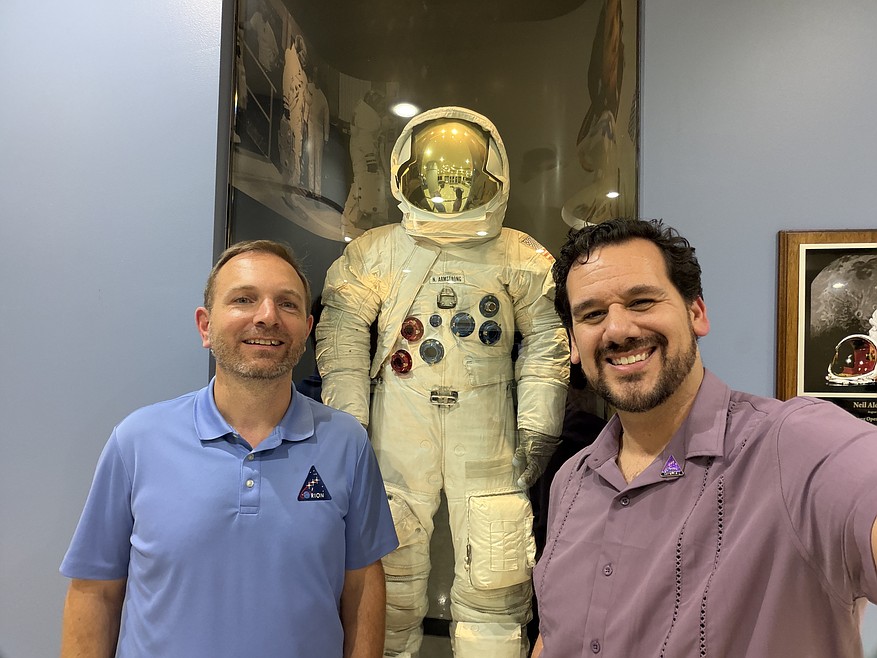
(Left to right) Aerospace engineers Jeremiah Hall and Daniel Baca pose in front of Neil Armstrong's astronaut suit at the Kennedy Space Center. (Courtesy of Daniel Baca)
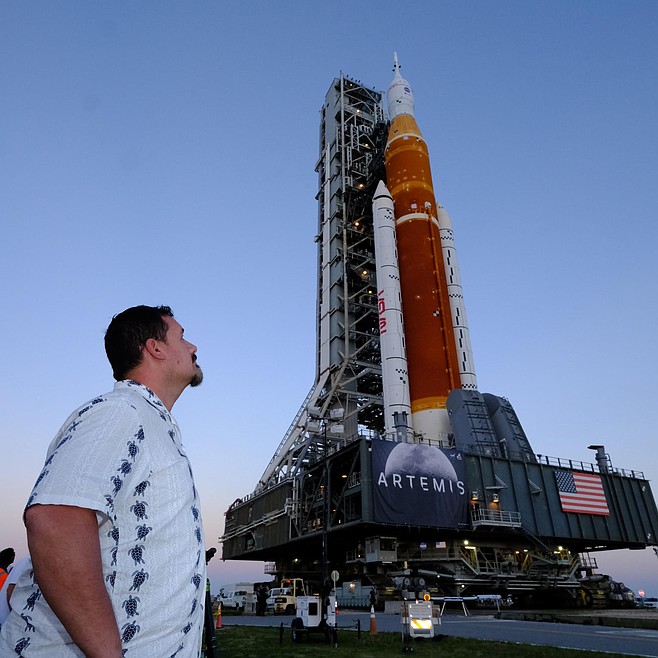
Aerospace engineer Daniel Baca gazes up at the Artemis II earlier this year. (Courtesy photo)
RURAL GOVERNMENT REPORTER, REPORT FOR AMERICA Hannah Shields covers rural government and accountability reporting for the Daily Inter Lake and Northwest Montana weekly papers as part of the national Report for America program. Her reporting focuses on transparency, public spending and the impact of local government decisions on small communities. Shields has covered issues ranging from school district finances to development disputes and rural infrastructure projects. She regularly uses public records and investigative reporting to examine institutions that affect local residents. Her work helps bring greater oversight and visibility to rural government across Northwest Montana. IMPACT: Hannah’s work strengthens transparency and accountability in rural communities that often lack consistent watchdog coverage. | April 5, 2026 12:00 AM
It was T-minus three minutes to launch, and Jeremiah Hall had just enough time to dash outside the Kennedy Space Center to see the rocket launch.
He and fellow aerospace engineers stood in the center’s parking lot in Cape Canaveral, Florida, about 8 miles from the launchpad, as Artemis II began its ascent on April 1. For the first time in 53 years, four astronauts were headed to the moon.
Large clouds of exhaust billowed from the 5.75-million-pound rocket. Twin solid rocket boosters ignited first, providing 75% of the thrust, before four RS-25 engines flamed to life, generating 8.8 million pounds of force.
After a second’s delay, Hall felt a low rumble build into a dull continuous thunder. As the rocket climbed higher, there came rapid popping noises, like a string of firecrackers going off. His chest hummed with vibrations.
Hall didn’t realize his hands were covering his face, as his eyes welled up with tears.
“I don’t normally get emotional,” Hall said. “But it was — it was pretty intense.”
Hall, 45, is one of two aerospace engineers from the Flathead Valley contracted by NASA, or the National Aeronautics Space Administration, to work on the Artemis project, a multi-part series to return humans to the moon’s surface and, eventually, Mars.
Astronauts on Artemis II will fly on a 10-day mission 5,000 miles past the moon before returning to Earth. Christina Koch, the first female astronaut to join a lunar mission, is a former Montana resident.
“I’m very proud to be sending the first woman to the moon,” said Systems Engineering Manager Daniel Baca, 47, who grew up in Kalispell. “And I absolutely want to bring her back.”
He and his wife, Melissa Bauer, witnessed the historic launch from the NASA Causeway Bridge, a structure that spans the Indian River Lagoon. When he looked over, his wife was in tears. He found himself lucky to share this moment with his partner.
“It was surreal,” Baca said.
LUCK IS how both Flathead Valley natives described their journey into aerospace engineering. Baca had lived in Kalispell since he was 5 years old, and Hall hails from Olney, attending junior high and high school in Whitefish.
As a kid, Baca paid more attention to skateboarding than his studies.
“I was a horrible student in high school,” Baca said. “I still surprise my teachers that I’m working with NASA.”
He always knew he wanted to do something in space. Baca and his older brother would venture out on starry nights, as his sibling recalled the Greek mythologies behind each constellation.
“I loved the night sky and learning about the planets and all the cool stuff up there,” he said.
A National Geographic poster of Astronaut Bruce McCandless, the first person to spacewalk untethered in 1984, hung in his childhood bedroom. Lockheed Martin, Baca’s future employer, designed the Manned Maneuvering Unit the astronaut wore on his back.
“It’s an iconic photo,” Baca said.
He took a more serious approach to his studies when he attended Flathead Valley Community College. It’s different when you have to pay your way through college, Baca said. He earned a scholarship to the University of Montana, where he graduated in 2003 with a bachelor’s degree in math and astrophysics, and a minor in computer science.
Three months before graduation, however, the space shuttle Columbia broke apart over Texas as it reentered the atmosphere, killing all seven astronauts on board.
“That shut down the whole space program,” Baca said. “No jobs.”
He worked at an Ace Hardware store in Missoula for two years, before he pursued a master’s degree at the University of Colorado Boulder. That’s where he met Hall.
“When I found out Daniel was from Montana, I was like ‘Oh, wow, that’s surprising,’” Hall said.
Hall’s love for flight technology was inspired by his grandfather, who showed him models of the airplanes he worked on as a mechanical engineer in World War II.
“The idea of flight, it was amazing to me,” Hall said. “It blew my mind.”
He aspired to follow his grandfather’s footsteps as a fighter pilot. But plans changed after he was rejected from the U.S. Air Force Academy.
Hall diverted to study mechanical engineering at Montana State University, where he found a love for fluid mechanics.
“When I finished, I knew that I still wanted to be in the aerospace industry,” Hall said.
That was how he ended up in Colorado, where he and Baca graduated with a master’s degree in aerospace engineering. Hall specialized in computational fluid dynamics, and Baca studied bioastronautics, the study and support of life in space.
THEY WERE both hired by Lockheed Martin in June 2007, a renowned aerospace and defense company based in Denver. Lockheed had just won a contract with NASA that year to develop the Orion Spacecraft.
“It was a huge contract,” Baca said. “And they’re like, ‘Oh wow, we’re gonna need a lot more people.’”
Baca was hired as a systems engineer, and Hall worked on computational fluid dynamics. Their first major assignment was Artemis I, an uncrewed test flight that launched in 2022.
“Coming off of that mission, it was a huge motivation,” Hall said. “We had just demonstrated this system that was gonna bring humans back to the moon.”
For Artemis II, Baca rose through the ranks to systems engineering manager, but his official title is European service module missioner architecture and integration manager, “which will never fit on a business card,” he joked.
He oversaw a variety of systems engineering tasks. This included mass management (making sure the rocket isn’t too heavy to lift off the ground) and designing an HVAC-like system to control temperature and volume pressure inside the cabin.
“So, literally me trying to keep people alive in space,” Baca said.
Hall’s primary role on the Artemis mission is purge, vent and drainage analysis. Purge is essentially pre-launch conditioning, he said. Dry nitrogen and air are pumped into the Orion Spacecraft to keep out humidity and contamination.
IN THE two days leading up to the launch, Hall worked in the console room to ensure all systems were running smoothly. Baca was in and out of meetings to plan for Artemis III and IV.
The aerospace engineers were cautiously optimistic. A sticker on the console even reads “Caution: Do not express optimism under any circumstance.”
“I’m excited, a little nervous,” Baca said in the hours leading up to the launch. “We have spent countless hours testing these vehicles.”
After Artemis II took off with four astronauts inside, he took a video of himself from the bridge, a trail of white smoke painted across a blue sky.
“This is it,” Baca said in the video. “That’s what we’ve been working toward, this whole time.”
For Hall, it was a dichotomous moment.
“We were sending four humans in that spacecraft that has been our lives’ work,” Hall said in a follow-up text. “It’s terrifying and thrilling at the same time.”
Report for America reporter Hannah Shields can be reached at (406) 758-4439 or [email protected]. If you value local journalism, pledge your support at dailyinterlake.com/support.
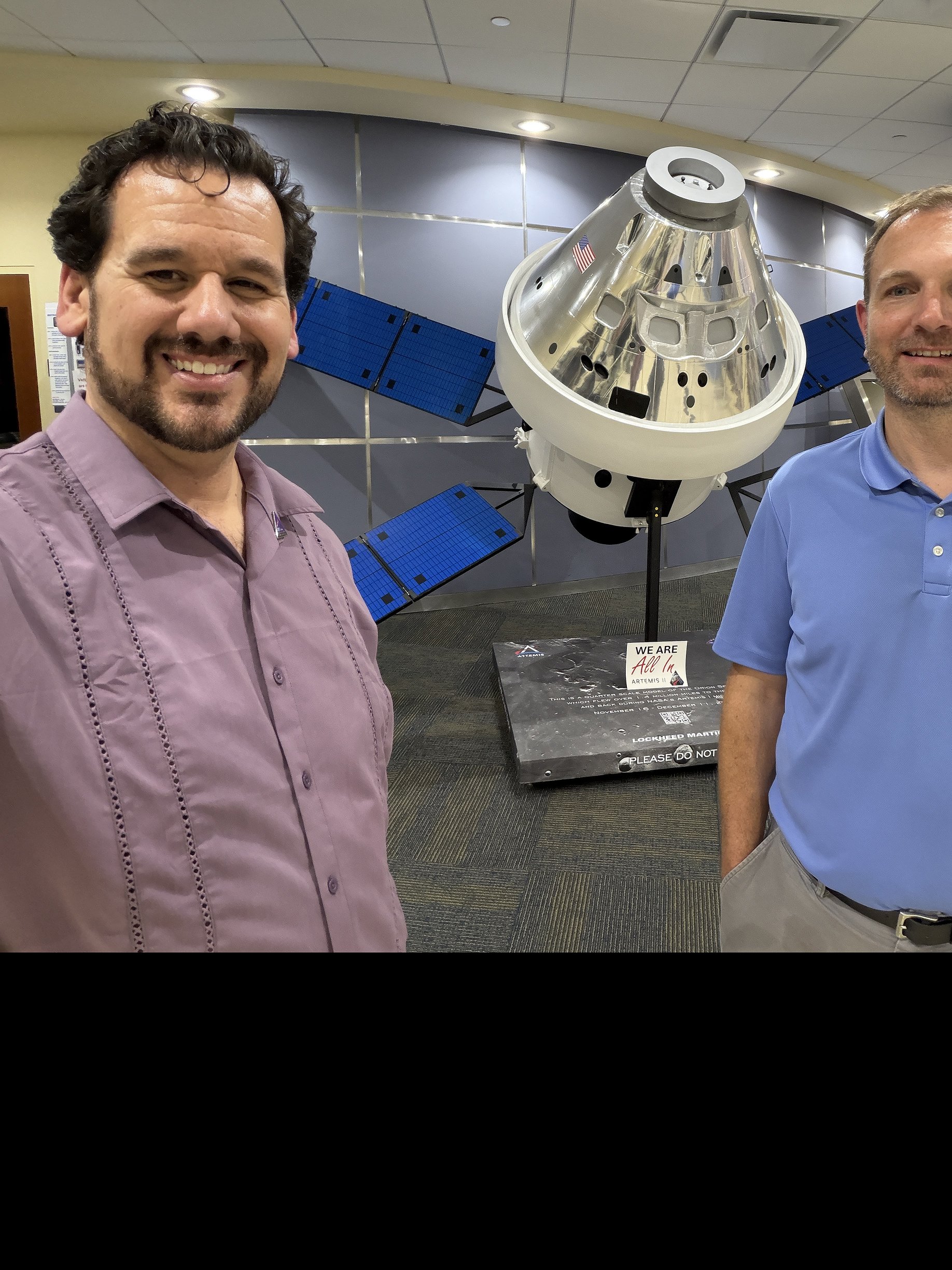 (Left to right) Aerospace engineers Daniel Baca and Jeremiah Hall pose in front of model scale of the Orion Spacecraft at the Kennedy Space Center. (Courtesy of Daniel Baca)
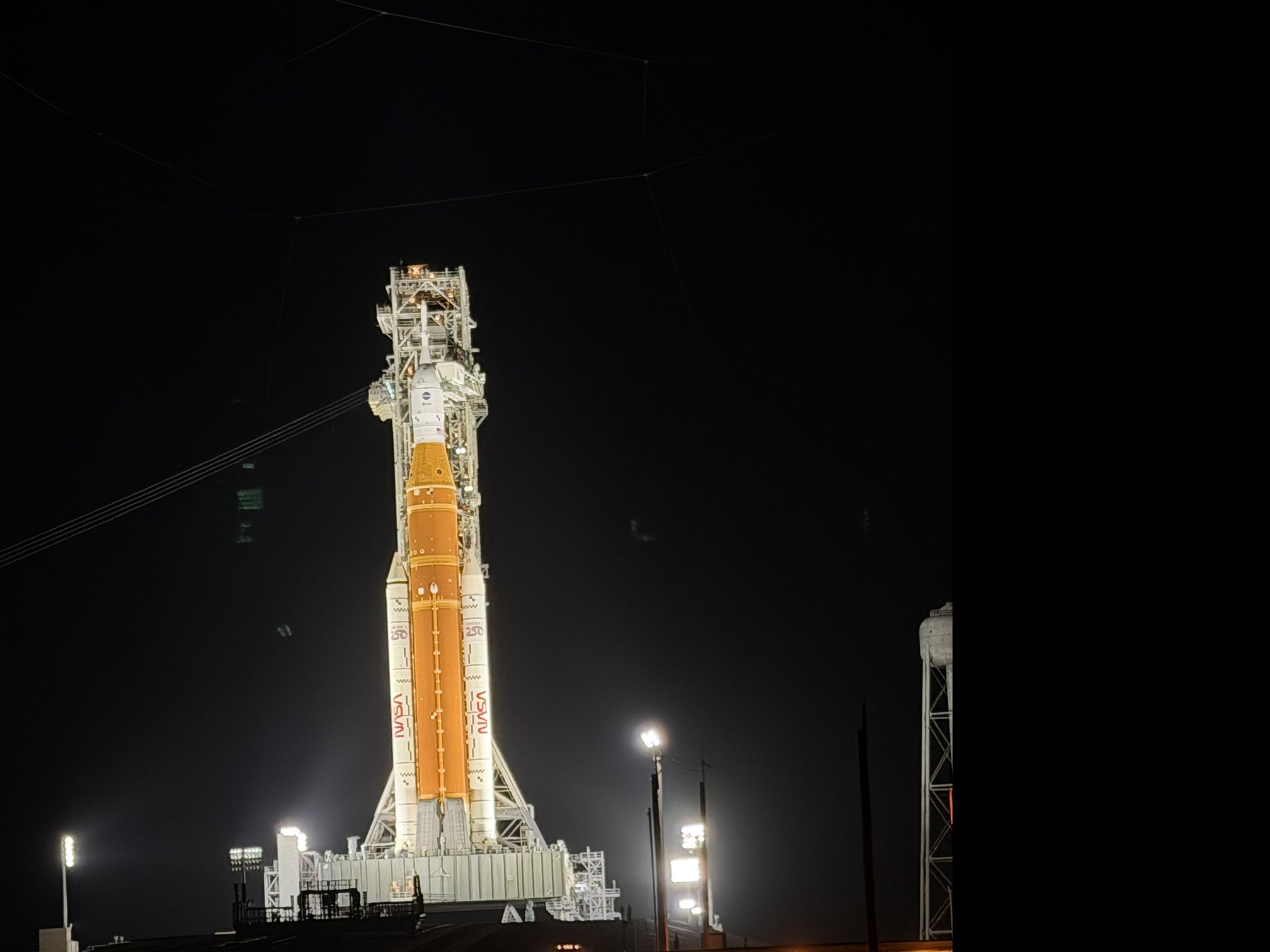 Crews ready Artemis II on the launch pad outside the Kennedy Space Center the night before launch. (Courtesy of Daniel Baca)
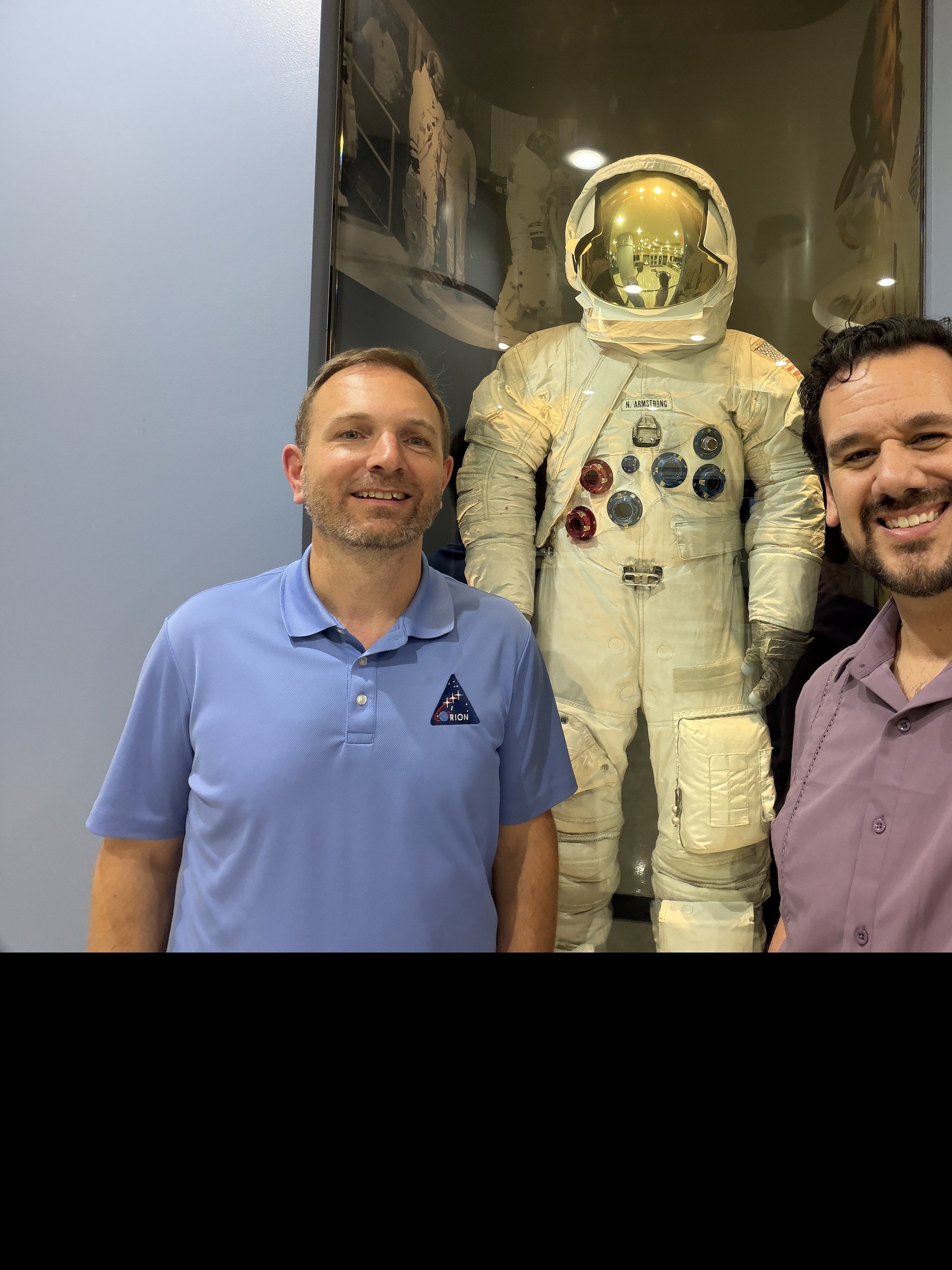 (Left to right) Aerospace engineers Jeremiah Hall and Daniel Baca pose in front of Neil Armstrong's astronaut suit at the Kennedy Space Center. (Courtesy of Daniel Baca)
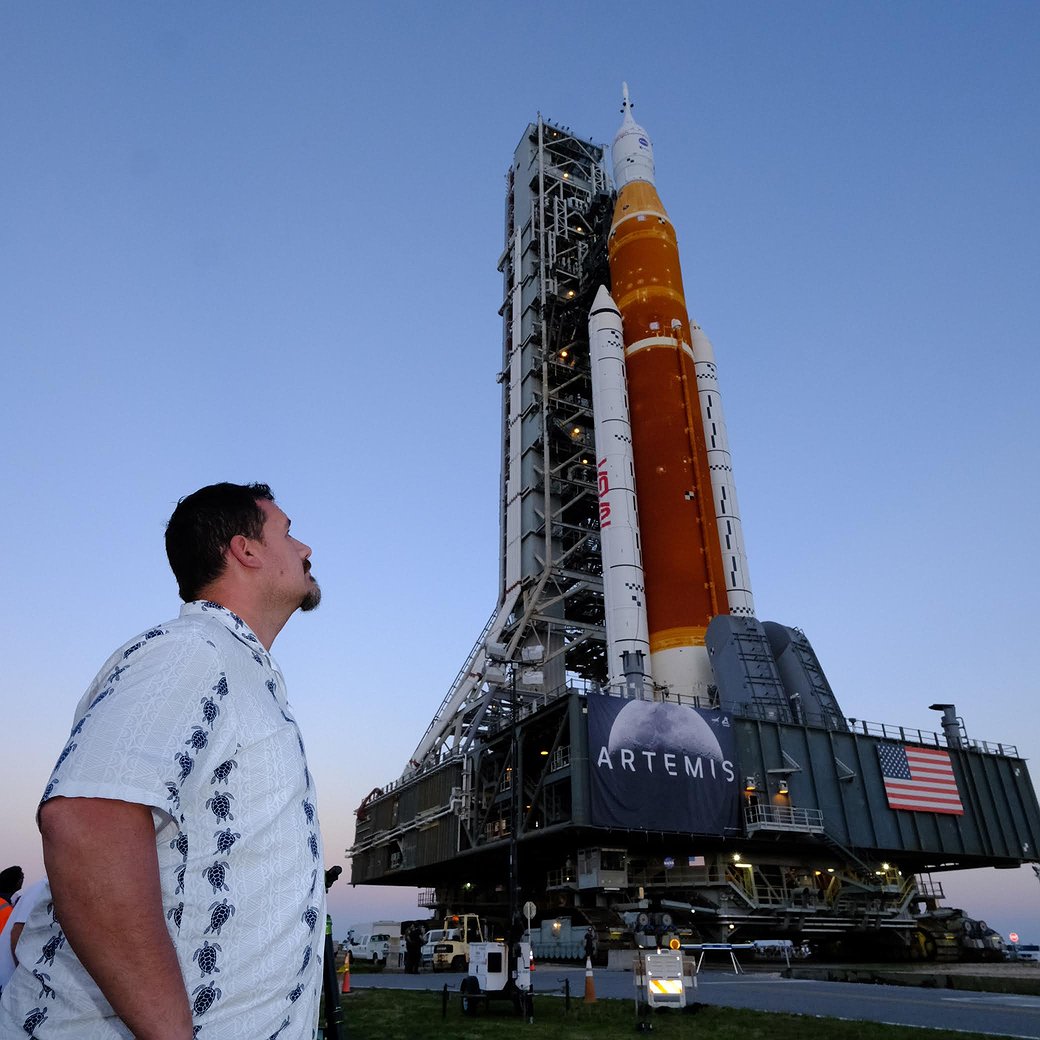 Aerospace engineer Daniel Baca gazes up at the Artemis II earlier this year. (Courtesy photo)
ARTICLES BY HANNAH SHIELDS
'It was surreal': How two Flathead Valley engineers launched into NASA history with the Artemis II Mission
It was T-minus three minutes to launch, and Jeremiah Hall had just enough time to dash outside the Kennedy Space Center to see the rocket launch.

Loss of library service came as a surprise to Marion School District officials
Marion School District officials are criticizing Flathead County Library trustees for failing to involve the public in their decision to end book delivery services to the community.
Mineral County commissioners grapple with unexpected $5K bill
Mineral County commissioners are upset with a $5,000 bill for surveying work they say was ordered without their knowledge or permission.