
Talking trash: A look at recycling services in the Flathead Valley
TAYLOR INMAN | Hagadone News Network | UPDATED 6 hours, 15 minutes AGO
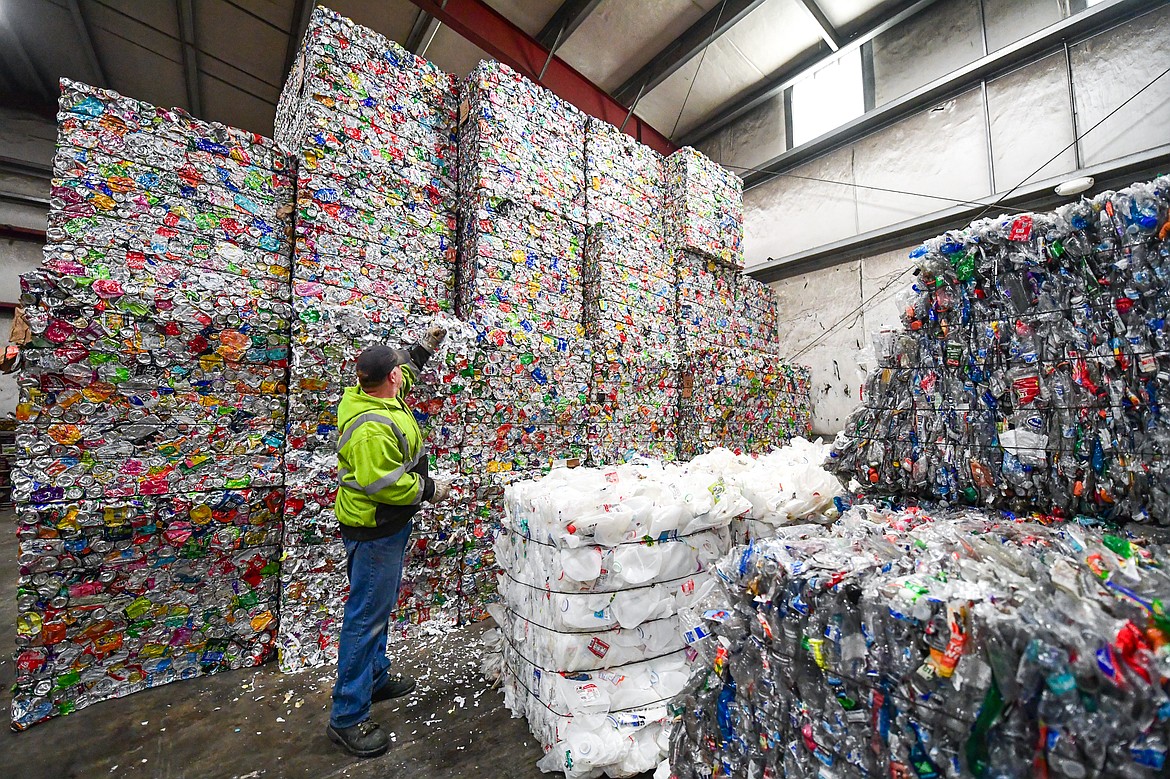
Mike Smith looks over bales of crushed aluminum cans at Valley Recycling in Kalispell on Tuesday, March 17. (Casey Kreider/Daily Inter Lake)
Casey Kreider
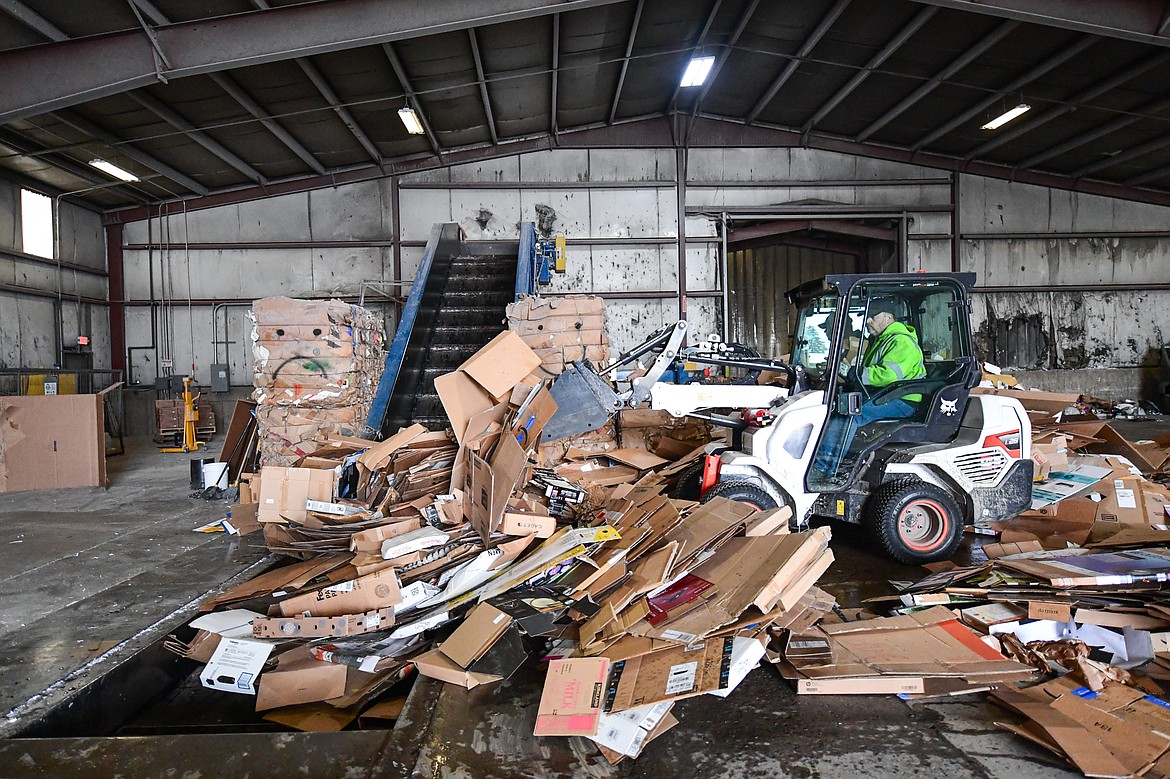
Mike Smith pushes a load of cardboard onto the conveyor belt of an industrial baler at Valley Recycling in Kalispell on Tuesday, March 17. (Casey Kreider/Daily Inter Lake)
Casey Kreider
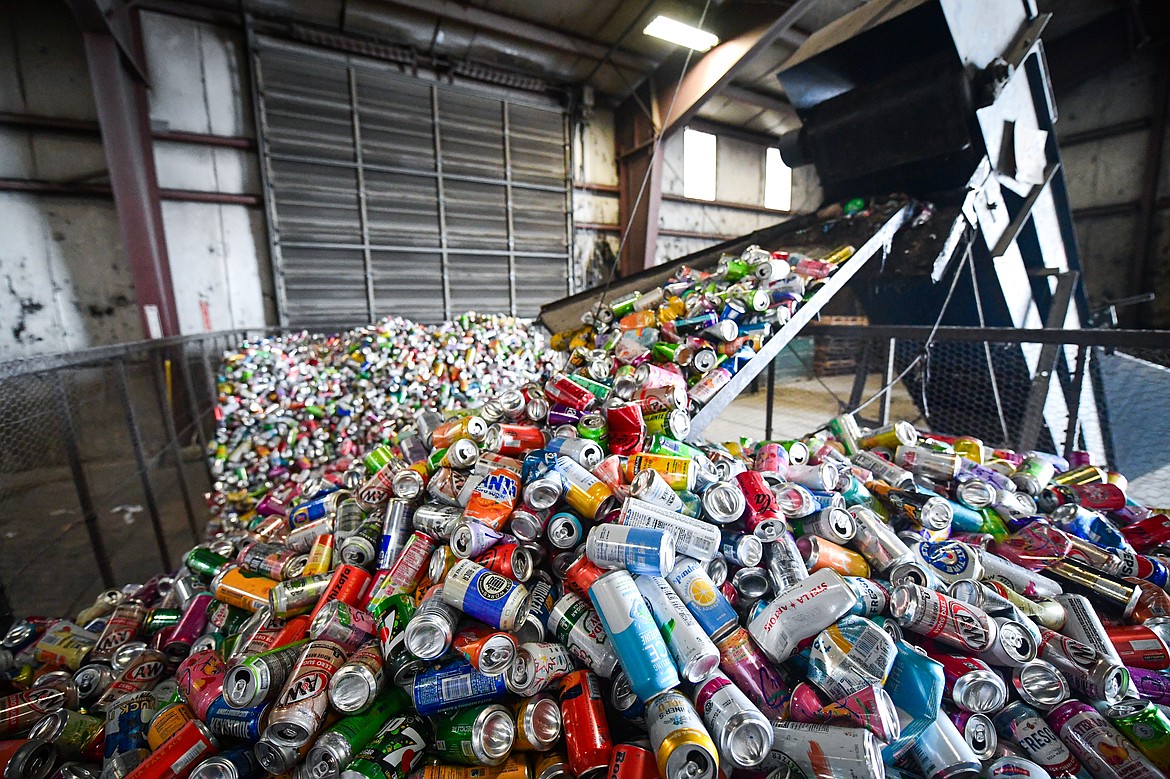
Aluminum cans in a storage bin before they are baled at Valley Recycling in Kalispell on Tuesday, March 17. (Casey Kreider/Daily Inter Lake)
Casey Kreider
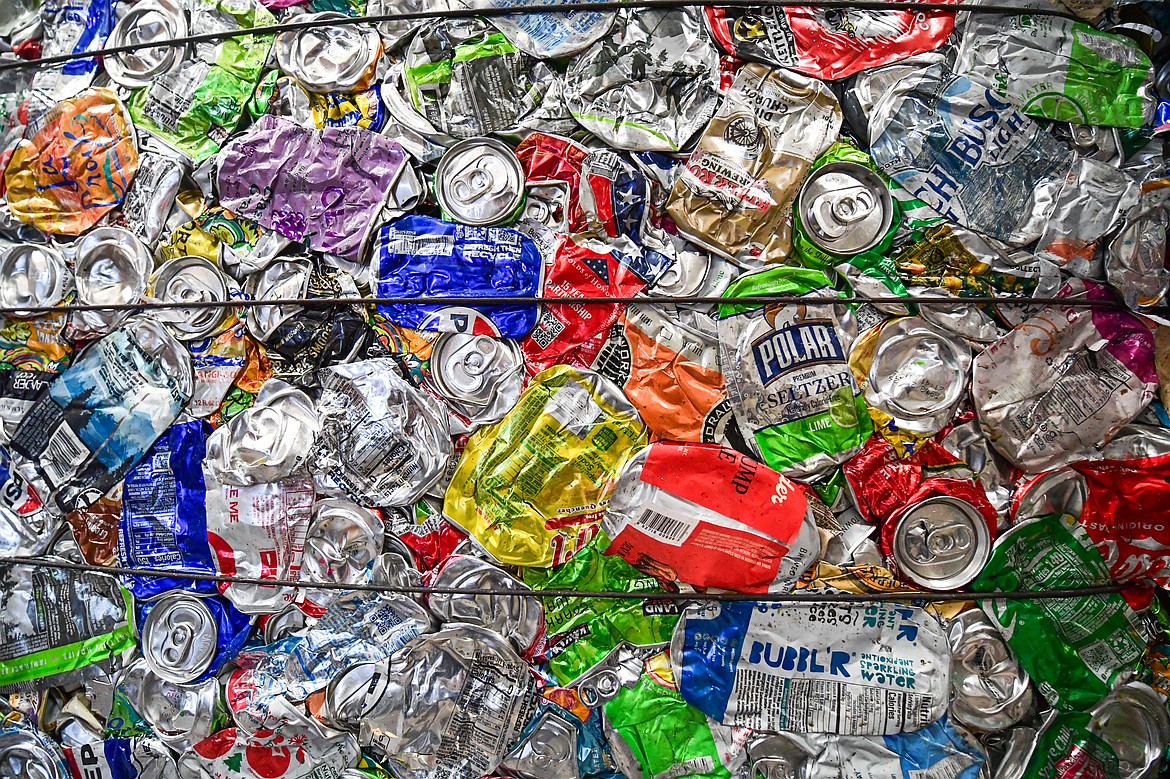
Aluminum cans are baled at Valley Recycling in Kalispell on Tuesday, March 17. (Casey Kreider/Daily Inter Lake)
Casey Kreider
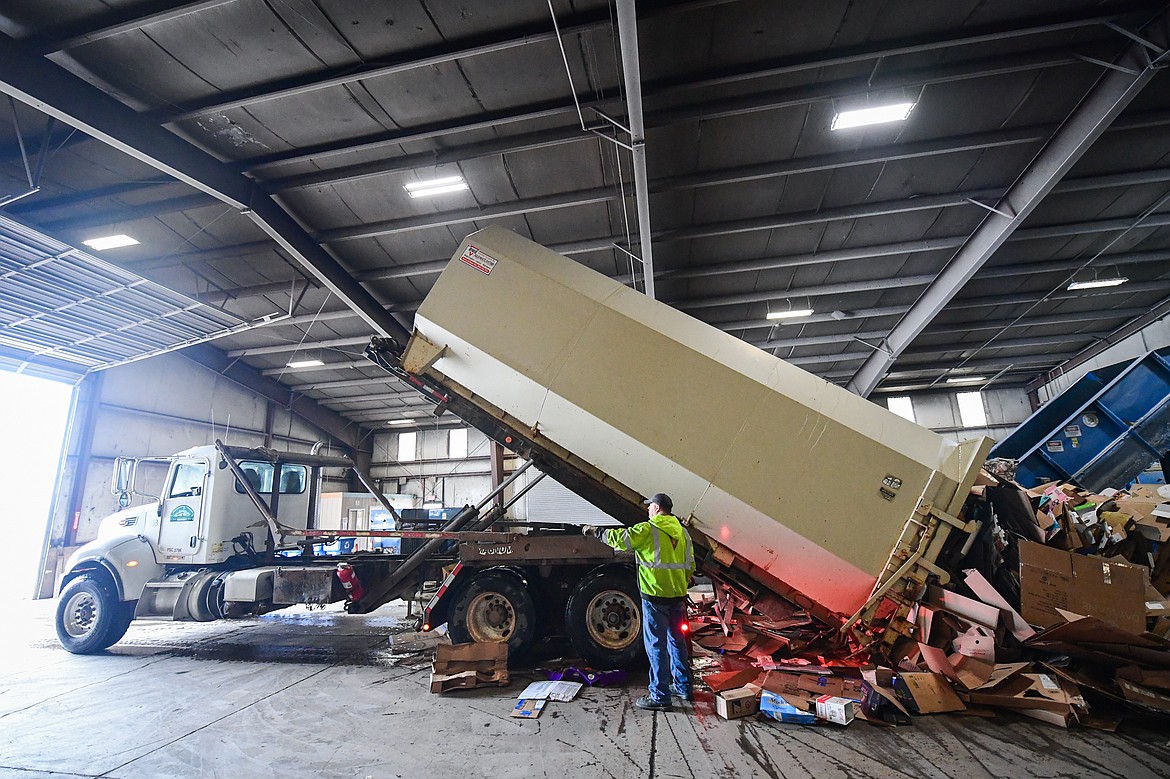
Mike Smith helps as a truckload of cardboard is offloaded to be baled at Valley Recycling in Kalispell on Tuesday, March 17. (Casey Kreider/Daily Inter Lake)
Casey Kreider
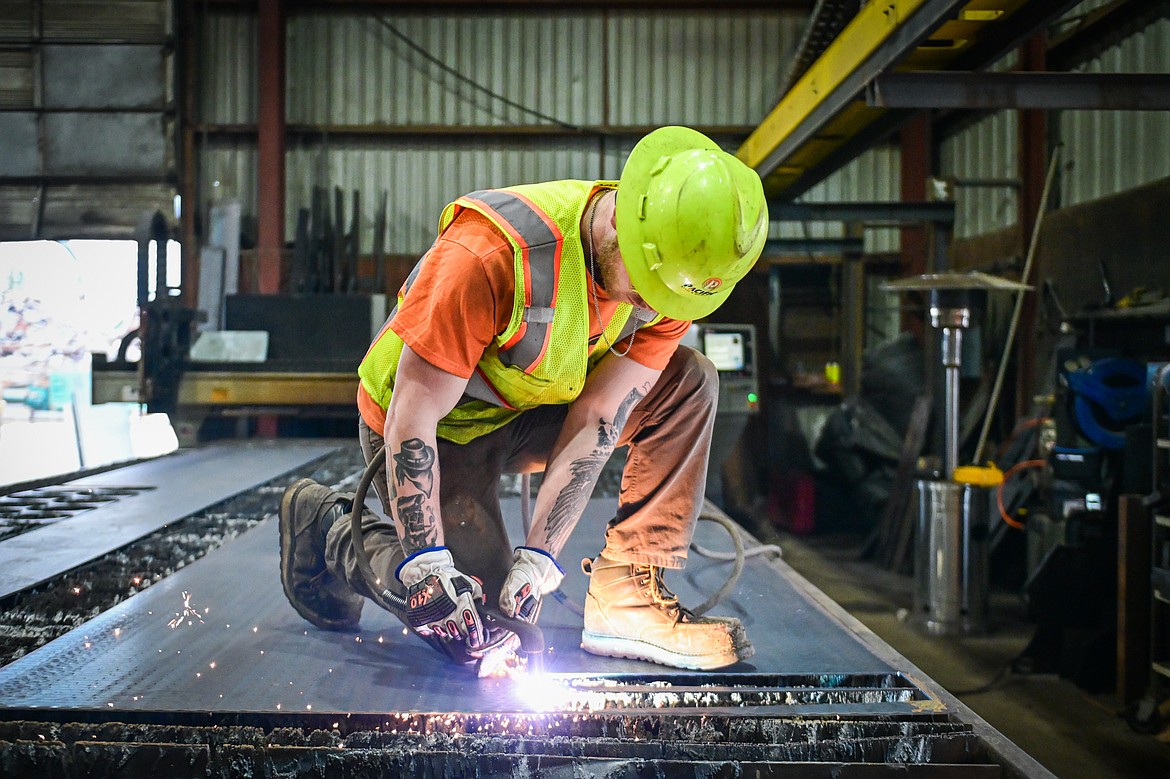
Zach Gray cuts a piece of steel with a plasma cutter at Pacific Steel & Recycling on Thursday, March 19. (Casey Kreider/Daily Inter Lake)
Casey Kreider
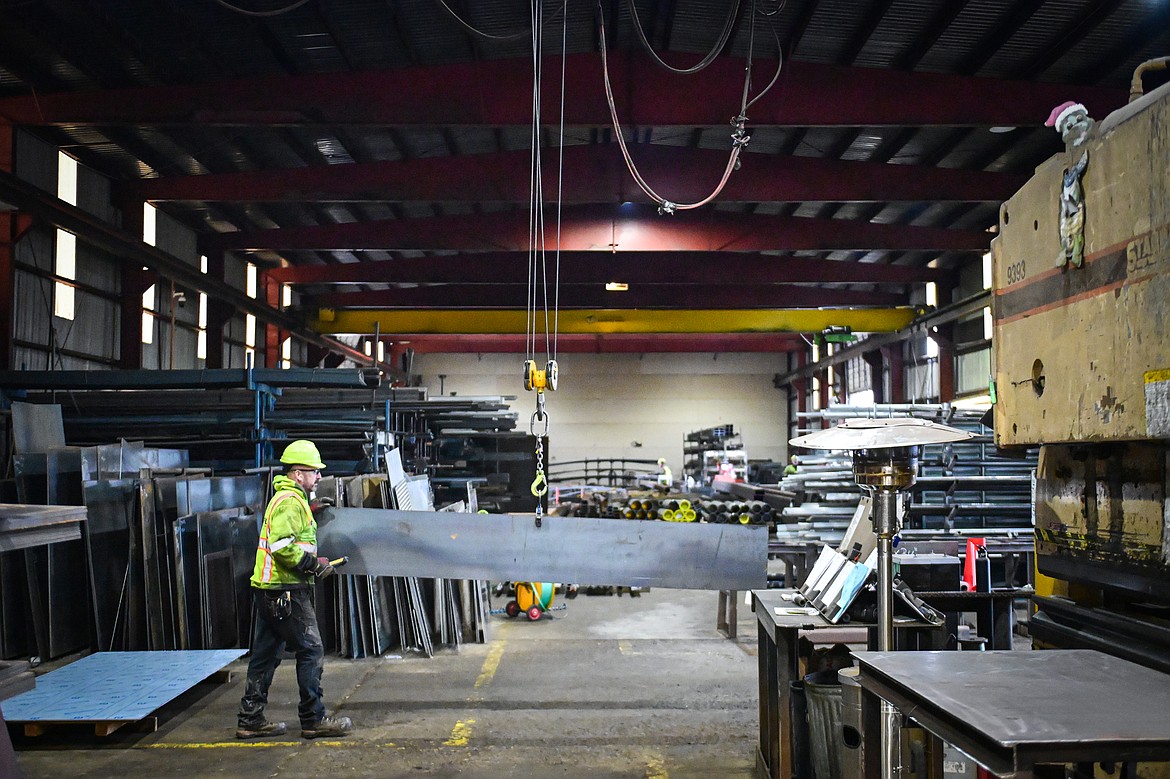
A steelworker moves a plate of steel at Pacific Steel & Recycling on Thursday, March 19. (Casey Kreider/Daily Inter Lake)
Casey Kreider
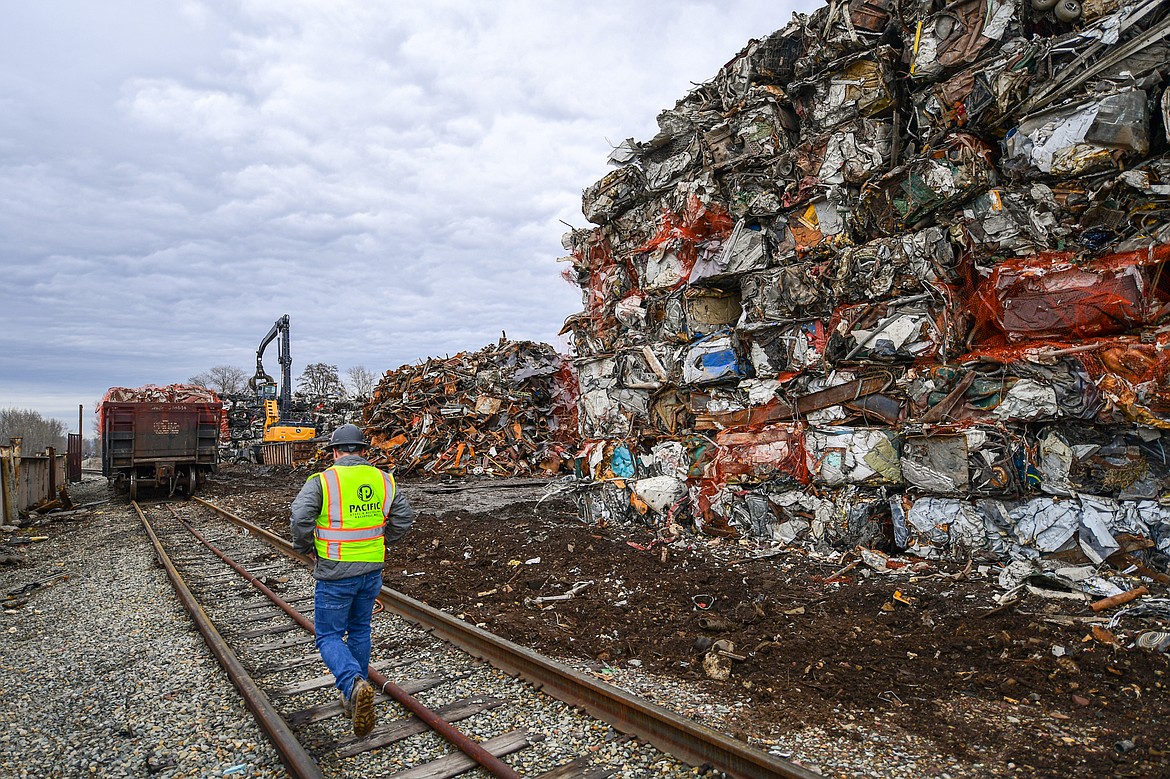
Branch manager Adam Eyman walks out to a railcar loaded with scrap material at Pacific Steel & Recycling on Thursday, March 19. (Casey Kreider/Daily Inter Lake)
Casey Kreider
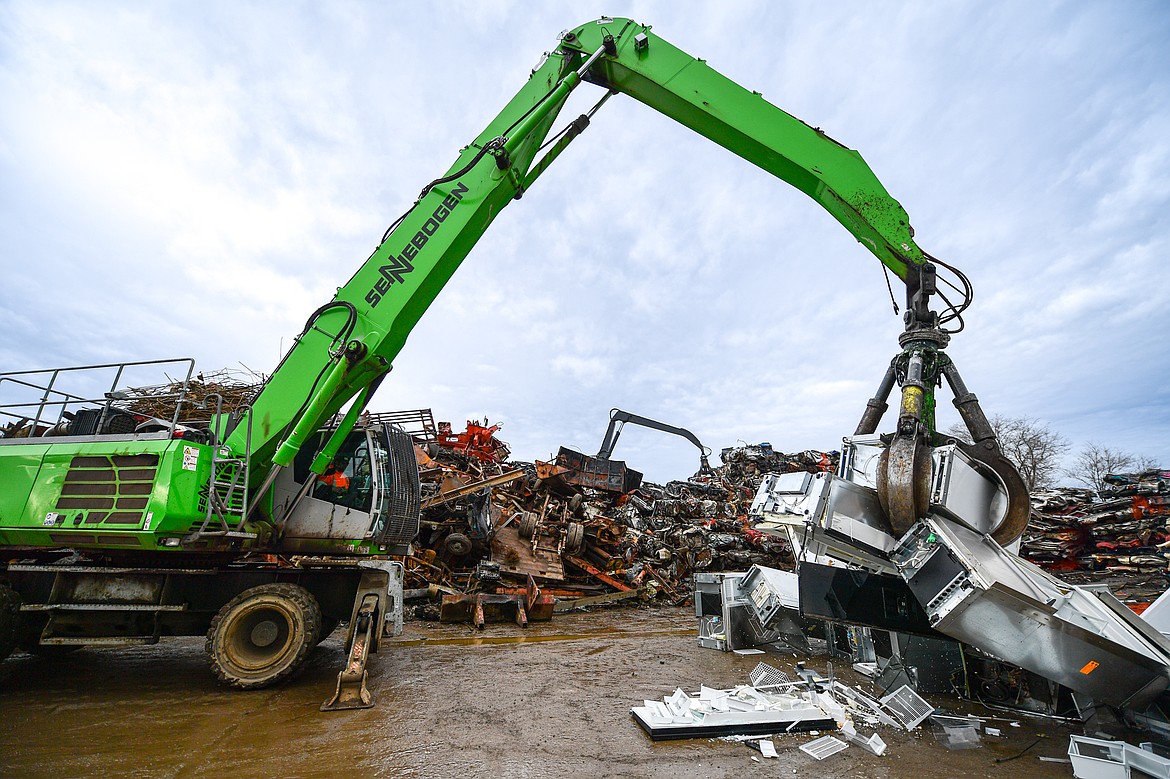
An employee in a scrap hauler moves a pile of refrigerators and kitchen appliances at Pacific Steel & Recycling on Thursday, March 19. (Casey Kreider/Daily Inter Lake)
Casey Kreider
REPORTER AND PODCAST HOST Taylor Inman covers Bigfork and the north shore of Flathead Lake for the Bigfork Eagle and the Daily Inter Lake. Her reporting focuses on local government, community issues and the people who shape life in Northwest Montana. Inman began her journalism career at Murray State University’s public radio newsroom and later reported for WKMS, where her work aired on National Public Radio. In addition to reporting, she hosts and contributes to Daily Inter Lake podcasts including News Now. Her work connects listeners and readers with the stories shaping communities across the Flathead Valley. IMPACT: Taylor’s work expands local journalism through both traditional reporting and digital storytelling. | April 5, 2026 12:05 AM
Despite having fewer opportunities than larger population areas, recycling businesses in the Flathead Valley say there are still plenty of ways to turn trash into treasure.
In general, Montana has barriers to recycling that most other states do not have, according to the Montana Department of Environmental Quality. Low population density and a large geographical area mean that it’s very difficult to find markets for materials that are both economically and environmentally sustainable.
Montanans recycle 19% of the waste generated here, according to the state environmental agency. The overall U.S. recycling rate is about 32%, according to the U.S. Environmental Protection Agency.
Dealing with recyclables can be messy, tedious and often hazardous, but the many businesses that handle such products in the Flathead Valley contend that there is a market to be met. And because the end product means reduced waste and impact on the planet, there is a rewarding aspect to the work, too.
Valley Recycling, owned by Evergreen Disposal, has been a recycling service in Flathead County for nearly 30 years. Though it operates as a drop-off facility, it serves some commercial customers with bins and also collects recycling from the Flathead County landfill and green box sites regularly.
The recycling service accepts cardboard, newspapers, magazines, aluminum cans, No. 1 and No. 2 plastics and shredded paper.
But there’s also the occasional wild card.
“I found two guns in a load of aluminum that came down here — turned one of them was stolen,” said Mike Smith, lead operator for Valley Recycling.
Barring incidents where law enforcement has to get involved, Smith is passionate about the recycling business. He shared a handout given to students who visit on field trips, which goes over the basics: reduce, reuse and recycle.
It also explains what the recyclables get turned into, like cardboard gets turned into shipping boxes, sheetrock, biodegradable planters, sheet mulching, cat scratching posts and dog toys. Mixed paper is used for magazines, cardboard and tissues. While aluminum cans are reused in car parts, window frames and electronics.
No. 1 plastics are used in new bottles, textiles, fiberfill (in soft furniture), construction materials and other uses like pallet straps and 3D printing filament. And No. 2 plastics are used again in milk jugs, grocery bags, shampoo bottles and pipe systems.
Smith said the materials are brokered by Georgia Pacific, one of the largest manufacturers in the U.S., producing products from tissue to plywood. With facilities all over the country, Smith said if the company can't take it directly, then it will find another place to take the materials.
“All of our cardboard goes into a facility in Oregon. Paper goes into Utah, Washington, and Idaho. Shredded paper goes to Oregon and the one that we send to is just outside of Los Angeles. Oddly enough, all of our aluminum goes to a facility in Kentucky,” he said.
There’s only Smith and one other employee at the warehouse facility, but the wider operation also involves employees of Evergreen Disposal. Because Valley Recycling runs as a drop-off only center, recyclables are sorted as loads come into the facility.
Sometimes it’s tedious to sort through what can’t be recycled. One of the most time-consuming tasks is picking trash out of the recyclable materials.
“We've already got enough of a mouse problem. We don't need to attract every mouse in the valley. So, we ask that they rinse plastics out,” Smith said. “Our big issue right now is we're spending a lot of time pulling contamination out. So, making sure you're putting the correct material into whatever bin you happen to be using. If it's cardboard, make sure it's cardboard.”
Recycling guidelines are listed online at valleyrecycling.com, but there are occasions where it may be easy to be misinformed about what is and isn’t recyclable. Smith said pizza boxes are a typical culprit in the cardboard bin.
“I tell people to tear the bottom off, if it’s got that grease stain on the bottom of it, throw that away. Recycle the top, unless there's cheese stuck to it, in which case you can't recycle it either,” Smith said.
Many things have changed in the 20 years Smith has been with Valley Recycling. At one time, the company accepted metals and glass but processing them posed hazards.
Following an announcement from China, which told the World Trade Organization that it would stop accepting 24 different types of recyclable materials, for a brief period in 2018, the company stopped accepting plastics. The announcement upended the market and destroyed the status quo up and down the pipeline, including the Flathead Valley, according to a Daily Inter Lake article from 2018.
For Valley Recycling, this was resolved by sorting cleaner products and finding specialized mills to accept them in the U.S.
THE ENVIRONMENT is a bit different at Pacific Steel and Recycling in Kalispell, which purchases a variety of scrap metal, including vehicles, catalytic converters, aluminum, brass, copper, steel and miscellaneous scrap — both ferrous and non-ferrous.
Branch Manager Adam Eyman walked around a busy yard as scrap haulers move around piles of metal, both large and small.
“What he's doing now is he's spreading out some of this stuff that’s prepared to make sure there's no shocks from vehicles, already closed cylinders or containers. If one of those gets in the mill, it’s a rejection on a rail car and a hefty fine because it can be explosive,” Eyman said.
At one point, scrap haulers that are busy sorting refrigerators left by Fred’s Appliances fling them through the air effortlessly. Standing far back with hard hats on, it’s another reminder that the work has to prioritize safety.
Eyman said environmental regulations have gotten stricter over the years, which can sometimes be a challenge. But it’s worth it not to cause any contamination.
“When these refrigerators come in here, Fred's Appliances have already drained all the Freon out of them,” Eyman said. “If they do have Freon in them, we refer people to the landfill. The landfill has a program out there where they can they e-vac all the Freon to deal with any of that stuff.”
From there, the metal gets turned into square bales and put into rail cars, where it is sent away to mills in Billings and Mayfield, Idaho, near Boise.
Eyman said the scrapyard is a little more crowded than usual, following recent equipment issues and a shortage of rail cars. The baler was down, and even with the company owning many of the rail cars themselves, it caused operations to slow.
It’s almost the start of the busy season, he noted.
“We're going to be loading 30 to 40 rail cars a month for the next I'd say three, four months, probably,” he said.
Pacific is open for anyone to stop by and drop off recycling, but the company serves a lot of commercial customers in Northwest Montana, so there is a little more hustle and bustle.
A crew also travels up to Canada for one customer about three times a week, Eyman noted, because Pacific is the closest place that accepts scrap metal. Their crews also pick up scrap from the Flathead County Landfill about once or twice a year.
In the steel facility, Pacific employees are hard at work shaping, cutting and preparing pieces of steel to sell. At one end of the building, a worker is cutting shapes out of metal with a CNC plasma table. Oftentimes, the company will sell recycled steel that started as scrap metal in the yard.
In Kalispell, Pacific employs 31 people. Assistant Branch Manager Dale Gambrel said he really enjoys working in the recycling industry, as someone who has been with the company at various locations for the past six years.
As an employee-owned company, he said Pacific treats people right.
“Employee ownership is huge. It gives everybody more reason to care about what they're doing, because they all they're all invested, right?” Gambrel said. “And then you know, this stuff is going to be turned into something else, instead of going into a landfill somewhere, and it's repurposed. Everybody should be doing more of recycling.”
Earth Day, April 22, is Pacific’s busiest day of the year. The company that day runs a premium on aluminum can pricing, as well as some other metals. People will save up cans just for the Earth Day special.
“We'll raise our prices up 10 to 15 cents a pound on our cans. Some people bring in truckloads or a horse trailer full of cans, and a lot of people wait until Earth Day to come recycle,” Eyman said. “And it’s busy from the time we open until we close. Sometimes we're here a couple hours after we close.”
Pacific Steel and Recycling has 46 locations across the Pacific Northwest, with 1,100 employees.
Recycling is an important economic driver, as it helps create jobs and tax revenues, according to the U.S. Environmental Protection Agency.
The agency’s 2020 Recycling Economic Information report found that recycling and reuse activities in the United States accounted for 757,000 jobs, $36.6 billion in wages and $6.7 billion in tax revenues over the course of one year.
This equates to 1.57 jobs, $76,000 in wages and $14,101 in tax revenues for every 1,000 tons of material recycled, the report continued.
But not every recycling operation has to be large to make an impact.
AT BLACK Bear Recycling, Zac Homer saw an opportunity to create a business and serve members of his community by starting a curbside pick-up service. Along with Black Bear, Green Montana Recycling also offers a curbside service in the Flathead Valley.
At Black Bear, large bins for single-stream recycling are offered, allowing customers to put all recyclables together — no sorting required.
“We saw an opportunity to kind of push the valley a little forward and modernize it a little bit to where it's closer to like a curbside recycling program you would see in a larger city,” Homer said. “Make it easy for the customers to just throw everything in the bin. It goes out to the curb and we come by and pick it up.”
Perhaps the aspect of his business that most sets him apart is that he is seemingly the only recycling service in the area that accepts glass.
Operating out of a lot in South Kalispell, Homer wanted to offer glass recycling to his customers, as the distance of Flathead Valley from larger metro areas makes it cost prohibitive to send glass somewhere else. So, he breaks it down himself.
“Glass is difficult for a few reasons. It can't be bailed like most recyclables, it shatters and it's very heavy. So, it's cost-prohibitive to try to send it to the large recyclers out of state,” he said.
It’s a one-man operation right now, and while sorting through single-stream recyclables can be time consuming, he wanted to make it easy and accessible for his customers.
“The biggest challenge with any type of recycling is ensuring that the material is clean and that the right material actually makes it into the bin. So a lot of that is educating our customers,” he said.
Originally from Missoula, Homer recently moved back home to Montana after a stint in Seattle. He stepped off the corporate ladder and looked to start a business here that would fill a need and give back to the community.
“It uses much less energy to create new material from recycled material than just using virgin materials. You know, with AI and different industries kind of exploding, they're very energy intensive. Using recycled material is a way that we can reduce our needs in terms of energy,” Homer said.
The nonprofit Recycle Montana has a list of places around the state that accept recyclables at recyclemontana.org.
Reporter Taylor Inman can be reached at 406-758-4440 or [email protected]. If you value local journalism, pledge your support at dailyinterlake.com/support.
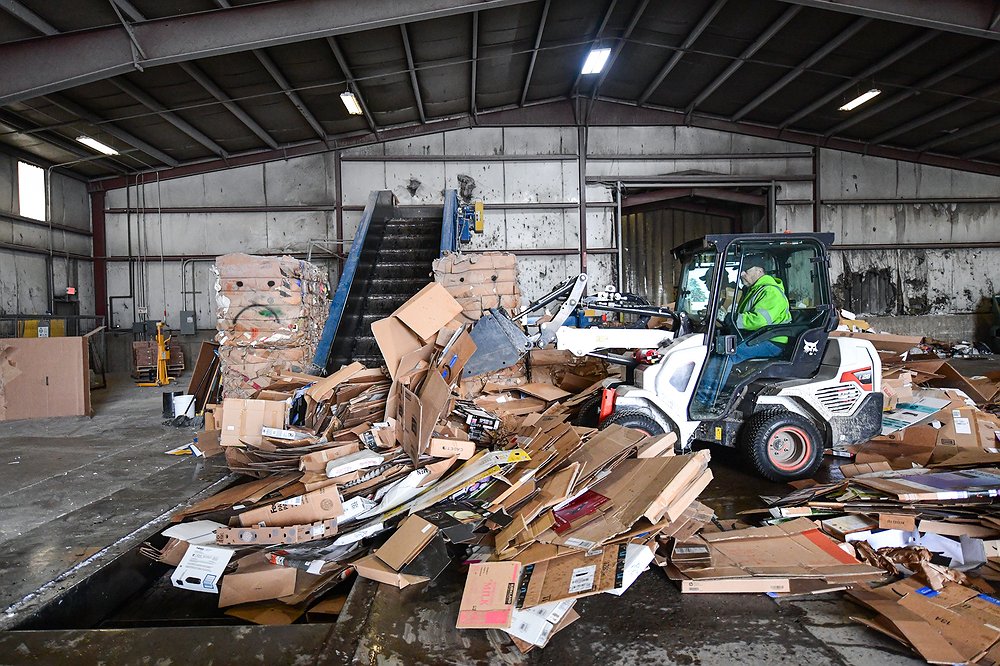 Mike Smith pushes a load of cardboard onto the conveyor belt of an industrial baler at Valley Recycling in Kalispell on Tuesday, March 17. (Casey Kreider/Daily Inter Lake)
Casey Kreider
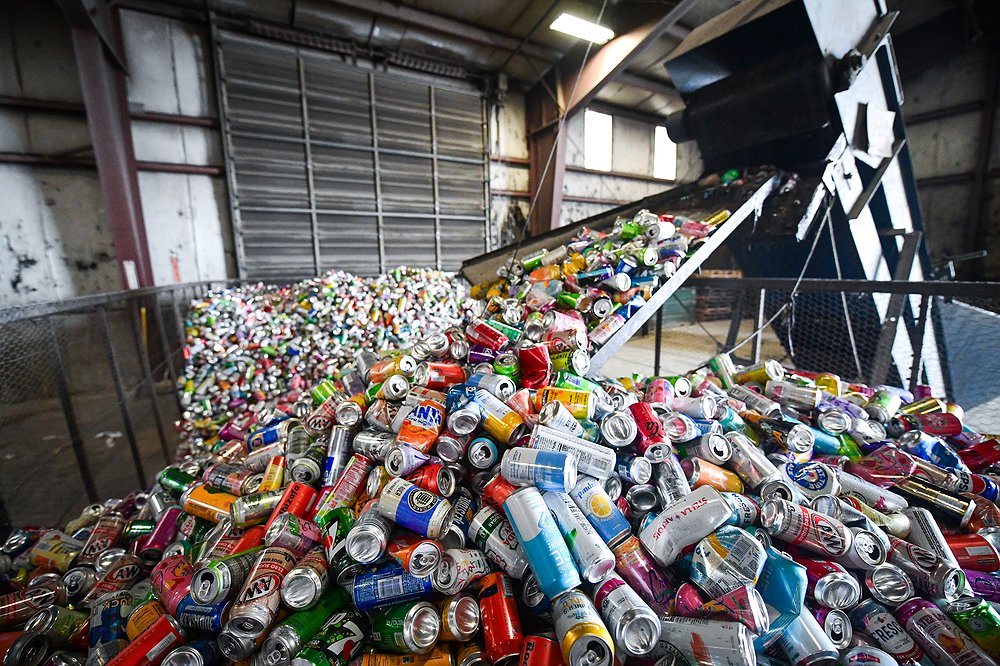 Aluminum cans in a storage bin before they are baled at Valley Recycling in Kalispell on Tuesday, March 17. (Casey Kreider/Daily Inter Lake)
Casey Kreider
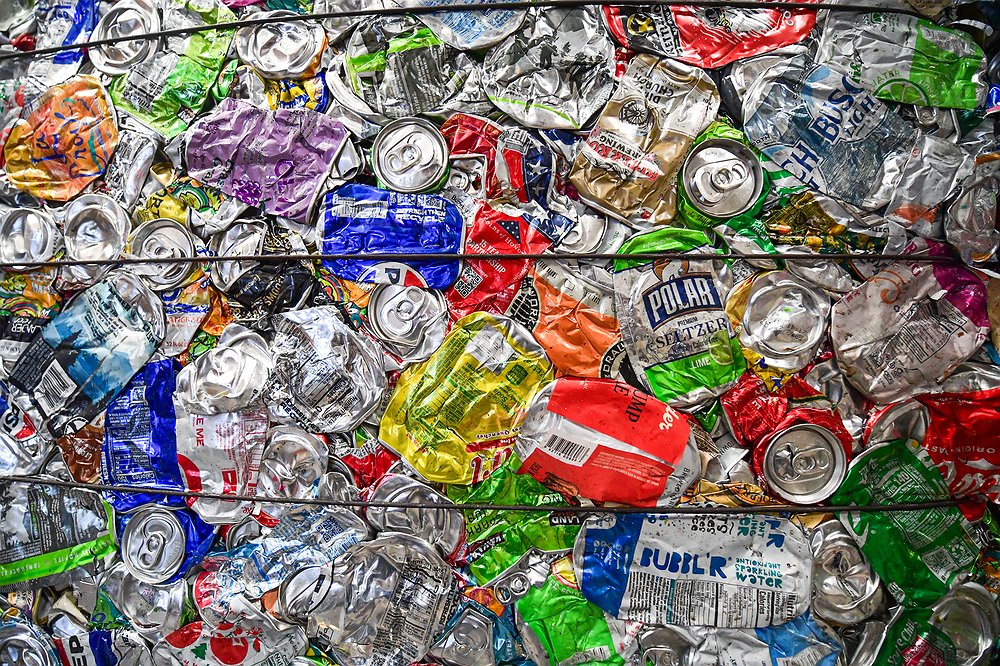 Aluminum cans are baled at Valley Recycling in Kalispell on Tuesday, March 17. (Casey Kreider/Daily Inter Lake)
Casey Kreider
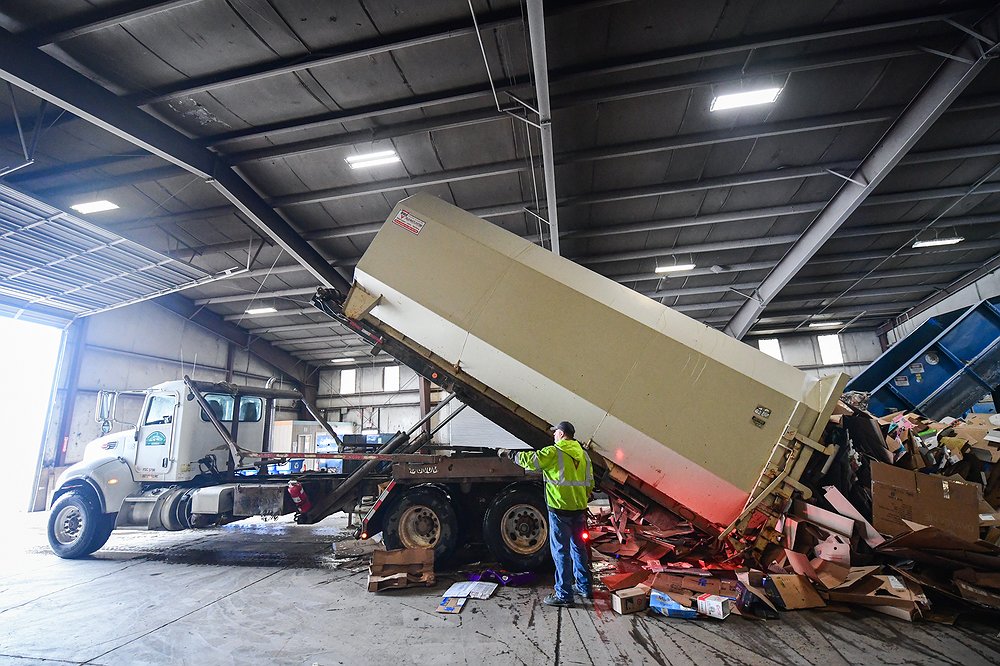 Mike Smith helps as a truckload of cardboard is offloaded to be baled at Valley Recycling in Kalispell on Tuesday, March 17. (Casey Kreider/Daily Inter Lake)
Casey Kreider
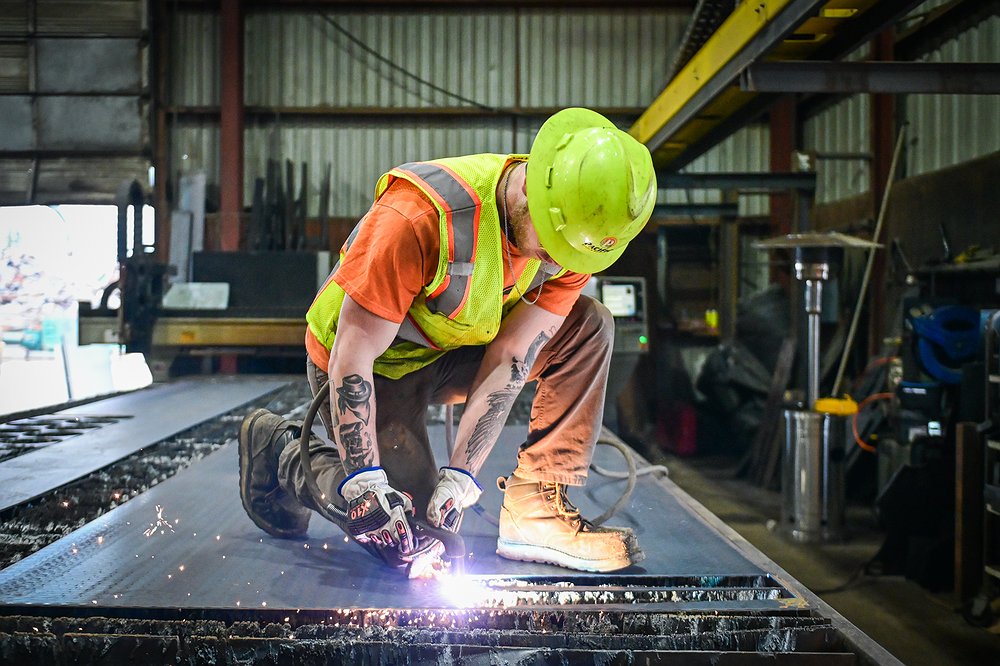 Zach Gray cuts a piece of steel with a plasma cutter at Pacific Steel & Recycling on Thursday, March 19. (Casey Kreider/Daily Inter Lake)
Casey Kreider
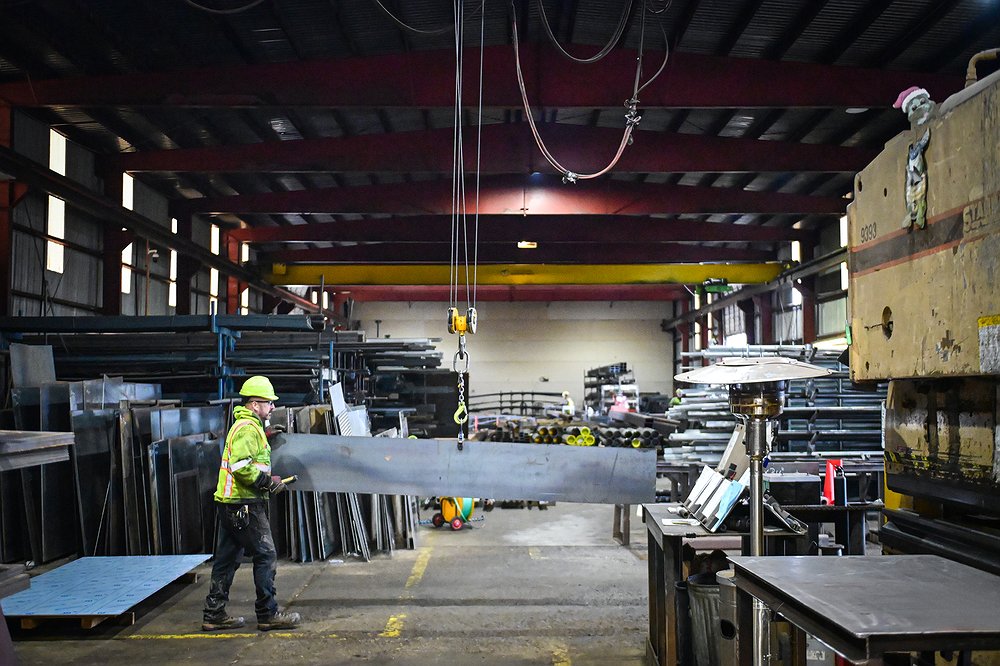 A steelworker moves a plate of steel at Pacific Steel & Recycling on Thursday, March 19. (Casey Kreider/Daily Inter Lake)
Casey Kreider
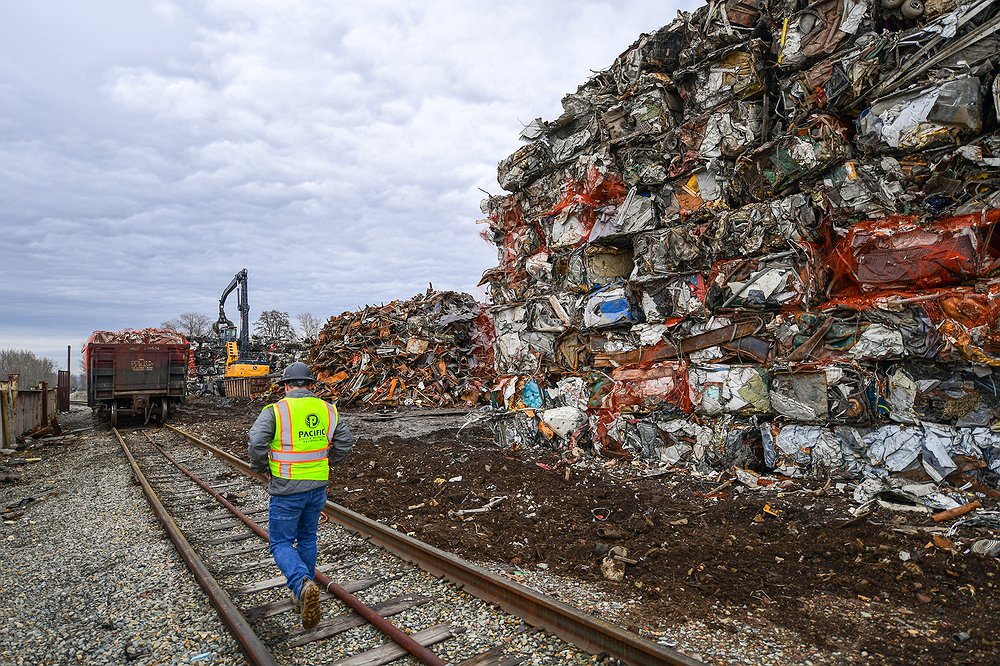 Branch manager Adam Eyman walks out to a railcar loaded with scrap material at Pacific Steel & Recycling on Thursday, March 19. (Casey Kreider/Daily Inter Lake)
Casey Kreider
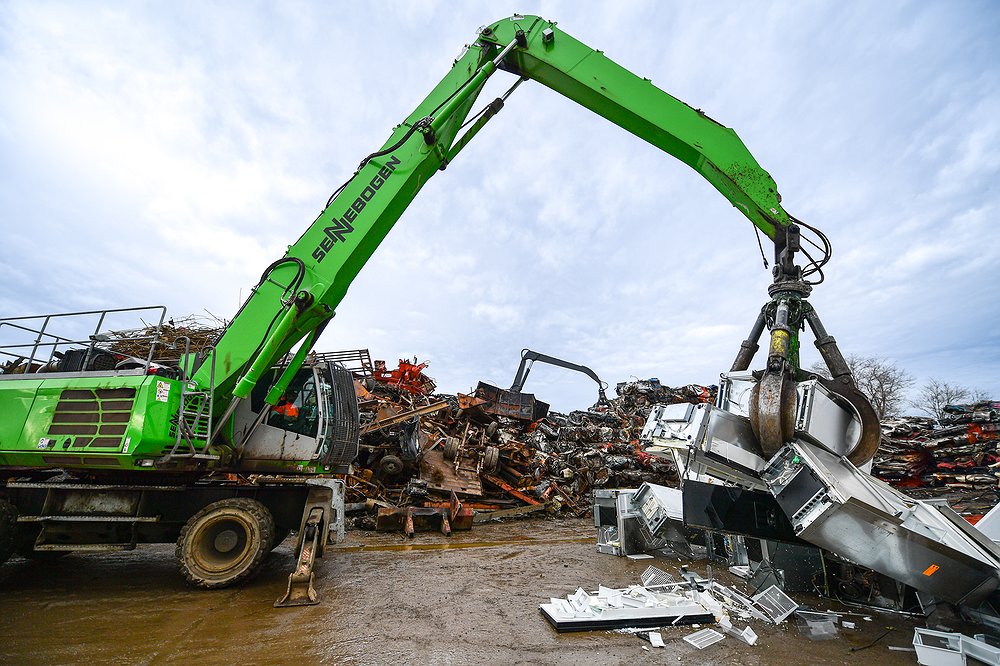 An employee in a scrap hauler moves a pile of refrigerators and kitchen appliances at Pacific Steel & Recycling on Thursday, March 19. (Casey Kreider/Daily Inter Lake)
Casey Kreider
ARTICLES BY TAYLOR INMAN

Eating with the fishes: The Codfather serves up a meal you can’t refuse
Though they’ve only been open for three weeks, Wayne Tinkler’s food truck is pretty recognizable. A blue fish resembling Vito Corleone with the catchy name The Codfather is emblazoned across the black trailer.
Can man: Ryan Ellis turned a hobby into a venture that gives back to the community
It’s a labor of love for Ryan Ellis, who has always been an avid recycler.
Talking trash: A look at recycling services in the Flathead Valley
Montanans recycle 19% of the waste generated here, according to the state environmental agency. The overall U.S. recycling rate is about 32%, according to the U.S. Environmental Protection Agency.