
Swan Lake residents propose extending no wake zone
HAILEY SMALLEY | Hagadone News Network | UPDATED 6 months, 2 weeks AGO
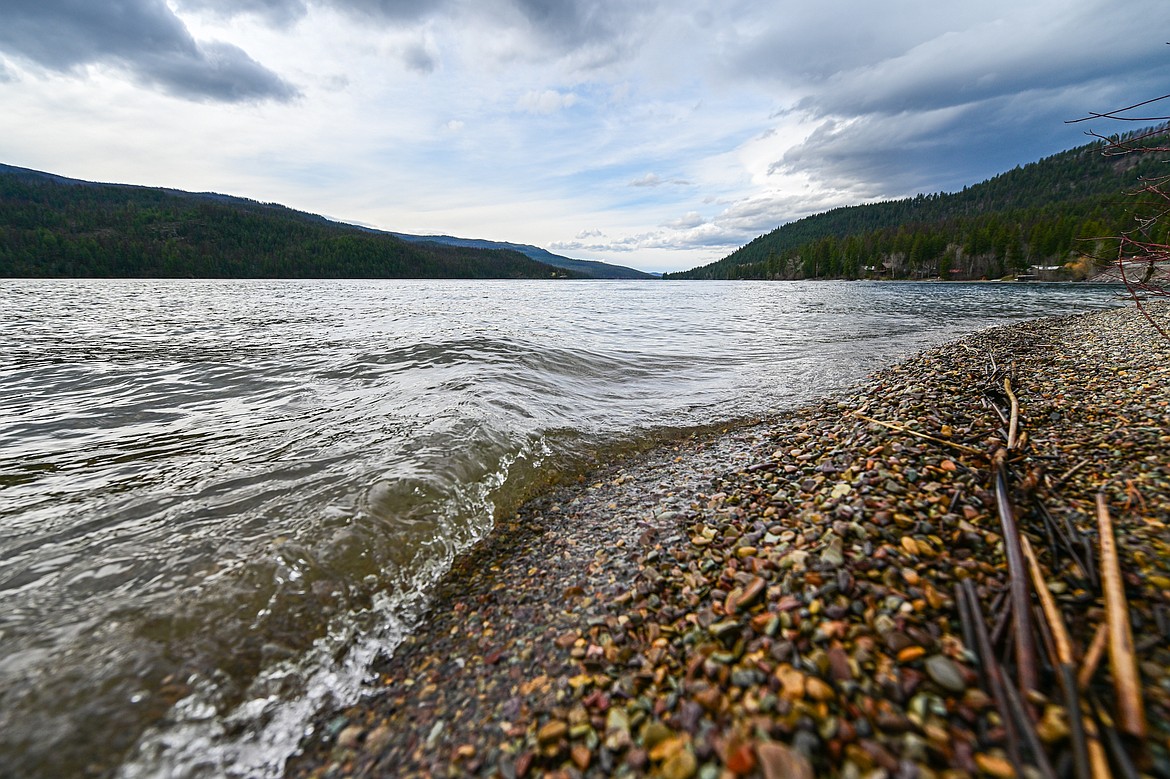
The shoreline of Swan Lake on Saturday, March 21. (Casey Kreider/Daily Inter Lake)
Casey Kreider
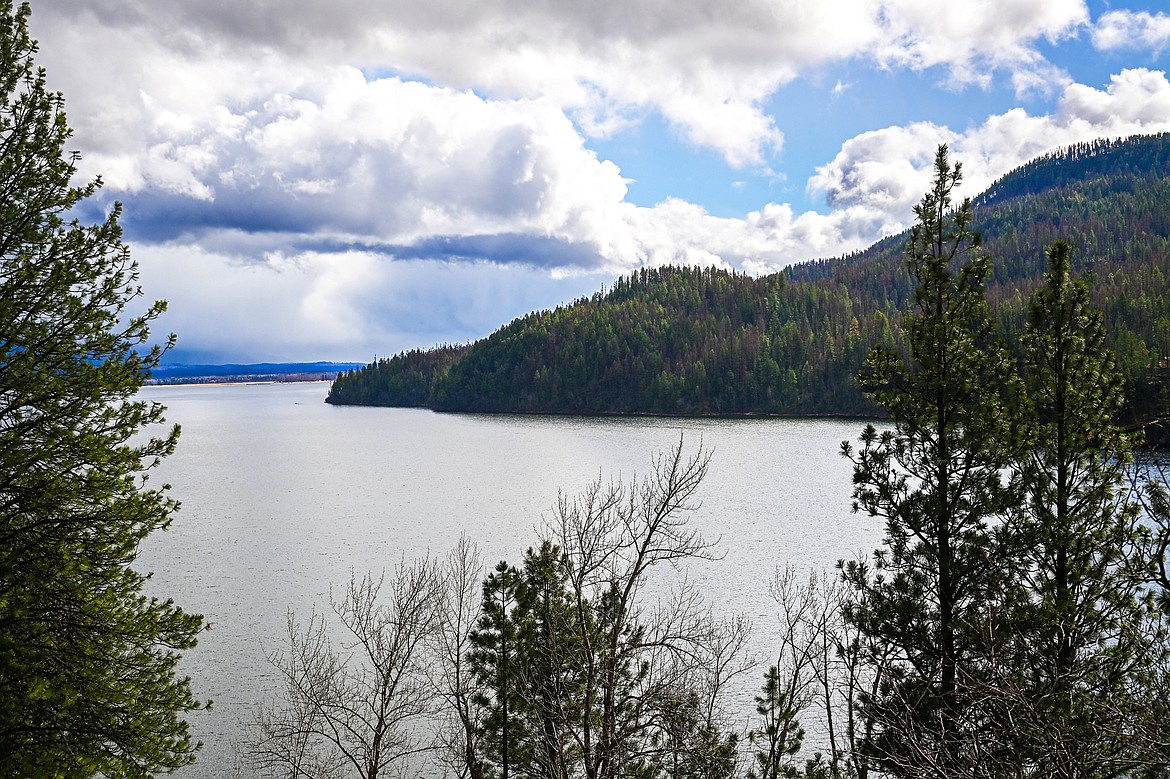
Swan Lake on Saturday, March 21. (Casey Kreider/Daily Inter Lake)
Casey Kreider
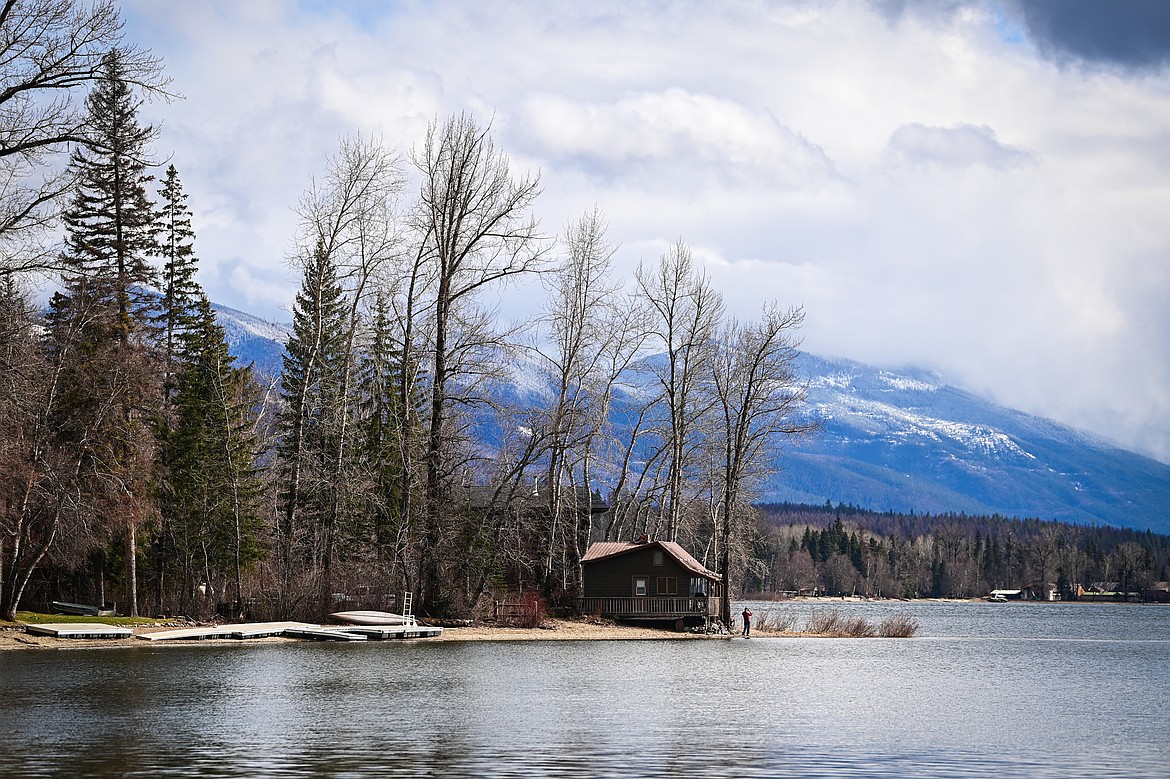
Swan Lake is shown from the day-use area near Swan Lake Campground on Saturday, March 21. (Casey Kreider/Daily Inter Lake)
Casey Kreider
The shoreline of Don Smith’s property was once a refuge.
Back in 1978, when Smith purchased the land on the western shore of Swan Lake, he might only see a single canoe or pontoon boat all morning. It was usually just him, a few waterfowl and the gentle lolling of the water as it lapped against the rocks.
“Now the waves are crashing in from these boats,” said Smith. “It’s beating on the shoreline. It’s damaging the shoreline, the docks.”
Neighbors around the lake voiced similar concerns about increasing wakes and wave action in the lake. Smith even heard from a homeowner who had to replace his dock after it was repeatedly slammed by large boat wakes.
It was clear to him that something needed to change.
The group worked with Montana Fish, Wildlife and Parks over the course of a year to hone their complaints into a rule-change petition. Their final request is simple: extend the no wake zone on Swan Lake to include all areas within 500 feet of the shoreline.
The Montana Fish and Wildlife Commission will review the petition and vote on whether to implement the new rule on April 16.
Most large lakes in Montana, including Swan Lake, are subject to a 200-foot wake free zone, but the petitioners argue additional shoreline protections are needed to accommodate newer boat models capable of producing larger wakes. The group singled out wake boats, sometimes also known as surf boats or wakeboard boats, as particularly problematic.
The boats are specifically designed to generate large wakes, making them an increasingly popular option for wake surfers and wakeboarders. Critics say the outsized waves stir up lakebeds, increase shoreline erosion and create unsafe conditions for nonmotorized boaters, particularly on smaller water bodies.
Expanding the no wake zone on Swan Lake won’t address all those concerns.
“But it’s a marker,” said Smith. “It is beneficial. It helps the shoreline and the docks.”
Swan View Coalition, Friends of the Wild Swan and the Montana Wildlife Federation voiced support for the proposal during an initial public comment period, as did a conclave of lakeside homeowners who said they have experienced the damaging potential of wake boats firsthand.
Dann Crist said he spent $5,000 reinforcing his dock on Lake Inez after large waves he attributed to wake boats damaged the structure. In a written comment to the Montana Fish and Wildlife Commission, he described how the wakes slammed his own boat into the dock, gouging a hole in the side and breaking the propeller.
“When these wake boats are out, it pretty much restricts anyone else from participating in lake activities we have so comfortably engaged in for many years,” wrote Crist. “We at Lake Inez will also be petitioning the [Fish and Wildlife] Commission at a future time. I sympathize with the people on Swan Lake.”
Of the 49 comments submitted to the Fish and Wildlife Commission, 13 urged commissioners to support the petition. The other 35 commentators decried the proposed rule change as unfairly restrictive to motorized boaters.
“A 500-foot buffer is not a small adjustment,” wrote Jacob Anderson, the general manager of Launch Watersports, a boat dealer with a branch in Kalispell. “It is a structural change to how the lake functions.”
Swan Lake is long and narrow, with a width between 1,600 and 2,900 feet in most places. Several commentators posited that increasing the no wake zone would concentrate motorized boat traffic in a small corridor near the center of the lake, creating potentially dangerous conditions for recreationists.
Others said a rule change was unjustified without specific data to back up the impacts some Swan Lake homeowners say they have seen.
A study conducted by the University of Minnesota’s St. Anthony Falls Laboratory found that wake boats created larger waves with more force behind them. Another study, conducted on the Willamette River in Oregon and published in River Research and Applications, concluded that “rational benchmarks” for wake boats were “likely to be in excess of 350 feet when considering wave height and 500 feet when considering wave energy.”
But opponents point out that those studies, along with others cited by the petitioners, were conducted on waterbodies in other areas of the country.
A third study conducted on the Conway chain of lakes in Massachusetts and commissioned by the Water Sports Industry Association, concluded that waves generated by wake boats dissipated to “inconsequential levels” within 200 feet. The Water Sports Industry Association submitted a letter in opposition to the petition, as did the National Marine Manufacturers Association.
The Fish and Wildlife Commission reviewed two similar petitions in October 2023 to implement no wake zones on the entireties of Lake Five and Half-Moon Slough. Commissioners voted down the proposal for Lake Five but advanced the petition for Half Moon Slough to the rulemaking process.
Commissioners are expected to vote on the Swan Lake petition during the April 16 meeting. Those that wish to provide public comment during the meeting must register by April 15. A registration link is available at fwp.mt.gov/aboutfwp/commission/april-2026-meeting.
Reporter Hailey Smalley can be reached at 406-758-4433 or [email protected]. If you value local journalism, pledge your support at dailyinterlake.com/support.
 Swan Lake on Saturday, March 21. (Casey Kreider/Daily Inter Lake)
Casey Kreider
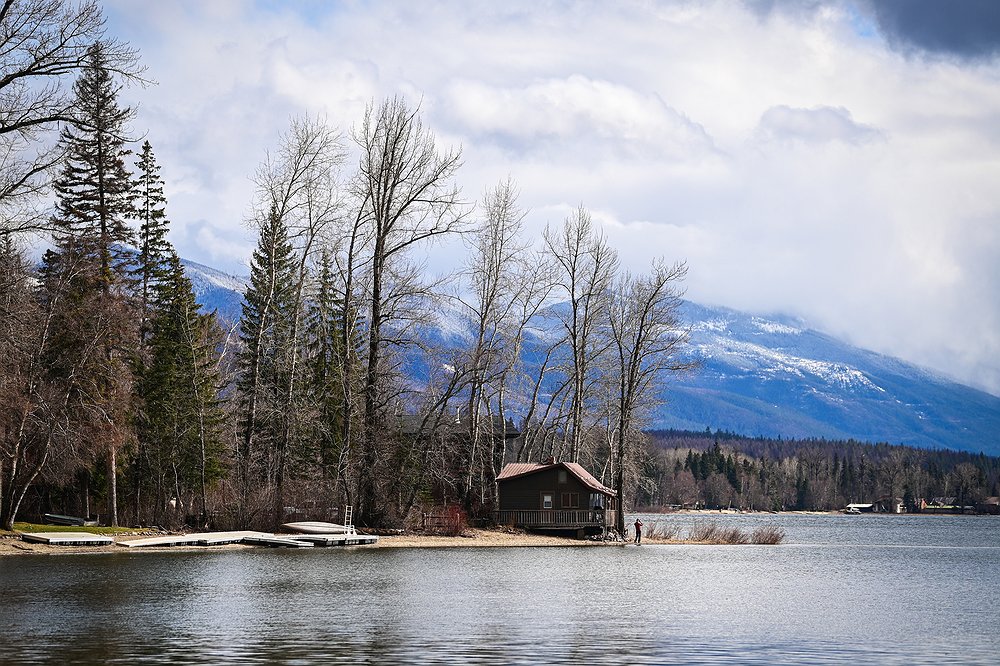 Swan Lake is shown from the day-use area near Swan Lake Campground on Saturday, March 21. (Casey Kreider/Daily Inter Lake)
Casey Kreider
ARTICLES BY HAILEY SMALLEY

Trump stumps for Flint in Kalispell as Election Day nears
President Donald Trump, wearing a dark suit, red tie and red USA cap, ambled into the Majestic Valley Arena to the raucous roar of a crowd.

Flathead National Forest greenlights Swan Valley timber project
A 2,307-acre timber project is now under way in the Swan Valley.
Flathead National Forest greenlights Swan Valley timber project
A 2,307-acre timber project is now under way in the Swan Valley.