
West Glacier sees warmest winter on record; snowmelt a month early
Hungry Horse News | UPDATED 1 month, 1 week AGO
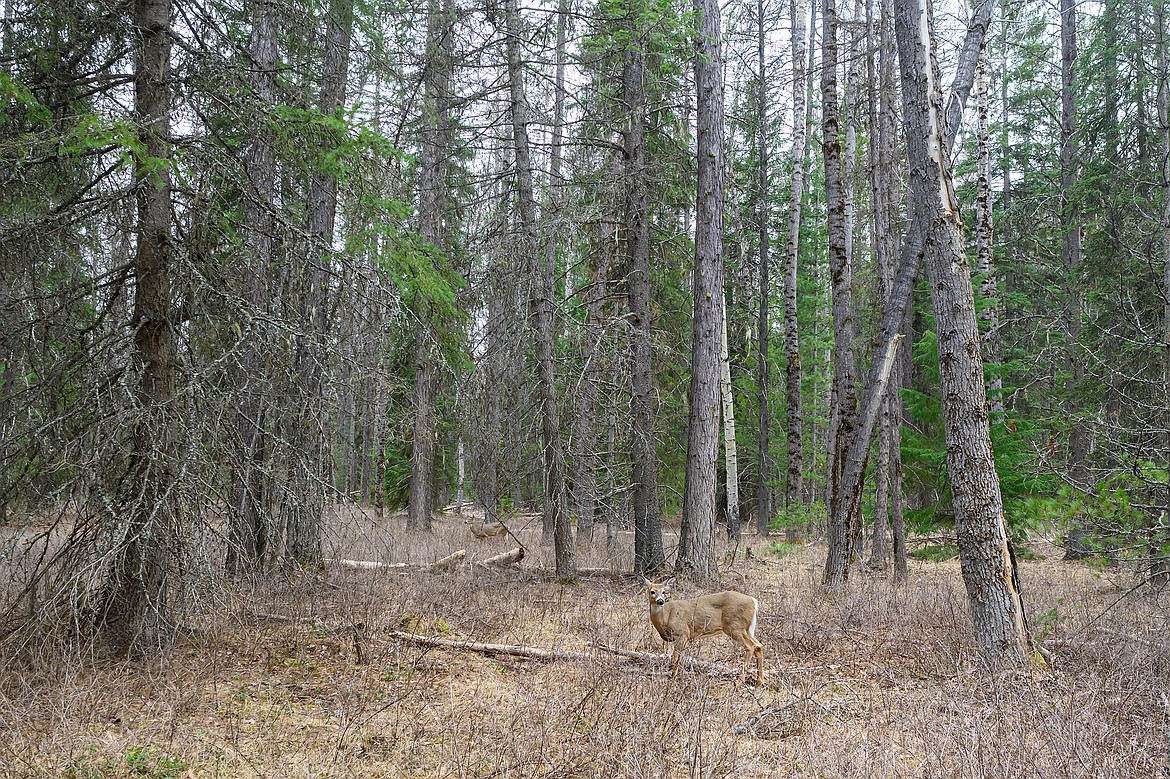
Deer near Apgar in Glacier National Park.
The winter of 2025-26 was the warmest winter on record in West Glacier, the National Weather Service said in a recent presentation.
The average temperature was 31.8 degrees F. The previous record was 30.4 F in 2020-21.
In contrast, the average winter temperature, from 1991-2022, is 25.2. This winter was 6.6 degrees higher than normal.
The data for the West Glacier weather station in Glacier National Park dates back to 1948.
The warmest day was Dec. 16 when it was 55 F. Dec. 17 was 47.
All told, there were eight record highs broken, three in December and five in February, where the temperatures ranged from 46 to 51, depending on the day.
It was also wet overall, with 2 inches more liquid precipitation than average. The season saw 10.93 inches of precipitation. The wettest year ever was 1971-72, with 15.10 inches. The average winter sees 8.92 inches.
Kalispell saw the fourth warmest winter ever, with an average temperature of 30.6. The record was ‘33-’34 at 32.5.
Kalispell was wetter than average with 1.02 inches above average. The average winter (from ‘91-’20) is 3.86 inches. This season saw 4.88 inches. The wettest winter in Kalispell was ‘64-’65 with 6.76 inches.
Records for Kalispell date back to 1899.
Despite the warmth, Flathead River Basin snowpack briefly reached 100% in mid-March, due to high elevation snows, but has since fallen and is now 90% of the median.
The lack of snow down low meant the cancellation of key events in the Flathead, including the Bar Stool races in Martin city and skijoring in Kalispell in February.
It was the first time ever the bar stool races had been canceled.
Plowing Glacier National Park roads was greatly accelerated as well. The Camas Road was simply opened on April 1, whereas in a normal year it takes at least a few days to plow it free of snow. And on the Going-to-the-Sun Road, there was no snow on the west side to about Logan Creek, which is a couple miles past Avalanche Creek.
While there was beneficial snowfall in March, the overall snowpack for the Clark Fork-Kootenai-Pend O’Reille-Spokane is below average, which should come as no surprise.
“The melt-off season has basically started a month earlier than it should ... that is not great news for our snowpack,” noted National Weather Service meteorologist LeAnn Allegretto in a recent presentation.
She noted that the Lower Snake River drainage, which includes some of Montana’s most coveted trout streams, is near historic lows.
As a result, almost all river drainages across Western Montana have less than a 10% chance of reaching flood stage, with the exception of the Clark Fork above Missoula, which has a 30% in early June.
The Flathead River at Columbia Falls has a 10% chance of reaching or exceeding flood stage in the middle of June.
All the rest have very low signals for flooding potential this spring unless Montana sees some significant storms between now and then.