
DNR prepares for fire season; too early to predict severity
Columbia Basin Herald | UPDATED 2 hours, 2 minutes AGO
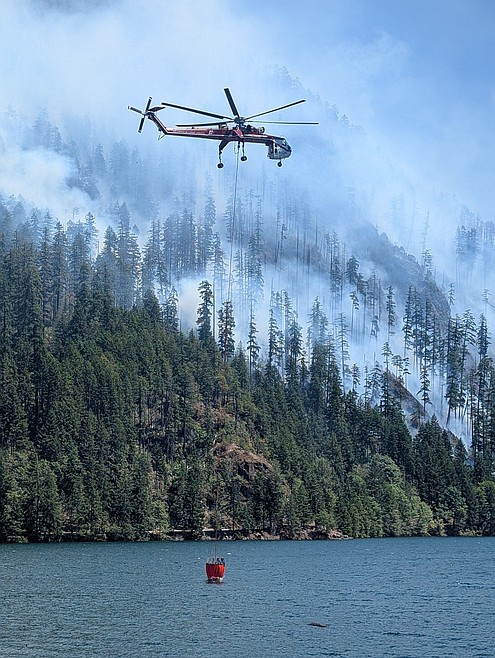
Although it is too early in the year for fire officials to predict the severity of the fire season, there are concerns around drought and lack of snowpack. However, House Bill 2104 passed the legislature unanimously, which will allow the state to continue providing aerial support to wildland fires.
FILE PHOTO
“Please exercise caution. Please be careful. Please respect all the burn restrictions as they come into place. DNR is fully prepared, but we need the public’s help.”
— Department of Natural Resources Eastern Washington Communications Manager, Ryan Rodruck
OLYMPIA — Washington wildfire officials say it’s too early to predict the severity of the 2026 fire season, but early indicators, including the state’s fourth consecutive year of drought, point to elevated risk.
The Department of Natural Resources is still analyzing drought, snowpack and fuel‑moisture data, but the agency has already started organizing crews, aircraft and equipment statewide, DNR Eastern Washington Communications Manager Ryan Rodruck said.
“We are in the process now of standing up resources, making sure that our personnel are well trained and well equipped,” said Rodruck. “DNR will, of course, be ready to fight the fires that occur in our jurisdiction and also exercise our mutual aid.”
Rodruck said drought and snowpack are among the first indicators the agency watches, but the most telling metrics emerge later in spring as fuels dry out.
“Hotter, drier breeds more frequency and intensity,” he said. “We look at the fuel composition, the fuel load on the ground, and how long that fuel retains its moisture.”
Human-caused fires
About 90% of Washington wildfires are human‑caused; a statistic Rodruck cited repeatedly.
“Prevention is absolutely key,” he said. “If you live in the wildland‑urban interface, start preparing your home and property now.”
He said while it’s still cool out, residents should begin clearing pine needles and debris from roofs and eaves. He also recommended trimming branches from overhanging structures and moving wood piles away from homes. As residents may be burning, he asks that they follow all burn-permit conditions. Rodruck also encouraged families to prepare evacuation plans early.
“Have your vehicles backed in and loaded up, know your exit routes, and have important documents and pet supplies ready to go,” he said.
Rodruck said the agency’s guidance is simple as they head into the fire season.
“Please exercise caution. Please be careful. Please respect all the burn restrictions as they come into place,” he said. “DNR is fully prepared, but we need the public’s help.”
Statewide readiness
DNR is positioning aircraft in Washington ahead of peak season and continuing its aggressive initial‑attack strategy, which Rodruck said has helped keep recent fires smaller and less costly.
“If you can keep initial‑attack fires to 10 acres or less, the chance they turn into a large, costly fire decreases exponentially,” he said.
A newly passed bipartisan bill, House Bill 2104, signed March 20 by Governor Bob Ferguson, strengthens that approach by ensuring local fire districts can directly request DNR aircraft during early fire starts.
“Wildfires don’t wait, and neither can our response,” said Rep. Tom Dent, the bill’s sponsor. “This program ensures we have the aircraft and resources ready for rapid initial attack – when a fire is small and manageable.”
The bill passed unanimously in both chambers.
Too early for a forecast
Rodruck said it’s still premature to estimate when fire season will peak or how severe it will be.
“I never want to peg a date on that,” he said. “It’s all going to depend on the weather systems, and more importantly, the drying climate and what it will provide for us this year.”
He said DNR hopes for a few more spring rain events but is preparing for the possibility of a challenging summer.