
Tribal water resources division will move to new building in Ronan
EMILY MESSER | Hagadone News Network | UPDATED 3 days, 3 hours AGO
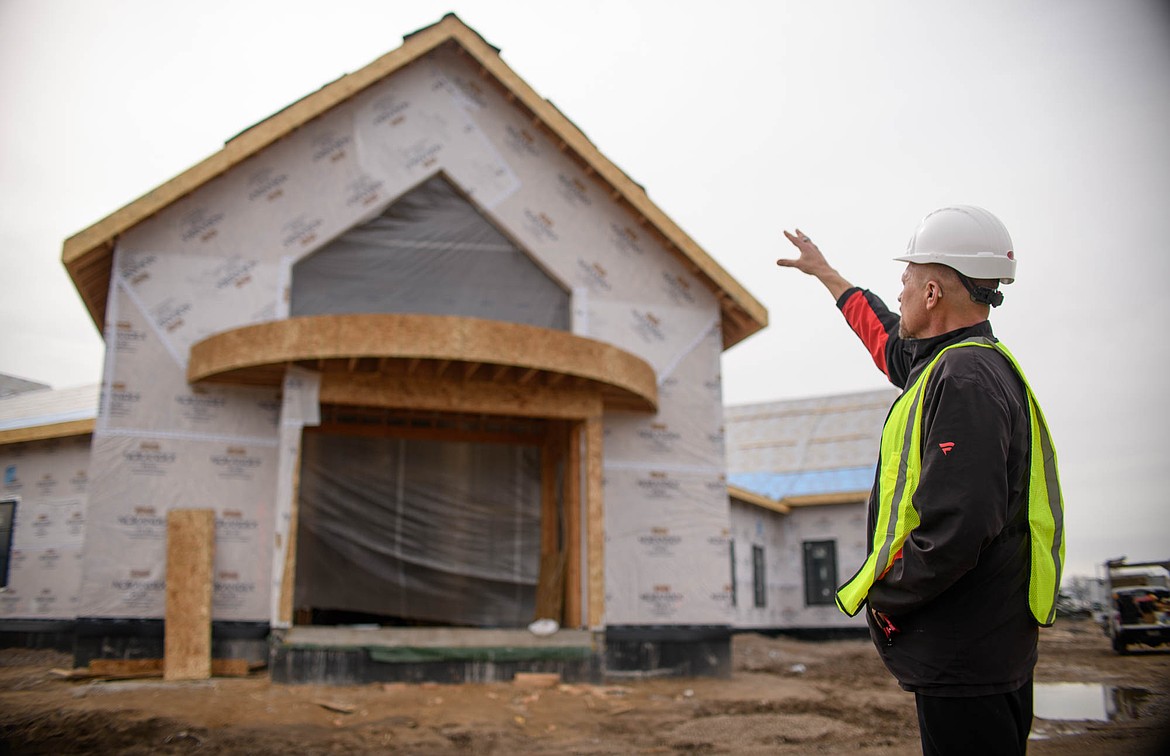
The state-of-the-art flagship building, as Natural Resources Department head Rich Janssen calls it, will have a teepee motif outside the front entrance. (Emily Messer/Leader)
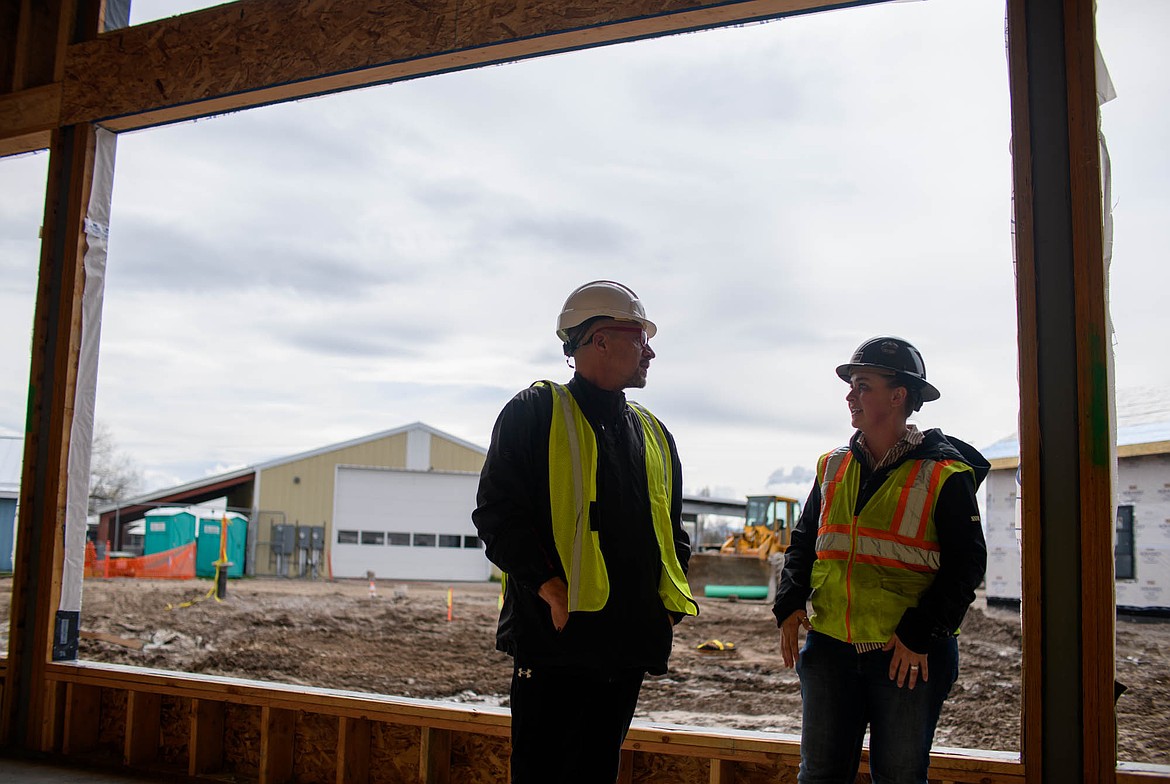
Department head Rich Janssen chats with project manager Trinity Ferguson as they tour the building. The building features multiple conference rooms and a breakroom with massive windows overlooking the courtyard, and can accommodate 100 employees. (Emily Messer/Leader)
Emily Messer joined the Lake County Leader in July of 2025 after earning a B.A. degree in Journalism from the University of Montana. Emily grew up on a farm in the rolling hills of southeast Missouri and enjoys covering agriculture and conservation. She's lived in Montana since 2022 and honed her reporter craft with the UM J-School newspaper and internships with the RMEF Bugle Magazine and the Missoulian. At the Leader she covers the St. Ignatius Town Council, Polson City Commission and a variety of business, lifestyle and school news. Contact Emily Messer at [email protected] or 406.883.4343 | April 9, 2026 12:00 AM
The Confederated Salish and Kootenai Tribes Natural Resource Department is constructing a new building for the Division of Engineering and Water Resources. Completion of the spacious new structure, located west of the Boys & Girls Club in Ronan, is estimated for the end of October.
The 21,500-square-foot facility will house the division with its 50 employees who work in programs such as roads, irrigation infrastructure and the Safety of Dams. The building will have the capacity to house 100 full-time staff that will be hired at a later time, Natural Resources Department head Rich Janssen said
This building, which will be named the Ronan offices of the Natural Resources Department Division of Engineering and Water Resources, has been Janssen’s vision since taking on his role as department head in 2011. The division is housed in five different buildings in two separate locations on the reservation, with a portion of the division currently in the old Kicking Horse complex, built in the 1960s.
“To have it placed in Ronan, a place where I grew up and my ancestors are from, means a lot to me,” Janssen said. “Because It'll be able to showcase the future generations of tribal members and others who want to pursue a position or a career in natural resources, that they can do it.”
Janssen chose Ronan for the division’s central location because he wants to build industry there. He also added that it’s close to the Ronan School District and the Boys and Girls Club, making it convenient for employees with children.
The Tribes already owned this plot of land, and Janssen noted they looked at others, but nothing fit their needs as well as this location.
The $11.5 million facility was funded by the $1.9 billion CSKT Water Compact settlement, approved by the Tribes in 2020. The compact is a tribal-state-federal agreement to fulfill water rights for the Salish, Kalispell, and Kootenai people as guaranteed by the 1855 Hellgate Treaty.
CSKT is using this financial settlement to repair the infrastructure of the Flathead Indian Irrigation Project – which is owned and operated by the Bureau of Indian Affairs – and complete restoration projects around the valley. The settlement also outlines funding for the building.
The funding for the project will allow them to bring all the staff under one roof, allowing for better communication, stronger collaboration and lower expenses, time and fuel waste, CSKT communications director Rob McDonald stated in an email to the Leader.
Janssen calls this facility a testament to the Tribes' negotiations on the water compact.
“I’ve been a part of water rights negotiations since 1998, and I’ve been through the wars, and now we’re seeing the fruits of our labor come to fruition,” he said.
The Division of Engineering and Water Resources was expanded in 2020 to meet the requirements of the water compact. Janssen said the positions they plan to add will include both professional-level careers in hydrology, engineering and habitat rehabilitation, as well as entry-level positions.
This facility was the first opportunity the Tribes have had to work with Langlas General Contractors, who were selected through an extensive search. They have employed many local contactors including nine tribal contractors.
Janssen noted they are also using local companies, such as Valley Glass, as well as local or native plants, wood and boulders in the space. This state-of-the-art flagship building, as Janssen calls it, will have a teepee motif outside the front entrance. The teepee poles will have an outside metal layer, and the inside will be lodgepole pine. The front entrance cabinetry will be western red cedar from the reservation.
Janssen is also proud of the ground-source heat pump that will use water to heat and cool the building, powered by two wells. He said it was an expensive purchase, but over time, with their minimal electric bill, it will pay for itself.
Along with the many offices, there will be a large breakroom, courtyard and community conference room. Janssen said one conference room will be named after retired long-time employees George McLeod and Bill Foust.
 Department head Rich Janssen chats with project manager Trinity Ferguson as they tour the building. The building features multiple conference rooms and a breakroom with massive windows overlooking the courtyard, and can accommodate 100 employees. (Emily Messer/Leader)
ARTICLES BY EMILY MESSER

Easter Haul
St. Ignatius Chamber of Commerce hosted its annual Easter egg hunt at the St. Ignatius High School Football Field on Saturday, April 4.

Tribal water resources division will move to new building in Ronan
The Confederated Salish and Kootenai Tribes Natural Resource Department is constructing a new building for the Division of Engineering and Water Resources. Completion of the spacious new structure, located west of the Boys & Girls Club in Ronan, is estimated for the end of October.
One incumbent, three newcomers file for Mission school board
The St. Ignatius School board has two board seats open, and four candidates have filed.