
Two Mission Valley cultural institutions receive grants
Lake County Leader | UPDATED 3 days, 1 hour AGO
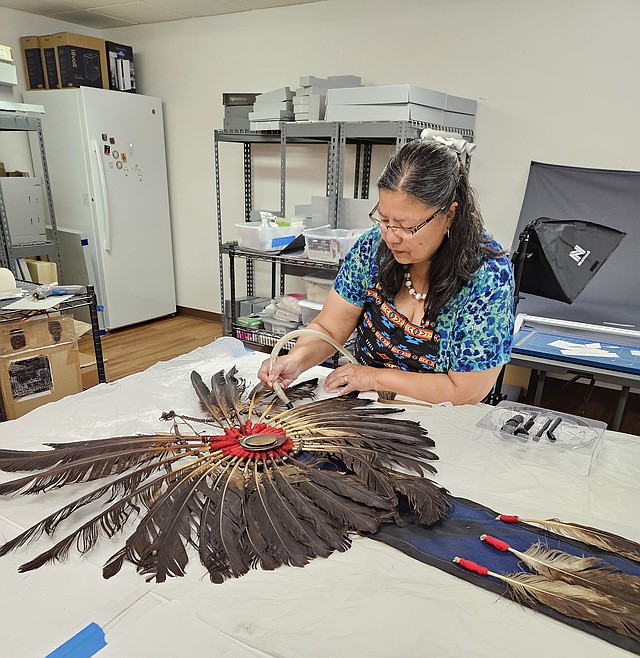
Marie Torosian, director of Three Chiefs Cultural Center, carefully cleans an eagle-feather headdress. (Courtesy photo)
The Foundation for Montana History awarded two grants to Mission Valley organizations recently as part of its largest ever grant-making cycle.
The foundation is a nonprofit based in Helena that raises private funds and makes grants for community-based history initiatives. This year, it awarded more than $255,000 to communities across Montana, and since starting the grant program in 2012, has invested more than $2.1million into history and preservation projects.
“Working with communities to save and share history is the core of our mission,” says Foundation President/CEO Charlene Porsild in a press release. “We are delighted to see our funding surpass previous years – a testament to the generosity of donors across the country who support the preservation of Montana’s history for future generations.”
The foundation grants up to $15,000 for 26 projects, including seven first-time foundation grant recipients.
Three Chiefs Cultural Center in Pablo, where the Confederated Salish and Kootenai Tribes share history through exhibits and activities, received $14,500 for Archival and Collections Management Training. According to the press release, the funds will be used to purchase archival supplies for collections preservation and conduct onsite training for Three Chiefs curation technician Grey Johnson.
The grant will also help digitize photographs that survived the catastrophic arson-caused fire that destroyed The People’s Center in 2020. Three Chiefs was established in 2023, and is temporarily housed on Major Houle Road. To learn more visit www.threechiefs.org.
The Ninepipes Museum of Early Montana, south of Ronan, received $8,800 for “Resonance: Voices that Shaped Ninepipes Museum” – the third installment of a multi-year award.
The Ninepipes team has created a downloadable curriculum guide that provides educators with four place-based lessons built around its Resonance oral history podcast series, which focuses on connections of community members to artifacts in the museum.
The team is now providing pilots of the curriculum to local schools. After their classroom experience, students will travel to the museum to view the items they heard about in the podcasts and expand their understanding of Montana history.
For details, visit ninepipesmuseum.org/educational-outreach.
A complete list of grant recipients is available at www.mthistory.org.