
Young voices
JOEL MARTIN | Hagadone News Network | UPDATED 5 months, 2 weeks AGO
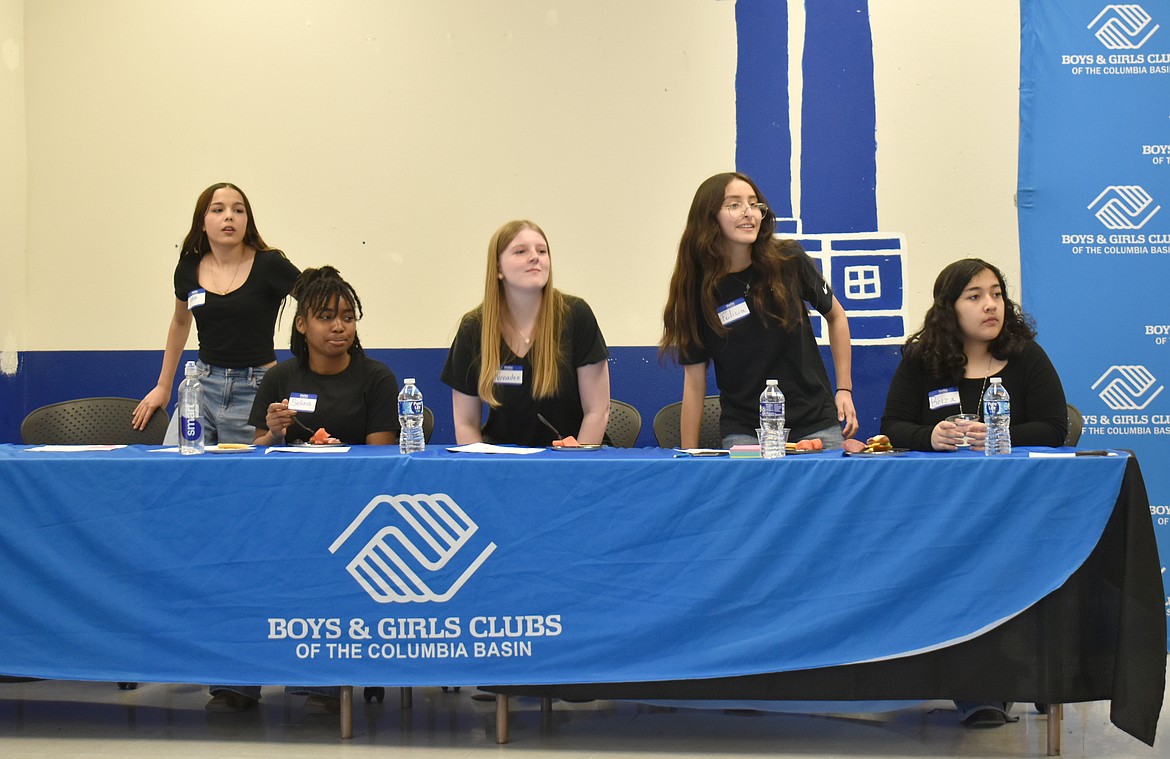
From left: Sophia Gonzalez, Selina Bailey, Kenadee Browning, Felicia Rodriguez and Briza Hernandez take their seats in preparation for the “Think, Learn, Create Change” town hall Wednesday, facilitated by the Boys & Girls Clubs of the Columbia Basin.
JOEL MARTIN/COLUMBIA BASIN HERALD
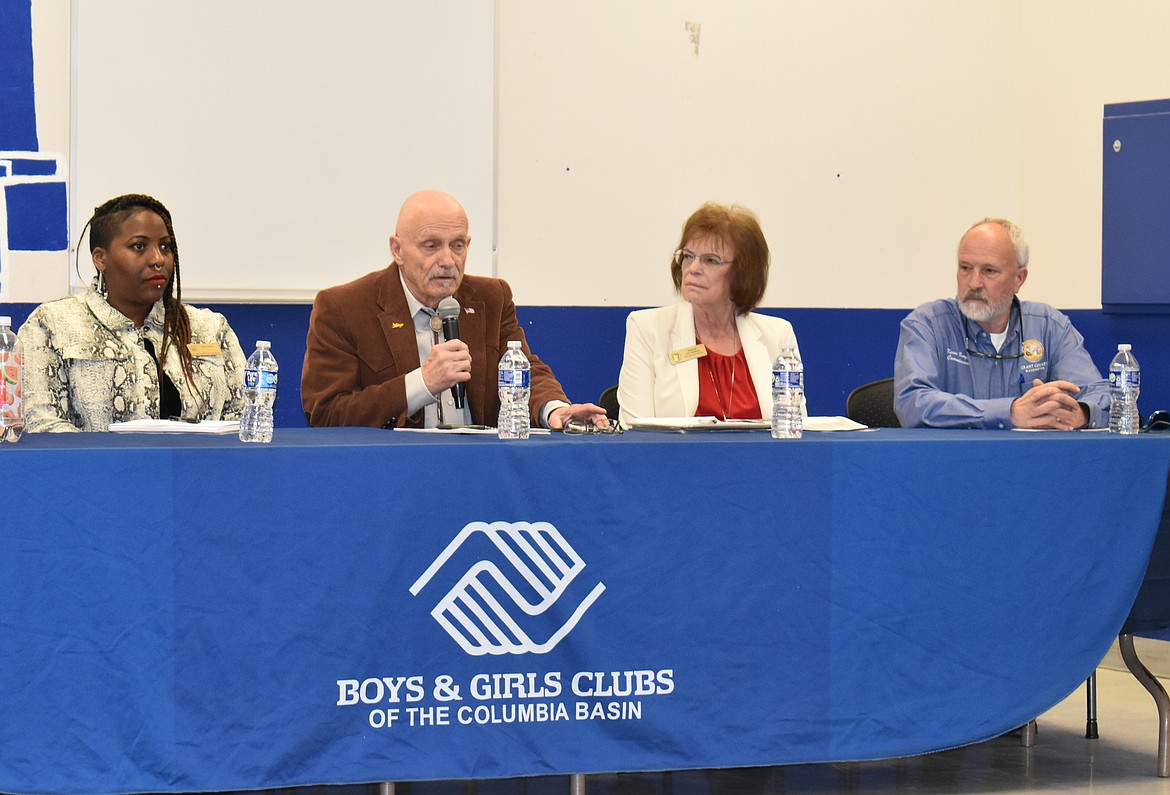
State Rep. Tom Dent answers a question at the teen town hall Wednesday. From left: Toni Ball, Central Washington Outreach Director for Sen. Patty Murray; Dent; state Sen. Judy Warnick; and Grant County Commissioner Kevin Burgess.
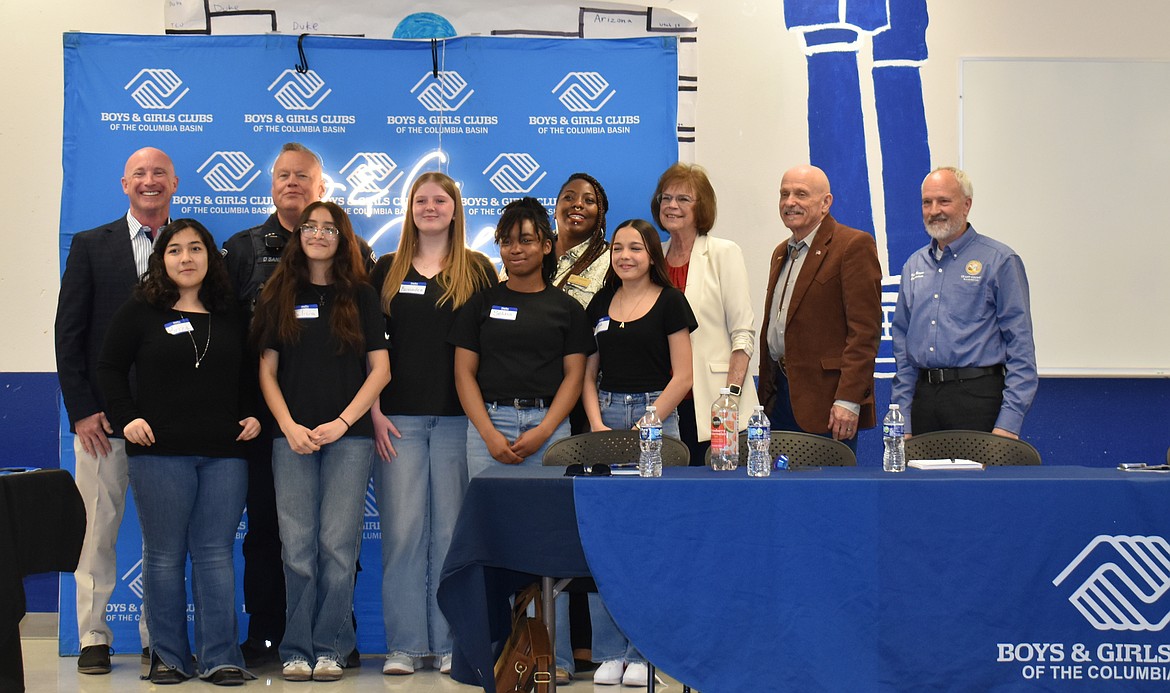
The participants in Wednesday’s teen town hall, from left: Moses Lake City Council Member Jeremy Davis; Columbia Middle School eighth-grader Briza Hernandez; Moses Lake Police Chief David Sands; Frontier Middle School eighth-grader Felicia Rodriguez; Columbia Middle School eighth-grader Kenadee Browning; Columbia Middle School eighth-grader Selina Bailey; Toi Ball, Central Washington Outreach Director for Sen. Patty Murray; Columbia Middle School sixth-grader Sophia Gonzalez; state Sen. Judy Warnick; state Rep. Tom Dent; Grant County Commissioner Kevin Burgess.
Joel Martin has been with the Columbia Basin Herald for more than 25 years in a variety of roles and is the most-tenured employee in the building. Martin is a married father of eight and enjoys spending time with his children and his wife, Christina. He is passionate about the paper’s mission of informing the people of the Columbia Basin because he knows it is important to record the history of the communities the publication serves. | April 13, 2026 1:20 AM
MOSES LAKE — Five middle school students from the Boys & Girls Clubs of the Columbia Basin discussed mental health and substance abuse Wednesday with local officials.
“As adolescents, we count on the environment around us to help in our journey growing up,” said Felicia Rodriguez, an eighth grader at Frontier Middle School. “However, with growing up come issues with us, our peers and even adults ... As teens, things happen that we feel aren’t being handled properly. These things are very real and aren’t isolated incidents.”
The town hall, held at Frontier Middle School, was part of a nationwide Boys & Girls Club program called “Think, Learn, Create Change,” according to Operations Director Cecily Hendricks. The students had planned the entire event, from the questions to the refreshments, and some of them will go on to Washington, D.C. this summer to present their project to Congress, Hendricks said.
The panel consisted of Moses Lake City Council Member Jeremy Davis; Moses Lake Police Chief David Sands; Toni Bell, Central Washington outreach director for Sen. Patty Murray; state Rep. Tom Dent; state Sen. Judy Warnick; and Grant County Commissioner Kevin Burgess.
“In my own experience, I have seen several people suffer from substance misuse all around me, from seeing them vape in the bathroom to right in the classroom,” Rodriguez said. “Even some of my friends have used vapes, weed and nicotine tablets right inside the school. It's become such a common occurrence that we feel the need to take charge of the situation.”
Rodriguez asked the panel if they knew anyone personally who had been affected by substance misuse.
“Yes, many people, including myself,” Dent said. “I’ve been in recovery for (39) years. I talk about it everywhere I go, and hopefully I can help somebody else on their way there. Substance abuse is a challenge and is probably one of our major issues that I perceive, not only in our state but our country. It leads people down pathways where they lose direction in their lives. It creates mental illness. It creates lots of issues.”
“I have family members that have used substances that aren't legal, and it does (take) a toll on you as a family,” Davis said. “I've had children that have dabbled in it, and it is a very difficult situation to deal with, from a parent's perspective.”
“What do you think about substance misuse in your community?” asked Kennadee Browning, a Columbia Middle School eighth grader.
“I think we have to look at it as a holistic problem,” Davis said. “It’s not just an individual issue. I think it has a lot to do with community interaction. Some people feel ostracized or set aside by society based on the choices that they have made, and it's really important that we help those that have made poor choices to come back to a better state of mind or state of habit.”
Sands agreed that a holistic approach was needed.
“We can’t just enforce our way out of it,” he said. “We can’t just educate our way out of it … It is a significant problem that affects absolutely everybody in the community in some way, shape or form.”
Ball said usually there are underlying reasons for substance abuse.
“I come from a human services background in Seattle, and from that experience, I see a lot of misuse in folks who are unhoused, who have that struggle,” Ball said. “And what I see is that happy people don't do drugs. Most people who are doing these drugs and misusing them are medicating. For some reason, they can't handle the reality of their life. They can't cope with loss, or something has happened to them and they're unable to overcome it.”
“What have you done to help advocate for teen mental heath?” asked Briza Hernandez, an eighth-grader at Columbia Middle School.
“I am on the Human Services Committee in the Senate,” Warnick said. “We have bills that are proposed and come through our committee to help with our youth ... (and a) lot of it is mental health or and/or medication or drug use … I support programs that find good things for youth to do – Boys and Girls Club, Future Farmers of America, 4-H programs – because we don't have enough programs, in my opinion for kids We need good healthy programs.”
Dent said he sits on the Human Services Committee in the House and has advocated strongly for better funding and more mental health professionals, particularly in rural, agricultural communities. However, Dent said, not everything has to be left to the professionals.
“Every one of us in this room can do something,” Dent said. “Every one of us can love somebody. Every one of us can recognize when somebody's having a challenge, a bad day, or whatever, and reach out and say, ‘Are you OK?’ and talk to them … More than one time in my life, I've been talking somebody off the cliff of committing suicide. We can all be part of that. We just have to do it. And right now, in our world today, it’s probably needed more than ever.”
“How do you feel hearing stories from youth about substance misuse?” Columbia Middle School sixth grader Sophia Gonzalez asked the panel.
“My initial feeling is heartbreak,” Davis said. “It’s really hard to see … but when you see it, we must engage.”
Sands said it’s a tough subject, and a tough problem.
“I would echo the heartbreak,” he said. “But I think also, people view police officers as (just wanting) to go out and arrest somebody. Don’t get me wrong; some people need to be arrested, but we’re problem-solvers at our core. So to me, it’s how do we fix it, and how can we affect it? Police rarely fix problems, but we can affect problems. So how can we affect that (problem) better than what we’re doing?”
Burgess said he’s seen the effects first-hand.
“It’s not something you want to see, ever,” Burgess said. “As a foster parent, some of the kids we’ve had come into our home were very difficult. I think being available and being kind (and) respectful to the child and supporting them is the biggest thing. We get calls from previous foster kids, or we run into them, (and) they appreciate what you did for them.”
The teens also had a question about the future.
‘What progress have you made to guiding youth to not use substances?” asked Selina Bailey, a Columbia Middle School eighth grader.
“Not enough,” Ball said. “I’m learning that today, that there needs to be more resources and I am obviously not doing enough.”
After the teenagers’ questions had been answered, they took questions from the panel.
“What in your life has helped prevent you from substance abuse?” Ball asked.
“The Boys and Girls Club, because I’ve been coming here since I was in kindergarten,” Gonzalez said.
“One thing that has helped keep me from substance abuse is my surroundings,” Browning said. “Surround yourself with good people … and do community service. It helps you a lot.”
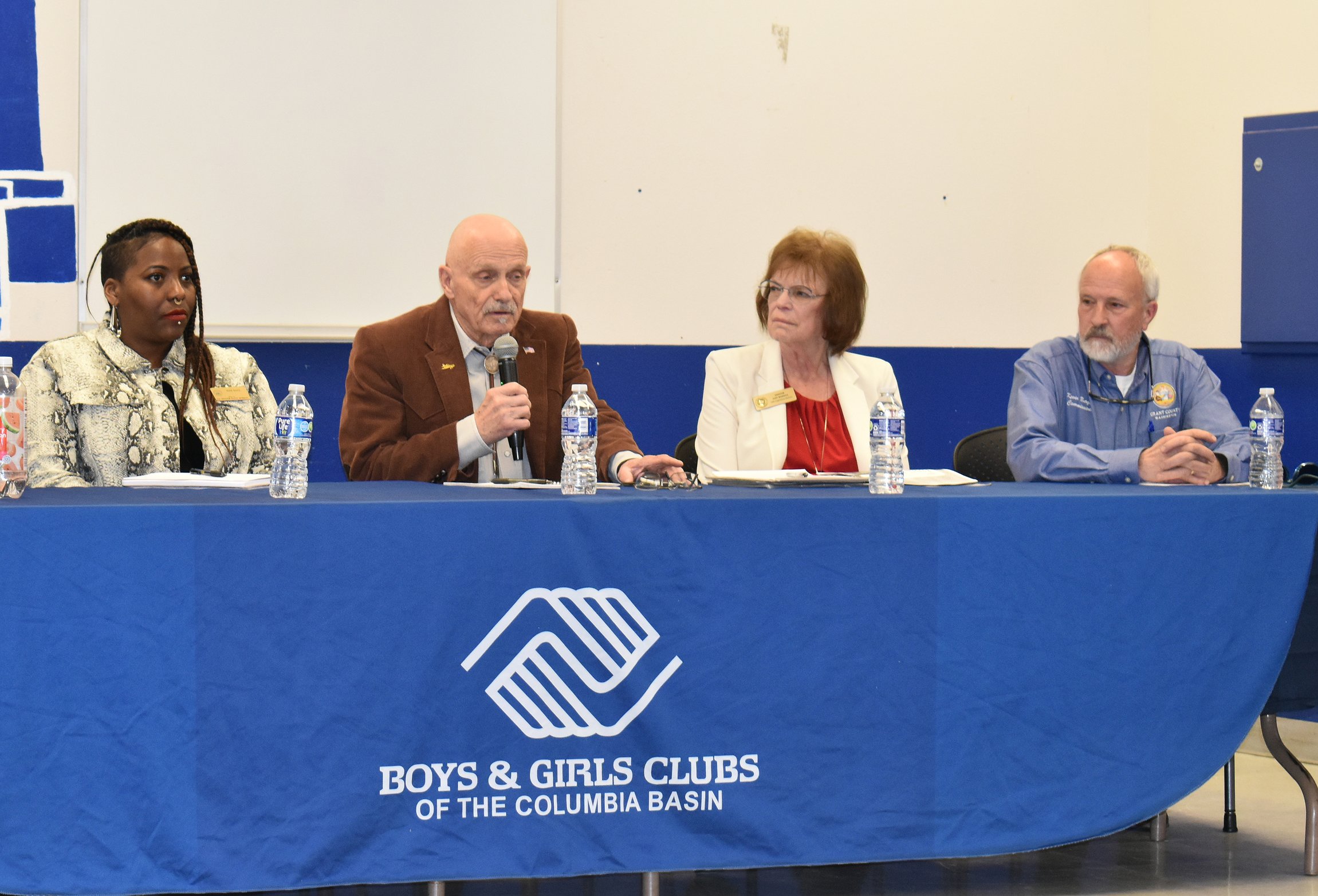 State Rep. Tom Dent answers a question at the teen town hall Wednesday. From left: Toni Ball, Central Washington Outreach Director for Sen. Patty Murray; Dent; state Sen. Judy Warnick; and Grant County Commissioner Kevin Burgess.
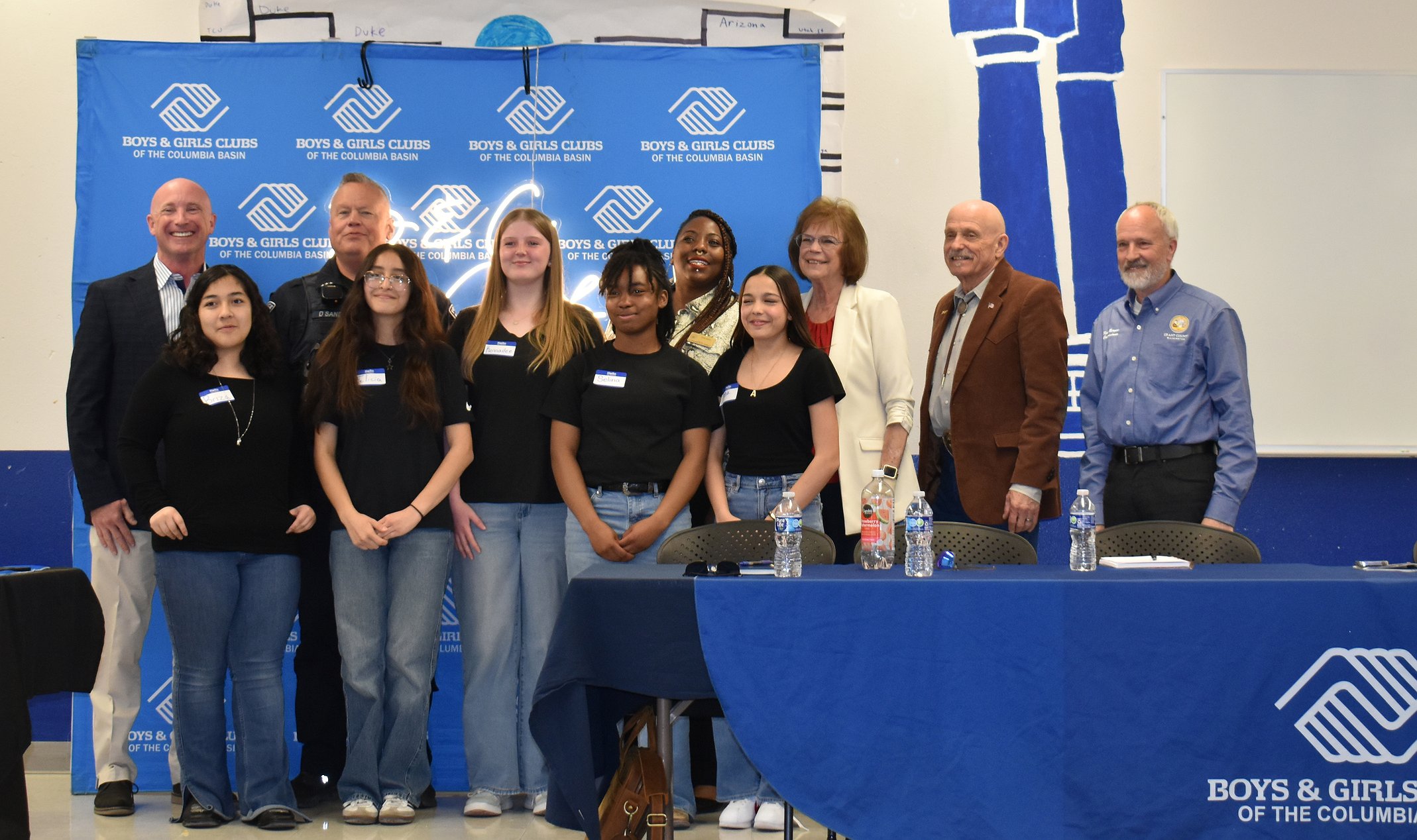 The participants in Wednesday’s teen town hall, from left: Moses Lake City Council Member Jeremy Davis; Columbia Middle School eighth-grader Briza Hernandez; Moses Lake Police Chief David Sands; Frontier Middle School eighth-grader Felicia Rodriguez; Columbia Middle School eighth-grader Kenadee Browning; Columbia Middle School eighth-grader Selina Bailey; Toi Ball, Central Washington Outreach Director for Sen. Patty Murray; Columbia Middle School sixth-grader Sophia Gonzalez; state Sen. Judy Warnick; state Rep. Tom Dent; Grant County Commissioner Kevin Burgess.
ARTICLES BY JOEL MARTIN
Klompen Farms named Hay King and Queen at Grant County Fair
MOSES LAKE — Klompen Farms of Royal City is the 2026 hay-growing champion of Grant County. Owners Bob and Anne Wieldraayer were named Hay King and Queen at the Grant County Fair Aug. 18, winning both first and second place for export alfalfa with Alforex AFX 439. The first-place ribbon was for the farm’s first cutting, which the Wieldraayers did on April 26. It was very early in the year to cut, Bob said, but he wasn’t going to be available for a while after that and wanted to get the cutting out of the way. The second-place entry was from the fourth cutting, which the Wieldraayers, with help from their daughter Erin Wieldraayer, baled Aug. 15. That was also a little early, Bob said.
Moses Lake DAR regent honored as Outstanding Junior
MOSES LAKE — Stephanie Massart, regent of the Moses Lake-based Karneetsa Chapter of the Daughters of the American Revolution, was honored earlier this year with the Washington State Outstanding Junior Award by the DAR, according to a press release from the chapter. The award is given to active DAR members 18-35 years old who demonstrate service that is above and beyond, according to the DAR website. “It’s really a big deal because they recognize younger women who have a lot going on – career, families – and they want to illuminate those individuals who are giving of their time not only to the (DAR) but in their communities,” Massart said. Each chapter nominates an individual member, Massart said, and those are entered in the state competition. From there, the state nominees compete at the national level, where the field is narrowed down to eight finalists, one of whom this year was Massart. The final winner was Sasha Atherton Quillin of Maryland, according to an announcement from the DAR.

Hispanic cultures blend at UMANI
MOSES LAKE — The range of cultures represented in downtown Moses Lake was broad: Mexican, Caribbean and South American performers stood side-by-side with U.S. Chicano lowriders and West Coast rap at the annual UMANI festival, a celebration of Hispanic life. “The streets are full, the vibes are good, the music’s great and the cars are stunning,” said Shawn Cardwell, executive director of Columbia Basin Allied Arts, which puts on UMANI every September.