
Rediscovering home: Judge rewinds decision on Mineral County's 'Brady' case
BRUCE MOATS Mineral Independent | Valley Press-Mineral Independent | UPDATED 1 month, 3 weeks AGO
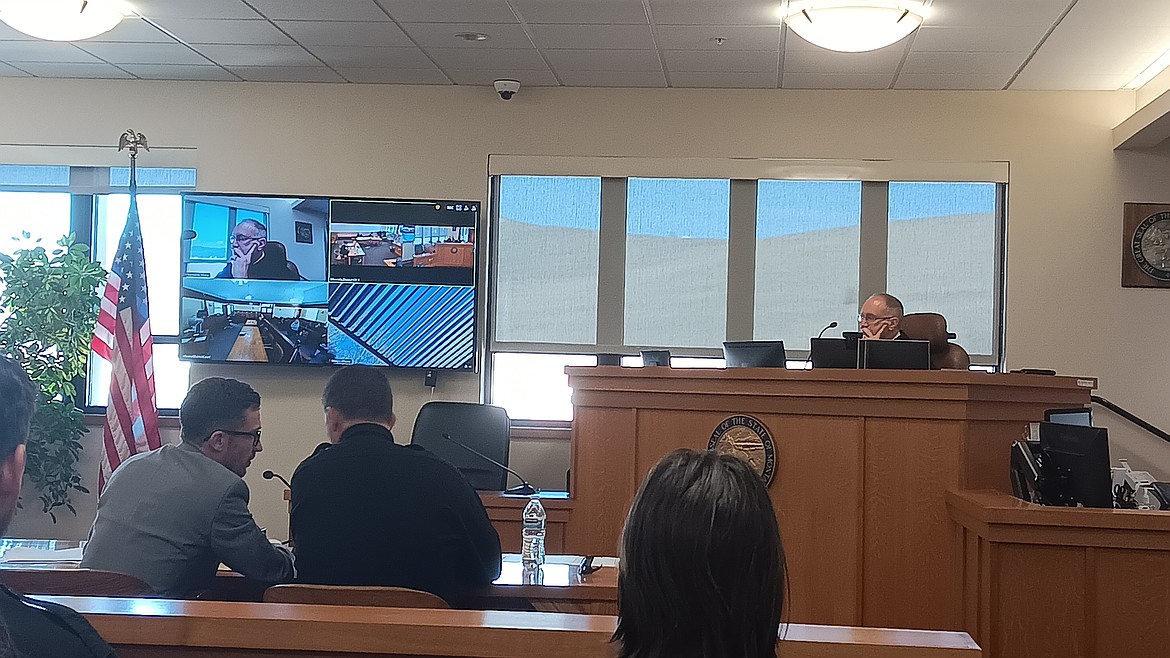
The judge has pushed the rewind button on the so-called Brady case of Mineral County Sheriff Ryan Funke.
In a hearing held April 6 in Missoula, Judge Shane Vanatta vacated his order finding that the Mineral County Attorney’s Office was obligated to turn over charges of misconduct to the defense alleged in a report while Funke was a Lake County deputy.
Vanatta then set an evidentiary hearing into the charges for May 13 in Superior. After hearing testimony and evidence in that hearing, the court will “determine if [any of the information in the report] should be permanently disclosed” to defense counsel in cases where Funke would testify.
“In hindsight, we need to back this up,” the judge said, pointing to the lack of an evidentiary process preceding his initial ruling and the impact of any decision on an “individual’s reputation and ability to continue his profession." The case “was not subject to the evidentiary process normally conducted in court,” he said.
Instead, the court relied on the investigation by the Lake County Attorney’s Office and did not take evidence or testimony. The hearing in Superior, he forewarned, “will be subject to the evidentiary process to the greatest extent possible.”
Further, Vanatta pointed out the lack of an evidentiary process meant the Montana Supreme Court would have no record upon which to rule if his initial order was appealed.
The May hearing was scheduled so that a decision could potentially be made before the June 2 primary election. Vanatta said he anticipated making a “decision very quickly thereafter.”
County Attorney Deb Jackson “will go first and share what incidents the County Attorney believes may be subject to affirmative disclosure.” She has until April 22 to provide Funke’s attorney with a list of incidents she plans to litigate.
The judge said the hearing will be closed to the public, as it involves the discussion of criminal justice information made confidential by statute. The decision will be public, however.
I think the closure is unfortunate. I am no expert regarding the criminal justice information statute, but the purpose appears to be preventing interference with either the investigation and prosecution of crimes. Here, the investigations involved are complete, and the public interest in the conduct of public officials, particularly those facing re-election, is high.
“I know a lot of people are watching today,” Vanatta said during the April 6 hearing. He said he was aware of how this has played out in the media and that the sheriff is up for re-election.
Under the U.S. Supreme Court’s Brady decision, prosecutors are obligated to provide information helpful to the defense, including charges of dishonesty by a law enforcement witness in a particular case.
The judge was concerned about “troubling misinformation” being circulated about the Brady case. Brady is defense centered – to assist the defense to construct whatever case they have to obtain a fair trial. It is not centered on labeling an officer. The decision about whether the information fits under Brady is initially for the prosecutor. If a dispute arises, then the court may be asked to resolve it.
Once the information has been turned over, the court still must rule whether it is admissible. If it is, then the defense is free to cross examine the law enforcement witness about it. For instance, defense counsel may ask the officer about a finding that he was inaccurate in his report. The officer could still contest the finding if appropriate.
No one is officially branded a “Brady cop,” but, as the court pointed out, the potential problems with testifying can have “serious consequences to law enforcement personnel.”
Vanatta vacated his decision after receiving a motion from Funke’s attorney asking the court to reconsider its decision because a mistake had been made or new evidence uncovered. Funke presented the court with an audio recording that appeared to show that Funke had not continued to question a subject without providing her Miranda rights, as alleged in the Lake County report.
Prior to its initial decision, the court had not been able to get the audio from an officer’s body cam to play. The audio revealed that Funke was talking to another officer when the subject began volunteering information, the court said. (I found in my career that body cam recordings were notoriously hard to get to play properly without special software.)
County Attorney Deb Jackson noted the Lake County investigation was done by an investigator out of Kansas, with no reason for bias. She said she planned to present allegations at the evidentiary hearing that Funke had made “false statements orally and in writing.”
All parties, including the court, must certainly agree with Jackson’s concluding comment about the case: “It’s been a long haul.”