
KEA, others urge coal mine expansion oversight
Coeur d'Alene Press | UPDATED 3 weeks, 5 days AGO
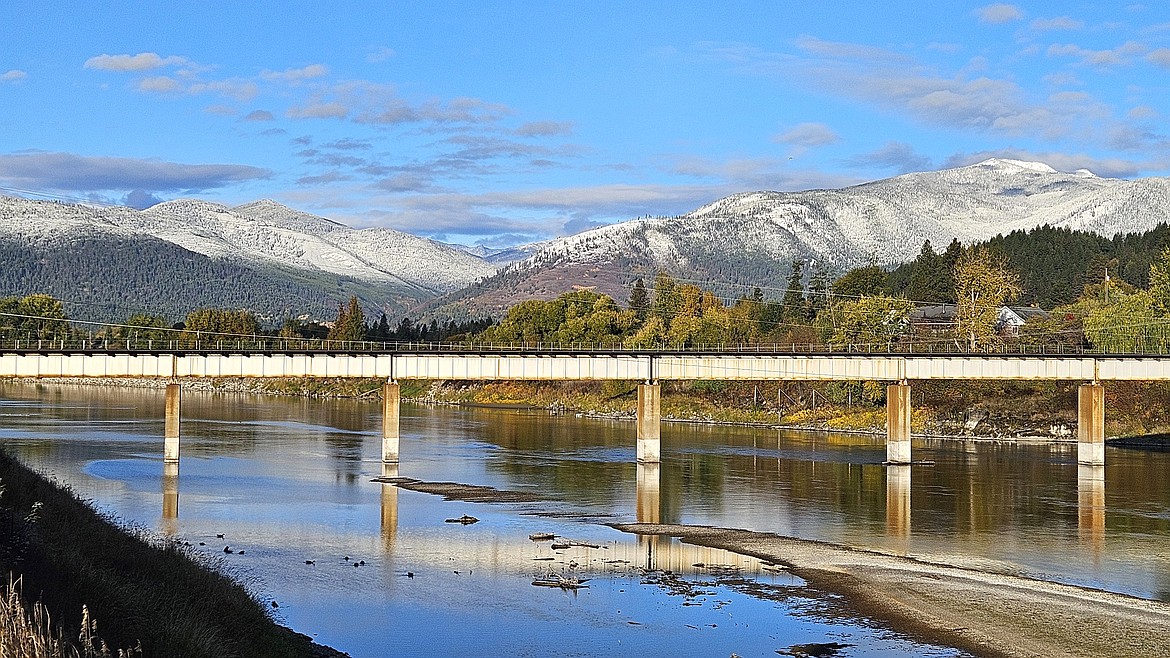
A coalition wants to protect the Kootenai River and other water bodies from potential impacts of a coal mine in Canada.
Jenn Wright / Bonners Ferry Herald
The Kootenai Environmental Alliance, the Idaho Conservation League and the Idaho Panhandle Chapter of Trout Unlimited were among a coalition that has requested that the Canadian government require a more rigorous review of a proposed coal mine expansion in British Columbia they say threatens downstream waters in Montana and Idaho.
In a letter to Canadian Minister of Environment and Climate Change Julie Dabrusin, 34 businesses and organizations called for an independent review panel to evaluate Glencore’s proposed expansion of its Fording River Mine in B.C.’s Elk Valley.
"The degradation of Montana and Idaho’s water from the associated mines has the potential to seriously impact our economies, our outdoor way-of-life, and outdoor recreation opportunities," the letter said.
The Fording River Extension would expand the existing mountaintop removal coal mine by approximately 5,000 acres, "which would exacerbate the damaging selenium pollution in Lake Koocanusa and the Kootenai watershed," a Wednesday press release said.
Under Canadian law, the minister has the authority to designate an independent review panel when projects pose risks to waters shared with the United States.
An independent review panel could examine the proposed expansion and its implications for both Canada and the United States and potentially recommend alternatives or mitigation measures to reduce the risk of further pollution, the release said.
“We hope Canada will do the right thing and appoint a review panel, because the consequences of allowing more pollution are significant for Montana," said Derf Johnson, deputy director of the Montana Environmental Information Center
For decades, open-pit coal mines in British Columbia’s Elk Valley have released selenium into the Elk River, which flows downstream into Lake Koocanusa and the Kootenai River in Montana and Idaho, the release said.
In Idaho, the Kootenai River has been formally designated as impaired for selenium under the Clean Water Act. The request highlights concern about impacts to regional economies, outdoor recreation and the way of life in both states.
“With Idaho’s water already designated as impaired under the Clean Water Act, and with the Boundary Waters Treaty activated to find solutions, it makes no sense to permit a major mine expansion before that work is complete,” said Jennifer Ekstrom, North Idaho director for the Idaho Conservation League. “At a minimum, an independent review panel is needed to ensure a transparent, science-based process that isn’t currently guaranteed.”
A recent U.S. Geological Surve study found that selenium concentrations in the International Elk-Kootenai/y watershed have more than quadrupled over the past four decades, with levels regularly exceeding those considered safe for aquatic life and human health. Researchers noted the increase may be the largest ever recorded in a peer-reviewed study.
These findings are supported by monitoring data from the Kootenai Tribe of Idaho, the release said.
Clean water is a significant economic driver for both states. In Idaho, the report shows $3.9 billion in economic output and 37,000 jobs related to outdoor recreation.
In Montana, recreation-related activities generated more than $3.4 billion in economic output and provided over 30,000 jobs across the state, according to a 2024 report by the U.S. Bureau of Economic Analysis.
The Minister of Environment and Climate Change has until April 23 to determine if the expansion will be referred to an independent review panel.
Other organizations signing the letter include the Clark Fork Coalition, Backcountry Hunters & Anglers Idaho Chapter, Kootenai Valley Trout Club, Selkirk Conservation Alliance and Trout Unlimited.