
Be beary aware
Coeur d'Alene Press | UPDATED 4 months, 3 weeks AGO
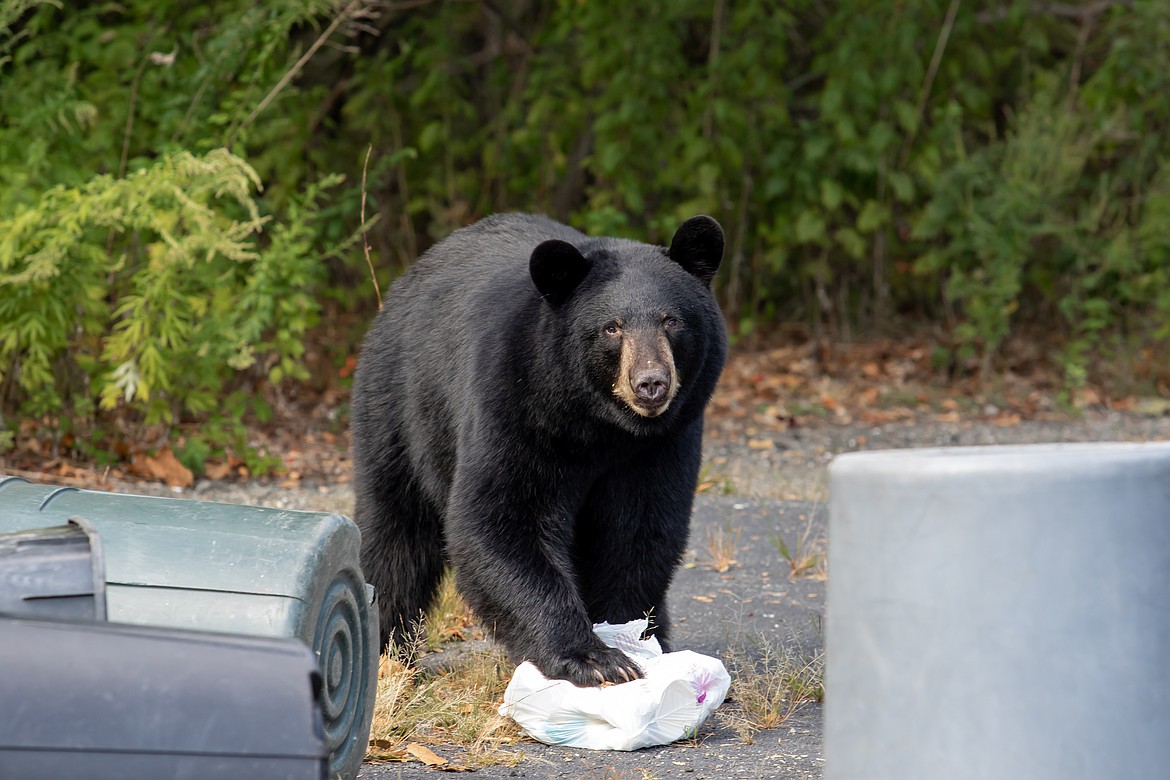
A black bear checks out a trash can in Idaho.
Idaho Department of Fish and Game
Bears have emerged from winter dens across Idaho, Fish and Game is reminding residents and visitors in bear country to stay Bear Aware and take simple steps to prevent attracting bears into neighborhoods, campsites, and recreation areas.
"Early spring is an especially sensitive time for bears. After months of hibernation, they are actively searching for food, yet natural food sources are often limited," a press release said. "Unsecured garbage, pet food, backyard bird feeders and other human-related attractants can quickly become an irresistible draw that brings bears face-to-face with humans."
Idaho has a lot of black bears.
According to Fish and Game, black bears (Ursus americanus) are found throughout both the foothills and forests of Idaho. Between 20,000 and 30,000 black bears roam these wild lands and encounters with people are expected to increase.
Fish and Game recommends the following steps to avoid conflicts between humans and bears:
Living in Bear Country
• Secure garbage in bear-resistant containers or store it indoors or in a hard-sided, locked building until the morning of pickup.
• Remove bird feeders completely or only use them when bears are hibernating (November–March).
• Store pet food and livestock feed inside or in a hard-sided, locked building. Clean up any spilled food.
• Keep barbecue grills clean and store them in a secure location.
• Protect livestock, beehives, fruit trees and compost with electric fencing.
Camping
• Keep food and anything with a scent out of tents.
• Dispose of garbage in provided containers; otherwise, take it with you and dispose of it properly elsewhere. Do not bury or burn garbage.
• Properly store unattended food and anything else with a scent. Food storage options are:
Bear boxes
Hard-sided vehicles (car, truck, RV). Avoid leaving attractants in vehicles for extended periods (backcountry trips)
Certified bear-resistant containers
Electric fencing, depending on local regulations and model or configuration of fence.
Hiking
• Carry bear spray and know how to use it.
• Hike in groups of three or more people. Avoid hiking after dark, or at dawn or dusk, when bears are most active. Use extra caution in places where visibility or hearing is limited, such as bushy areas near streams.
• Be alert. See the bear before you surprise it. Watch for fresh tracks, scat, and feeding sites (signs of digging, rolled rocks, torn-up logs, ripped-open ant hills).
• Make noise. When hiking, periodically yell “Hey bear!” to alert bears to your presence, especially when walking through dense vegetation/blind spots, traveling upwind, near loud streams, or on windy days. Avoid thick brush whenever possible. Bears often use the same trails hikers do, and are attracted to sources of food like berry patches or carcasses.
• View and photograph all wildlife from a distance. You should never come closer than 100 yards to a bear.
— Idaho Department of Fish and Game