
Forest Service restructure will see Idaho managed under new state office
LAURA GUIDO / Idaho Capital Sun | Bonner County Daily Bee | UPDATED 3 weeks, 2 days AGO
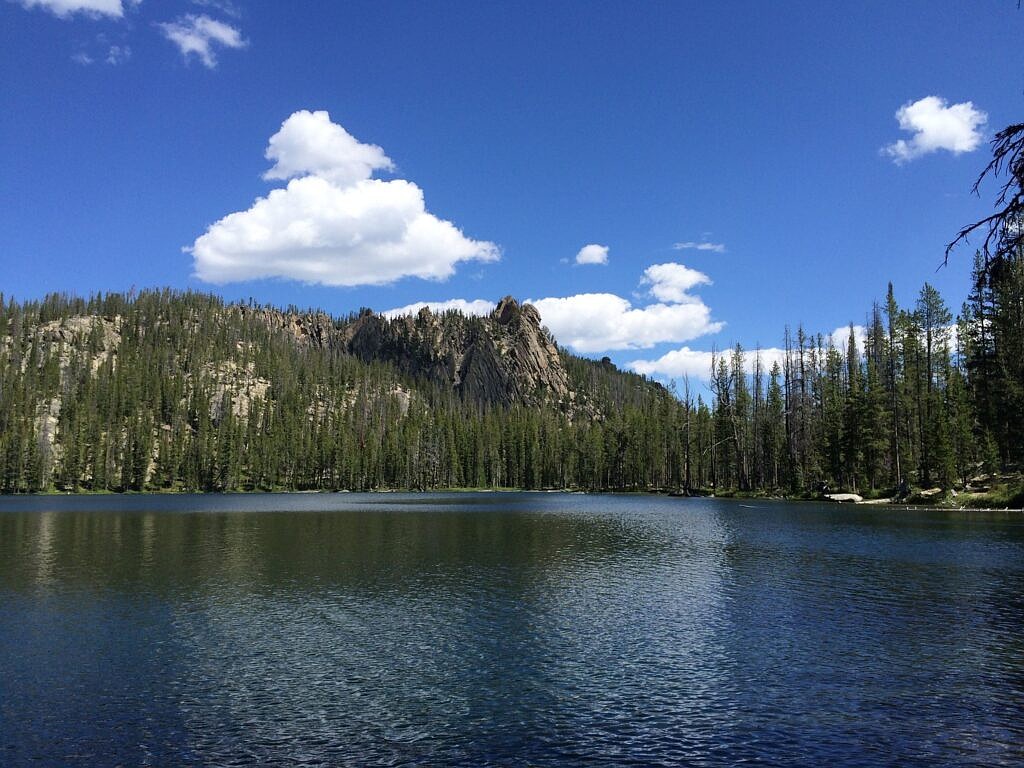
A summer day on Golden Trout Lake in the Salmon-Challis National Forest, in east-central Idaho.
USDA Forest Service photo
Recently announced changes to the U.S. Forest Service are prompting concern and also some cautious optimism from Idahoans interested in protecting the Gem State’s vast forests.
Idaho is home to more than 21 million acres of forest land. Under the new proposal, Idaho lands would be managed by a single office in the state, rather than split between two out-of-state regional offices, which some advocates see as an advantage. But other changes at the agency also include limits on public comment periods for proposed projects, which alarms environmentalists.
The U.S. Department of Agriculture, which oversees the Forest Service, announced at the end of March it would move the Forest Service’s headquarters to Salt Lake City, consolidate research offices, and close regional offices while adding new state facilities — including one in Boise.
The Forest Service is led by Idahoan Tom Schultz.
“This is about building a Forest Service that is nimble, efficient, effective and closer to the forests and communities it serves,” Schultz said in a press release. “Effective stewardship and active management are achieved on the ground, where forests and communities are found—not just behind a desk in the capital.
Idaho’s congressional delegation has responded with support for the move. Some conservationist groups and former Forest Service employees, however, are concerned about how the restructuring will affect the agency’s mission on public lands.
The USDA last week also announced the finalization of new rules around the National Environmental Policy Act, known as NEPA. The new rules are meant to minimize regulations and streamline review, but they also allow for more limited or no public comment on projects.
“The Forest Service reorganization is designed to bring decision-makers closer to the ground and closer to the forest, closer to the communities, and put more boots on the ground. And maybe it will do that,” said John Robison, public lands and wildlife director at the Idaho Conservation League. “… but at the same time the administration is eliminating the actual forums for the public to communicate to the Forest Service.”
Reorganization may bring agency closer to forests, but could be ‘disruptive’
USDA Secretary Brooke Rollins said in a press release announcing the reorganization that the move was intended to concentrate decision-makers in the West, where the vast majority of national forests are located.
“President Trump has made it a priority to return common sense to the way our government works. Moving the Forest Service closer to the forests we manage is an essential action that will improve our core mission of managing our forests while saving taxpayer dollars and boosting employee recruitment,” Rollins said in the release.
However, some groups are concerned that moving around employees will take leaders away from key policy and budget decision-making and coordination efforts with other federal agencies in Washington, D.C.
Bill Avey, board chairman of the National Association of Forest Services Retirees, said his concerns are compounded by mass layoffs at the agency last year instigated by the now-defunct Department of Government Efficiency, or DOGE.
“U.S. Forest Service leadership needs to acknowledge the losses that have occurred, that this organization is going to reduce productivity and set realistic expectations for the work that’s going to get done,” Avey said in a phone interview. “You’re not going to get more work done with less people. It just doesn’t work that way.”
Around 500 employees are expected to relocate under the new plan, according to the federal agency.
Robison and Avey both said they had been told the major reorganization wouldn’t occur until the current fire season ended.
Idaho will get its own office under new plan, but details aren’t clear
Idaho’s national forests are overseen by leaders in two regional offices, both located out-of-state. The southern part of the state is covered by a Forest Service office in Ogden, Utah, and the northern panhandle is covered by an office in Missoula, Montana.
The plan calls for more state-based leadership with 15 new state directors to oversee operations.
Robison, of the Idaho Conservation League, noted that the BLM operates under a similar state-office model.
“I think that this is one where it could make some sense, and we already have a long standing example of the BLM,” Robison said, “where this could be a logistical step that could benefit Idaho.”
An unanswered question remains as to how the reallocation of staff and services will be carried out, he said. Existing offices support ranger districts, coordinate activities between national forests and grasslands, and allocate budgets for forests in their area.
The state offices are expected to have fewer staff, and it hasn’t been announced how many of the services will be retained.
New limited public comment rules already in effect on Forest Service projects
Rollins, the USDA secretary, also recently announced the finalization of new regulatory rules, meant to streamline environmental reviews of projects on public forest lands. The new rules have been in place on an interim basis since July.
“Since last July, agencies at USDA have shown they can reduce environmental review timelines by up to 80%. These faster, more efficient reviews are saving the Department millions in taxpayer dollars,” Rollins said in a press release.
The new rules have already affected Idaho. In December, a project that includes commercial timber harvesting covering around 2,500 acres of the Sawtooth National Forest was proposed. Under previous rules, the project would’ve had a 30-day scoping period and another 30-day comment period of a draft environmental review.
“These public comments provide community members with opportunities to shape the project to optimize treatment activities and minimize negative effects,” Robison said in an email. “(Idaho Conservation League) has seen substantive project improvements in numerous projects as a result.”
Under the new rule, the Forest Service has fewer requirements for notifying people of proposed projects, which could include timber harvesting, road or trail repairs, environmental restoration work, or mining and other permits.
There are also new rules for emergency authorizations, which can eliminate requirements for public comments completely.