
Surveys of Moses Lake residents show attitudes toward service cuts, sales tax increase
CHERYL SCHWEIZER | Hagadone News Network | UPDATED 4 months, 2 weeks AGO
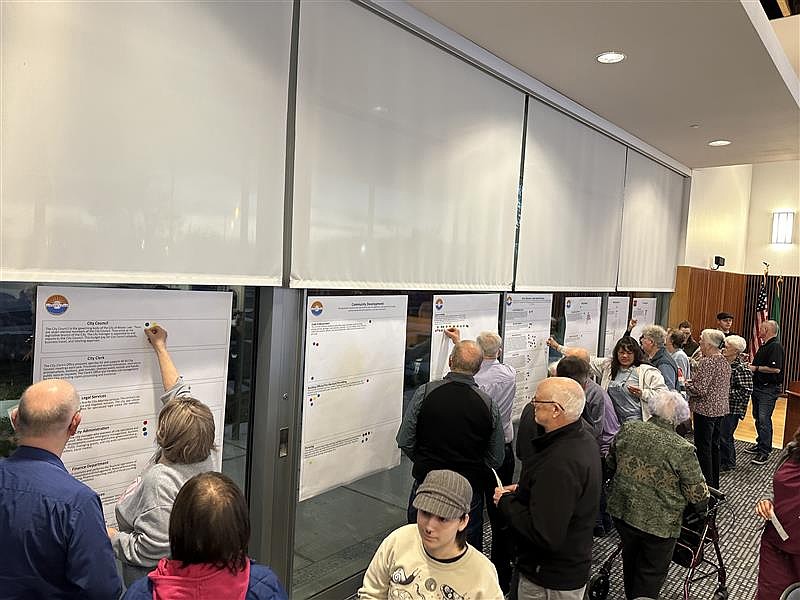
Participants in a March 16 town hall consider services provided by the city of Moses Lake and which are important to them.
COURTESY PHOTO/CITY OF MOSES LAKE
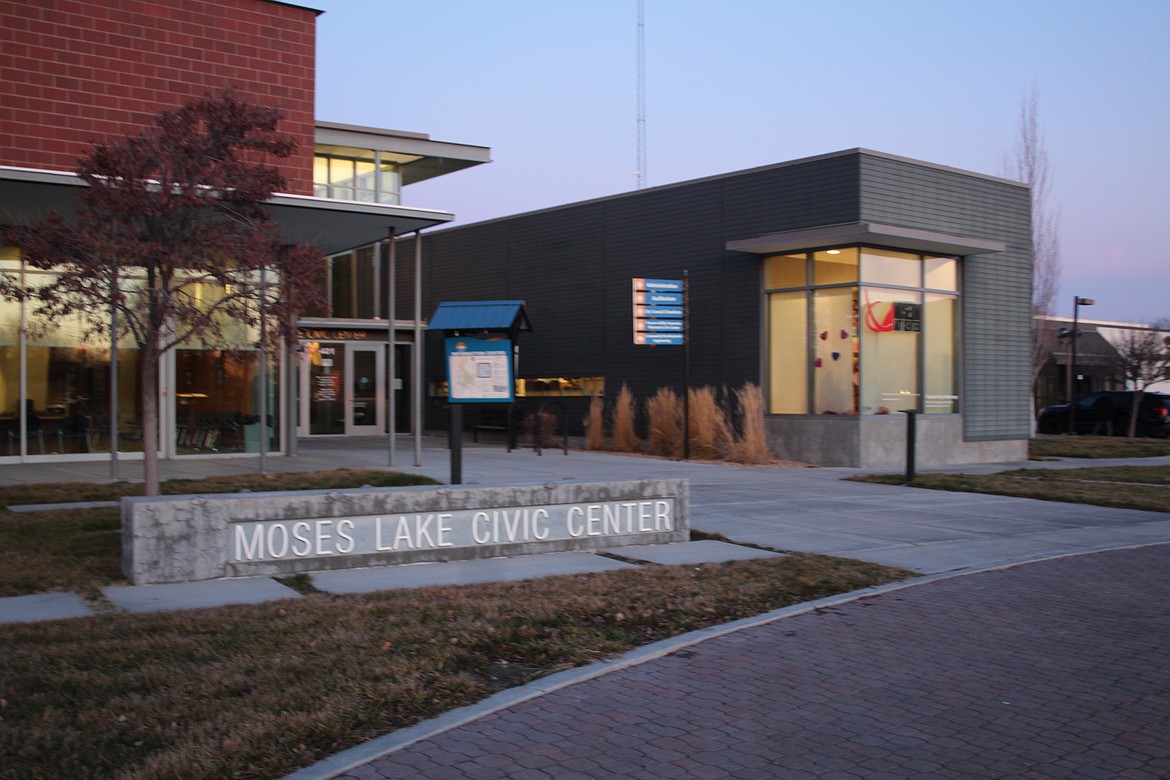
Results of a citywide survey indicated Moses Lake residents might be willing to accept a sales tax increase and service cuts to balance the city’s general fund budget.
Senior Reporter Cheryl Schweizer is a journalist with more than 30 years of experience serving small communities in the Pacific Northwest. She began her post-high-school education at Treasure Valley Community College and enerned her journalism degree at Oregon State University. After working for multiple publications, she has settled down at the Columbia Basin Herald and has been a staple of the newsroom for more than a decade. Schweizer’s dedication to her communities and profession has earned her the nickname “The Baroness of Bylines.” She covers a variety of beats including health, business and various municipalities. | April 18, 2026 11:33 AM
MOSES LAKE — About 49% of Moses Lake residents contacted as part of a survey of community attitudes and priorities said they were satisfied with the direction of the city, with about 42% saying they thought the city was on the wrong track. The biggest concerns of survey respondents centered around homelessness and public safety.
The survey was part of a larger project to get public input on possible revisions to city programs due to a deficit in the general fund.
“We’re trying to understand how voters look at their values and what kinds of things you might have the opportunity to do in the future as you’re thinking about corralling this budget. Where are the opportunities, where will you find resistance and (where) will you find more agreement among voters?” said Ian Stewart, of Fulcrum Strategy group, which conducted the survey.
The general fund incurred a deficit in 2025; Moses Lake City Council members opted to make up the difference from the city’s reserves. The operating deficit was smaller in 2026, but there’s still a deficit and council members have made it one of their goals to eliminate that deficit in the future. What that means is the subject of ongoing discussions, including a special council meeting Tuesday.
The survey got responses from 300 residents and had an overall margin of error of 5.7%. It was broken down by geographic region and by age.
Respondents were asked how they would prefer to address the budget deficit:whether they would support a mix of tax increases and service cuts, or if they would prefer no tax increases and larger service cuts.
“This might vary by age because age is a big marker of how people think about taxation in a lot of places,” Stewart said. “If you’re looking at those under 50 years old versus over 50 years old, you can see the differences here.”
The respondents less than 50 years of age were more supportive of a mix of service cuts and tax increases. Of people younger than 50 years old, 58% supported higher taxes and service cuts together. Of respondents over 50 years old, 48% said they would support a mix of higher taxes and service cuts.
“There are differences in the community, but in this instance it’s still either a majority or plurality (supporting) a combination of service cuts and tax increases,” Stewart said.
If voters were asked for a tax increase, more would support a 0.1% sales tax increase for police and public safety, rather than the same increase for cultural programs. The public safety option got support from 73% of respondents, while 42% were in support of the cultural programs option.
The Moses Lake Public Library, Moses Lake Museum & Art Center and Surf ‘n Slide Water Park got support from about 35 participants in a March 16 “financial sustainability” town hall. Participants in that town hall were asked which city services are important to them.
The library, parks, museum and water park all received a lot of votes from town hall participants as being important to them. The Moses Lake Fire Department was identified as important to respondents, and the patrol function of the Moses Lake Police Department.
The Larson Recreation Center, MLPD’s community policing and street crimes unit, and roadway maintenance were important to town hall respondents, but not as important. Functions like snow and ice removal, permitting, city administration and recreation programs got the lowest number of town hall votes.
“Lower response counts in core administrative and operational functions may suggest those are viewed as essential functions,” city staff wrote in an analysis included with the town hall poll results.
The citywide survey respondents were asked how many times a year they used the city’s parks and recreation facilities. About 83% said they visited a park or used a walking trail at least once per year. About 64% used a city sports field or sports court at least once a year, which was about the same percentage of respondents who used the water park. About 50% of respondents visited the library, the museum or the Larson Rec Center at least once a year.
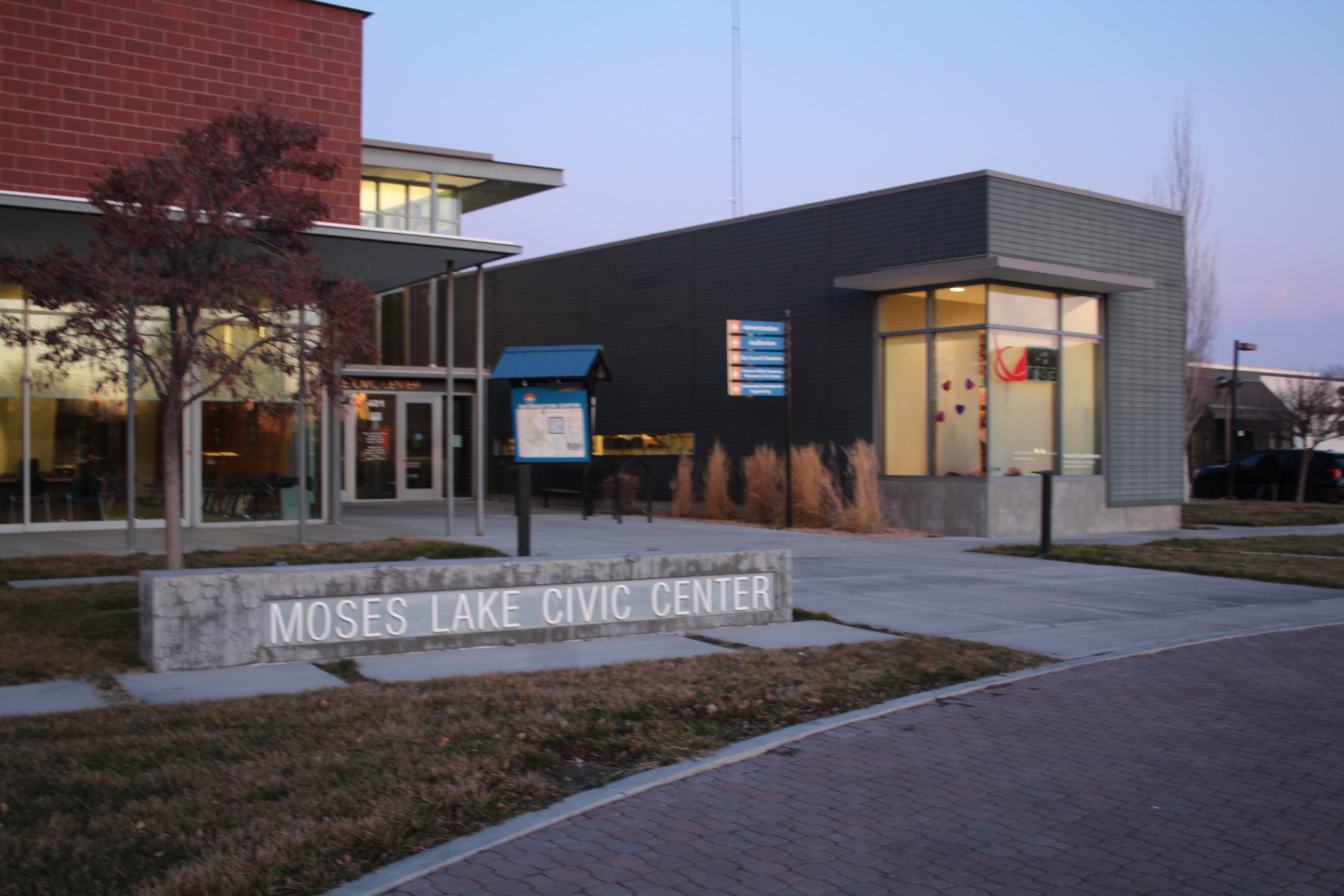 Results of a citywide survey indicated Moses Lake residents might be willing to accept a sales tax increase and service cuts to balance the city’s general fund budget.
ARTICLES BY CHERYL SCHWEIZER
Road projects on hold for Labor Day weekend
MOSES LAKE — With Labor Day weekend dead ahead, drivers will be able to move freely about the state. Most road projects are on hold for the holiday weekend. Nobody will be working on the Hansen Road overpass on Interstate 90, but the lane restrictions that are in effect will continue through the end of the project.
Cost estimates for water source alternatives given to Moses Lake City Council
Protected under the U.S. Endangered Species Act, efforts are ongoing to keep it self-sufficient
MOSES LAKE — It’s going to cost a lot of money to provide alternative water sources for the city of Moses Lake, but some of the possible alternatives will cost more than others. City officials provided the Moses Lake City Council with costs for various alternatives Tuesday.

Dryer vent cleaning is important -- but often overlooked
MOSES LAKE — Not all the maintenance a house needs is visible. Sometimes a potential problem just goes unnoticed until it causes trouble, sometimes serious trouble. But a lot of potential problems give off warning signs. Clothes dryers often do when they need a good cleaning.