
OUR GEM: Tracking phosphorus in lake tributaries to protect Lake Cd’A
SHARON BOSLEY, Special to The Press | Coeur d'Alene Press | UPDATED 1 week, 5 days AGO
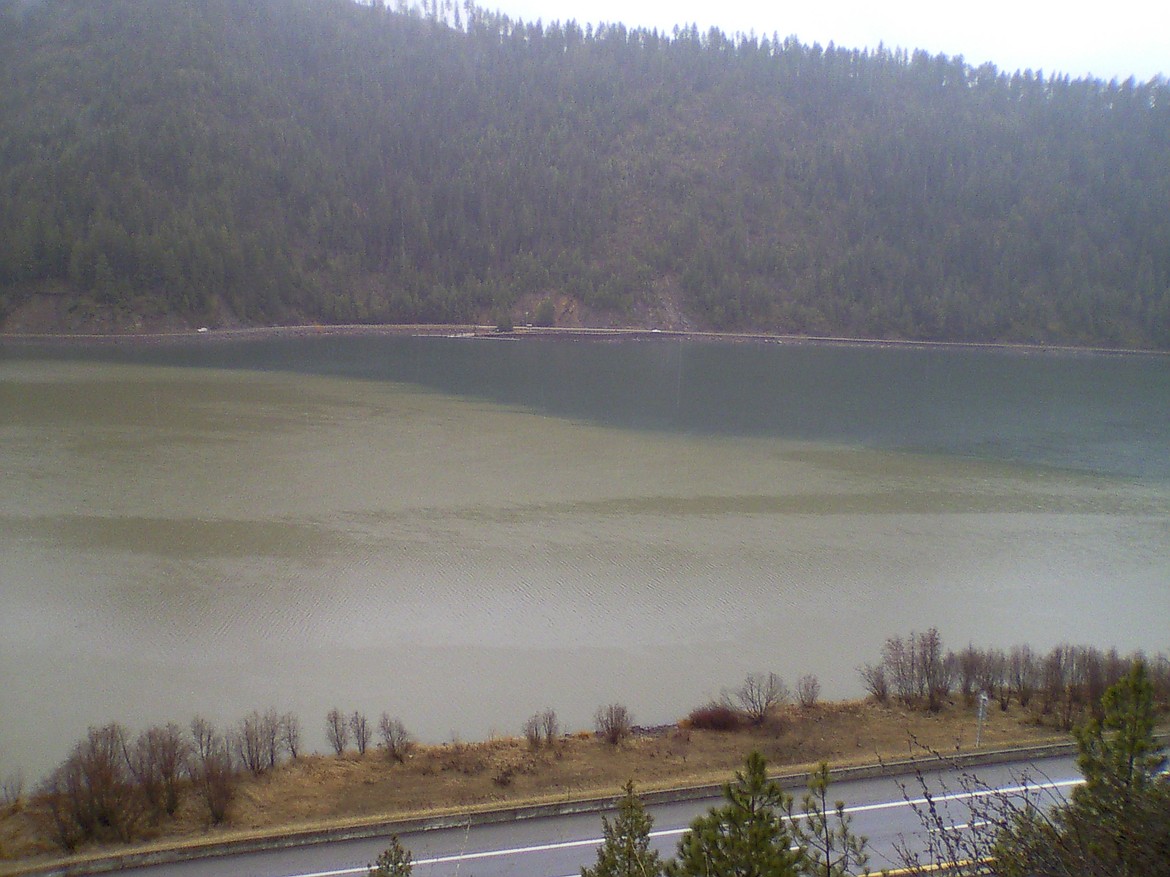
Photo courtesy of Our Gem.
Understanding how phosphorus enters and moves through Lake Coeur d'Alene is critical to protecting water quality and managing long-term environmental risks. According to Craig Cooper of the Idaho Department of Environmental Quality (DEQ), phosphorus plays a key role in influencing metal mobility in the lake. While nutrients like phosphorus support algae growth, the decomposition of that algae can reduce oxygen levels and pH in deeper waters, conditions that may trigger the release of metals from lakebed sediments. This connection between nutrients and metals makes phosphorus monitoring especially important in a system like Lake Coeur d'Alene, where legacy mining contamination remains a concern.
Tributaries that flow into the lake are a significant source of phosphorus and have become a major focus of recent monitoring efforts. DEQ and the Coeur d’Alene Tribe have previously estimated that these streams contribute an estimated 12 to 28 tons of phosphorus annually, accounting for roughly 6–16% of the total phosphorus load entering the lake. Their proximity delivers nutrients to the lake quickly, and in some cases, tributary inputs may include a higher fraction of bioavailable phosphorus, increasing their influence on lake productivity. At the same time, increasing development pressure in the region has heightened concerns about how land use changes may be affecting nutrient loading.
Historically, phosphorus inputs from tributaries were estimated primarily through modeling, leaving a gap in direct, measured data. DEQ staff designed and began implementing a more comprehensive monitoring program to fill this data gap in 2019. A National Academy of Sciences (NAS) study in 2022 highlighted the lack of measured tributary data as a key uncertainty, validating DEQ’s efforts. Coeur d’Alene Tribe staff have also developed a plan to monitor tributaries in the southern end of the watershed, and monitoring is under way.
The scale and complexity of the lake’s watershed poses challenges. With more than 40 watersheds, varying access conditions, and significant seasonal and annual variability, it is not feasible to monitor every stream. To address this, DEQ selected 20 representative watersheds for the monitoring effort described above, covering approximately 35% of the lake’s drainage area. These sites were chosen to reflect a range of land uses, development intensities, and geographic distribution, with additional emphasis on the north and west shores of the lake. The monitoring approach included monthly manual sampling, as well as additional sampling during runoff events when phosphorus loads are often highest. In core watersheds, 40 to 50 samples per stream have been collected to improve the accuracy of load calculations, particularly during high-flow conditions.
Results from the monitoring effort have identified several priority tributaries. Fernan Creek, Wolf Lodge Creek, and Mica Creek rank among the highest in total phosphorus load, while Bennett Creek, Neachen Creek, and French Gulch show high yields relative to their size. In contrast, smaller “micro-watersheds” generally exhibit lower total loads and mid-to-low yields, with some developed north shore streams showing relatively low phosphorus output.
Seasonal patterns also play a critical role. The highest phosphorus loads typically occur from January through March, with elevated levels continuing into April and June, largely driven by runoff events. During these periods, phosphorus concentrations per unit of water are also higher, reflecting the mobilization of nutrients from soils and landscapes. Understanding this timing helps align monitoring efforts with periods of greatest impact and improves comparisons with other lake data, such as measures of biological productivity.
Human influence appears to be a substantial contributor to phosphorus loading. By comparing monitored streams to a natural background reference site, DEQ estimates that a large amount of the phosphorus entering the lake from the tributaries may be linked to human activities. Preliminary estimates are as much as 50%, but there are many unknowns and better estimates are needed. These findings also suggest that phosphorus loads may be up to 30–60% higher than they were in the 1990s, potentially reflecting increased development and land use changes. The results of this effort can be reviewed in a report on DEQ’s website at https://www.deq.idaho.gov/water-quality/surface-water/coeur-dalene-lake-management/ under “Coeur d’Alene Lake Scientific Reports.”
DEQ has built on this work by developing a model to better estimate loading from watersheds that were not monitored. This report can also be viewed at the DEQ website listed previously. The Tribe’s monitoring effort is ongoing. Together, these efforts will support more targeted nutrient management strategies, help prioritize restoration actions, and evaluate the effectiveness of recent projects in key watersheds such as Fernan, Mica, and Wolf Lodge Creeks. This work represents an important step toward protecting the long-term health of Lake Coeur d'Alene.
Learn more about the Our Gem Collaborative at uidaho.edu/OurGem