
Rivers plan draws more than 1,000 comments, often with pointed criticism
CHRIS PETERSON | Hagadone News Network | UPDATED 12 hours, 36 minutes AGO
Chris Peterson is the editor of the Hungry Horse News. He covers Columbia Falls, the Canyon, Glacier National Park and the Bob Marshall Wilderness. All told, about 4 million acres of the best parts of the planet. He can be reached at [email protected] or 406-892-2151. | April 22, 2026 12:00 AM
The Flathead National Forest received 1,088 comments on the draft Comprehensive River management Plan for the three forks of the Flathead River in the National Wild and Scenic River System.
A little over 500 were considered form letters, but plenty of other people and organizations weighed in on the plan, which seeks to balance commercial and private use of the 219-mile long river system while maintaining the rivers' standing as some of the finest on Earth.
Flathead Trout Unlimited, for example, was pleased to see use being curtailed on the South Fork of the Flathead River in light of declining bull trout numbers in one of the nation’s last bastions for the big fish.
It also supported curtailing motorized use on gravel bars and the free unlimited permit system for users.
“That being said, we still lack confidence that the plan will adequately protect the Fishery Outstanding Resource Values. In fact, the Environmental Analysis strongly hints that the plan as written is harmful to the Fishery ORV (but never quite determines if it is significant or not). We are left wondering how the decision makers will understand the effects and have any confidence that this CMRP will actually be worth a darn,” the organization wrote in its letter.
It points out there is no plan to monitor cutthroat trout populations, which are seeing threats from hybridization with rainbow trout. It suggests outfitters could be helpful in collecting data.
“… We strongly recommended fishing outfitters be required to collect data on catch and effort. We think this would greatly enhance our understanding of the role of angling pressure on the fishery. There are excellent apps available to make this easy. This data would be more effective and affordable than a traditional creel survey. To our disappointment, we could not find any mention of monitoring angling effort in the CRMP,” Trout Unlimited wrote.
Others raised concerns about the permit system.
The American Packrafting Association said it supported the permit system, but offered critiques.
“We support the use of the permit system to build a more empirically grounded baseline for these sections before any hard use restrictions are imposed. Restricting access based on estimates that are acknowledged to be data-limited would be premature and difficult to defend.
“We request that the final CRMP include an explicit commitment to collect disaggregated use data on the South Fork wild sections during the initial permit period, and that capacity adjustments be triggered by that data rather than by current estimates,” it said.
The system has yet to be fully fleshed out, but the wilderness sections of the Middle and South Forks would likely be the first areas to see permits.
The Packrafters also asked that they be allowed to get a permit at takeout rather than put-in, as they don’t always access at traditional trailheads.
“We request that implementation explicitly accommodate packrafters who may not use the traditional put-ins that other river users do. Physical permits must be available at possible trailheads and access points given limited cell service throughout the corridor. We encourage the Forest Service to explore other options for packrafters, such as obtaining a permit from a Forest Service employee they encounter along their route, or to retroactively obtain a permit at the takeout. We request that packrafters who access the river via a non-standard route not be penalized for obtaining permits at takeout rather than put-in.
“We support extending the permit requirement to all user types, not just boaters, so that monitoring data reflects total corridor use equitably,” the organization wrote.
But Wilderness Watch, a national advocacy organization, said it already saw problems with the plan as it pertains to wilderness.
It noted that in most instances, the more restrictive legislation is the Wilderness Act, not the Wild and Scenic Rivers Act.
“Wilderness seems to be an afterthought,” it claims.
It also brought up longstanding concerns about packrafters putting more pressure on the bull trout fishery and creating more plane traffic at the Schafer Air Strip in the Great Bear Wilderness, as people fly in with their packrafts and then float out down the Middle Fork.
“There is no question use has greatly increased on both the Middle Fork and the South Fork, in part due to technologies that permit ultralight packable rafts and in part due to increases in use on the Wild section of the Middle Fork by both outfitted and non-outfitted users since designation as wilderness ... in 1978,” Wilderness Watch wrote. “We suggest that the Forest Service reduce impacts by implementing actual limits on use within the Middle and South Forks Wild segments. This would include packrafts as well as full-sized rafts, kayaks and other watercraft.
“It is also clear the current levels of use are excessive and any limits should reduce those impacts,” the group added.
Others gave practical comments on day-to-day operations.
Glacier Guides and Montana Raft offered a few suggestions.
They recommended the Forest Service establish a designated portable toilet clean-out location and garbage receptacle at an appropriate river access site to support proper sanitation and protect water quality.
They also recommended maintaining outfitter use from Paola to Cascadilla within the lower river priority pool system, rather than including it within the more regulated Bear Creek to Paola reach.
“This segment functions operationally as part of the lower river for guided overnight camping trips and should be managed accordingly. Maintaining this distinction will ensure that management boundaries remain consistent with established operational use patterns, trip logistics, and campsite distribution along the lower river corridor,” it notes.
“The CRMP should also continue to recognize historic outfitter use and the important role professional guides play in providing safe, low-impact public access to Wild and Scenic rivers. Thoughtful management can protect these rivers while maintaining responsible public access, stewardship, and long-standing recreation traditions consistent with the Wild and Scenic Rivers Act,” the company said.
Another national organization, American Rivers, expressed confusion about “user capacities” that are noted in the plan, saying the Forest Service changes its own language in the document.
It also raised broader concerns about use in general, echoing concerns brought up when the Forest Service released the proposed action prior to the Environmental Assessment.
“The CRMP should not allow increases in commercial or private use where monitoring already shows significant impacts to outstanding resource values. Since specific declines in water quality, botany, fisheries, recreation and wildlife ORVs are already broadly documented in the [Environmental Assessment], we question the increased user capacities on most segments,” it notes.
After taking public comments into account, the hope is to have a final plan completed by this summer with implementation in the 2027 season.
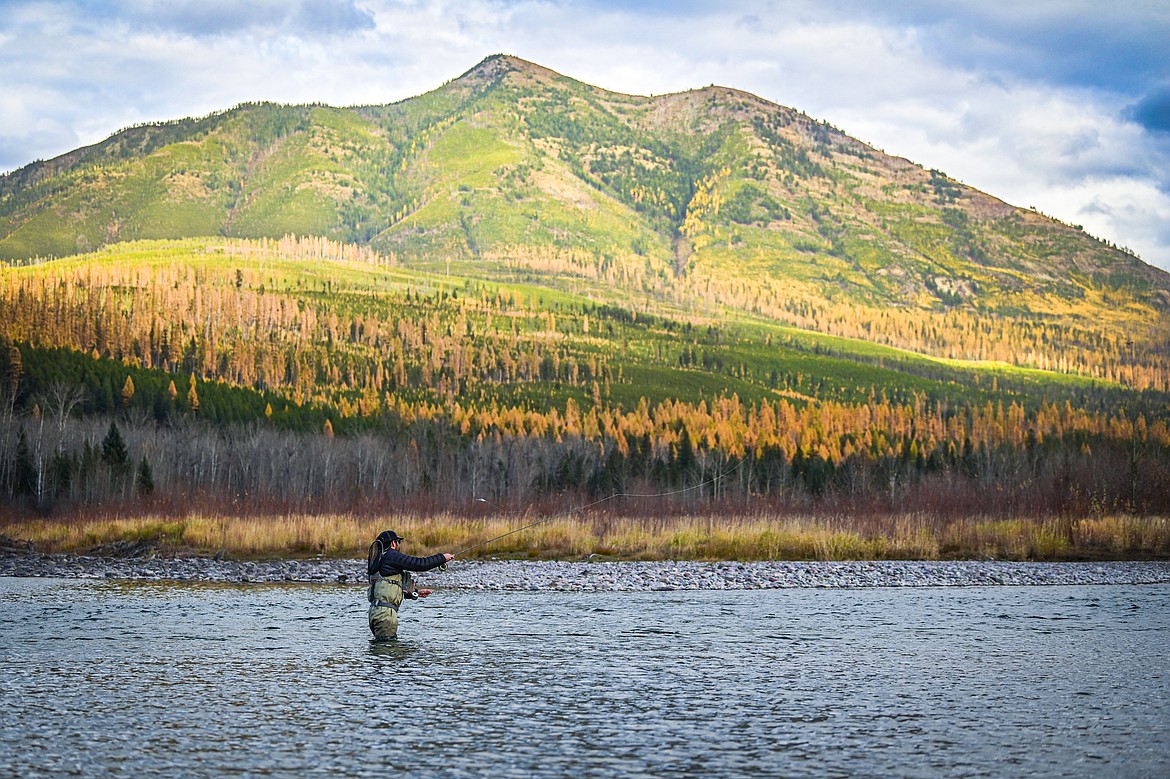
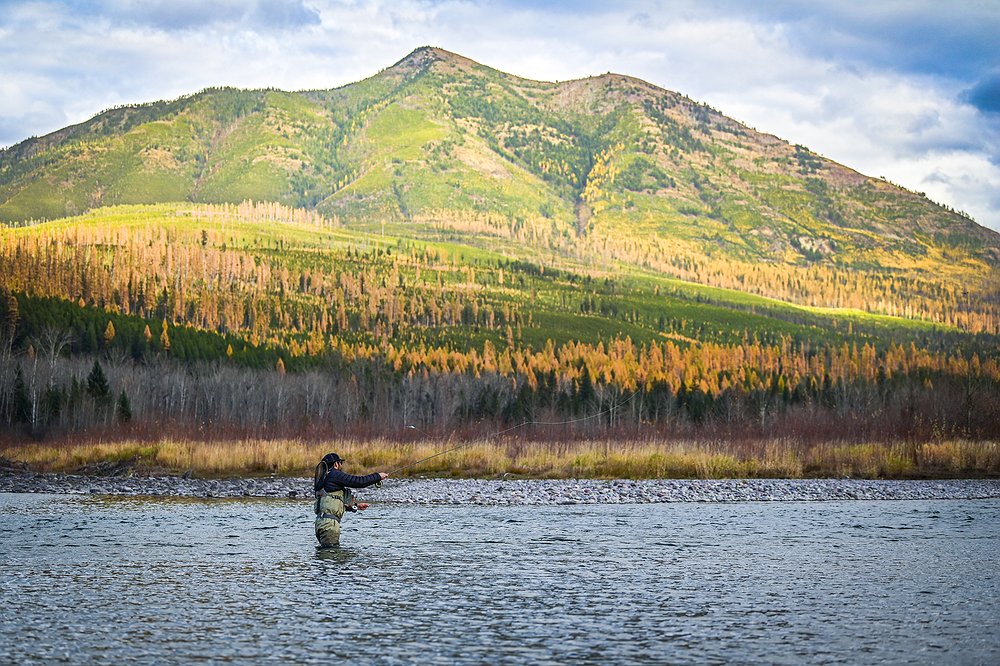 Milan Mena casts a line into the Middle Fork Flathead River below Loneman Mountain in 2024. (Casey Kreider/Daily Inter Lake FILE)
Casey Kreider
ARTICLES BY CHRIS PETERSON
Bail reduced for Columbia Falls man charged in DUI wreck that severely injured couple
A Columbia Falls man had his bail reduced last week in Flathead County District Court but not to the degree the defense would have liked.

For Hazel Alexander, a remarkable recovery
For Hazel Alexander, some days she takes baby steps. Others she takes big steps. But make no mistake, they’re all steps forward and illustrate her remarkable recovery and drive to succeed in life.

‘Cocaine Fairy’ gets 20 years for burglary ring
A Hungry Horse man was sentenced by District Court Judge Paul Sullivan April 16 to 20 years in prison with credit for time served for being the ringleader in a major burglary ring in Flathead County.