
PET TALK A well-fed mind: Mealtime enrichment for cats
PET TALK | Coeur d'Alene Press | UPDATED 3 weeks, 3 days AGO
Pet Talk
The typical day for an indoor cat is often filled with continuous attention, cozy naps and — most importantly — a scheduled dinnertime.
Because indoor cats miss out on the exploration and adventure accessible to outdoor cats, they may be left feeling restless.
However, owners can bridge that gap in stimulation by implementing opportunities for enrichment as part of their feline friend’s regular meal routine.
Dr. Erin Ray, a clinical assistant professor at the Texas A&M College of Veterinary Medicine and Biomedical Sciences, provides insight into how owners can better support the mental and physical well-being of their cats.
An enriching lifestyle
All cats need enrichment, but indoor cats often require more intentional stimulation than their outdoor counterparts, since they are not able to roam, hunt or eat small meals like they would when they’re outdoors.
“While an indoor lifestyle can be safer for cats, oftentimes, indoor cats are not hunting for their food, have limited one-on-one play times and can have less physical expenditure inside,” Ray said.
Just like many other animals, cats can become destructive when they are not getting enough daily enrichment, with behaviors that include:
• Chewing and eating toys or items in the house
• Inappropriate urination or defecation
• Scratching
Beyond short-term behaviors, there are also long-term consequences for cats whose enrichment activities are not prioritized. For example, according to the 2022 Association for Pet Obesity Prevention Survey, 61% of the feline population in the U.S. are categorized as overweight or obese.
“Indoor cats tend to live a more sedentary lifestyle, which can lead to decreased mobility, cardiovascular health-issues and weight gain,” Ray said.
Mealtime games
One way to stimulate your cat’s feline instincts is by implementing various feeding techniques, according to Ray.
For example, the type, size and location of your pet’s food and water bowls can be tailored to each individual cat.
“Tilted and raised food bowls can be helpful for cats with oral, neck or shoulder pain,” Ray said. “Another potential benefit from these bowls is in the reduction of chin acne.”
“Also, many cats don’t like when their whiskers touch the bowls they have food or water in,” Ray said. “These types of bowls are often very open and reduce whisker fatigue or annoyance.”
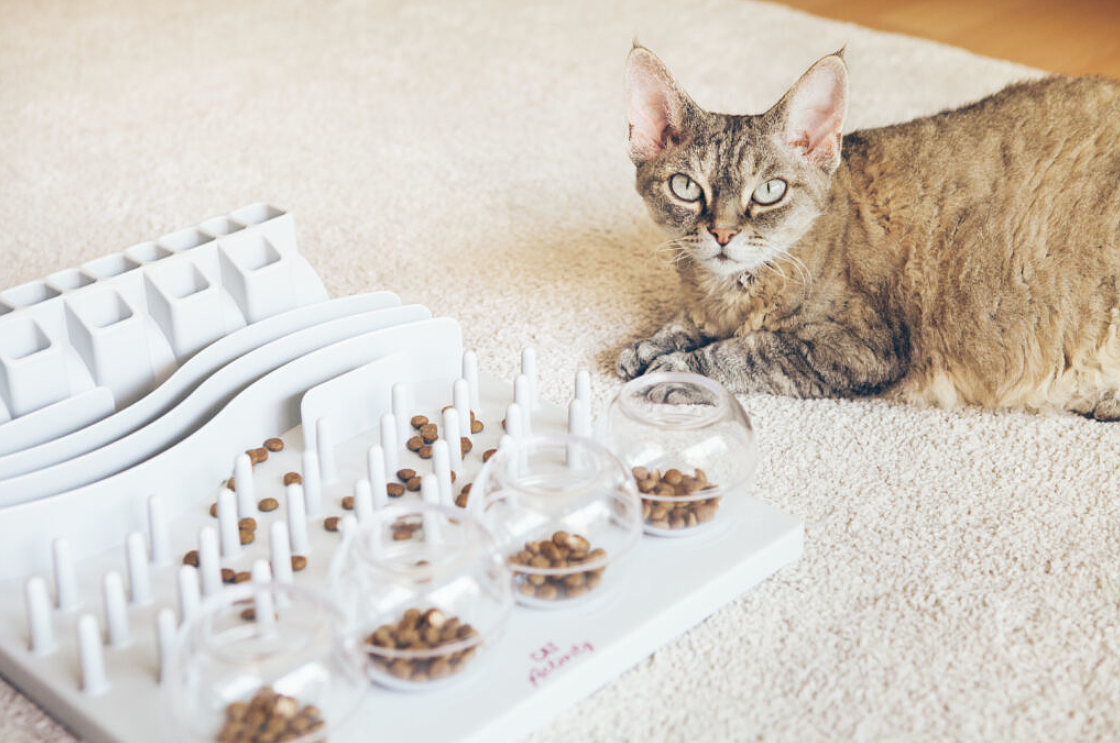
In addition to tilted bowls, there are various types of puzzles that cats can use to get their food — including for both dry or wet types — instead of the traditional bowl eating.
“Puzzle feeders can be very helpful for improving the lifestyle of indoor cats,” Ray said. “There are lick mats where canned foods, semi-solid treats and crunchy foods can be utilized for a simple interaction.”
These mats — often made of silicone — are textured and encourage the cat to slow down their eating while also mediating stress. Many owners use them as a happy distraction while they are being groomed or bathed.
Owners also can create a stimulating experience by crafting their own games for their furry friends.
“Cats can ‘hunt’ for treats or foods that owners have hidden around the house or in a contained room,” Ray said. “Treats rolled up in a small towel are a quick and easy way for cats to search for lingering treats.”
Providing cats with these opportunities to exercise their skills and alleviate their boredom can also act as a positive bonding modality for pets and owners, while also:
• Improving mental stimulation
• Encouraging physical activity
• Decreasing anxiety or stress
Safety measures
As with the introduction of any habit or product, owners must keep a close eye on their pets to ensure safety is being maintained.
“Monitor your pets closely to ensure pieces of the feeding puzzles, towels or crafted materials are not broken off,” Ray said. “Also, avoid any puzzles with small pieces or parts that can be ingested easily. Furthermore, make sure the products do not have any coating or paint overlying that could be toxic when ingested.”
It may initially be frustrating for some pets to have to work for their dinner, so you may need to introduce a puzzle little by little.
“It is also very important to make sure all puzzles and bowls are cleaned after each use to avoid any buildup of bacterial or unwanted pathogens that could pose a health risk to your pet,” Ray said.
Supporting the physical and emotional well-being of your cat is of the utmost importance, and weaving enrichment activities into mealtimes is a great, and easy, way to improve the quality of life for your furry friend.
•••
Pet Talk is a service of the College of Veterinary Medicine & Biomedical Sciences, Texas A&M University. Stories can be viewed on the web at vetmed.tamu.edu/news/pet-talk. Suggestions for future topics may be directed to [email protected].