
The Simple Things: Whitewater rafting the main Salmon River
DAVID GROTH / It's the Simple Things | Coeur d'Alene Press | UPDATED 1 week, 6 days AGO
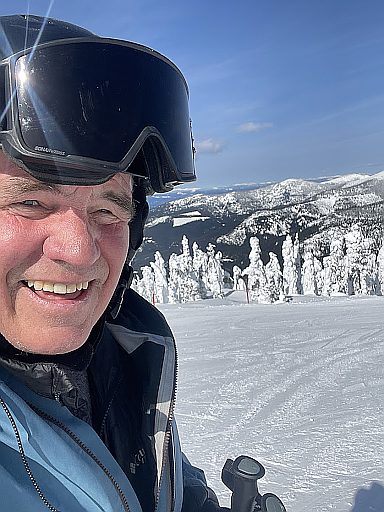
Groth
Meriwether Lewis and William Clark, on their quest to locate a pathway to the Pacific Ocean, wrestled with the Salmon River in August of 1805.
I experienced the challenge and the magic of the Salmon River this past week on a whitewater rafting trip with 30 people, guided by Row Adventures, a high-quality Coeur d’Alene outfitter.
Lewis and Clark wanted the Salmon River to be their water route across the Bitterroot Mountains. Clark and a small scouting party, aided by a guide named Old Toby, pushed 52 miles down the river from near present-day North Fork, Idaho, only to find continuous, impassable whitewater and sheer cliffs. (Quite amazing, to me, that they went 52 miles before deciding that the river was impassable.)
With ROW, we floated 81 miles of the Main Salmon River, made much easier by modern-day Hypalon rafts, in contrast with the hard-sided canoes and large sweep boats of the 19th century.
The Salmon River earned the nickname “The River of No Return” out of pure logistics and geography. In the 19th and 20th centuries, travelers and entrepreneurs built large, wooden freight boats to transport supplies, gold and lumber downstream. Because of the river's wild rapids and strong currents, it was impossible to navigate upstream, so when the boats reached their destination, they were dismantled and sold as scrap lumber — or used to build a house. Hence, the “River of No Return.”
In 1980, the United States Congress solidified the historic moniker by establishing the “Frank Church River of No Return Wilderness,” through the Central Idaho Wilderness Act, signed by President Jimmy Carter. Sponsored by U.S. Sen. Frank Church, it protected over 2.3 million acres of Idaho’s rugged terrain, becoming the largest contiguous wilderness area in the lower 48 states.
After accepting that the Salmon River was impassable, Lewis and Clark headed north and eventually crossed the Bitterroot Mountains along the Lochsa River, which is now hugged by Highway 12.
The Salmon River is an Idaho treasure, historically and today. One can’t overestimate the value of Frank Church’s efforts to declare this area Wilderness, with a capital “W.”
Our amazing Canadian neighbor
I visited Tofino, British Columbia, on the west coast of Vancouver Island. My daughter and her family invited me to join them at their honeymoon place from 13 years ago, a place they love to return to. I was excited to experience Tofino and the Pacific coastline and all that it offers.
In preparation for the trip, I learned a lot from this article about our neighbor to the north. For those who don’t know about Canada …
1. Canada is the second-largest country in the world by land area.
2. Canada has the longest coastline in the world, with over 150,993 miles of shoreline.
3. Canada has more lakes than any other country, with over 2 million lakes covering about 8% of its land area.
4. The country's name comes from the St. Lawrence Iroquoian word "kanata," meaning "village" or "settlement."
5. Canada is home to the world's oldest known rock, the Acasta Gneiss, which is approximately 4 billion years old.
6. The country has six time zones: Pacific, Mountain, Central, Eastern, Atlantic, and Newfoundland and Labrador.
7. Canada is home to the world's longest street, the Trans-Canada Highway, which spans over 4,846 miles.
8. The country has a vast array of wildlife, including bears, moose, wolves and beavers.
9. Canada is the world's largest producer of maple syrup, accounting for over 70% of global production
10. The country has a diverse population, with over 20% of Canadians being foreign-born.
11. Canada has two official languages: English and French.
12. The country is home to the world's largest freshwater island, Manitoulin Island, located in Lake Huron.
13. Canada has a strong reputation for its natural beauty, with many famous attractions like Niagara Falls, Banff National Park and the Canadian Rockies.
14. The country has a thriving arts and culture scene, with numerous museums, galleries and festivals.
15. Canada is known for its friendly and welcoming people, with a high standard of living and a strong social safety net.
One amazing thing about our world
Idaho’s Salmon River, the “River of No Return,” is the longest free-flowing, undammed river in the contiguous United States. Flowing for 425 miles, the complete lack of dams creates a perfectly open highway for salmon, keeping the water's natural rhythm untouched.
Quote about life
"When I'm in Canada, I feel this is what the world should be like." — Jane Fonda
• • •
David Groth retired in 2016 after 37 years in elementary education. His last 17 years, the favorite part of his career, were spent teaching fifth grade and juggling at Sorensen Magnet School of the Arts and Humanities. He has lived in Coeur d’Alene since 1982 and has always appreciated the people, the geography, the climate, the rivers and lakes, and the simple things that make days special.