Climbing Longfellow: A long hike and alpine camp reveal surprising rewards
RIVER BLAZEJEWSKI | Hungry Horse News | UPDATED 2 months, 2 weeks AGO
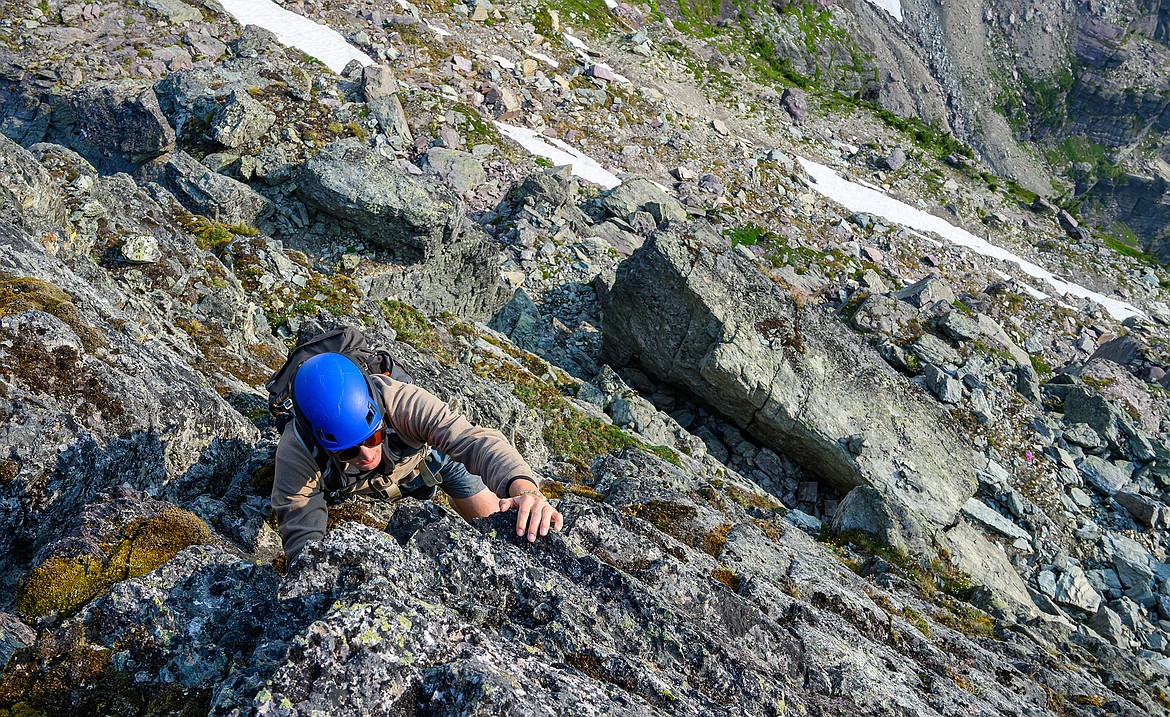
Located in the North Fork region of Glacier National Park, Longfellow Peak sits at 8,909 feet, just shy of its neighbor, Heaven’s Peak. Longfellow can only be seen from the road in a few select locations, most notably the large downhill as you near West Glacier. However, it’s usually the kids screaming in the back of the car about a “house up on the hill” that draws people’s attention.
That “house” happens to be Paul Bunyan’s Cabin, a prominent gendarme sharing a ridge with Longfellow. As a climber, I can’t say I didn’t feel the same childish allure the first time I ever made the drive to Lake McDonald.
When climbing partner Cosley Payne and I first set our sights on Longfellow, we knew it would come with its own unique challenges.
First, the primary means of accessing it is via the Dutch Creek trail, which leads you to Dutch Lake. This trail gets cleared very infrequently, and it’s no fault of the Park. The Inside North Fork Road has been closed to vehicles from Camas to Logging Creek for nearly two decades, so the only way to access the trailhead is by a roughly 4-mile bike ride.
Considering the heavy deadfall we experienced this winter, that option was out.
Instead, we opted for Trout Pass, which deposits you at Trout Lake, the second in the West Lakes chain (Rogers, Trout, Arrow, Camas, Evangeline, and Ruger Lakes) with a seemingly deceptive name.
So at 6 a.m. on Monday morning, we were grinding up dusty Trout Pass, trying to beat the impending heat.
Treading along Trout Lake’s serene shores, two kingfishers led us away from their kin.
We met our first people of the day crossing the stream at Arrow Lake. They said they had stayed the night at Camas Lake, a much more remote stay than Arrow.
In the mile following Arrow Lake, I noticed meadow timothy growing along the side of the trail–a strange sight to see a non-native plant so high up in a glacial drainage. However, both the Dutch and Camas Creek valleys have a history of spotty settlements. Old foundations and cart paths may have been reclaimed by nature, but this was subtle proof of human presence dating back to the 1800s.
Camas Lake is a beautiful, shallow alpine lake sitting towards the end of the West Lakes. A tiny island makes it unique from an aerial perspective. The trail appears to end upon reaching the lake, yet crossing a short, mucky stream takes you to the campground, which has well-maintained sites.
However, there’s no shortage of head-high thimbleberry and willow at Camas Lake, so expect a bear or moose surprise.
At this point in the day, we would head off trail up Nirvana Pass, a little-known mountain pass from Camas to Dutch Creek. While it’s a semi-steep gradient, it offered us freedom from the suffering of bushwhacking–so it lived up to its name.
At the top of Nirvana Pass sits a pothole lake, offering a prime spot to filter water between valleys. Without a doubt, Nirvana Pass was one of the most beautiful places I’d ever seen in Glacier. Wildflowers grew everywhere; the place glowed pink with high altitude paintbrush.
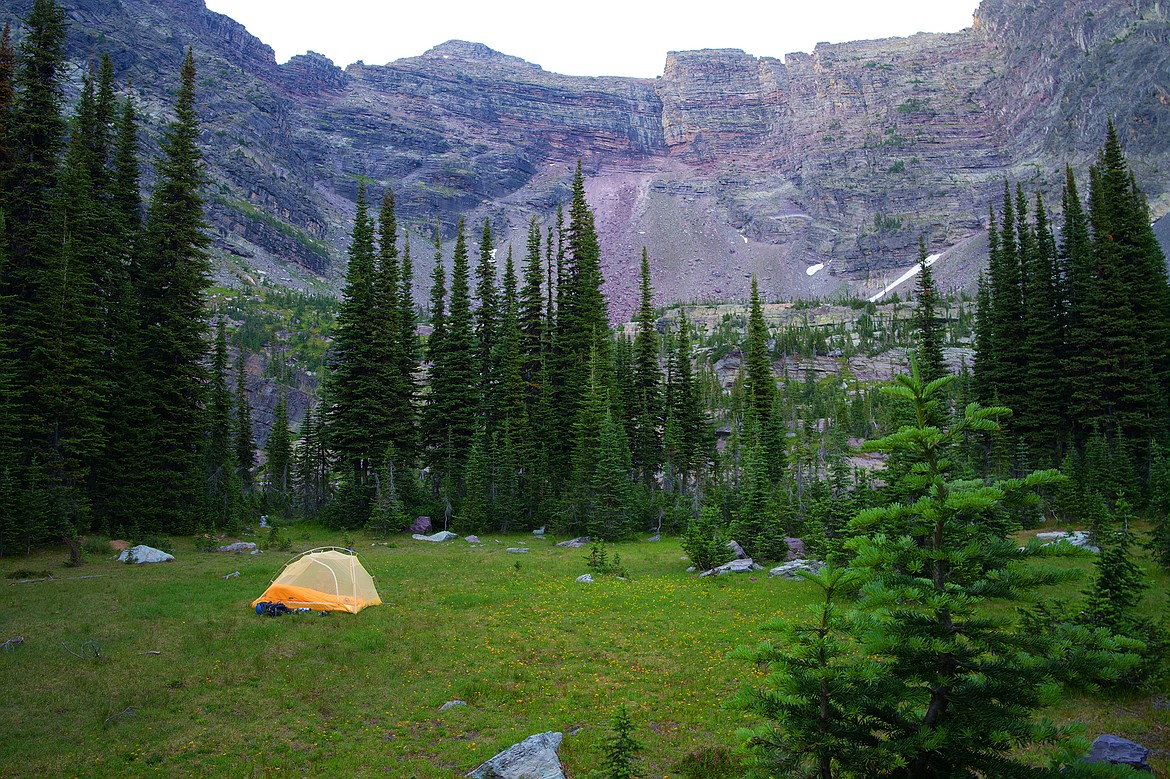
We were headed into the Dutch Lakes Basin, which is right at the base of Longfellow, housing two small lakes. Sidestepping beargrass and traversing along cliffbands, eventually we dragged our weary selves to base camp–a wide open alpine meadow in the middle of the trees at the base of Longfellow.
That night, I observed a pair of common goldeneyes in the lake.
At a campsite like that, not much needs to be said. The mountains speak for themselves.
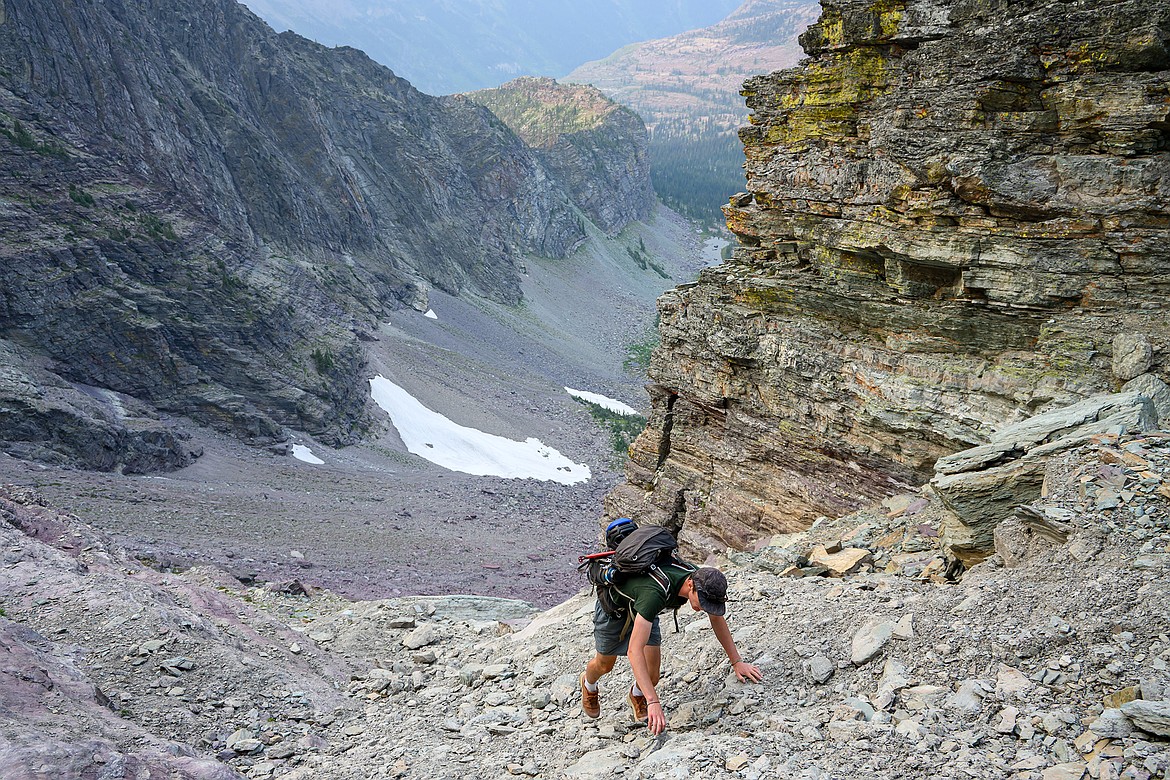
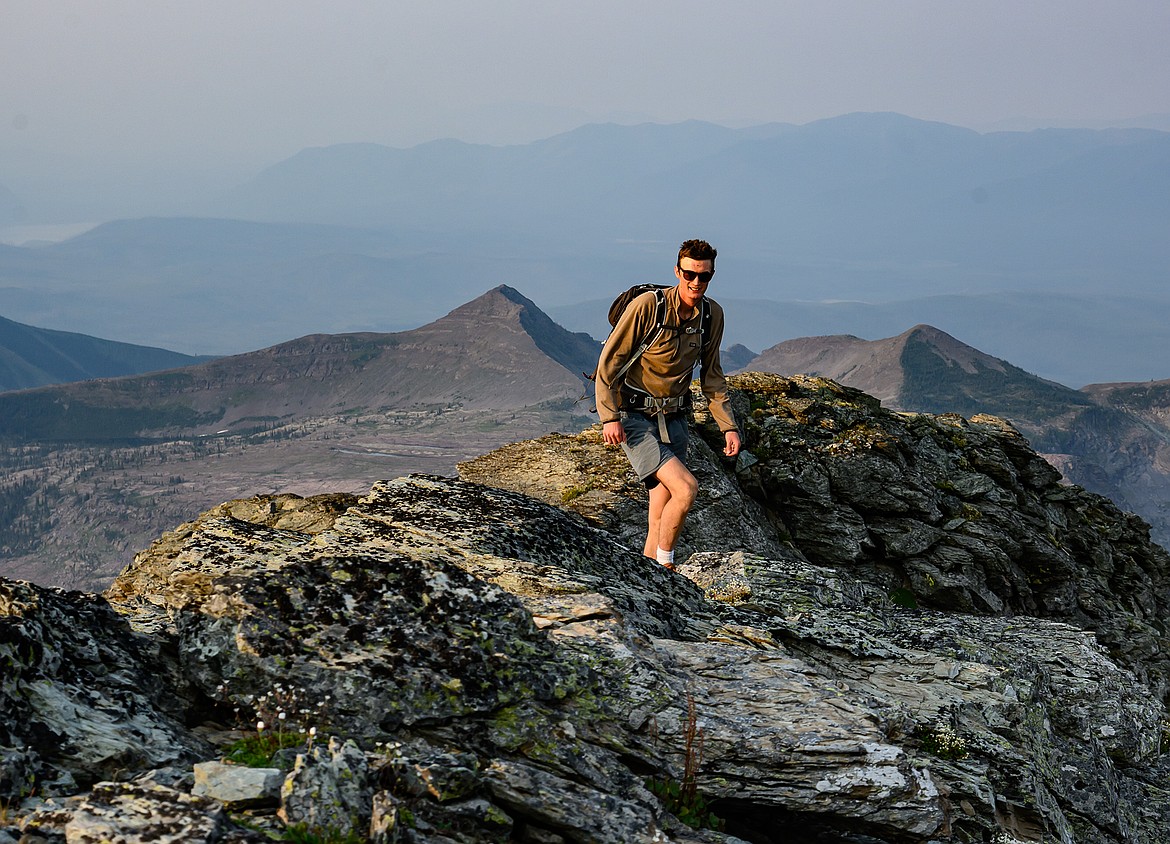
The next day, we also got an early start. The first half-mile of the route traverses up a scree field, followed by class three cliff bands until you top out at the ridge. The final ridgewalk is a treat; Payne described it as similar to the ridgewalk on Mount Brown.
Longfellow usually has a giant snowfield on it year-round. However, we were fortunate to not have to use our ice axes, as enough of the south-facing slope was melted out to reach the summit.
Heavens Peak Fire Lookout across the way appeared like a ghost ship amidst the smoke that hazy morning.
After a joyous celebration, we began to make our way down to the back door of Paul Bunyan’s Cabin. Up close, the cabin is much less intimidating and more majestic.
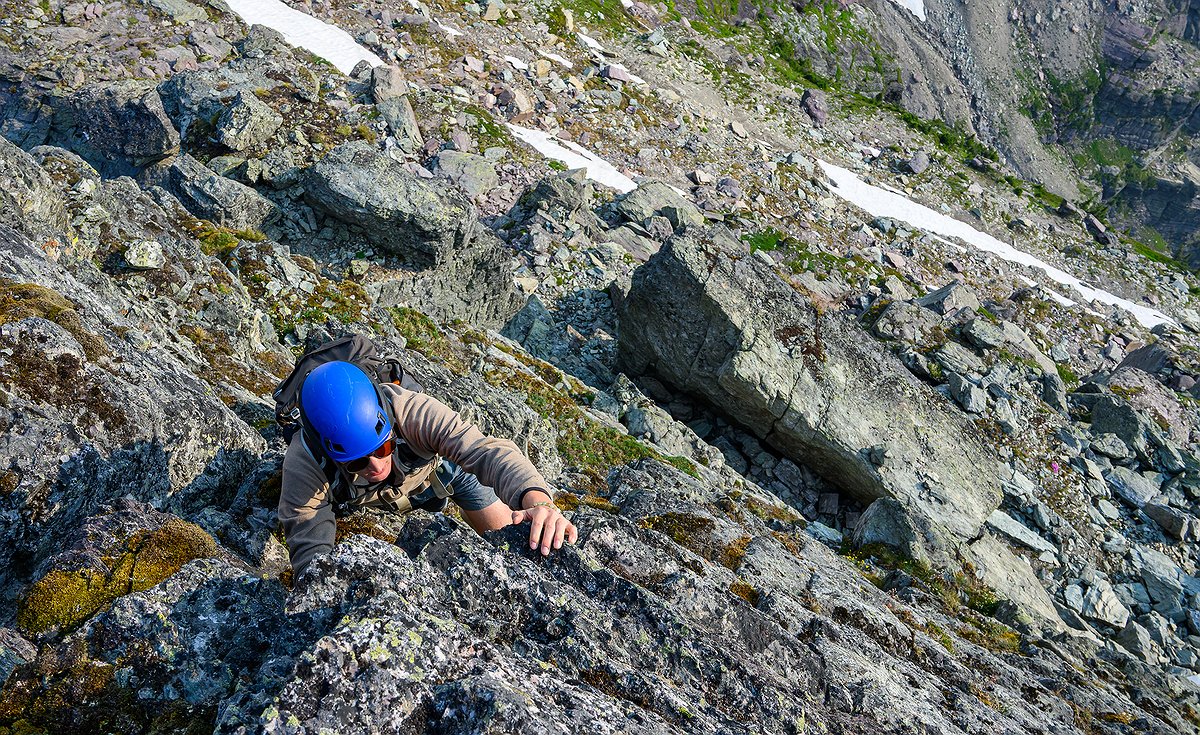
Here, we donned helmets in case of a rockfall, as we’d be climbing relatively above one another.
Picking your way up class four cliff bands is the most direct way to get up the cabin; however, we executed a few class five moves just to keep things spicy.
After waving Lake Evangeline one last goodbye, we descended back to base camp.
We ended up seeing only three parties that trip, each headed to Arrow or Camas Lake to camp.
While it was not the tallest mountain either of us had climbed, it was certainly our most memorable trip of the summer. I believe that later in life, I’ll forget the views I saw at the summit, but I’ll never forget the approach.
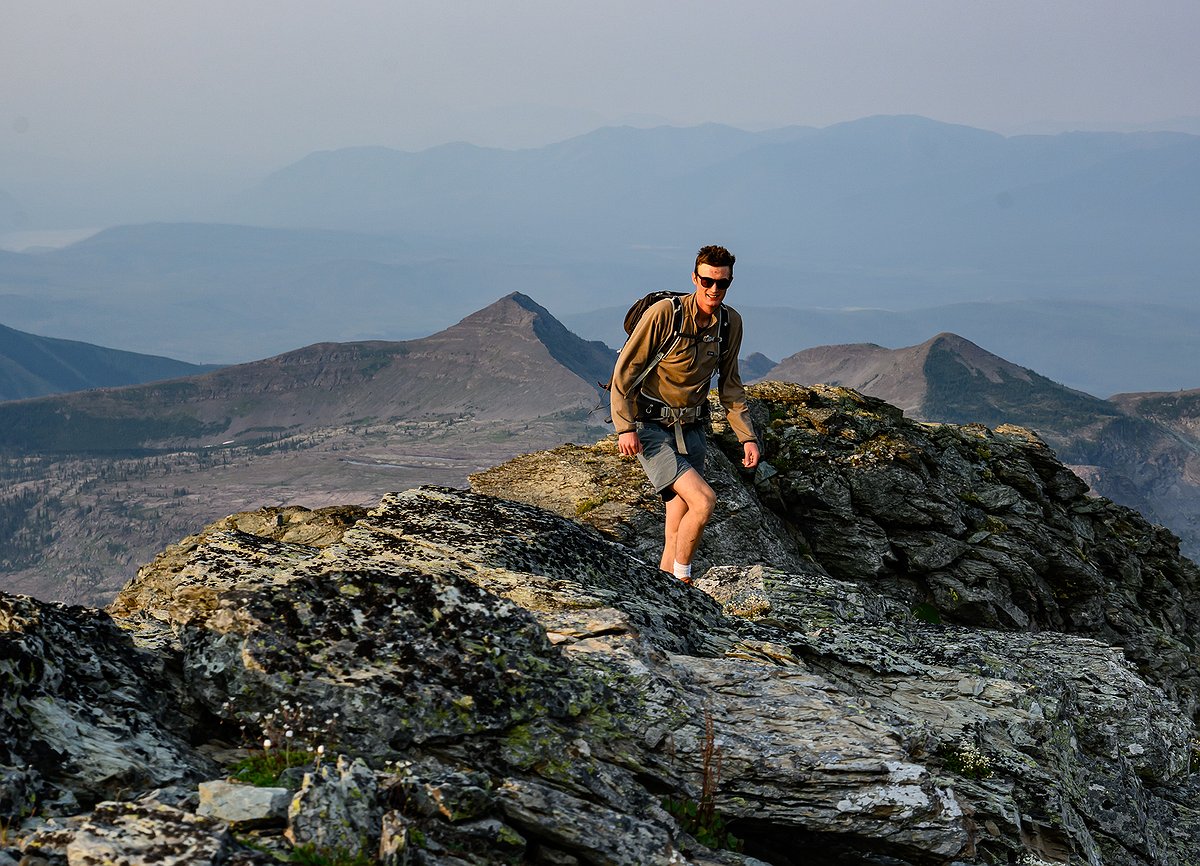 Cosley Payne on the summit of Longfellow (River Blazejewski photos/all)
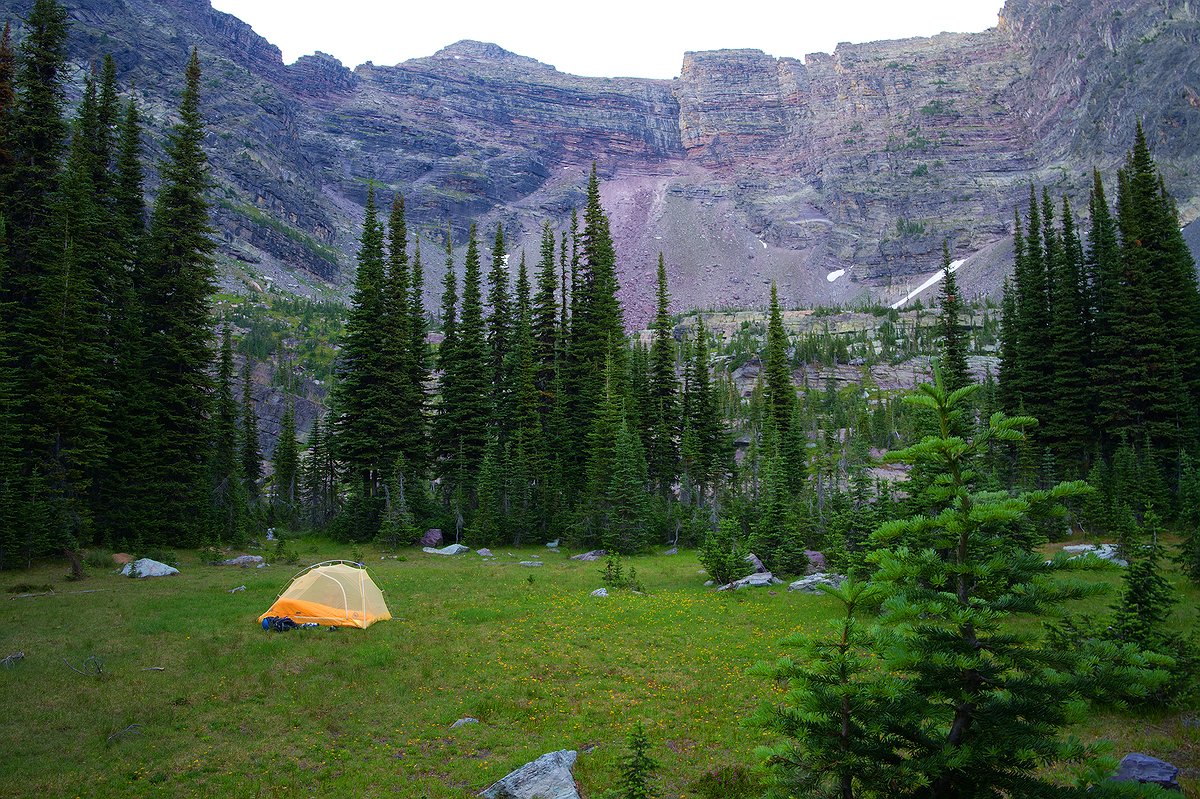 A high country camp below Longfellow Peak.