
Proposed tar sands pipeline in eastern Montana hits stumbling block
ELLIS JUHLIN Mountain Journal | Daily Inter-Lake | UPDATED 4 weeks, 1 day AGO
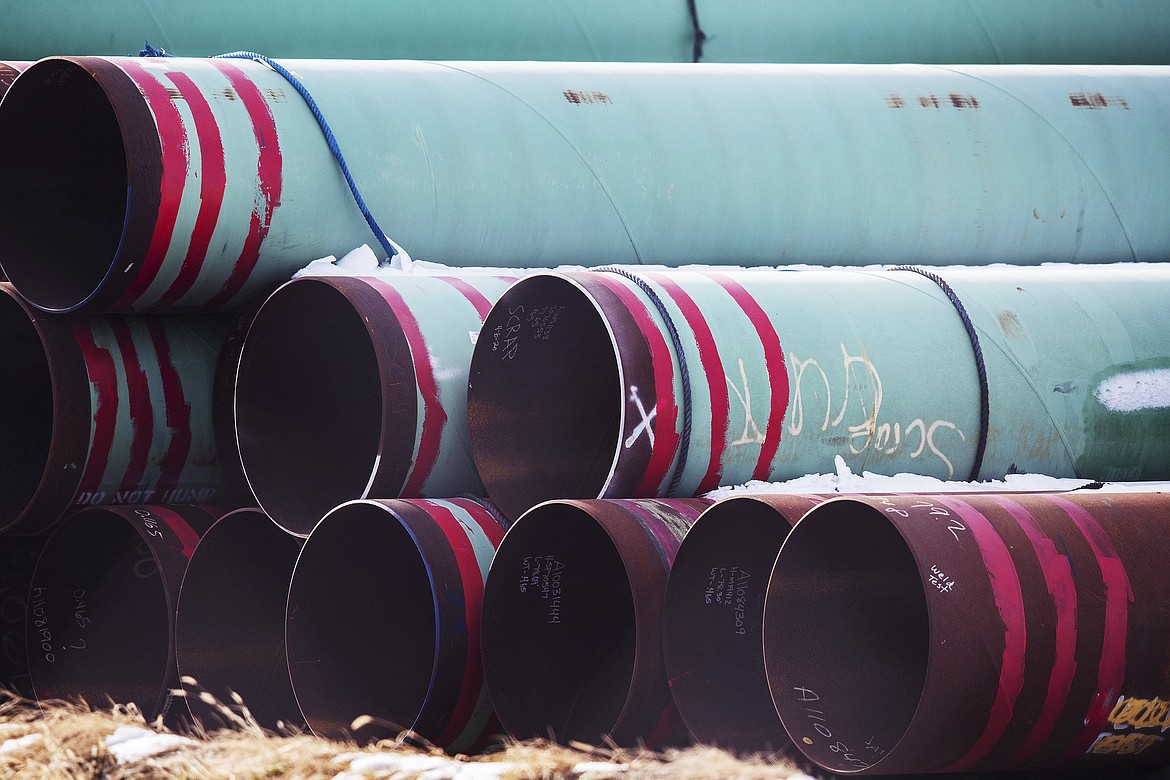
In this Dec. 18, 2020, file photo, pipes to be used for the Keystone XL pipeline are stored in a field near Dorchester, Neb. Calgary-based TC Energy, sponsor of the Keystone XL crude oil pipeline, said Wednesday, June 9, 2021, that it was pulling the plug on the contentious project after Canadian officials failed to convince President Joe Biden to reverse its cancellation of its permit on the day he took office. (Chris Machian/Omaha World-Herald via AP)
A pipeline proposed to run through eastern Montana hit a delay last week on the permitting path. The Montana Department of Environmental Quality on July 22 withdrew a waiver it had previously granted to the Bridger Pipeline Expansion, a project expected to run from Canada through Montana and Wyoming, and cost an estimated $2 billion.
The waiver allowed Bridger Pipeline Expansion, LLC to omit certain financial information and baseline environmental data from its state permit application with DEQ. Bridger must receive this permit, along with federal approval, to begin construction on the 650-mile pipeline, which permit application documents say will break ground in July of 2027. The Bridger is one of three proposed pipeline legs connecting Alberta, Canada to Cushing, Oklahoma.
At the core of the debate is Montana’s Major Facility Siting Act. MFSA is a state law that outlines the process of evaluating the potential economic, community and environmental impacts of large energy projects like pipelines or power plants. Earlier this year, Bridger requested a waiver to omit certain financial and economic information, as well as baseline environmental data from its application to DEQ. MFSA allows for ‘irrelevant information’ to be omitted from the review process, and DEQ granted Bridger the waiver in February.
Now, the agency has backtracked on that decision.
In June, the environmental law firm Earthjustice filed a complaint on behalf of two Montana residents against DEQ’s decision to grant the waiver. Lars Phillips, an attorney with Earthjustice said the information needed to be included in order to have a thorough review process. “The law is clear and DEQ was right to reverse course,” Phillips said. “But we are troubled by why DEQ decided to issue these waivers in the first place.”
Projects of this size and scale require both state and federal approval. Montana DEQ along with the U.S. Bureau of Land Management held a public comment period on the pipeline proposal in May. Phillips says without Earthjustice taking this action to discover what information was waived, members of the public would never have known they were commenting on an incomplete application.
The proposed pipeline is expected to move roughly 500,000 barrels of crude tar sands oil per day, according to DEQ’s MFSA documents. But at full capacity, that number is projected to increase to moving 1.13 million barrels per day from Canada, through Montana and into Wyoming.
The project has been referred to by supporters as “Keystone Light” referencing the Keystone XL Pipeline, which then-President Joe Biden canceled in 2021. Shannon James with environmental watchdog Montana Environmental Information Center says calling it “light” is a misnomer. “It’s Keystone XXL and a major climate threat that far too many people haven’t heard about yet,” she said.
James and other opponents have raised concerns over the potential environmental harms the pipeline’s proposed path would take, a route that would cross water 150 times. “Pipelines leak,” James told Montana Free Press. “It’s not a matter of if, but when. We should not be giving the green light to a company with a troubling track record in our state, especially before it has fully disclosed the impacts this project would have on Montana’s people, water, wildlife, and climate.”
The Bridger Expansion has been prioritized by the Trump administration, which in late April granted it a cross-border permit to pass from Canada into Montana. James says it’s likely the company is eager to have the pipeline completed before the end of the current administration, given its prioritization of fossil-fuel energy projects.
In an email to Earthjustice shared with Montana Free Press, DEQ attorney Jeremiah Langston said the agency is “requiring Bridger to produce the information in question” in order to move forward with the application. Permitting for the project cannot move forward until the application is complete, Langston said, and it’s up to Bridger to submit the additional information DEQ requires.
Phillips maintains it’s a positive sign to see DEQ addressing gaps in the application, but says he would have liked to see the agency more proactively inform the public.
“It is unfortunate that it took two Montanans standing up to big oil to force DEQ to require Bridger to comply with Montana law,” he said.