
Against the current: Charlo shrimp farmer rebuilds after winning three-year fight to be recognized as a farm
JACK UNDERHILL | Hagadone News Network | UPDATED 2 months, 2 weeks AGO
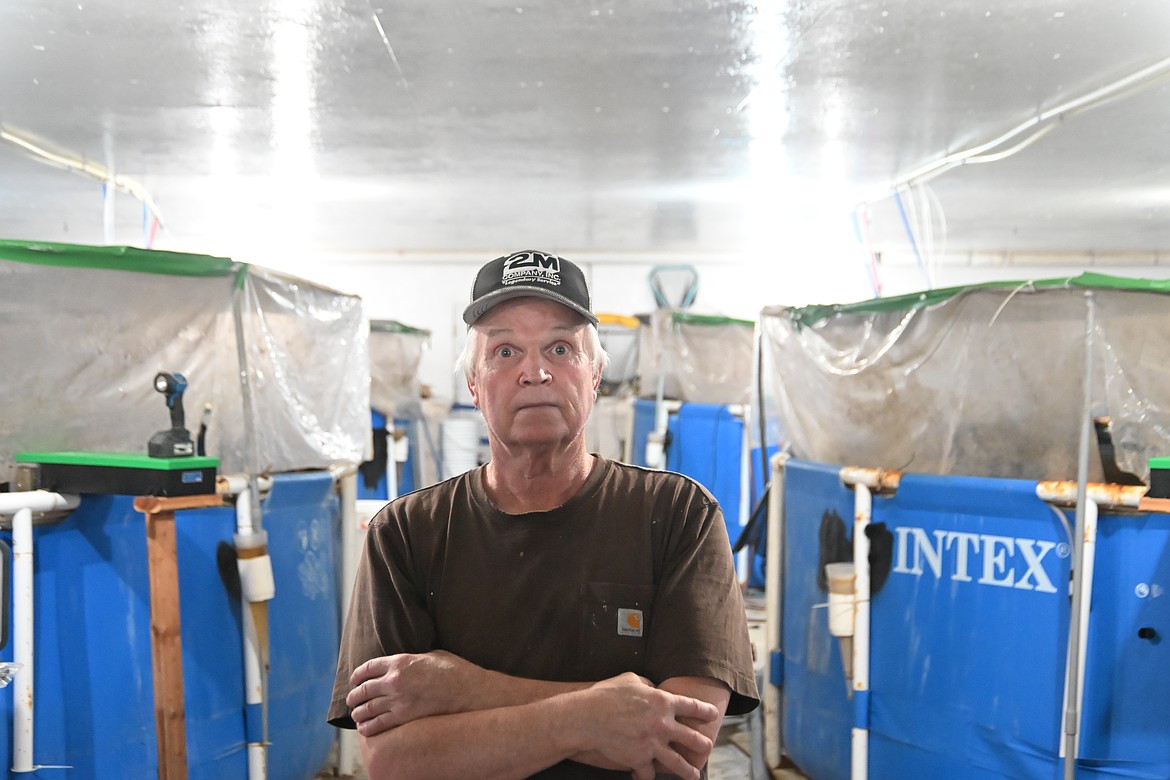
Jim Vaughan stands in front of the pools he uses to grow shrimp at Mission Valley Shrimp on June 25, 2026. (Jack Underhill/Daily Inter Lake)
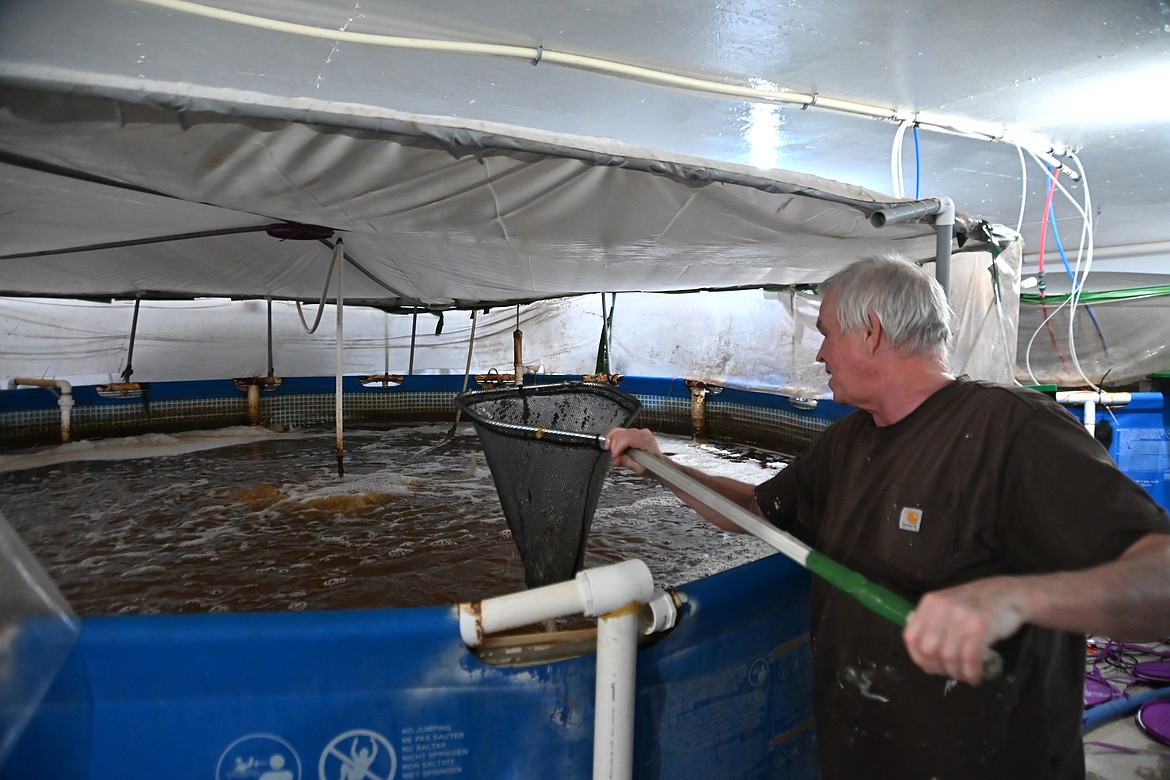
Jim Vaughan dips a net in one of the pools he uses to grow shrimp at Mission Valley Shrimp on June 25, 2026. (Jack Underhill/Daily Inter Lake)
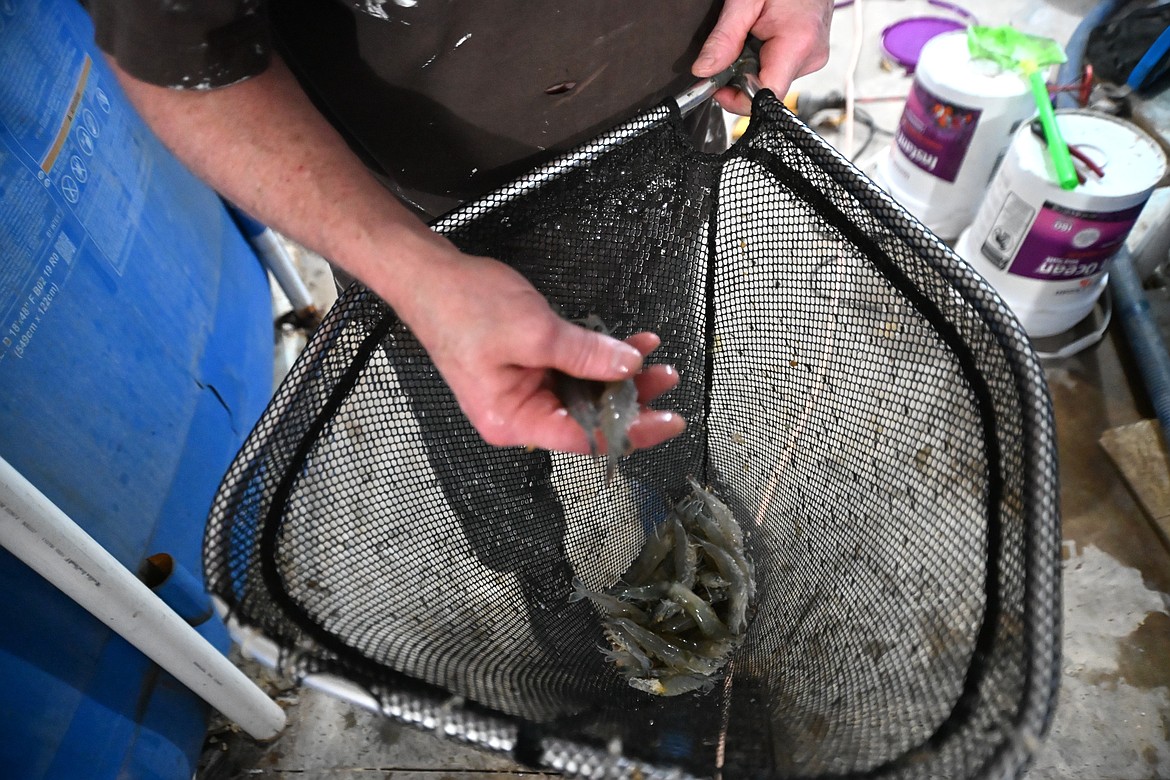
Jim Vaughan shows off some of his prawns at Mission Valley Shrimp on June 25, 2026. (Jack Underhill/Daily Inter Lake)
KALISPELL GOVERNMENT, HOUSING AND TRANSPORTATION REPORTER Jack Underhill covers Kalispell city government, housing and transportation for the Daily Inter Lake. His reporting focuses on how local policy decisions affect residents and the rapidly growing Flathead Valley. Underhill has reported on housing challenges, infrastructure issues and regional service providers across Montana. His work also includes accountability reporting on complex community issues and public institutions. Originally from Massachusetts, Underhill graduated from the University of Massachusetts, Amherst with a degree in Journalism before joining the Inter Lake. In his free time, Underhill enjoys mountain biking around the valley, skiing up on Big Mountain or exploring Glacier National Park. IMPACT: Jack’s work helps residents understand how growth, housing and infrastructure decisions affect the future of their community. | August 9, 2026 12:00 AM
Charlo shrimp farmer Jim Vaughan never imagined he'd find himself at the Montana Capitol serving prawns to lawmakers, but he was willing to do whatever it took to preserve the business he'd spent years building.
Born and raised in Charlo, Vaughan has spent the past seven years operating Mission Valley Shrimp, Montana's only shrimp farm. Using six Intex above-ground swimming pools to raise and harvest shrimp, Vaughan built a niche business that in 2023 became the focus of a regulatory dispute with Lake County over whether his operation qualified as a farm that could sell its product without a wholesale license.
Before what snowballed into a three-year regulatory fight involving county officials and state lawmakers, Vaughan had built Mission Valley Shrimp into a thriving business since launching it in 2019. At its peak, he was harvesting upwards of 60,000 shrimp annually, earning praise from customers across the region. He recalled tourists from Seattle, Washington, who told him they were the best shrimp they'd ever tasted.
While summer tourists and farmers markets provided strong business, Vaughan knew he needed a steadier market. That's why in 2023 he turned his attention to restaurants, approaching Lake County about selling his shrimp wholesale.
As one of the state's shrimp-farming pioneers, Vaughan was navigating regulatory territory few had explored before. Other shrimp farms have come and gone in Montana, and he said Mission Valley Shrimp remains the state's lone operation.
Instead of being regulated as a farm, his business was licensed under the Montana Department of Public Health and Human Services-Environmental Health Food Safety as a food manufacturer, leading Lake County Environmental Health to require a wholesale license for restaurant sales.
The state health department said his operation did not qualify as producing or harvesting raw, unprocessed farm products, which state law would exempt him from needing the license, according to a March 2024 health department letter to Vaughan shared with the Daily Inter Lake.
To obtain the license, state and county officials required Vaughan to install a three-compartment sink, upgrade his septic system or secure approval for a wastewater holding tank, a requirement he argued was unnecessary because his operation produces no discharge.
“I don’t use as much water as most people washing their garage floors," he said.
Vaughan couldn't understand why his shrimp wasn't recognized as a harvested farm product.
“I have a thousand, two thousand people tour here a year. Not a single person walks out of here saying, ‘You’re not a farm,'” Vaughan said.
With negotiations at a standstill, Vaughan turned to Sen. Greg Hertz, R-Polson, who had previously sponsored legislation allowing him to sell shrimp at farmers markets, Vaughan said.
Hertz then sponsored Senate Bill 161. Introduced in January 2025, the bill classified farm-raised shrimp as an agricultural product and allowed them to be sold year-round to restaurants and retail stores.
Vaughan made three trips to Helena to lobby for the bill, even bringing his own crop to help make his case to lawmakers.
“I just put them on a plate with some cocktail sauce, and they just scarfed them up,” he said.
Vaughan said he was ultimately able to secure a wholesale license by installing a three-compartment sink connected to a 32-gallon portable waste tank, a system he said he'll never have to use.
But the larger fight wasn't settled until three and a half years later, when Senate Bill 161 was signed into law by Gov. Greg Gianforte on May 1, 2025.
Vaughan's farm is now inspected by the Montana Department of Agriculture, according to Kalke County Environmental Health Director Diana Luke.
LOOKING BACK, Vaughan said he might have been less stubborn at times. Though he remains frustrated that proving his operation was a farm took over three years, a battle that left lasting scars.
“Any business can’t be locked out of its largest customer for three years," he said. “It was a three-and-a-half-year fight, and it damn near put me outta business.”
Without access to restaurant sales, the pools became overcrowded, throwing his curated system out of balance and killing much of his crop. Annual production dropped from about 60,000 shrimp to 25,000 by 2024, and just 8,000 in 2025.
The deaths caused the pools' nitrate levels to skyrocket.
Vaughan enjoys tinkering with his system. To lower nitrate levels, he introduced anaerobic bacteria that break down the compounds in the water, then pumped oxygen through the pools to remove the carbon dioxide produced by the process.
The system worked, but it wasn't restoring water quality quickly enough. He eventually opted to drain the tanks and start fresh with new water, a major undertaking that he believes will pay off in the long run.
“I don’t want to be like the miner that found a gold nugget and spends the rest of his life chasing the next one. But I'm in a controlled environment, so I got to believe that if I did it once, I can do it again,” Vaughan said.
Vaughan hopes to surpass even his past production levels.
WHEN VAUGHAN receives baby shrimp from his supplier, they are smaller than a fingernail. He starts them on a high-protein diet, gradually switching to larger pellets with less protein as they grow.
The shrimp are raised in warm saltwater pools in a high-humidity shed by Vaughan's house.
On one June afternoon, Vaughan scooped a net through a pool of about 8,000 shrimp about ready to be sold. He dipped a net into the water and immediately pulled about a dozen shrimp from the water. He placed one of the wriggling prawns in his palm. Its body was so translucent that the color of Vaughan's skin showed through.
“I raise them so clean, I would say that 99% of my customers do not de-vein,” he said.
The water stays clean in part because of beneficial bacteria in the tanks.
“It’s like grandma’s old sourdough bread," he said of the carefully cultivated bacterial colony.
After about two months, the shrimp are ready for market, and once a tank is harvested, he starts the process over again.
For more information, visit missionvalleyshrimpfarm.com.
Reporter Jack Underhill can be reached at 406-758-4407 or [email protected]. If you value local journalism, pledge your support at dailyinterlake.com/support.
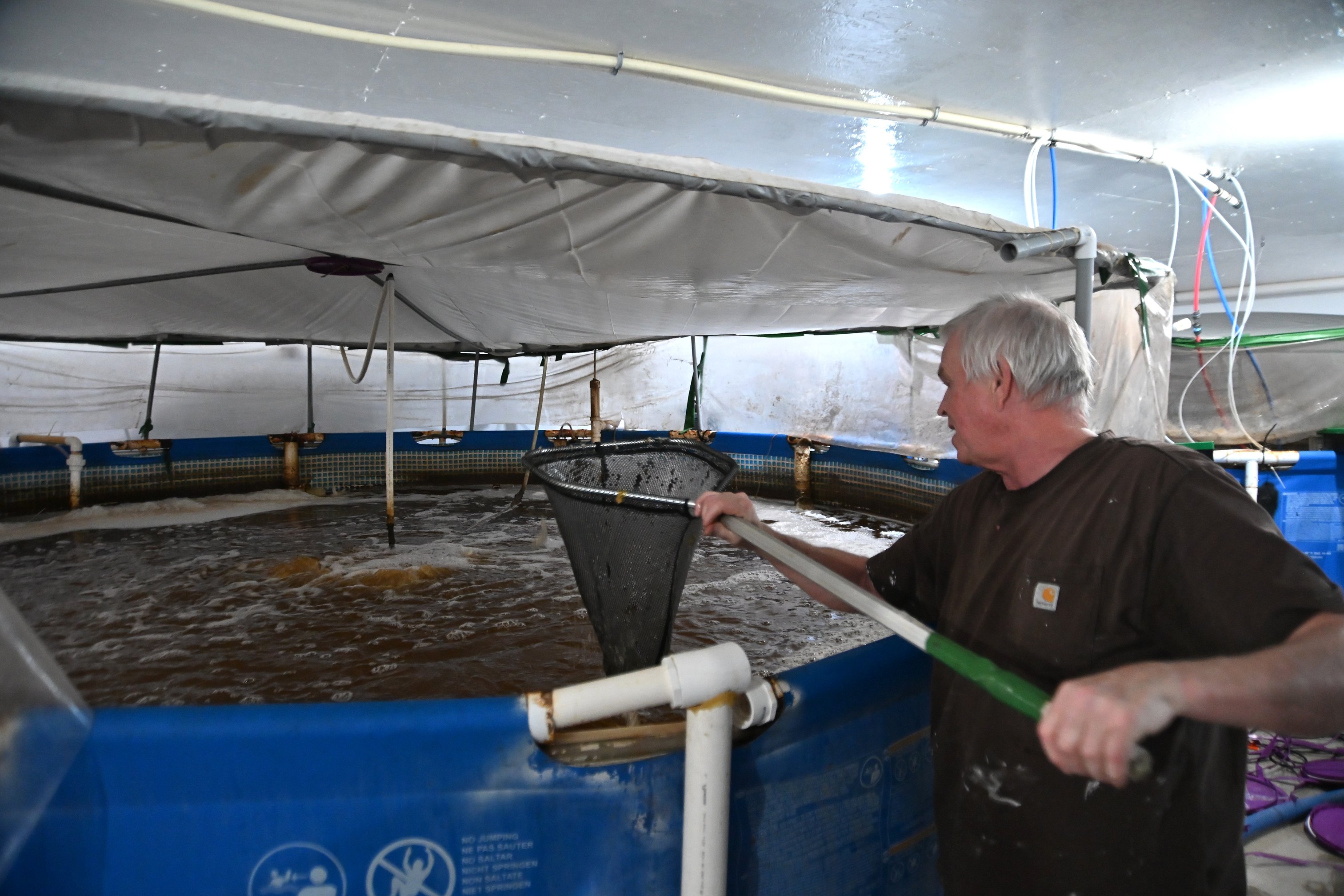 Jim Vaughan dips a net in one of the pools he uses to grow shrimp at Mission Valley Shrimp on June 25, 2026. (Jack Underhill/Daily Inter Lake)
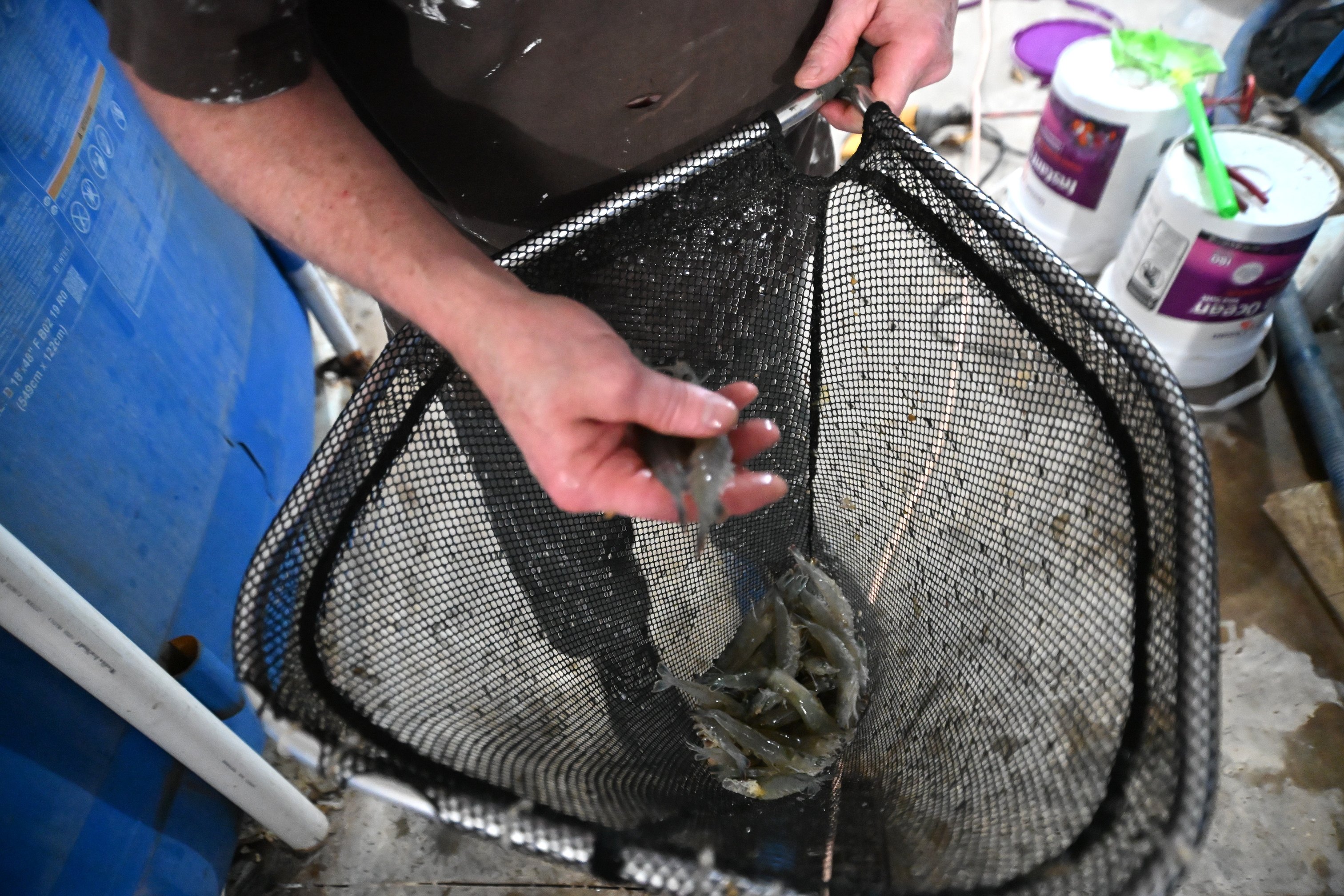 Jim Vaughan shows off some of his prawns at Mission Valley Shrimp on June 25, 2026. (Jack Underhill/Daily Inter Lake)
ARTICLES BY JACK UNDERHILL

Kalispell clears way for tiny homes by adopting building standards
Councilors on Monday added tiny homes to Kalispell's city code in a bid to make it easier to build the simpler, low-cost housing alternatives.

Glacier Park International Airport earns spot among nation’s resort airports
Glacier Park International Airport was named one of the nation’s top resort airports in USA Today’s 10BEST Readers’ Choice Awards.

Kalispell City Council to consider tiny home regulations
Kalispell City Council on Monday will vote on whether to add tiny homes to city code, allowing the municipality to inspect them and enforce building standards.