
Floral tale blooms with adventure, spans six centuries
VALLE NOVAK / Contributing Writer | Bonner County Daily Bee | UPDATED 1 month, 2 weeks AGO

I had wanted a Tradescantia – or “Spiderwort” – ever since I saw them for the first time over 20 years ago at the home of Gretchen Hellar right here in Sandpoint. I knew what they were, but having never seen one “up close and personal,” reveled in their exotic beauty when I saw them.
Gretchen’s were very tall and large-flowered – on the order of Hollyhocks in size — and I was totally captivated. It was about that time that I was deeply into travel and conducting tours and visits to Europe, often using London as the base point.
In that esteemed city I “discovered” the Medieval Museum of Garden History housed in a 14th or 15th Century church on Lambeth Road. Among the floor-set tombs, which were the standard burial practice in those early centuries, were fabulous exhibits with ancient tools and accompanying illustrations of their uses. Truly fascinating.
Then I found a small side door that led outside and stepped into another world: a fabulous stone-wall enclosed churchyard garden/cemetery, gloriously, lavishly planted and redolent with the scent of old roses. It contained three modestly-sized marble tombs: Two were the resting places of John Tradescant, Sr., and his son, Jr., with the third – and totally unlikely - of Captain Bligh! (That is another story for another time, however).
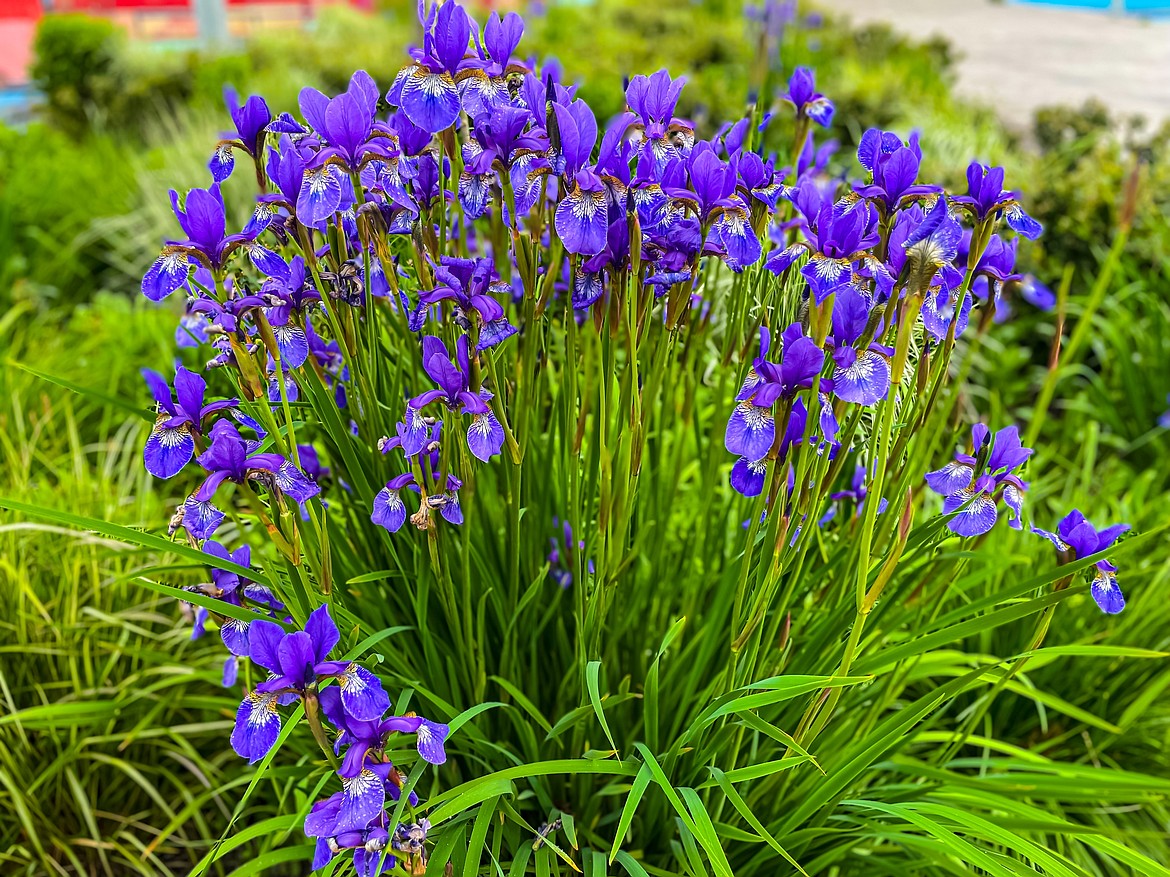
Of course, there were Tradescantia blooming, tall and beautiful with their outstanding brilliant blue-violet blossoms surrounded by the “spider legs” of their green strappy leaves. A modest notice indicated the plant had been discovered in the ‘new world’ in 1644-45 by John Tradescant, Jr., and named for him “Tradescantia virginiana.” Other sources tell us his father, John Sr., was a close friend of John Smith, who encouraged the younger man to visit the colonies. Once again, I lusted for a plant.
But that desire remained unfulfilled for many years — until just a few weeks ago when daughter Shelley and I visited a local nursery, and I discovered two potted Tradescantia (Andersoniana) for sale! I whined and hinted until she bought me one of them — and my adventure began!
Upon returning home (in our 90-degree heat), I immediately dug a roomy hole in a “perfect” spot, added some mulch and potting soil, poured in water, and after unpotting, pulling away wayward rootlets and such, carefully settled the “new baby” into its nest.
It seemed to perk right up, stretching out from the confines of pot-life and opening to the sun/dappled shade which I had chosen for it. A good watering of the garden spot it had become a part of, and so to bed.
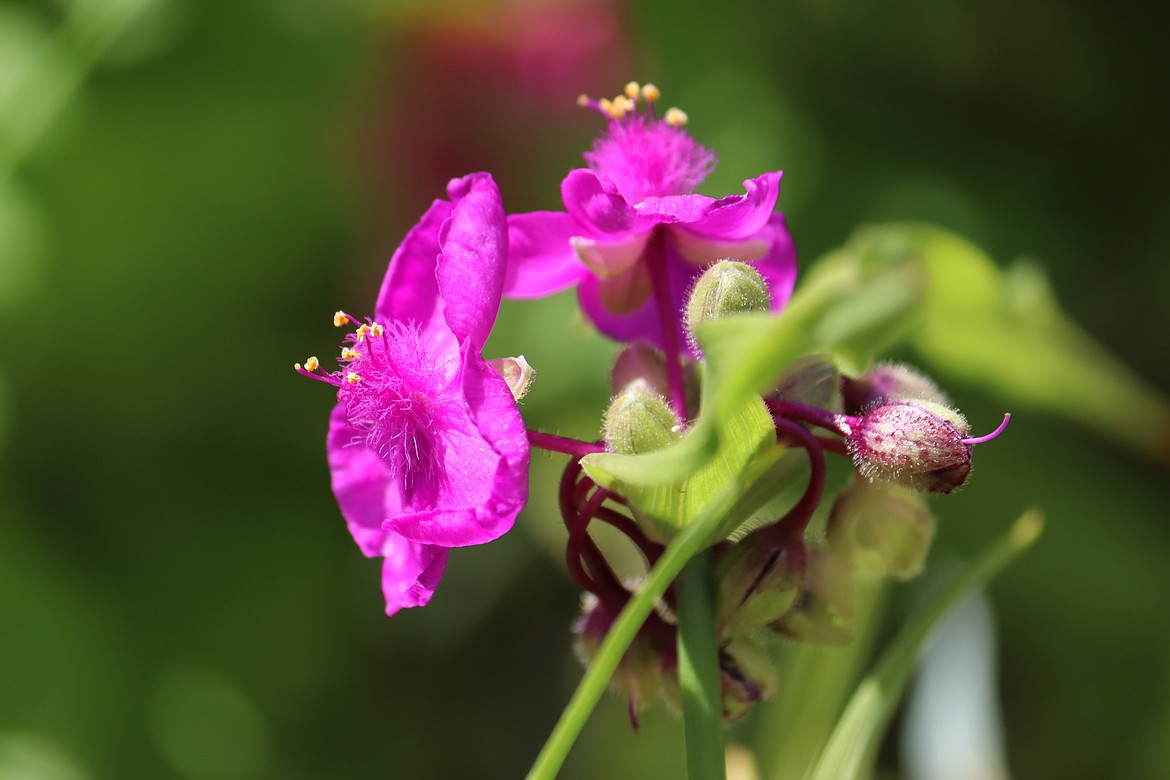
Next day, it actually greeted me with bright, winking new flowers – they bloom for only one day, but it’s continuous since they are borne on a cluster of ever-renewing buds (as per the photo) and so continue over the summer. Daughter Olivia picked me up for our weekly outing to the grocery store and I left home with a happy heart.
Alas, I had forgotten one vital aspect of my daily life.
Two hours later, I left the car with armloads of groceries, waved goodbye and made my way to the porch to deposit the bags and go inside. The corner of my eye caught something that seemed wrong; I glanced toward my coveted new plant – and there it lay – torn to pieces and strewn broken and dirtied, ripped from its planting hole; attacked by the Schweitzer turkeys! I had forgotten to toss out their offering of sunflower seeds in the front yard (read ‘shambles’) and they had come looking for their daily treat. *
I was devastated. This was akin to discovering a rat nibbling at your baby’s toes! Heedless of my “shopping garb” I knelt into the mess and began gathering shreds of plant, clumps of soil, leaves, stems, anything with a vestige of root – and began re-planting, tidying, straightening, talking and cooing to the poor, put-upon plant. I actually rescued five stems with root, a few others with buds, etc., stuck them into the soil and shored it all up with extra leaves and mulch – whatever I could find. For good measure, I found a sizeable old round basket, cut out the bottom, and set it over and around the plant pieces, twisting to “set” it into the soil. I turned on the sprinkler and hoped.
Now, I must quote from a paragraph about Tradescantia in the Sunset book of Perennials: “The plants are nearly abuse-proof, and will survive under much less than ideal conditions … cut nearly to the ground – they will bounce back” … there’s more, but suffice it to say, it reinforced my hope – and that’s what happened! The plant not only recovered, somewhat battered, but regenerating beautifully, and now, a week later is again perky and bright, smiling up at me. The few rootless flowering stems that I brought in and placed in water continue to pop new blossoms each day as well. Amazing!
My plants are not the great, tall native-type or cultivar, but a short, bushier cultivar (Andersoniana) termed “Commelinaceae” — nonetheless they are beautiful, and obviously tough as nails. Thank heaven!
*A word about the turkeys. Through the winter snow-time, I throw out sunflower seeds for the area turkeys (this year, there were about 45 total in the gathered flocks), and a few continue to “drop by” throughout the summer. I encourage this with only a token cupful of seeds, since it keeps them away from the traffic on Schweitzer Road (which has accounted for many turkey deaths) — and during hunting season provides a haven. Hunters needn’t feel threatened by this, since of all that great flock only about seven now remain to come by (enough to do a number on the Tradescantia, though)!
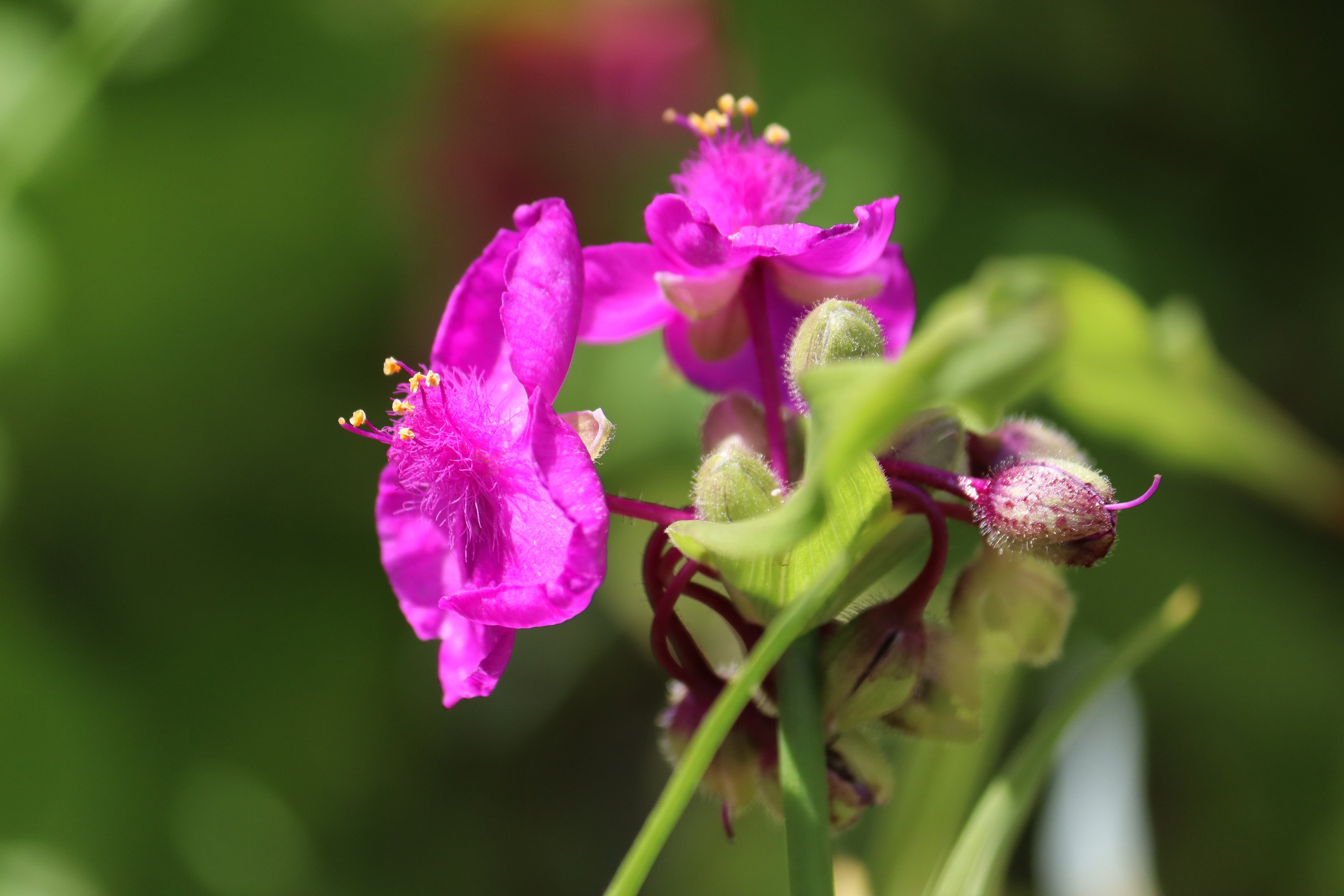 Tradescantia Andersoniana plant blooms with bright pink flowers.
 Valle Novak
Editor’s note: For many years, Valle Novak wrote gardening and cooking columns for the Daily Bee. Weekend Gardener and Country Chef became renowned for their humor, information and common-sense advice on everything from planting to cooking. She left behind many columns — such as this one — to delight her many fans.