Forest officials OK second timber salvage harvest
SCOTT SHINDLEDECKER | Hagadone News Network | UPDATED 1 month, 4 weeks AGO
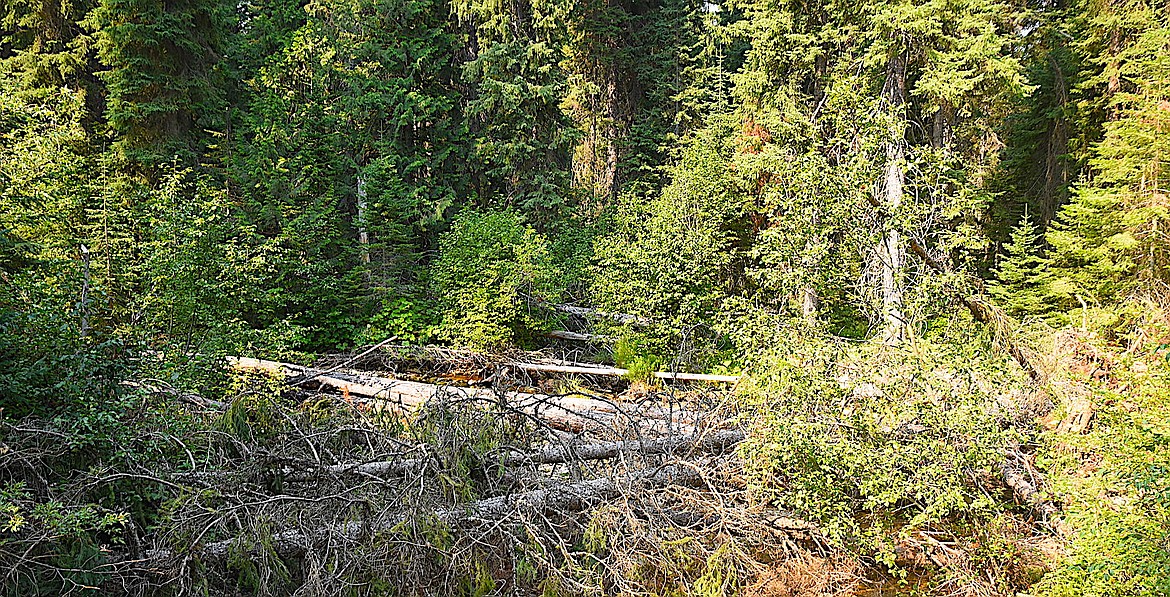
Kootenai National Forest officials recently signed off on the Getner Salvage Project. It's the second that will target blowdown from the storms last winter in Lincoln County. (Scott Shindledecker/The Western News)
The Kootenai National Forest recently approved another blowdown salvage project in another attempt to clean up the mess left behind from the winter storm events of 2025-2026.
The Getner Again Blowdown Salvage project, located 12 miles south of Libby, near U.S. 2, plans to salvage blown-over, damaged and root sprung trees on about 160 acres in four locations in an effort to capture the economic value of the wood while maintaining wildlife habitat, soil productivity and ecosystem functions.
More information on the Getner Again Blowdown project, which is anticipated for sale advertisement soon, can be found on the project webpage at https://www.fs.usda.gov/r01/kootenai/projects/287484.
According to the signed order by Forest Supervisor Chad Benson, no more than one-half mile of temporary road would be constructed to access landing locations. Slash generated by the harvest will be piled at the landings and burned. Design features will be developed to comply with Forest Plan guidelines. Monitoring will be conducted following the work to ensure that the work achieved the objectives of the project.
About 0.3 miles of temporary road segments would be constructed to access Units 1, 3, 4 and 5. Private Road 99130 would be used to access Unit 3 via a temporary road. A possible Temporary Road Use Permit from the landowner might be needed prior to use. These temporary roads would be built to the minimum standard necessary to support safe log truck haul and would not be added to the permanent transportation system because they are not added to the road atlas or database.
Once the harvest is done all temporary roads would be decommissioned and returned to their preharvest condition.
Road maintenance activities would occur on about one-half mile of National Forest System Road 8687, which is open to public use and required for project haul.
Maintenance actions may include blading and reshaping the existing road surface, removal or cutting of encroaching vegetation, and cleaning of existing drainage features such as culverts, inlets, outlets
and catch basins during the haul period.
About 0.7 miles of permitted road segments on National Forest System lands including NFS Roads 8747 and the Paul Bunyan Refuse Containers access road would be utilized to access and implement treatments in Units 1 and 2. These roads would be maintained to the minimum standard necessary to support safe log truck haul. Once harvest activities are done, the road segments would be returned to their preharvest condition.
Incidental standing or undamaged trees may be removed if necessary to improve the efficiency and safety of operations. Material would be brought to a landing area and processed.
Ground‑based logging systems (skidders, harvesters and tethered equipment) would be used.
The proposed actions are selected for each area based on what is most appropriate for existing conditions, including amount of blown down trees, access and fuel load. Specific to the individual units, a certified silviculturist will follow the policies and procedures detailed in the Forest Service Manual in developing individual prescriptions for each unit.
The desired outcome of all proposed activities is to manage stands to recover the economic value of forest products and maintain forest health and resilience. Salvage harvest would likely be done within two years and post-harvest or non-harvest activities (e.g., slashing, piling, burning) within 20 years.
In terms of the impacts of federally protected threatened species, Forest officials determined the Getner Project would likely adversely affect grizzly bears, but not Canada lynx and threatened North American wolverine.
While consulting with the U.S. Fish and Wildlife Service on the project, it reported male grizzlies used the area infrequently. While a known female has used a very small portion of the Libby Grizzly Bear Analysis Unit, its home range primarily encompasses the Cabinet-Yaak grizzly bear recovery zone. Officials said because female numbers appear to be increasing and slowly expanding from the recovery zone, it is possible that a female might be in the area during salvage work.
Fish and Wildlife Service officials said in their biological opinion the project is not likely to jeopardize the continued existence of grizzly bears.
ARTICLES BY SCOTT SHINDLEDECKER

Libby Loggers get much-needed win over Ronan