
Grant County Fire District 7 seeks voter approval for replacement EMS levy
NANCE BESTON | Hagadone News Network | UPDATED 3 weeks, 2 days AGO
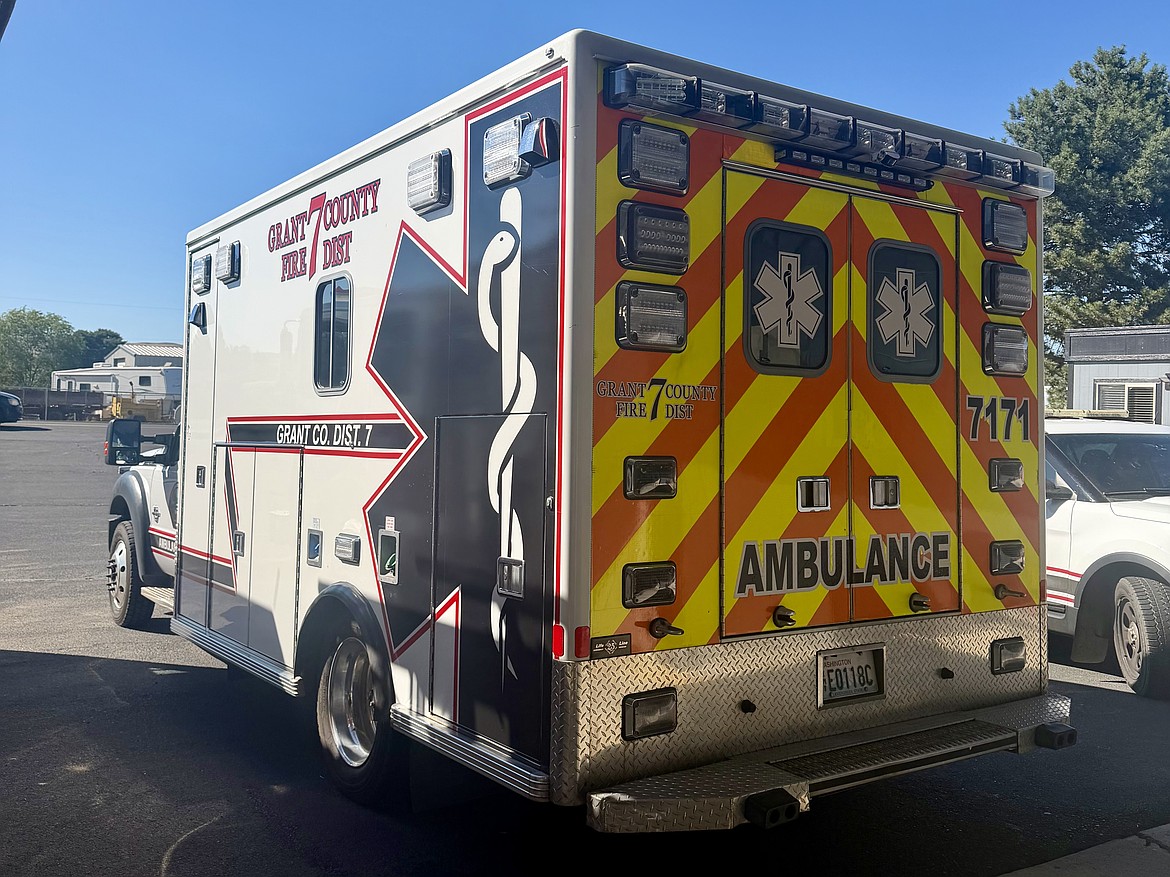
Grant County Fire District 7 officials say rising EMS call volumes and increasing operational costs prompted the district to place a replacement EMS levy proposition before voters in the November General Election. The levy, if passed, would increase the district’s rate of collection from $0.25 to $0.50 per $1,000 of assessed property value.
NANCE BESTON/COLUMBIA BASIN HERALD
SOAP LAKE — Voters in Grant County Fire District 7 will decide this November whether to approve a six-year replacement Emergency Medical Services levy that would increase the district's rate from $0.25 to $0.50 per $1,000 of assessed property value.
The measure, Proposition No. 1, will appear on the Nov. 3 general election ballot. If approved, it would replace the final two years of a voter-approved EMS levy passed in 2022 and authorize a new six-year levy at the higher rate beginning in 2026 and collected starting in 2027.
If the measure fails, the district will resume collecting the previously approved $0.25 EMS levy, which still has two years remaining.
According to Fire Chief Erick Brittain, the district chose not to collect the voter-approved levy during the past two years in an effort to ease financial pressure on residents.
"Due to the hard economic times, we've chosen not to collect that 25 cents for the last two years and give our constituency a break," Brittain said.
District officials say the proposed increase is being driven by rising demand for emergency medical services and higher operating costs.
Brittain said EMS calls have increased significantly in recent years, driven by population growth, an aging population and increased seasonal activity around Soap Lake and Sun Lakes.
"Our population is aging," Brittain said. "We do have an influx in population, as well as increasing the service level."
The district also sees seasonal increases in boating and swimming accidents, general medical calls and trauma incidents associated with summer tourism. Brittain said wildfire smoke has contributed to more respiratory-related medical calls.
"With the wildfire season, we're seeing an uptick with those respiratory illnesses as well," he said.
According to the district, EMS calls now account for approximately 85% of its call volume. Brittain said July saw a dramatic increase in activity, with crews responding to 116 calls compared to 56 during the same month last year.
"Last July, we ran roughly 56 calls. This July, we ran 116 calls," Brittain said.
The district currently provides basic and intermediate life support services and operates two ambulances. Brittain said increasing call volumes have led to more instances of simultaneous emergencies, requiring personnel to handle multiple incidents at the same time.
During the Independence Day holiday, Brittain said crews experienced multiple "double taps," or simultaneous calls for service while already committed to other emergencies.
"It's been all hands on deck," he said.
District officials say revenue generated by the replacement levy would be used for EMS-related expenses, including staffing, equipment, supplies and ambulance operations, as allowed under state law.
Brittain said the district is also preparing for the expiration of federal funding currently supporting one position through a SAFER grant. While the district has reapplied for grant funding, it does not expect to learn whether it has been awarded until later this year.
"We also did apply for the SAFER grant again," Brittain said. "If that happens, that's just icing on the cake."
According to Brittain, collecting the existing $0.25 levy would provide funding for one position, while the proposed increase would help support additional staffing needed to meet growing call volumes.
"What this funding will do is provide us those two other much-needed positions," he said.
The district estimates the proposed $0.50 levy would cost approximately $150 annually on a property assessed at $300,000. However, property owners are already scheduled to resume paying the previously approved $0.25 levy if the proposition fails. The proposed increase would add roughly another $75 annually on a $300,000 property beyond that existing levy.
Brittain said district officials believe increasing costs for fuel, equipment and services have made additional revenue necessary to maintain current service levels.
"We're trying to provide the best service we can with the greatest value to our taxpaying consumer," Brittain said. "I think we're just at the point where we can't provide that service anymore to the level that we can without a tax increase."
Under the proposition filed with the Grant County Elections Office, the levy would require a simple majority vote to pass.
Voters will decide the measure during the Nov. 3 general election. Questions can be directed to Chief Erick Brittain at [email protected] or 509‑246‑0321.
ARTICLES BY NANCE BESTON

Ephrata proclamation honors 9/11 victims, calls for service
EPHRATA — As the nation marks the 25th anniversary of the Sept. 11, 2001, terrorist attacks, the City of Ephrata has proclaimed Sept. 11, 2026, as a Day of Remembrance and Service, encouraging residents to honor victims and first responders through reflection, gratitude and community service.

Ephrata advances A Street project
EPHRATA — The Ephrata City Council unanimously approved a resolution Sept. 2 authorizing a Washington State Department of Transportation agreement supplement, allowing the city to move forward with the right-of-way phase of the A Street SE Overlay Project.

Grant County Republican Party to stage debate in Ephrata
Candidates for Grant County sheriff and Superior Court races to debate
EPHRATA — Grant County voters will have an opportunity this evening to hear directly from candidates seeking two of the county’s elected offices during a debate hosted by the Grant County Republican Party.