
Hay now
JOEL MARTIN | Hagadone News Network | UPDATED 1 month, 3 weeks AGO
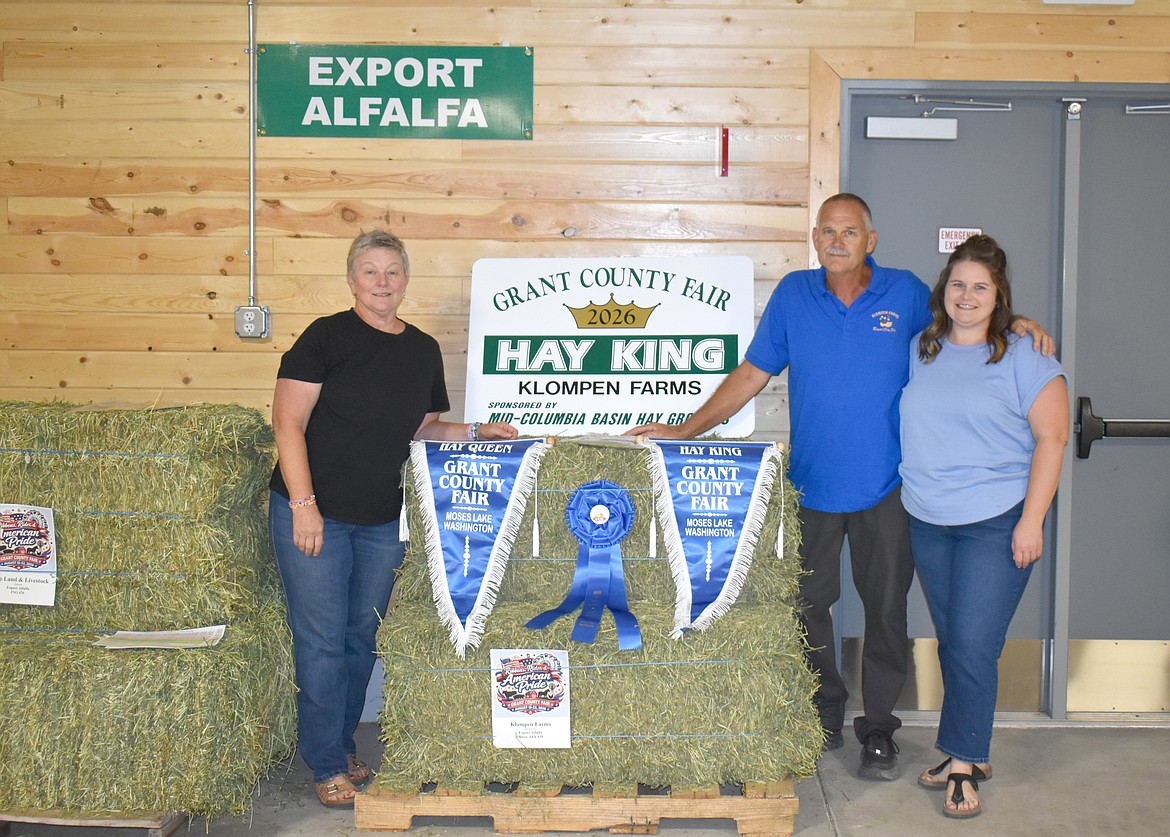
Anne Wieldraayer (left), and her husband Bob Wieldraayer, owners of Klompen Farms in Royal City, were named Hay Queen and King at the Grant County Fair Tuesday. Their daughter Erin Wieldraayer (right) helped with the cutting and baling to get the hay to the fair.
JOEL MARTIN/COLUMBIA BASIN HERALD
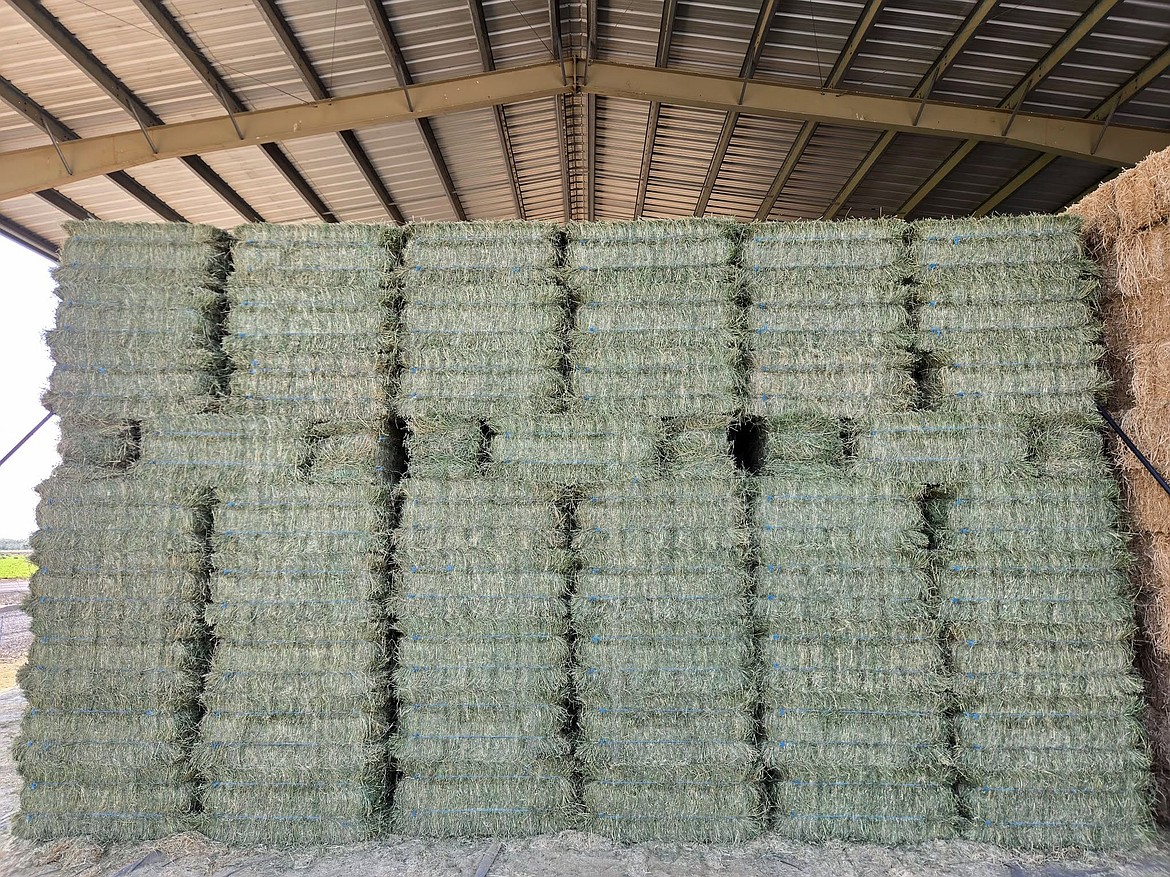
Much of the fourth cutting of hay at Klompen Farms was raked and baled in a matter of hours Saturday night, owner Bob Wieldraayer said. That cutting took second place in the Hay King competition, while an earlier cutting took first.
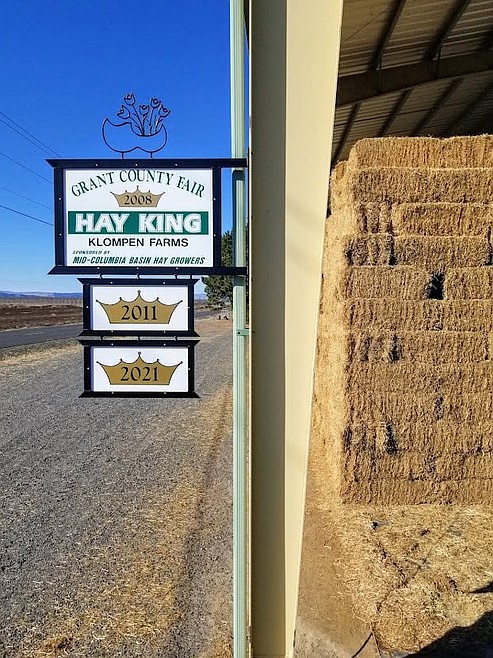
Klompen Farms has signs commemorating each of its wins in the annual Hay King competition, and will now have a fourth to add, after taking both first and second place this year.
Joel Martin has been with the Columbia Basin Herald for more than 25 years in a variety of roles and is the most-tenured employee in the building. Martin is a married father of eight and enjoys spending time with his children and his wife, Christina. He is passionate about the paper’s mission of informing the people of the Columbia Basin because he knows it is important to record the history of the communities the publication serves. | August 20, 2026 3:20 AM
MOSES LAKE — Klompen Farms of Royal City is this year’s hay growing royalty.
Owners Bob and Anne Wieldraayer were named Hay King and Queen at the Grant County Fair, winning both first and second place.
The first-place ribbon was for the farm’s first cutting, which the Wieldraayers did on April 26. It was very early in the year to cut, Bob said, but he wasn’t going to be available for a while after that and wanted to get the cutting out of the way.
“All that hay sold already,” Bob said. “There’s not a bale in the barn. It’s all gone.”
The second-place entry was from the fourth cutting, which the Wieldraayers, with help from their daughter Erin Wieldraayer, baled Saturday. That was also a little early, Bob said, in order to leave time for a fifth cutting next month.
The turnaround on the fourth cutting was tight, Bob said, a matter of four and a half days from the swather to the baler. The baling was done quickly too, he said.
“We started about 10 o'clock Friday night,” he said. “I'm running the rake with the girls chasing behind with the tractors and balers, and we all got in the house about 12:30 Sunday morning.”
This year is the fourth time Klompen Farms has won the Hay King honors, following honors in 2008, 2021 and 2023.
The Wieldraayers have been farming on the Royal Slope since 1988 and growing hay since 1990. Bob had worked on a farm on Whidbey Island in Puget Sound, Anne said. They were planning to work with some family friends on the Royal Slope, but when a farm became available, they bought it, she said.
“Bob knew what he wanted to do,” she said. “We had a small amount of equipment and the neighbors were helpful to get us started. I worked full-time in Moses Lake as an RN for the first several years. We’ve been doing it ever since and didn’t look back.”
They named their farm Klompen, which is the Dutch word for a wooden shoe, a nod to Bob’s heritage.
Erin grew up on the farm, she said. She works at Callahan Manufacturing in Royal City, but she comes back to help out when Mom and Dad need the extra hands.
“As a kid I moved a lot of water and caught a lot of gophers,” she said. “We just do whatever needs to be done to get the job done.”
This summer has been especially bad for wildfires, and the smoke from those affected the weather in the Basin, which in turn affected hay production.
“It’s difficult to make hay when there’s smoke,” Bob said. “We get late sunrises, early sunsets, heavy dews, lots of humidity.”
“When things don’t dry they way they should, they kind of stall,” said contest Superintendent Kirk Jungers. “You get humidity trapped and it’s just stagnant air.”
The Hay King competition is managed by the Mid-Columbia Hay Growers Association as a way of bringing attention to central Washington’s role in producing cattle feed. The hay is put through a series of blind tests by three judges to determine the winner. The Wieldraayers’ hay undergoes some rigorous testing before that, Erin said.
“We have horses, and they taste-test it,” she said. “We’re like, ‘Will our horses eat it? Yes? Okay, let’s ship it.’”
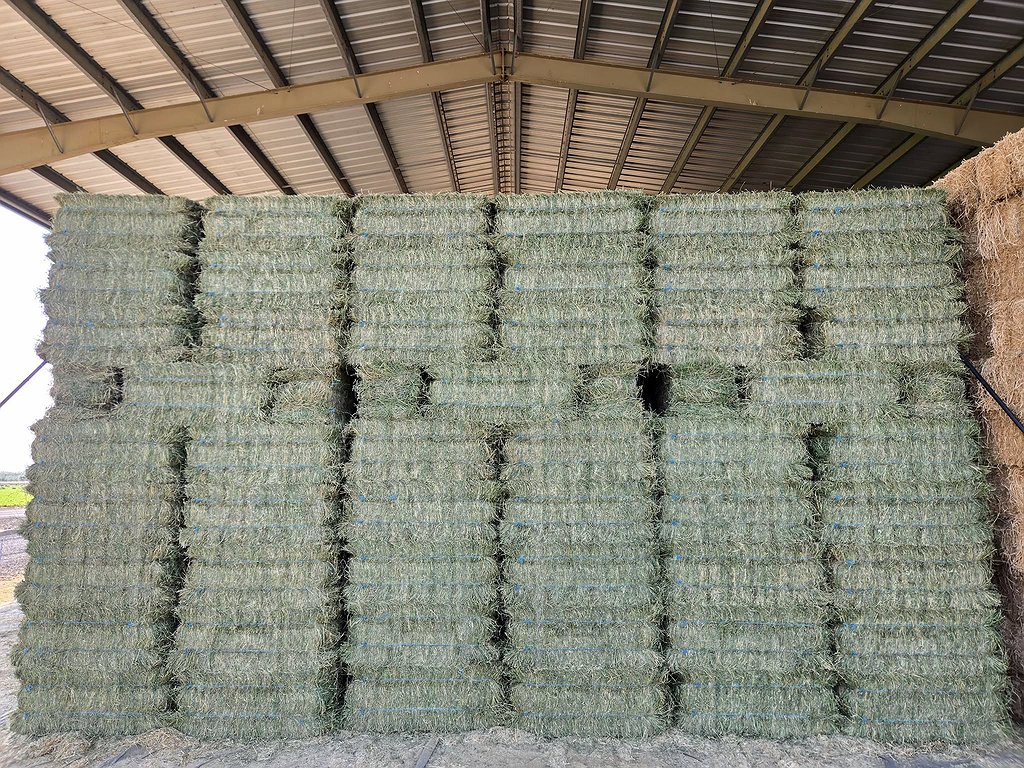 Much of the fourth cutting of hay at Klompen Farms was raked and baled in a matter of hours Saturday night, owner Bob Wieldraayer said. That cutting took second place in the Hay King competition, while an earlier cutting took first.
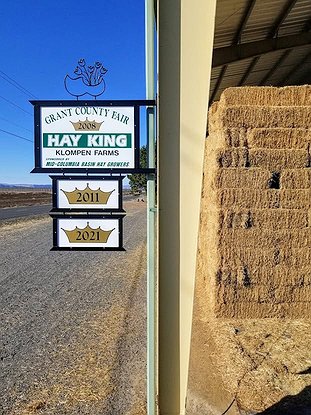 Klompen Farms has signs commemorating each of its wins in the annual Hay King competition, and will now have a fourth to add, after taking both first and second place this year.
ARTICLES BY JOEL MARTIN

Endless battle
Noxious Weed Control Board works to keep invasive plants under control
MOSES LAKE — Some of the nastiest plants in Grant County were the topic of a class led by Jay Johnson, a consultant with the Grant County Noxious Weed Control Board, Tuesday. The Noxious Weed Control Board, as its name would suggest, is tasked with keeping weeds under control in Grant County. That’s not a small job; the board’s website lists 129 species of noxious weeds that are found around Grant County. A noxious weed is defined as an invasive, non-native plant that threatens agricultural crops, local ecosystems or fish and wildlife habitat, according to the Noxious Weed Control Board. Washington state law requires that these weeds be identified and their spread kept to a minimum, if not completely eradicated. “We’re one of those agencies a lot of people don’t really understand,” Johnson said. “We’re a county office and … our funding is tax-based assessment. When you get your tax bill and you look down at all the expenses that you pay for, there we are.”

BASIN EVENTS: Oct. 16-24
COLUMBIA BASIN — Whether you feel like shopping, crafting, learning or seeing a show, there’s something happening for you this week in the Basin. Oct. 16 ‘My Family (Mi Familia)’ screening Spanning three generations, “My Family (Mi Familia)” is a heartfelt drama that follows the Sánchez family as they build their lives in East Los Angeles. Through love, hardship, triumph, and sacrifice, the film explores the immigrant experience, the strength of family bonds, and the traditions that connect one generation to the next. Lowrider show and taco truck before the screening. Sponsored by Columbia Basin Allied Arts, EDUBS C/S and the Moses Lake Creative District. $12 per person. Doors open at 6 p.m., film begins at 7 p.m. at the Moses Lake Civic Center Auditorium, 401 S. Balsam St. Tickets and info: www.cba-arts.org.

Moses Lake author encourages women to look beyond church culture norms
MOSES LAKE — A Moses Lake author’s book, “A Christian Woman Striving to Live Her Faith in a Man-Controlled World,” takes aim at the role to which many churches relegate the female half of their congregations. “It’s to encourage women in the faith,” Linda Curran said. “A lot of churches say, ‘Teach Sunday school, do this, do that, but don’t (evangelize.)’" In her book, Curran recounts a time when she moved to a new community and joined a church there. She was surprised to learn that, as a new female member, she had been automatically assigned church cleaning duties. When she questioned it, she wrote, she was met with condescension and her objections were brushed aside. In other churches, she said, women who were capable of teaching were relegated to “women’s ministry.”