
WA takes steps to make cosmetics safer
JOEL MARTIN | Hagadone News Network | UPDATED 1 month, 3 weeks AGO
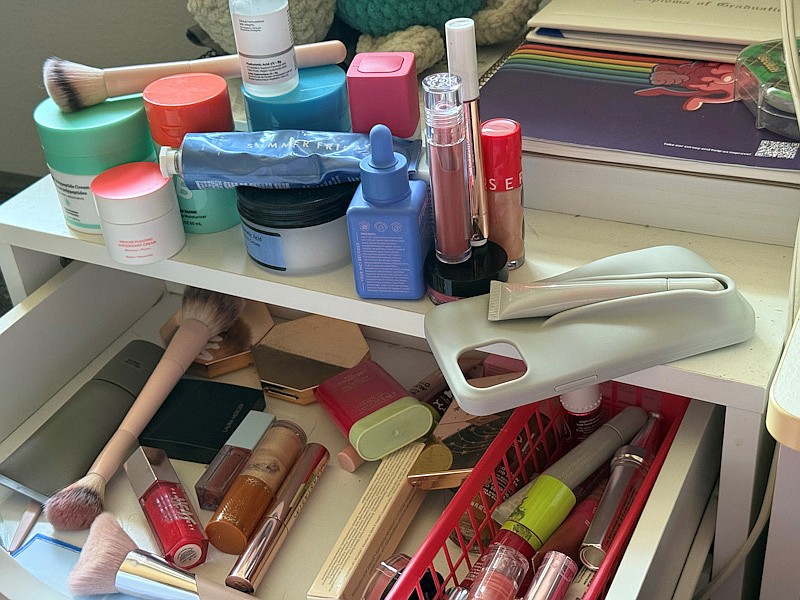
The items on your bathroom counter could contain chemicals that you don’t expect. A law that went into effect last year aims to keep those out of Washington.
COURTESY PHOTO/WASHINGTON DEPARTMENT OF ECOLOGY
Joel Martin has been with the Columbia Basin Herald for more than 25 years in a variety of roles and is the most-tenured employee in the building. Martin is a married father of eight and enjoys spending time with his children and his wife, Christina. He is passionate about the paper’s mission of informing the people of the Columbia Basin because he knows it is important to record the history of the communities the publication serves. | August 20, 2026 3:00 AM
OLYMPIA — The products in your bathroom may not be as innocuous as they look.
“One thing that's really shocking in general to people is that ingredients don't need to be approved before being used on the market,” said Shari Franjevic, who’s in charge of implementing the Toxic-Free Cosmetics Act for the Washington Department of Ecology, in an interview with DOE Communications Specialist Michele Cole. “And this is the case in cosmetic ingredients. What happens then is that in reality we have ingredients in products on our shelves that can cause … cancer, effects on human development or our reproductive systems, our hormone systems, our immune systems, all of these things.”
Those chemicals can also cause environmental damage, Franjevic said, when they go down the bathroom drain.
The word “cosmetics” may conjure up an image of makeup, but in fact it covers almost everything in the bathroom: shampoo, lotion, sunscreen, deodorant, shaving cream: anything that is intended to be used for cleansing, beautifying, promoting attractiveness or altering the appearance, according to the DOE website. The exceptions are soaps and prescription or over-the-counter medicines.
Cosmetic products may have ingredients listed on the label, but it can be hard for an ordinary customer to decipher those,” Franjevic said.
“Some clues help identify a chemical in a restricted class, like ‘phthalate’ in the name or ‘fluoro’ for PFAS,” she said. “Other chemicals are hidden, like phthalates in ‘fragrance’ or impurities like lead, which aren’t listed at all.”
The Toxic-Free Cosmetics Act was passed in 2023 and went into effect at the beginning of 2025 and regulates what chemicals can be used in cosmetic products that are manufactured or sold in Washington, according to the DOE website. The TFCA is one of the most stringent regulations on cosmetics in the country, Franjevic said. The restrictions also cover products ordered online and shipped into Washington.
Even with TFCA in place, consumers would be wise to check the ingredients on things they buy, Franjevic said.
“Watch for key words which can … help us understand what to avoid,” she said. “Look for things like fragrance-free versions of products. Avoid waterproof or water-resistant products, because they often contain PFAS … Avoid products that have dyes in them, especially if that dye doesn’t serve a function besides making the product look pretty. They’re unneeded and can have some hazards associated with them.”
Some manufacturers engage in a practice called “greenwashing,” which means using terms that sound environmentally safe but have no scientific definition, like “eco-friendly” or “non-toxic” or “natural.”
A good rule of thumb is to look for products with shorter ingredient lists, Franjevic said.
TCCA, and other laws of its kind, are making a difference, Franjevic said.
“People are paying attention,” she said. “They're asking questions and seeking safer alternatives and … transparency. And in response we see brands reformulating, we see ingredient suppliers innovating, we see legislators paying attention, and we're seeing more and more of these laws and we see nonprofit organizations saying, we can do better really defining a future for us.”
ARTICLES BY JOEL MARTIN
Endless battle
Noxious Weed Control Board works to keep invasive plants under control
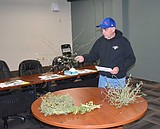
MOSES LAKE — Some of the nastiest plants in Grant County were the topic of a class led by Jay Johnson, a consultant with the Grant County Noxious Weed Control Board, Tuesday. The Noxious Weed Control Board, as its name would suggest, is tasked with keeping weeds under control in Grant County. That’s not a small job; the board’s website lists 129 species of noxious weeds that are found around Grant County. A noxious weed is defined as an invasive, non-native plant that threatens agricultural crops, local ecosystems or fish and wildlife habitat, according to the Noxious Weed Control Board. Washington state law requires that these weeds be identified and their spread kept to a minimum, if not completely eradicated. “We’re one of those agencies a lot of people don’t really understand,” Johnson said. “We’re a county office and … our funding is tax-based assessment. When you get your tax bill and you look down at all the expenses that you pay for, there we are.”
BASIN EVENTS: Oct. 16-24
COLUMBIA BASIN — Whether you feel like shopping, crafting, learning or seeing a show, there’s something happening for you this week in the Basin. Oct. 16 ‘My Family (Mi Familia)’ screening Spanning three generations, “My Family (Mi Familia)” is a heartfelt drama that follows the Sánchez family as they build their lives in East Los Angeles. Through love, hardship, triumph, and sacrifice, the film explores the immigrant experience, the strength of family bonds, and the traditions that connect one generation to the next. Lowrider show and taco truck before the screening. Sponsored by Columbia Basin Allied Arts, EDUBS C/S and the Moses Lake Creative District. $12 per person. Doors open at 6 p.m., film begins at 7 p.m. at the Moses Lake Civic Center Auditorium, 401 S. Balsam St. Tickets and info: www.cba-arts.org.
Moses Lake author encourages women to look beyond church culture norms
MOSES LAKE — A Moses Lake author’s book, “A Christian Woman Striving to Live Her Faith in a Man-Controlled World,” takes aim at the role to which many churches relegate the female half of their congregations. “It’s to encourage women in the faith,” Linda Curran said. “A lot of churches say, ‘Teach Sunday school, do this, do that, but don’t (evangelize.)’" In her book, Curran recounts a time when she moved to a new community and joined a church there. She was surprised to learn that, as a new female member, she had been automatically assigned church cleaning duties. When she questioned it, she wrote, she was met with condescension and her objections were brushed aside. In other churches, she said, women who were capable of teaching were relegated to “women’s ministry.”