
Phoenix is flying again
CAROLINE LOBSINGER | Hagadone News Network | UPDATED 2 months AGO
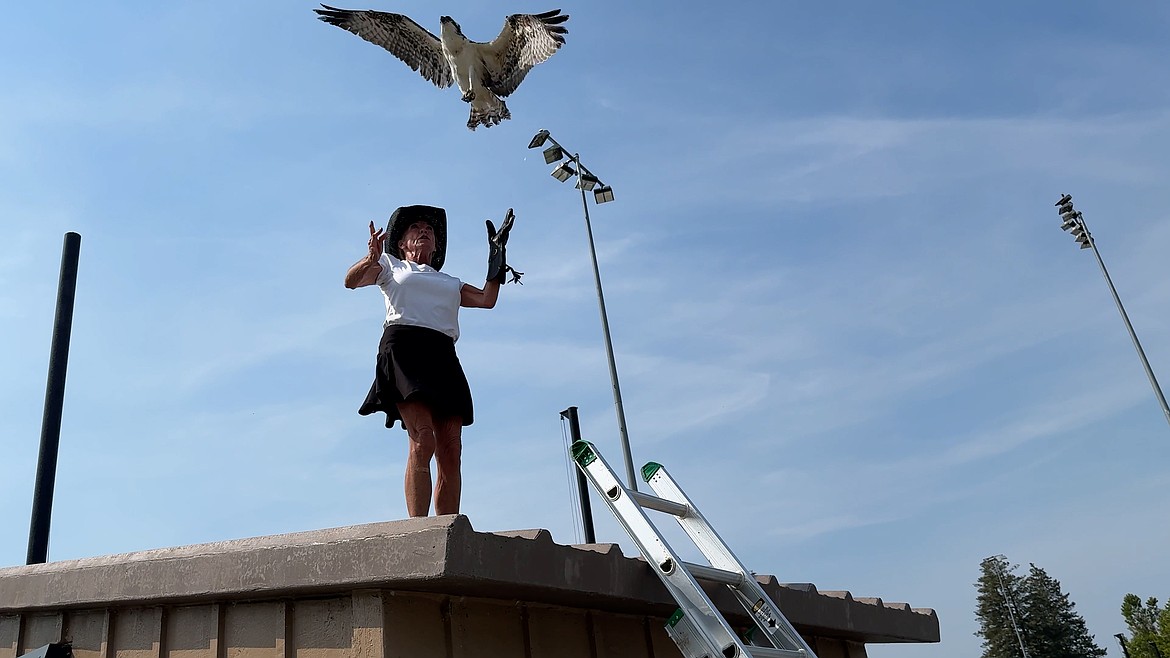
Phoenix takes off Wednesday, Aug. 19, as Bird of Prey Northwest's Janie Veltkamp watches his release following a week-long rehabilitation after an eagle attack during his first flight on Aug. 12.
Photo by CAROLINE LOBSINGER
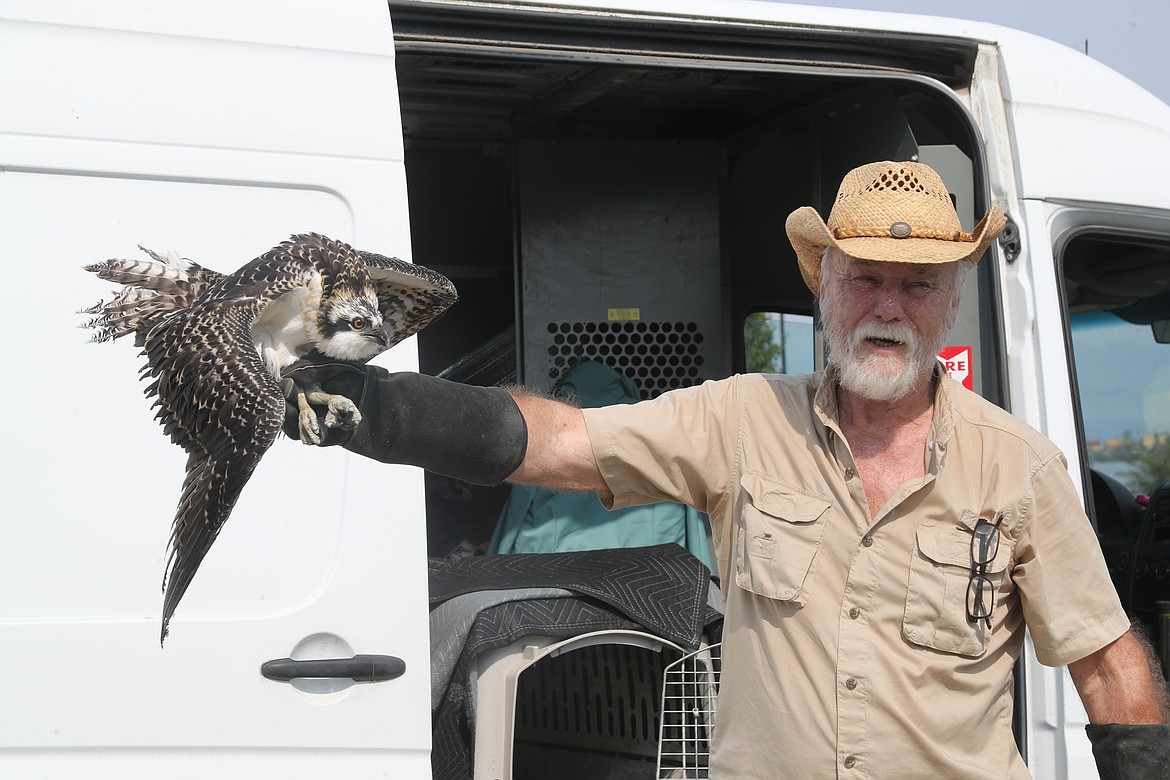
Don Veltkamp of Birds of Prey Northwest holds Phoenix shortly before the young osprey was released a week after being attacked by an eagle.
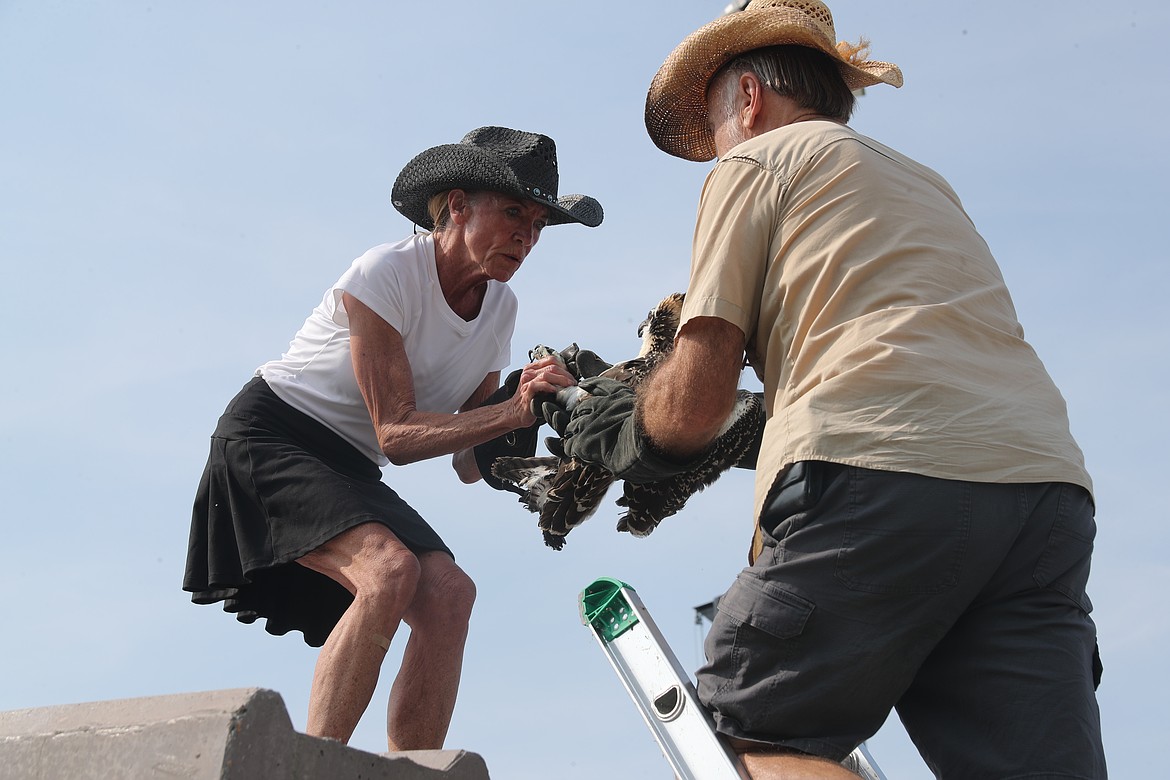
Janie Veltkamp of Birds of Prey Northwest carefully takes hold of Phoenix, a young osprey injured in an Aug. 12 eagle attack, from her husband, Don, as she gets ready to release him on Aug. 19.
I grew up in the Tri-Cities, Wash., and have always loved to write. I attended the University of Washington, where I earned a double major in journalism and political science, with an area of emphasis in history. I am the fifth out of six kids — don't believe any of the stories that my siblings tell. To be able to tell others stories and take photos for a living is a dream come true — and I considered myself blessed to be a community journalist. When I am not working, I enjoy spending time with family and friends, hiking and spending time outdoors, genealogy, reading, and watching the UW Huskies and the Seattle Seahawks. I am a servant to my cat, Frankie, who yes, will eat anything and everything in sight … even wedding cookies. | August 21, 2026 1:00 AM
SANDPOINT — After an eagle attack, a young osprey has risen like the mythical bird for which he was named to return to his home at Memorial Field.
"There he goes," said Jane Veltkamp, founder of Birds of Prey Northwest, as she stood atop a one-story building to give Phoenix as much height as possible in his return home.
As Phoenix took off downriver, applause and cheers broke out, with the flight watched by his parents; one from a nearby tree and the other from a bank of lights on the opposite side of the field.
"He's got all the moxie it takes to survive in the wild," Veltkamp said of Phoenix's chances for survival. "He's feisty and strong — and he's been fed three rainbow trout every day this week and has a fortune in fish in him and medical care. He's been X-rayed, sutured, antibiotics, cared every day, fed three times a day, because that's how these youngsters are. They eat twice as much as an adult."
Veltkamp said Phoenix's parents will keep an eye on their offspring, with at least one of the parents watching from the nest sporadically since the fledgling was released.
The release comes a week after the young osprey, which was 50 days old Wednesday, was attacked by an eagle during his initial flight from the nest. Named Phoenix by osprey cam watchers, the fledgling was attacked within 30 seconds of taking off on his first flight from the Memorial Field nest.
Because the nest's osprey cam is a popular feed, even pulling in viewers from around the world, viewers were able to respond almost immediately after the attack. That meant Phoenix was only on the ground for a short time before his rescue, increasing his odds of survival.
"That's the beauty of the nest cam. This bird is under watch at all times," Veltkamp said.
"They have a fan club," added Chris Bessler, who helped launch the osprey cam in fall 2011 in collaboration with former Sandpoint Parks & Recreation director Kim Woodruff, Birds of Prey Northwest and others.
Based on his injuries, Phoenix was likely in the air when he was attacked, landing near the lakeside rocks where he was rescued by Shelly Rose and taken to the Raptor Freedom Project. There, X-rays determined the extent of his injuries before he was placed under anesthesia to give medical crews from the Raptor Freedom Project and Bull River Veterinary Clinic time to thoroughly clean the wounds, suture the gash and ensure his injuries were addressed.
"Incredibly, he was standing on his feet within about 30 seconds," Mya Jinright, who provided the first medical care, said in a post to Rosebud, an online Facebook group following the attack.
Veltkamp said Phoenix lost his two central tail feathers — known as deck feathers — in the attack when he likely came down on his tail, breaking them off at the skin. Because of where the feathers broke off, Veltkamp was unable to replace them with donor feathers.
"I make a point of mentioning that because he is now very recognizable because he has a forked tail," the longtime raptor biologist said.
Because Phoenix was likely attacked in the air instead of when he was on the ground, Veltkamp said the osprey was less severely injured than he could have been.
The attack still left severe bruising, a laceration that required six to eight stitches and the loss of his deck feathers.
"He's one of the toughest, biting-est ospreys. … Usually, with the babies, we don't even wear gloves, but this bird, if you don't have a glove on, he's going to nail you with his beak," Veltkamp said.
The osprey's release was timed to coincide with the end of his medical treatment, with Phoenix receiving his last antibiotics shortly before his release Wednesday.
While there was some discussion about whether to keep Phoenix longer, Veltkamp said it was in the osprey's best interest to release him sooner rather than later.
"As long as you keep a bird in captivity, the conditioning goes down because they can't exercise enough in captivity to mimic this area here," said Veltkamp with a broad gesture to take in Memorial Field and adjacent Lake Pend Oreille.
BPNW officials had to make a decision: Keep Phoenix over the winter, giving him time to regrow his tail feathers, or release him once his injuries had healed enough and give him time to gain the skills he needs to survive in the wild.
"He's not going to get any better in captivity for eight months," she said. "So we decided to bring him back here (Wednesday), a week after his injury, and release him."
The release also gives Phoenix time to learn to hunt and prepare for his hopeful migration south. After a successful launch from Veltkamp's arms, Phoenix headed south downriver, where he appeared to camp out in nearby trees. His next steps will be to make it back into the nest, which sits 90 feet above Memorial Field, followed by learning to hunt.
"He knows where he's at," Veltkamp said. "He's seen this scenery for 52 days. … He might sit in a tree all day and at the first crack of dawn, he might take off and inch his way back to the nest."
Because of the nest's height, Veltkamp said it might take the osprey a bit to make it back. She has high hopes that Phoenix's story is just beginning, citing his strong personality and determined attitude, both of which made themselves abundantly apparent shortly after he woke up from his surgery.
"We've done all we can as humans intervening and I think we've done the right thing so far," Veltkamp said.
Now, it's up to Phoenix.
"He's feisty and he's got a strong will to survive," Veltkamp said. "… he's made it this far. He's survived an eagle attack. He's survived his first grounding after his first flight. He's survived in rehabilitation and being grabbed and given antibiotics and he's made it through all of that. I'd give him high marks."
For more information or to donate to Birds of Prey Northwest, go online to birdsofpreynorthwest.org or call Veltkamp at 208-582-0797.
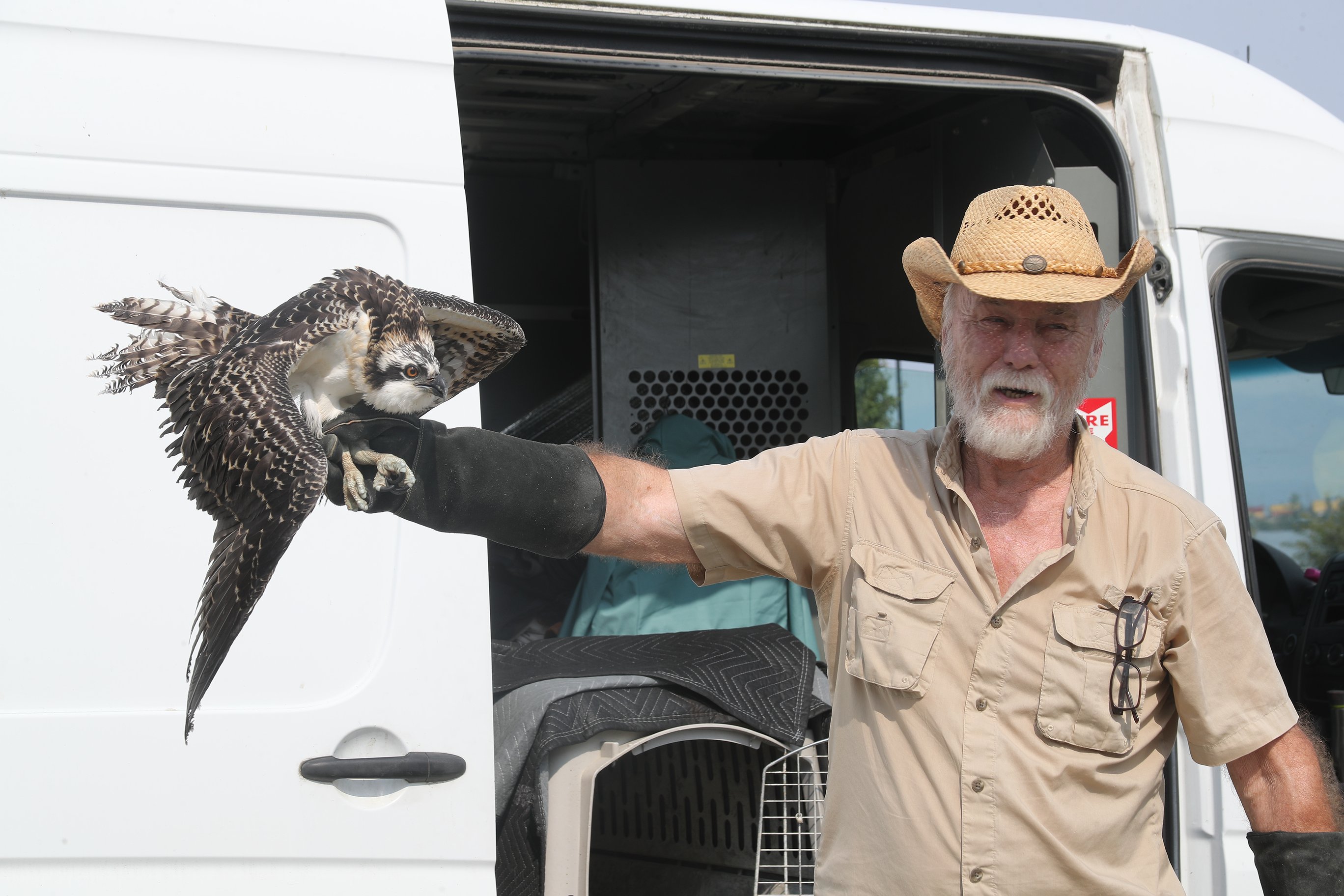 Don Veltkamp of Birds of Prey Northwest holds Phoenix shortly before the young osprey was released a week after being attacked by an eagle.
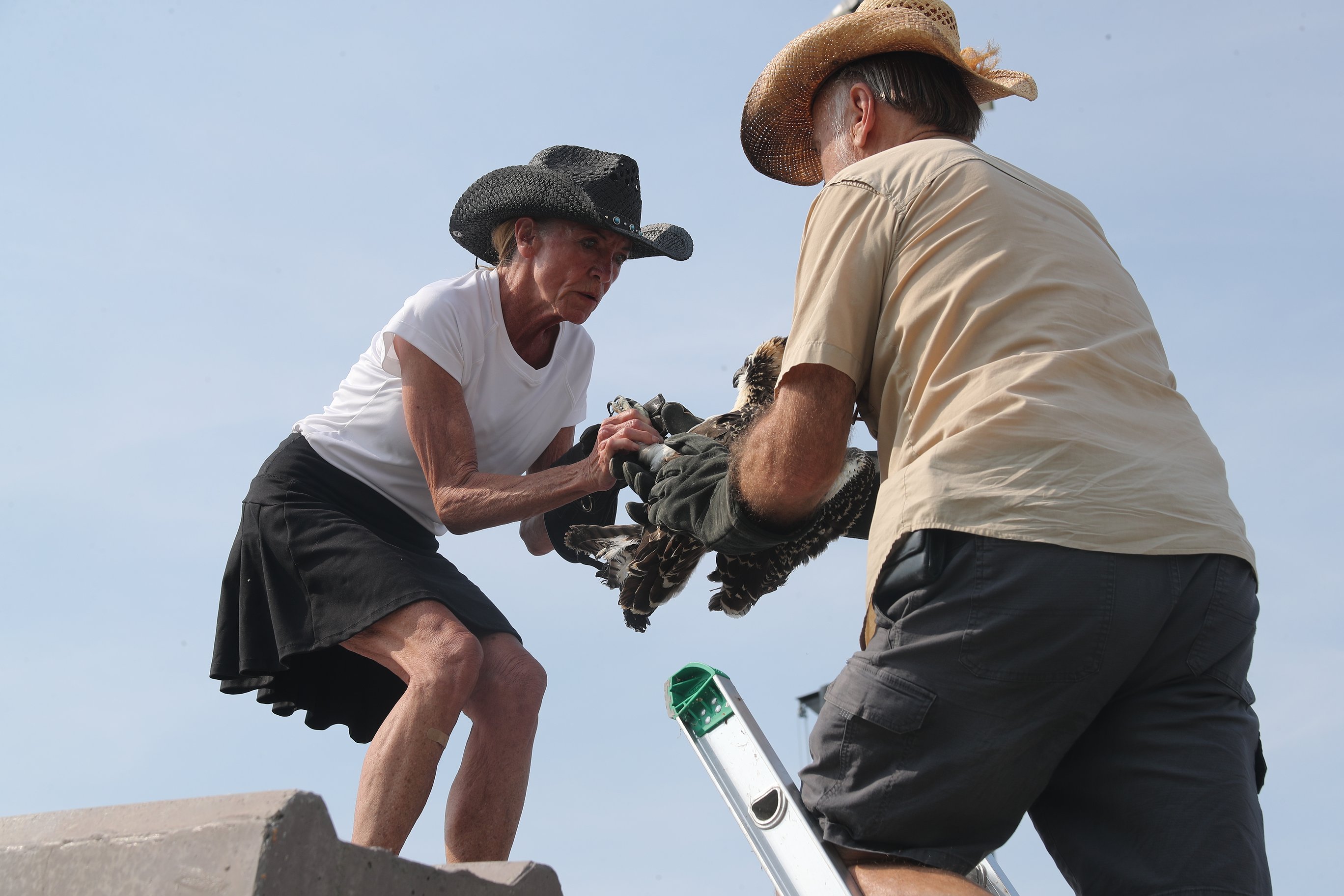 Janie Veltkamp of Birds of Prey Northwest carefully takes hold of Phoenix, a young osprey injured in an Aug. 12 eagle attack, from her husband, Don, as she gets ready to release him on Aug. 19.
ARTICLES BY CAROLINE LOBSINGER

Wellness fair puts focus on health
The Wellness & Connection Fair is bringing together local health and wellness professionals together in Sandpoint for a day of presentations, activities and community resources.

BCSD pays share of ISBT shortfall
District opts to make lump sum payment
Boundary County School District paid $217,000 to cover its share of the Idaho School Benefit Trust's $13 million shortfall.

Deadline extended for 'Valor' stories
The Valor publication is gathering photos, military service details and personal stories from Boundary County veterans and military families. Featured profiles highlight local service members' contributions, achievements and sacrifices across generations.