
THE FRONT ROW with MARK NELKE: A reminder to be thankful for sports around the clock ... and the dial
Coeur d'Alene Press | UPDATED 1 month, 3 weeks AGO
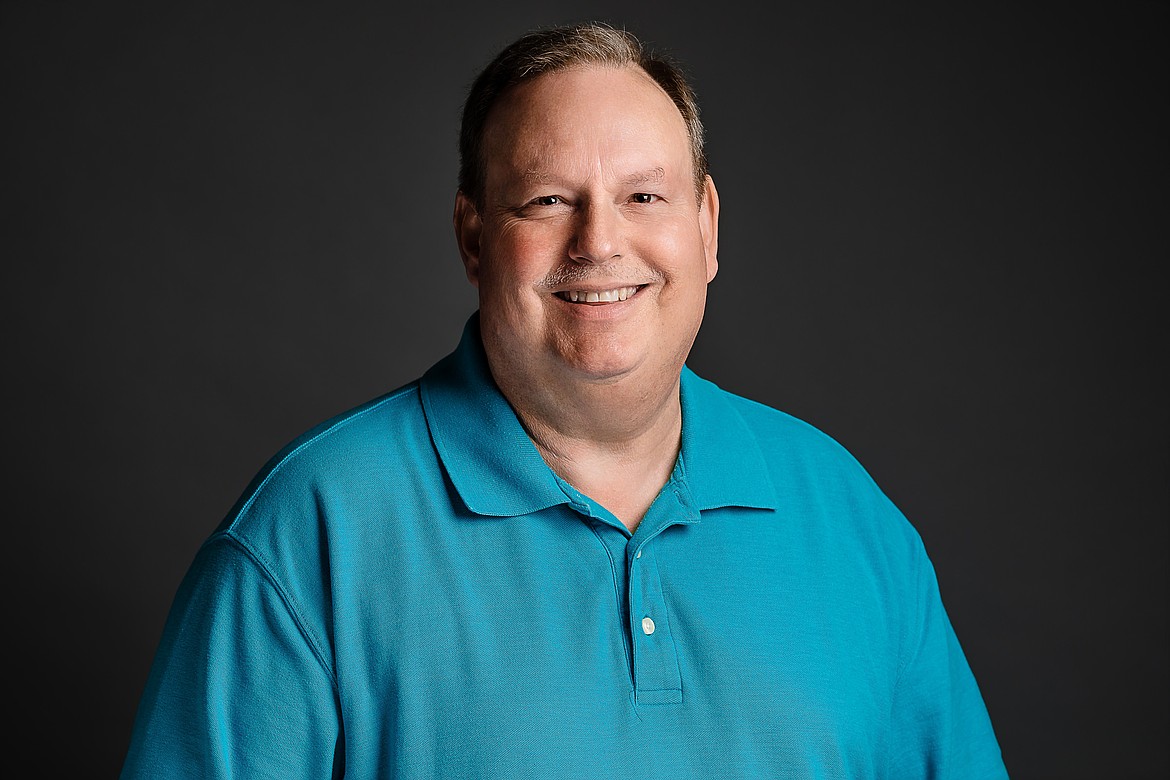
Mark Nelke
Australian Rules Football.
Body by Jake.
And, of course, SportsCenter.
With the death earlier this week of Bill Rasmussen, one of the co-founders of ESPN, I wondered what life would have been like if he had not had the guts to start an all-sports cable network in 1979?
Would someone else have tried it eventually?
Maybe. Maybe not.
Remember, he was told by industry “experts” that the concept wouldn’t work.
Good thing he didn’t listen.
You can argue about the politics of ESPN these days, that it has become “too this” or “too that.”
But one thing you can’t argue — the existence of the “Total Sports Network” remains a blessing for sports-starved fans.
BACK IN the day, most sports on TV were shown on the weekends.
And not all day, like they are now.
If someone got up to use the bathroom, or grab something from the kitchen ... “Hey, while you’re up, can you change the channel?”
But before that, tap the TV console so you don’t get “shocked” when you touch the dial.
Shortly before ESPN debuted, cable TV made its way into our neighborhood — another historical moment.
No longer were we stuck with just 2, 4 and 6.
Now there were other options, accessible through some contraption on top of the TV. One of those options was a movie channel — a chance to watch classics like “Slap Shot” from the comfort of your living room.
Anyway ...
Around that time, I remember USA Network (the same one that’s still around now), showing MLB doubleheaders one weeknight a week.
What!?
Two games on the same day! Six hours of televised baseball? Heaven!
(That was better than going downstairs to your room and trying to tune your clock-radio to a strong-enough AM station to find out how the A’s did that night. Or the USF Dons in their heyday.)
Remember, that was back in the day where baseball on TV consisted of the Saturday Game of the Week on NBC, with Curt Gowdy and Tony Kubek, and later Joe Garagiola.
Monday Night Baseball on ABC was also a big deal, especially when Mark “The Bird” Fidrych was pitching.
Other nights?
Thankfully there was “M*A*S*H,” “Happy Days” and the like to fill the void.
I REMEMBER when ESPN wasn’t even a 24-hour network in those early days.
And SportsCenter was must-see TV, with George Grande, Lou Palmer, Chris Berman, Bob Ley and Tom Mees telling us what happened that day. Other than George Michael’s Sports Machine on Sunday nights, there was no other way to see that many highlights of the day’s events.
Nothing like working the 3 to 11 shift at the 7-Eleven on 14th and Grand on the South Hill in Spokane, turning things over to my friend Mike for the graveyard shift, heading home to the north side and catching the 12:30 a.m. SportsCenter (it was only a half-hour back then), then it was time for bed. ESPN had signed off for the day.
Years later, when the morning came, and it was time for “Getting Fit with Denise Austin,” or “Bodies in Motion,” or “Kiana’s Flex Appeal.”
Hmm. Fitness shows then ... debate shows now. You decide which was the better way to start your day.
Many of us grew up watching the College World Series, attracted in part by the site of a college baseball game on TV (before that, we just heard the stories of back in the day, when USC and Arizona State were good). That was it until ESPN started showing every game from Rosenblatt Stadium.
The feeling was sort of an “Animal House” with spikes.
REMEMBER WHEN ESPN tried to show as much of the NCAA men’s basketball tournament as it could?
Especially on the first two days of the tournament, that Thursday and Friday. Whatever games ESPN didn’t show live, it would show all through the night on tape-delay.
Back then, CBS showed games on the weekend. But all we got the first two nights were one late-night game on Thursday and Friday, at 11:30 p.m. Eastern time.
So there were Brent and Billy in Salt Lake City on a Thursday night, calling a 9:30 p.m. local time NCAA game to be shown live on the East Coast.
Out West, we had to wait for the tape-delayed version at 11:30 our time, after the late local news.
If you wanted to catch the end of NC State’s miracle comeback against Pepperdine in the 1983 tourney in Corvallis, Ore., you had to stay away until almost 2 in the morning.
CBS, of course, saw what ESPN was trying to do and how popular it was becoming, and eventually coughed up enough money to earn the rights to the whole tournament.
But not necessarily bring us all the games.
CBS did show more NCAA games on that first Thursday and Friday after that, but not was much as ESPN was showing. Fans complained, and it wasn’t until recent years that CBS farmed out games to TBS, TNT and truTV, so all the games were available to watch, if you knew how to find them.
Which is what ESPN was trying to do, some 40 years earlier.
BEFORE ESPN, college football, like major league baseball, consisted of a “game of the week” on Saturday.
And not that listening to Keith Jackson every week was a bad thing, but we wanted more games, especially more local games.
(Though listening to Bob Robertson calling Washington State football games on the radio, and Bob Curtis calling Vandal games, wasn’t necessarily a bad thing either.)
Eventually, we got more games on TV. From early morning until nearly midnight.
We learned what a “broadcast window” was.
Before that, a window was just something that sometimes got broken when you chipped a golf ball too close to your house in the back yard.
Now, of course, there’s several networks that show lots of sports. The downside is, as you’ve figured out by now, is there is no longer a one-stop shop for sports — one cable system, or one satellite system.
Now, if you want all the games, you have to subscribe to numerous streaming services — or know someone kind enough to let you “borrow” their login.
(Watch a game on your phone back in those days? What if Dad needed to make a call? Or watch on your tablet? You mean like “Etch A Sketch?”)
So thank you Bill Rasmussen, Bill’s son Scott, and Ed Eagan, for founding ESPN.
Whether you liked the way it turned out or not, sports on TV ... and beyond ... has never been the same since.
Mark Nelke is sports editor of The Press. He can be reached at 208-664-8176, Ext. 1205, or via email at [email protected]. Follow him on X (formerly Twitter) @CdAPressSports.