SEPT NIBJ: Kootenai County short on mental health professionals
DAVID BERNAUER | Hagadone News Network | UPDATED 1 month, 3 weeks AGO
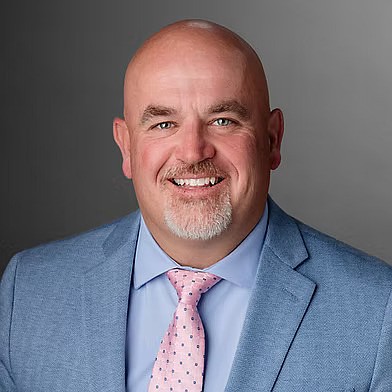
Heritage Health CEO Mike Baker
All of Idaho is designated as a Health Professional Shortage Area for mental healthcare providers, according to Idaho Department of Health and Welfare officials.
According to IDHW, there are two different types of HPSAs: geographic and population. Geographic ones have a shortage of providers for an entire area, whereas population ones have a shortage for a specific group of people in an area such as the homeless or low-income for example. Kootenai County falls into the former.
Health Resources and Services Administration’s “Find a Health Center” tool found that Heritage Health is the only federally qualified health center in Kootenai County. FQHCs are federally funded clinics who service underserved communities and treat patients regardless of insurance status or income. They are not free clinics, but charge patients based on a sliding fee scale commensurate with their income.
“Access has been a big deal for a long time in our community,” Heritage Health CEO Mike Baker said. “We have about 50 therapists, they do traditional mental health therapy, substance use treatment. We have psychologists that do diagnostic testing for autism, ADHD, stuff like that, and then we have our psychiatric prescribers that work with patients on medication.”
Even with the hospital's resources, Heritage Health officials said it can still be a struggle to serve everyone who needs access to mental healthcare, causing difficulty for people.
“Where the challenge really comes in is in Idaho, we just don't have enough therapists in our community,” Baker said. “We've got great partners that work in private practice and at other community agencies, but the biggest challenge for our community truly is the number of therapists in this area.”
Idaho averages roughly one mental health provider per 399 residents, 20% worse than the national average of one per 320 residents according to HRSA data.
Heritage’s mental health clinics take walk-ins, but only Monday through Friday from 8 a.m. to 10 a.m., making it technically accessible, but not always convenient. It may not fit clients' schedules or they may want to seek regular appointments in the future. If someone is in crisis, they are able to take that person in; however, for the majority of cases, treatment might be delayed.
“Even in psychiatry, we might have a month waiting for therapy,” Heritage Health’s Clinical Director of Behavioral Health Erika Harrison said. “We might have a two-week wait. But once again, that's if you just take what you can get. If you need those preferred spots with the preferred clinician, that's when it starts getting longer and longer.”
If someone has the time to wait for availability, their insurance may still not be able to cover those mental healthcare costs. The only options would be accruing massive medical debt or continuing to fall through the cracks into a potentially scary headspace.
“I was making a recommendation for substance use counseling, and the person said, ‘That's not covered under my insurance, so I have to pay out of pocket,’” Harrison said. “That significantly impacts a person's decision to get treatment or not. Even within private insurance some services are not covered or they have to meet deductibles. It significantly impacts the ability to access care.”
Taking into account all the hurdles to access, there can be a negative stigma surrounding mental health treatment. While that stigma has weakened as the issue has become more mainstream and socially acceptable, it remains another obstacle to getting better.
“Mental health services is more than counseling,” Harrison said. “It's also your peer support. It's also your recovery coaching. It is your skill building. It is your case management. It's your crisis service. It's all of that. It's your psychiatry. You know, it's not about just coming into counseling once a week. It’s multidimensional.”
Preventative health is also important. Much in the same way someone might see a primary care provider for a yearly physical checkup, keeping tabs on one's mental health is just as important.
“I can have all of my life together and still find value in meeting a therapist,” Baker said. “There’s lots of things we can work with, so I think the more we can normalize that, that'd be great.”
Not everything surrounding mental healthcare access is negative though. In a post-COVID world telehealth has become an increasingly available and helpful option for those able to seek treatment.
“People who literally cannot be driving an hour and a half to their appointments, or they’re in a blizzard, or they may have co-occurring conditions, maybe physical, medical conditions that prevent them from leaving their home,” Harrison said as examples of those who may utilize telehealth. “Telehealth may not be for everybody, but it’s another way people in our community have been able to access care.”
As much work as there is to be done, taking the steps toward finding treatment is better than not seeking it at all.
“The more we can talk about this stuff, the better,” Baker said. “The only way to break it down is to normalize it and talk about it.”
ARTICLES BY DAVID BERNAUER

Kitty Caper: Store mascot missing from Duncan's Pet Shop
Oscar was last seen outside Government Way business last week

Penny's Pit reopening in Rathdrum
Restaurant had closed its doors in May