
SEPT NIBJ: Awareness and prevention: Empowering everyone to play a role in suicide prevention
CHLOE COCHRAN | Hagadone News Network | UPDATED 2 months AGO
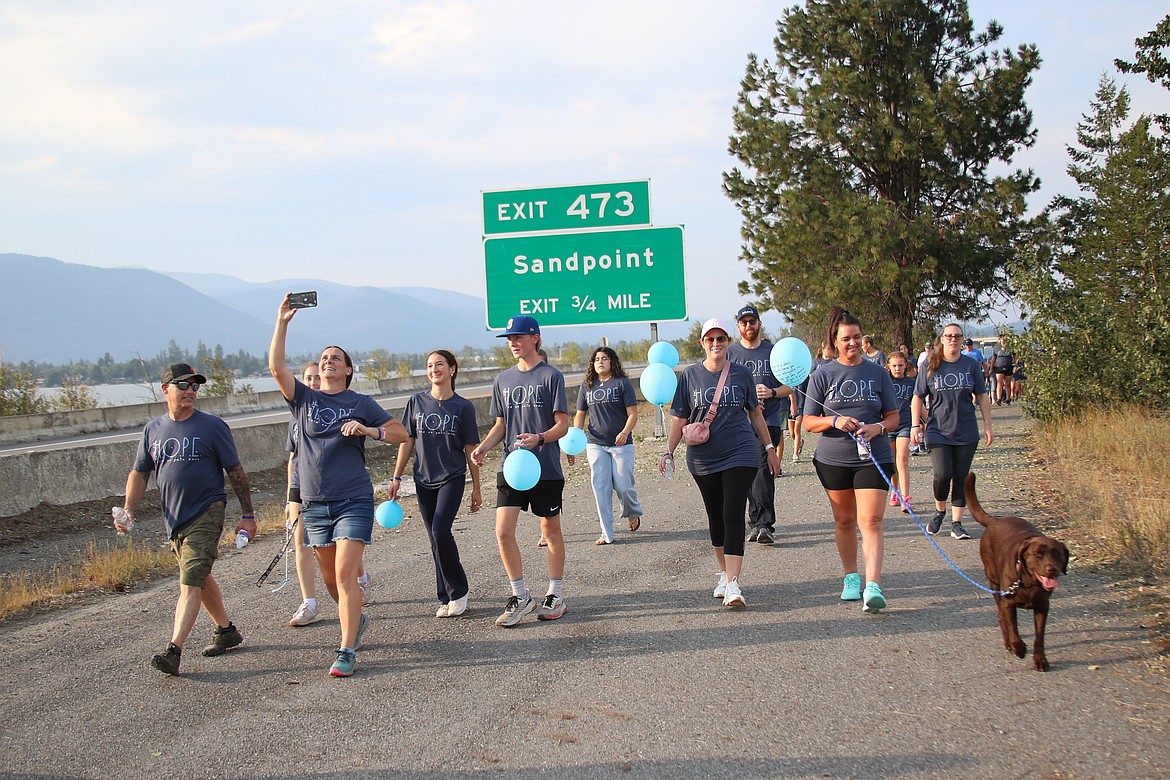
A group of walkers take a selfie as they start across the walking bridge during Sunday's Walk for HOPE. The annual walk is held at the start of Suicide Awareness Month to raise both awareness and support for those who might be struggling.
Photo by CAROLINE LOBSINGER
In rural North Idaho communities, access to necessary medical and behavioral health services can be limited by geographic isolation, minimal infrastructure and low population density. These barriers can make it more difficult for health care professionals to provide consistent care to those living with a mental health challenge.
Despite those challenges, health care organizations such as Panhandle Health District are pushing past those restrictions to provide suicide awareness and prevention services. Those offerings are especially important in communities where residents living with mental health challenges may face fewer local care options.
The effort reflects a wider push to make suicide prevention training more accessible in rural communities, where distance, stigma and limited behavioral health resources can make it harder for people to seek help before a crisis, officials said.
For about a decade, PHD has been involved in assisting individuals and their families with suicide prevention services, whether through preemptive measures or recovery resources via training, classes and harm reduction tools. The district also works in the behavioral health space, providing additional support to connect people seeking substance use treatment or recovery assistance.
Katherine Hoyer, PHD health promotion and substance use prevention program manager, said the district collaborates with hospitals, law enforcement agencies and first responders, and other community organizations to make sure that rural communities are equipped with the necessary suicide prevention tools.
Substance abuse training, mental health first aid, naloxone (Narcan) response training and youth substance abuse training are just several services offered through PHD.
“For the general public and community organizations, we offer free QPR (question, persuade, refer), naloxone response and other training so everyone can be empowered to play a role in suicide prevention and harm reduction,” Hoyer said.
Community members and organizations interested in training can contact Panhandle Health District for information about upcoming QPR, naloxone response and other prevention classes.
Suicide rates have remained stable in recent years, which Hoyer said is encouraging. However, she noted that stability in numbers also means that the suicide rate hasn’t decreased, which is the district’s goal within the suicide prevention program.
“Suicide is a multi-faceted public health issue, and significant factors can include rural/social isolation, stigma, lack of healthcare resources, and other disparities that can contribute to the many factors of suicidality,” Hoyer said.
Hoyer said prevention efforts depend on building awareness before a crisis occurs and helping residents recognize when someone may need support. By offering training and working with local partners, PHD aims to give more people the tools to respond, refer and connect others with help.
Anyone experiencing a mental health crisis or concern about someone else can call or text 988 to reach the Suicide and Crisis Lifeline.
ARTICLES BY CHLOE COCHRAN
Caldon sentenced to 270 days in jail for fatal boat crash
A man charged in connection with a fatal boat crash last September was sentenced to 270 days in county jail and five years of probation.
Absent opponents leave candidates unchallenged at Sandpoint forum
Half the politicians on the ballot for Nov. 3’s general election attended Tuesday evening's candidate forum, drawing a crowd of approximately 50 people as they fielded questions from public spectators.
Absent opponents leave candidates unchallenged at Tuesday forum
Half the politicians on the ballot for Nov. 3’s general election attended Tuesday evening's candidate forum, drawing a crowd of approximately 50 people as they fielded questions from public spectators.