
SEPT NIBJ: The challenges of rural healthcare
MAKEILAH LAW | Hagadone News Network | UPDATED 2 months AGO
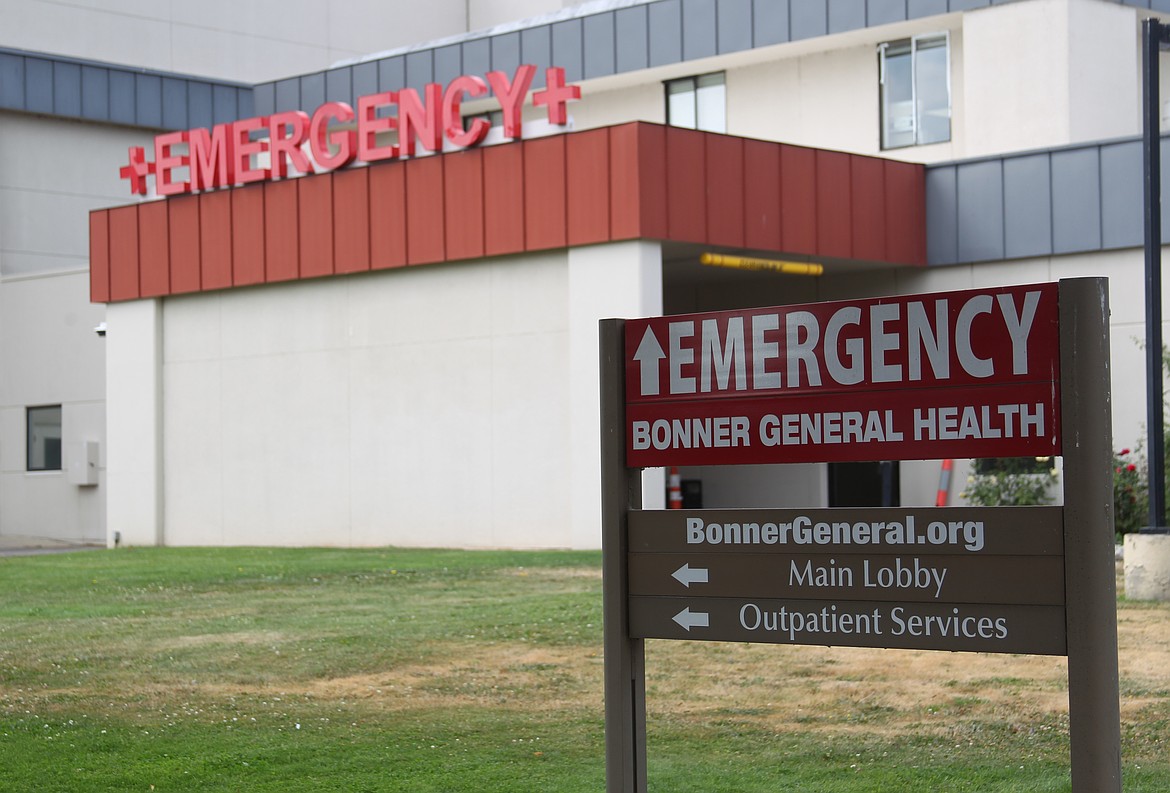
The Bonner General Health hospital serves the entire population of Sandpoint, making access to specialized emergency care for many residents difficult.
Photo by MAKEILAH LAW
For residents in Boundary and Bonner counties, access to emergency healthcare can be slim. Boundary County Hospital in Bonners Ferry and Bonner General Health in Sandpoint serve as the sole hospitals for each community. For that reason, rural healthcare presents a unique set of challenges.
Whether a patient experienced a stroke or was in a life-threatening car crash, rural communities are not immune to emergencies. When one hospital functions as the primary source of care for thousands of residents, emergency medicine physicians like Dr. Jackson Bell must be prepared.
Bell is an emergency medicine physician at both Boundary County Hospital and Bonner General Health. As a doctor who splits his time between two rural hospitals, Bell understands the realities of rural healthcare, including the long distances patients and providers must navigate to access specialized care at tertiary facilities.
Oftentimes, a patient needing surgery must be transported to a larger hospital that can provide specialized care, said Bell.
“Very frequently, the surgery is more complex or requires a different specialist,” said Bell. “From Bonners Ferry, we average transferring a patient out by ambulance every other day,”
Transferring patients can be done by life flight if the weather permits, but most patients are transferred via ambulance. That takes time, Bell said.
The transfer from Boundary County Hospital to Kootenai Medical Center is an hour and a half, but some medical emergencies require transferring patients even farther.
“There are certain types of strokes that could require a vascular surgeon or interventional radiology,” said Bell.
Since those treatments are not available in Bonners Ferry, patients must be transferred to hospitals in Spokane.
“We have to make sure that they’re stable and provide initial treatment to get them there and that is a pretty complex process,” said Bell, adding that he calls multiple hospitals and speaks with multiple doctors to figure out the necessary steps to transfer patients efficiently.
Another challenge in rural healthcare is the limited availability of specialists.
To illustrate the issue, Bell offered a hypothetical example.
“Let’s say someone got a tonsillectomy. And they have a post- tonsillectomy hemorrhage, like they’re bleeding three days after their tonsillectomy,” said Bell.
In that situation, patients would need to revisit their initial surgeon for a revision surgery.
“Because I don’t have that specialist at my hospital, I can’t provide that treatment,” said Bell.
For residents of Bonners Ferry or Sandpoint, that often means traveling hours back to the hospital where the original procedure was performed.
A core reason behind the lack of specialists in rural healthcare is driven in large part by patient volume. While hospitals that serve larger populations may see enough cases to support a wide range of specialists, rural communities often do not have enough patients needing a particular type of care to sustain those services.
“Let’s say you’re a neurosurgeon. You’re not going to be able to live in Bonners Ferry because there’s not enough neurosurgery cases to even allow you to have a career,” said Bell.
“It’s really a hub- and- spoke model where all the people in the rural areas are the spokes, and they refer to a central center,” said Bell. “There’s not really a way around that.”
Although doctors at rural hospitals may not always be able to provide definitive care, they still play an integral role in treating patients — especially when every minute matters.
One bias Bell said he encounters is that rural hospitals are “Band-Aid shops” that don’t do anything.
To that misconception, Bell responds that patients who don’t receive initial care from rural hospitals could die.
“We need to be able to stabilize them and keep them alive long enough to get to a hospital where they can get surgical care,” said Bell.
Even though rural hospitals may see fewer patients, Bell said doctors are still required to perform at the same level of care as those working at urban hospitals.
“We only see so many traumas a month at Bonners Ferry, but we have to be ready for it,” said Bell.
That why Bell said ongoing training for doctors in rural healthcare is important.
To be boarded by the American Board of Emergency Medicine, future doctors must train at a high-volume residency site for three years.
“You’ll see shootings and stabbings and brain injuries and broken bones and heart attacks and strokes,” said Bell. “You’re inundated with those patients for three years.”
Training at an adequate facility would equip doctors with the necessary skills to provide care for any emergency, even if they decided to pursue working in a rural town, said Bell.
However, to combat the challenge of limited specialists, Bell said doctors can continue taking medical education courses to be ready for any event.
“You don’t get to pick your doctor on the day that you have a car accident, you just hope that they’re ready to take care of you,” said Bell.
ARTICLES BY MAKEILAH LAW

Healing garden seeks next generation of volunteers
Leaf blowers roared throughout the Healing Garden on Saturday morning as volunteers worked diligently to prepare the garden for the winter months. The cool bite of fall didn't keep volunteers from showing up and, although their cleanup duties varied, everyone shared a common goal: caring for a space they love.

Idaho Liberty Bell to visit area
As part of the nation's 250th birthday celebration, the 2026 Idaho Liberty Bell tour will make 23 stops across Idaho, including cities in Bonner and Boundary County early next week.

Apply Idaho readies students for college applications
As college application deadlines approach, Sandpoint High School seniors are receiving support through a program that lightens the load of applying for college. Apply Idaho, a free application platform, is partnering with the high school to assist seniors in sending their personal, academic and application information to several in–state Idaho colleges in one step.