
With hucks in short supply, officials hope to reduce bear conflicts
The Western News | The Western News | UPDATED 3 weeks, 2 days AGO
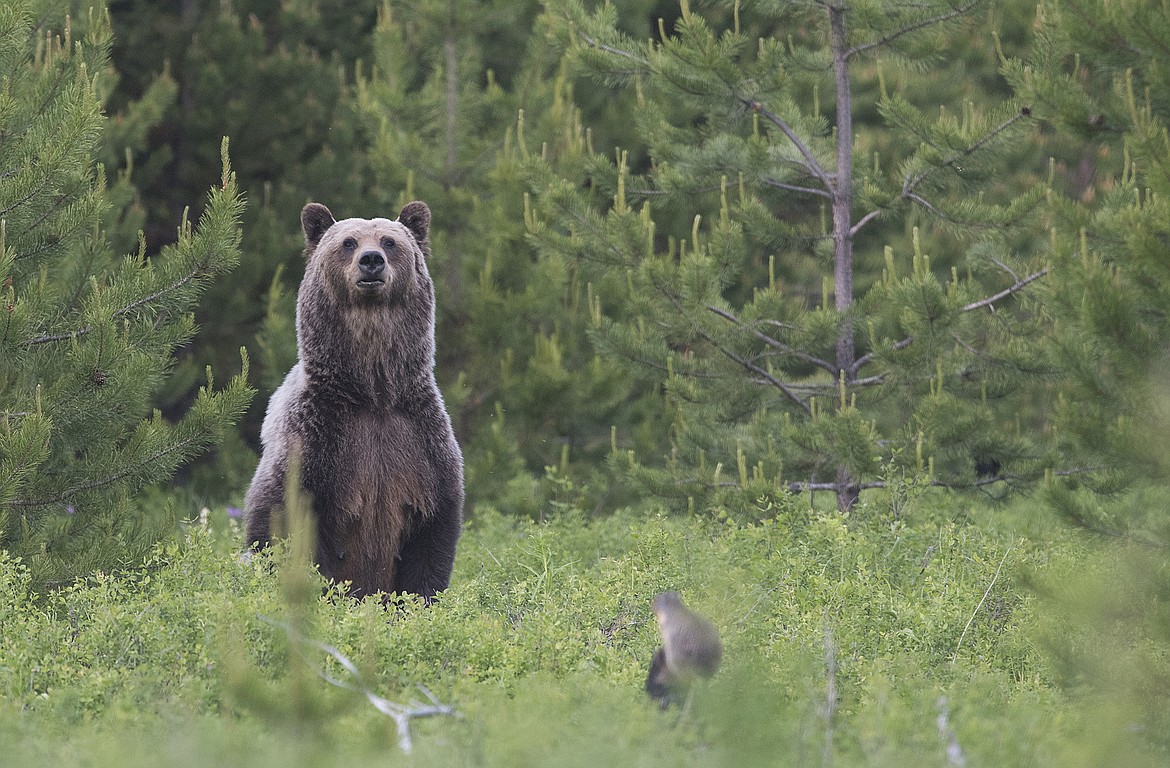
A grizzly bear eyes a ground squirrel and a hiker in Northwest Montana. (Chris Peterson photo)
The old saying, "An ounce of prevention is worth a pound of cure" is very appropriate when considering interactions between bears and people."
Northwest Montana is experiencing a below average huckleberry crop this year and as natural food sources become harder for bears to find, they are increasingly moving to lower elevations in search of alternatives.
Montana Fish, Wildlife & Parks bear conflict specialists are asking for the community’s help to reduce potential conflicts.
“We’ve responded to an unusually high number of calls this season,” said bear and lion conflict specialist, Justine Vallieres.
As fall approaches and bears enter hyperphagia, a time when they actively seek out extra calories to prepare for winter, specialists expect that call volume to increase.
Securing common attractants such as garbage, bird feeders and fruit trees, can help prevent conflicts before they arise. Bears are resourceful and highly food‑motivated, but actions like storing garbage in bear‑resistant containers, temporarily removing bird feeders and protecting fruit trees with electric fencing can greatly reduce the chances of bears lingering in developed areas.
Montana FWP bear conflict specialist Garrett Tovey spoke with The Western News about what is happening in Lincoln and Sanders counties in Northwest Montana.
"In the middle of April, things were normal, but then we got a wind and rain event the blew the blossoms off of the shrubs that provide the food bears bank on," Tovey said.
Service berries, thimble berries, hucks, choke cherries and hawthorns were all affected and by the middle of May, conflict calls had plateaued and still haven't ended.
"We're (Tovey and an assistant) answering calls seven days a week and we're already on par to double our totals for all of 2025," he said.
2025, as many recall, was a banner year for fruit and berries, but 2026 is as bad as last year was good for the omnivores.
Tovey said he couldn't remember a time when didn't have a bear trap out.
He and his assistant cover a massive expanse from Rexford to the Idaho border and south to Quinn Hot Springs in Sanders County.
Most of the conflicts with black bears tend to be near towns while the Yaak is seeing more issues with grizzly bears.
Tovey's advice to the public is to call as soon as a bear conflict occurs is to call FWP.
"It's one of our big struggles," he said. "If one of two weeks go by, to determine which bear is pretty difficult."
“We really need your help this year,” said Vallieres. “We live in an area with a high density of both black and grizzly bears, and when natural food sources are low, the chance for conflict increases. Being proactive about securing attractants can make a big difference, because even if you haven’t had a bear visit before, there’s always a chance one could pass through.”
Vallieres also encourages anyone experiencing a bear‑related concern to get in touch with FWP as early as possible. “Early calls allow us to respond quickly, help secure attractants, and provide guidance. The sooner we’re aware of a situation, the sooner we can help.”
Tovey said FWP will loan electric fencing to people who need it as well as bear-resistant garbage carts. But currently, he is out of cans.
But Evergreen Disposal, located on U.S. 2 in Libby, has bear-resistant carts.
For more information on getting a cart and reducing bear conflicts, see https://www.evergreengarbage.com/living-in-bear-country or call 406-257-1739.
Tovey said it's about $6 per month to rent a bear-resistant cart.
While huckleberries are scarce in some places, other productive patches remain. In these areas, bears may be especially protective of the food they’ve found. When recreating in bear habitat, follow these safety tips:
- Carry bear spray where it’s easily accessible and know how to use it.
- Stay alert and watch for signs of bear activity, especially in areas with limited visibility.
- Travel in groups and keep members close together.
- Make noise to avoid surprising a bear, especially in dense vegetation or near running water.
- Avoid traveling at night, dawn, or dusk.
- Steer clear of carcass sites or areas with scavenger activity.
For more information, visit https://fwp.mt.gov/conservation/wildlife-management/bear/be-bear-aware/living-bear-country.