
Guest opinion: The plight of the adorable pika
April Craighead | Whitefish Pilot | UPDATED 2 months AGO
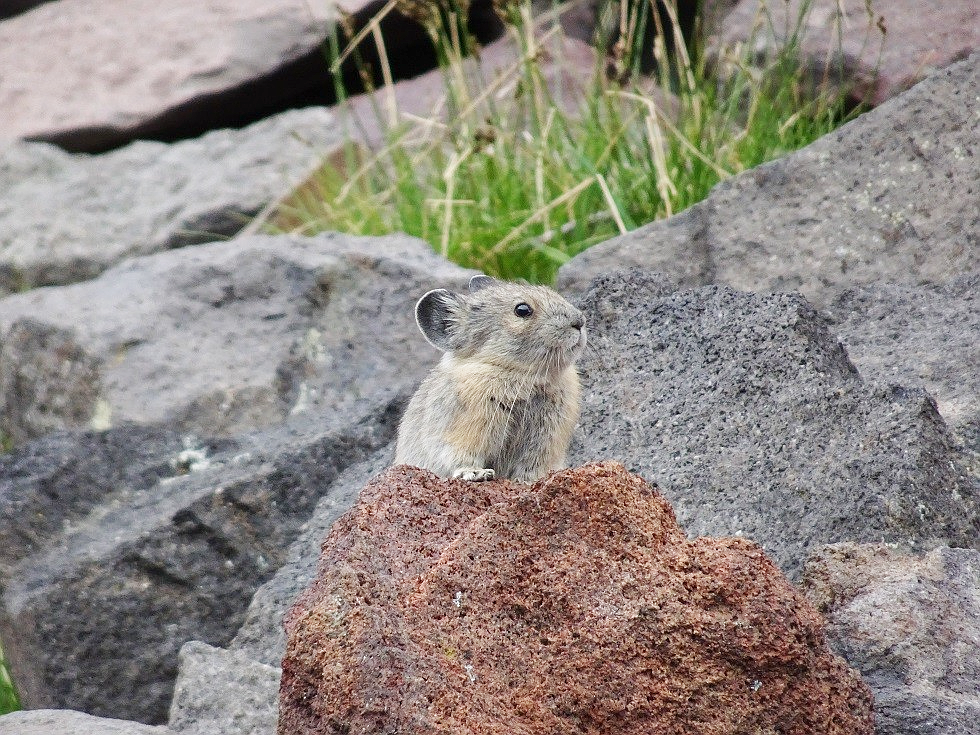
Pika. Photo provided.
For anyone lucky enough to spend time hiking in Montana’s alpine ecosystems, you’ve probably had the privilege to see the American pika frenetically running around collecting vegetation or “hay” in July and August. You might have also heard their telltale “eep” alarm call.
I think of pikas as charismatic mini-fauna, but while extremely cute and cuddly, they are also important climate change indicators and landscape gardeners by redistributing plants within their habitat. Don’t let their pint-size stature fool you. They are powerhouses of energy, making on average 200 haying trips a day to build haypiles during the short summer months that they will consume during the long Montana winter. In summer, they need the cool habitat between talus rocks to keep from overheating. In winter, they need substantial snowpack to keep subsurface temperatures constant and cold for their survival.
Due to increased greenhouse gases in the atmosphere and subsequent warming, alpine ecosystems are some of the fastest warming biomes in Montana and among the most threatened habitats from climate change. The Montana Climate Assessment reports that annual temperatures have increased 2-3 degrees F since 1950, with warming in all seasons. Snowpack has concurrently declined by 20-80% in our mountains, exposing talus slopes from their insulating snow cover earlier in the year. Last winter’s low snowpack and warm temperatures portend future conditions in our mountains. How will climate change affect pika survivability?
Pikas don’t have many options: they can move upslope where temperatures are cooler but they are notoriously poor dispersers and don’t move far. They are restricted to talus and rocky slopes with adjacent nearby meadows. Recent research in the Tobacco Roots, Beaverhead and Italian mountains found that pika populations have already vacated populations under 7,000 feet and moved approximately 900 feet upslope in some watersheds. Similar upslope movements have been recorded in recent decades in Colorado, Nevada and California. Warmer daytime temperatures may alter pika behavior, shifting their foraging time to cool nights, increasing predation risks. Moreover, climate change is shifting local vegetation to plants that are less nutritious or toxic such as alpine avens. Under such stressful conditions, pikas may find it difficult to gather enough hay for the winter.
We’re seeing that climate change affects pika at both the individual and the population level. For individuals, continued physiological stress has reduced their overall health, making them more susceptible to diseases and predation. At the population level, declining snowpack has led to changes in the number of occupied territories, and declining numbers of juveniles will eventually lead to local extinctions and more fragmented populations across the landscape.
In the Gallatin Range, I’ve been involved with a long-term pika study that spans 38 years, led by scientists from the University of Colorado-Boulder. Our group has documented striking changes in pika populations since the 1990s. As average summer temperatures have risen and local plant communities changed, pika numbers have fluctuated yearly. Current populations appear to be most stable at about 8,500 feet elevation; however, continued warming and decreasing snowpack in the coming decades will certainly pose problems for pikas even at these high elevations.
Pikas are considered the “canary in the coal mine” when it comes to climate change in mountainous regions. If we experience more winters like 2026 in the coming decades, we will witness pika numbers decline across the state, and many populations will go extinct altogether. Populations under stress from rising temperatures will need to move to higher elevations to survive, and in many places, they are already at the mountain top with nowhere to go. In the future, we may no longer encounter this alpine denizen.
April Craighead is a wildlife biologist and executive director of the Craighead Institute in Bozeman.