
Stuck on science
JOEL MARTIN | Hagadone News Network | UPDATED 1 month, 3 weeks AGO
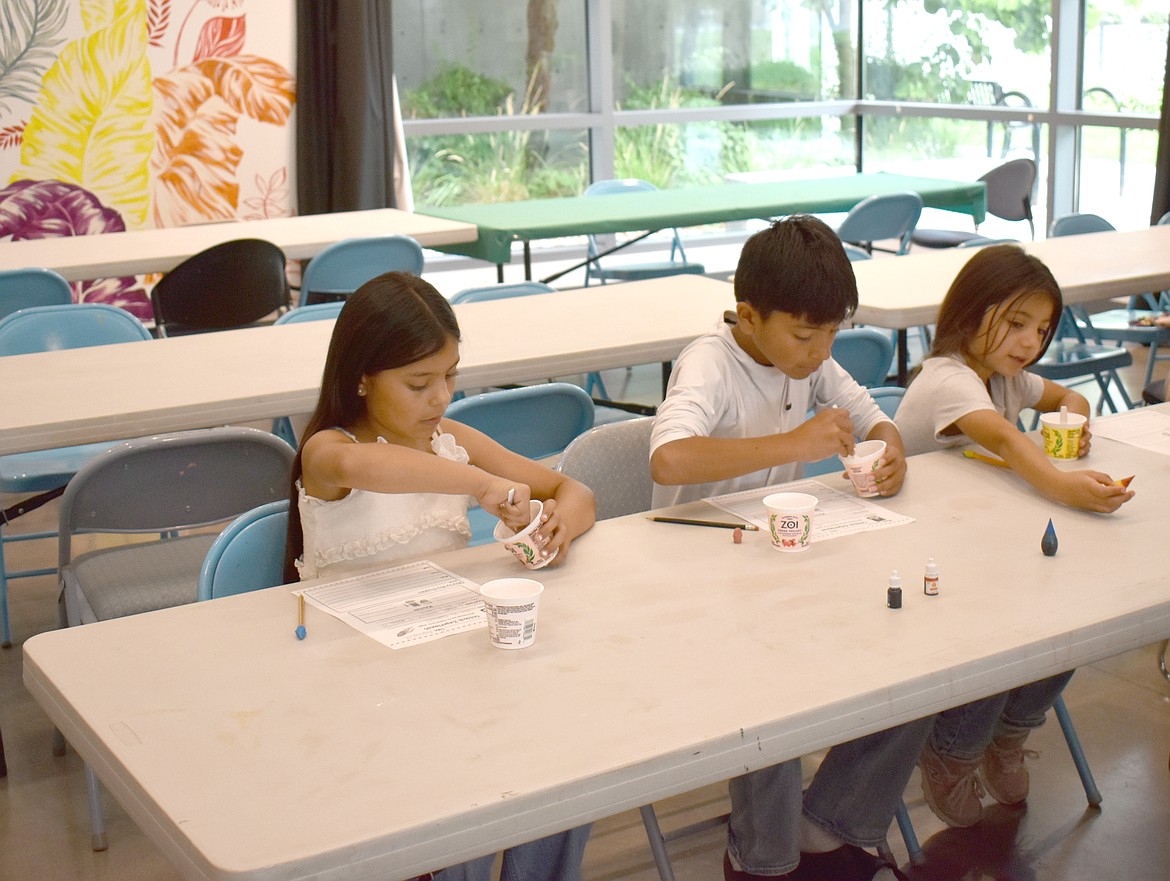
From left: Sophia Correa, 9, Julian Correa, 11, and Ariella Correa, 6, mix up cups of oobleck, a cornstarch-and-water mixture that shifts between solid and liquid, at Science Saturday at the Moses Lake Museum & Art Center.
JOEL MARTIN/COLUMBIA BASIN HERALD
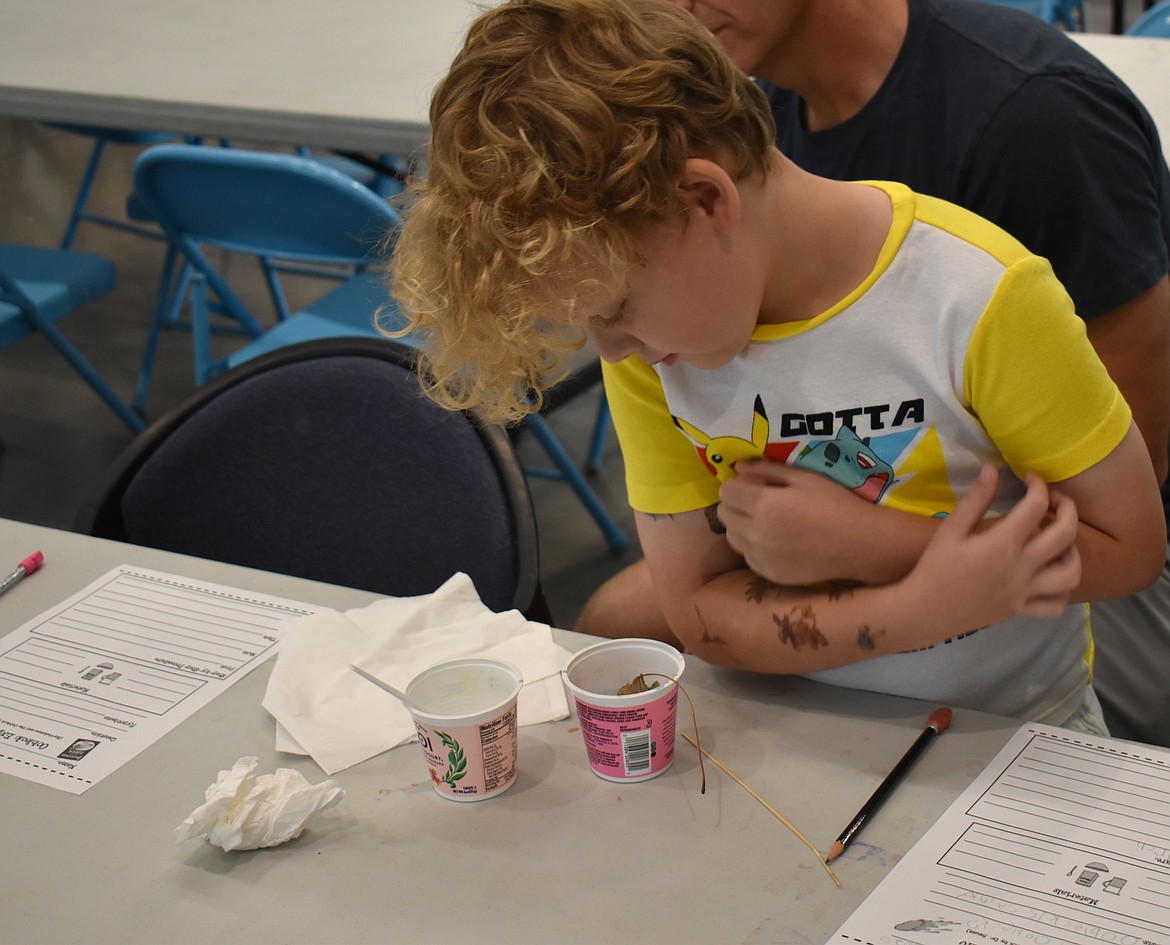
Six-year-old Ned Honsowetz tests his oobleck to see whether a leaf will float or sink in it.
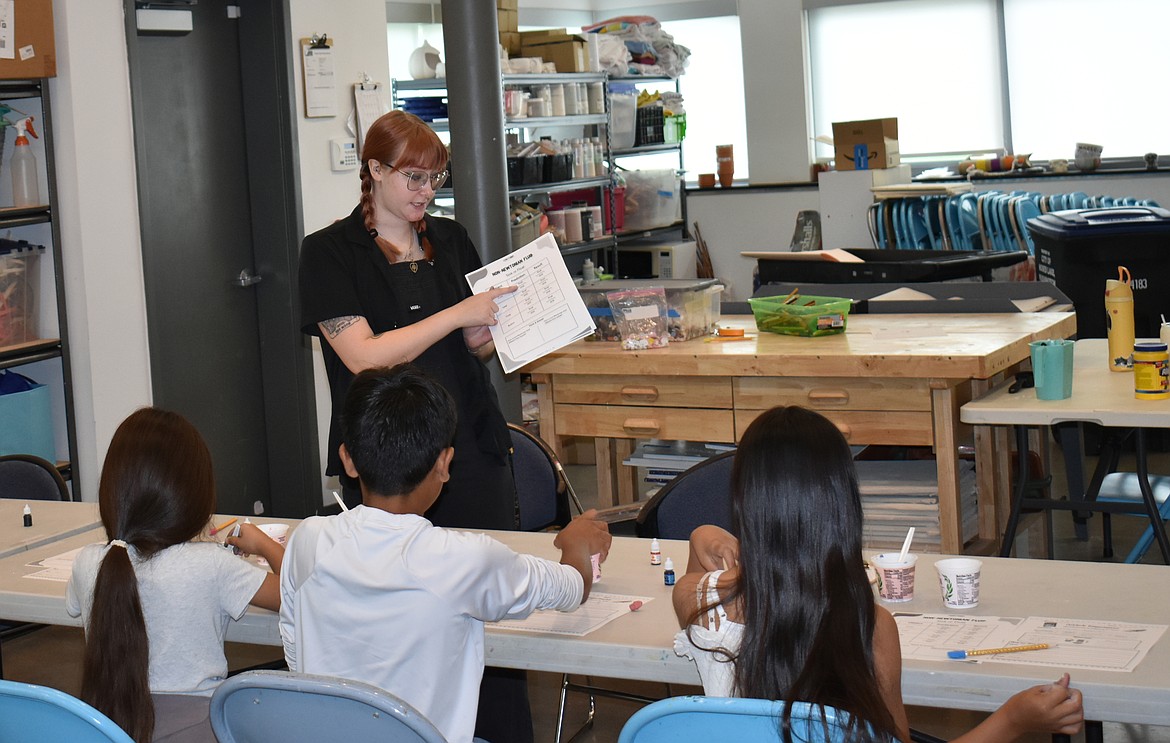
Moses Lake Museum & Art Center Program Assistant Savannah Betz shows the students at Science Saturday the sheet where they will predict which items will float and which will sink in oobleck. The kids then experimented and wrote down their results.
Joel Martin has been with the Columbia Basin Herald for more than 25 years in a variety of roles and is the most-tenured employee in the building. Martin is a married father of eight and enjoys spending time with his children and his wife, Christina. He is passionate about the paper’s mission of informing the people of the Columbia Basin because he knows it is important to record the history of the communities the publication serves. | August 26, 2026 3:20 AM
MOSES LAKE — It was just another Saturday at the Moses Lake Museum & Art Center, with Program Assistant Savannah Betz explaining non-Newtonian physics and the scientific method to a group of grade-school children.
“We know that something is solid because we can feel that it’s solid,” Betz said. “We know that something is liquid because it looks like liquid and feels like liquid. And you know that something is a gas because, well, you can’t see it, really. Sometimes you can smell a gas, and you kind of feel it as you wave your arms around. (Oobleck) is called a non-Newtonian fluid because it doesn’t conform to those states of matter.”
Science Saturdays is a monthly event at the museum designed to get little hands and young brains excited about science with hands-on experiments. This Saturday, four children from 6 to 11 years old were making oobleck, a mixture of corn starch and water. The name comes from the 1949 children’s book “Bartholomew and the Oobleck” by Dr. Seuss, in which a king complains that no new weather ever comes out of the sky, and his royal magicians present him with oobleck, a sticky, viscous substance that gums up the kingdom and threatens to flood it in goo. The stuff the kids were making on Saturday was safely contained in paper cups, but it presented them with some questions as to how it would behave.
“It’s all about the pressure you put on it,” Betz told the kids. “If you squeeze it, it’ll stay a solid. But the second you stop squeezing it, it wants to turn back into a liquid.”
Betz passed out a sheet of paper that listed common objects – a stick, a rock, a leaf – and asked the students to predict if each would sink or float. Then they all took a few minutes to step outside and find those things, bring them back in and see how accurate their predictions were, recording their findings on the sheet.
Science Saturdays is a fairly new program the museum has rolled out to go along with its slate of art, craft and other classes, Museum Superintendent Dollie Boyd said.
“We’re a general museum; we try to do a little bit of everything,” Boyd said. “We do a little history, a little art, a little natural history, and so we wanted to inject some science, technology, engineering, art and mathematics (or) STEAM.”
The museum has been doing “Story and STEAM” for several years, Boyd said, where preschoolers listen to a children’s book and then do a simple project related to it. Science Saturdays is a similar program, rolled out just a few months ago, to bring STEAM ideas to school-age children. Parents are asked to pre-register, either online or in person at the museum, their kids so that organizers know how many to expect and that the minimum student count is met. This Saturday, two of the six children registered didn’t turn up, Betz said, but she held the class anyway.
“As long as there are kids who show up, I’m here,” she said. “If it’s just one, great. If it’s more, great.”
Next week, the museum will debut Moses Lake Makers for tween-agers, with guided creative projects for imagination and skill-building, Boyd said. That program is funded by a grant from a community coalition and will take place every Tuesday. Betz is planning to lead that one too, she said.
“(We want to have) kids of older ages get back into doing cool arts and crafts,” she said. “My goal is to have them create things that are practical for them that they can be proud of.”
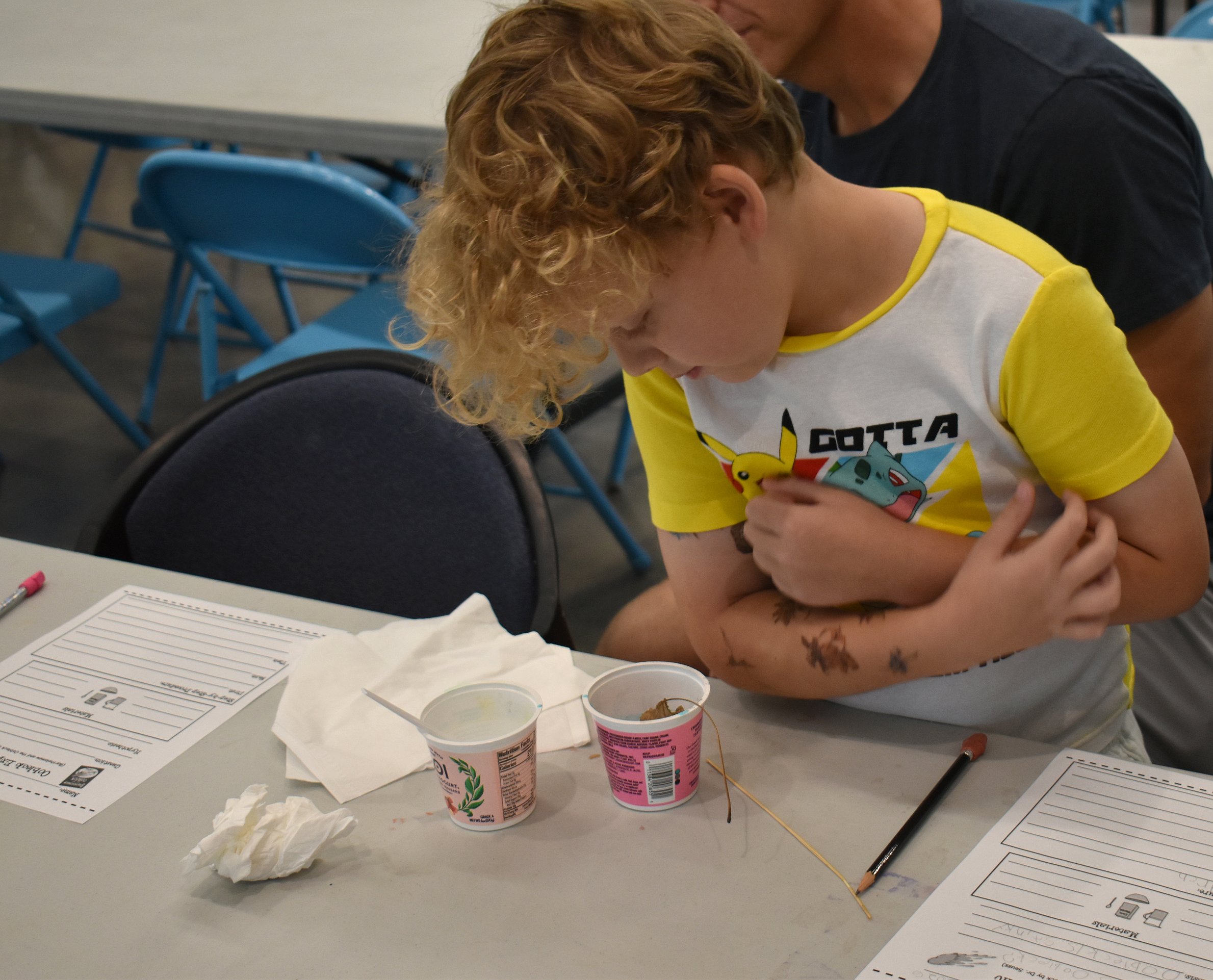 Six-year-old Ned Honsowetz tests his oobleck to see whether a leaf will float or sink in it.
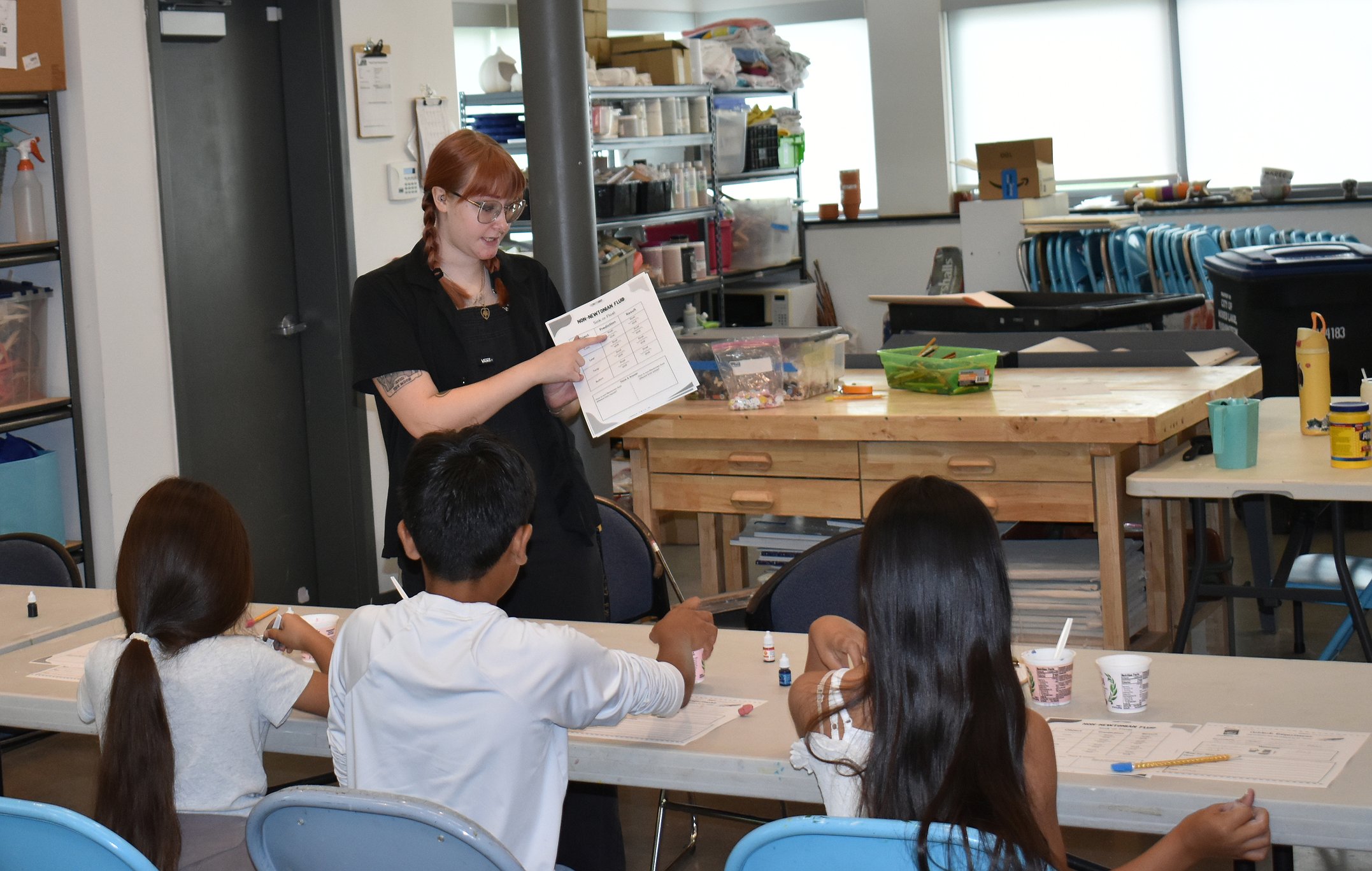 Moses Lake Museum & Art Center Program Assistant Savannah Betz shows the students at Science Saturday the sheet where they will predict which items will float and which will sink in oobleck. The kids then experimented and wrote down their results.
ARTICLES BY JOEL MARTIN

Endless battle
Noxious Weed Control Board works to keep invasive plants under control
MOSES LAKE — Some of the nastiest plants in Grant County were the topic of a class led by Jay Johnson, a consultant with the Grant County Noxious Weed Control Board, Tuesday. The Noxious Weed Control Board, as its name would suggest, is tasked with keeping weeds under control in Grant County. That’s not a small job; the board’s website lists 129 species of noxious weeds that are found around Grant County. A noxious weed is defined as an invasive, non-native plant that threatens agricultural crops, local ecosystems or fish and wildlife habitat, according to the Noxious Weed Control Board. Washington state law requires that these weeds be identified and their spread kept to a minimum, if not completely eradicated. “We’re one of those agencies a lot of people don’t really understand,” Johnson said. “We’re a county office and … our funding is tax-based assessment. When you get your tax bill and you look down at all the expenses that you pay for, there we are.”

BASIN EVENTS: Oct. 16-24
COLUMBIA BASIN — Whether you feel like shopping, crafting, learning or seeing a show, there’s something happening for you this week in the Basin. Oct. 16 ‘My Family (Mi Familia)’ screening Spanning three generations, “My Family (Mi Familia)” is a heartfelt drama that follows the Sánchez family as they build their lives in East Los Angeles. Through love, hardship, triumph, and sacrifice, the film explores the immigrant experience, the strength of family bonds, and the traditions that connect one generation to the next. Lowrider show and taco truck before the screening. Sponsored by Columbia Basin Allied Arts, EDUBS C/S and the Moses Lake Creative District. $12 per person. Doors open at 6 p.m., film begins at 7 p.m. at the Moses Lake Civic Center Auditorium, 401 S. Balsam St. Tickets and info: www.cba-arts.org.

Moses Lake author encourages women to look beyond church culture norms
MOSES LAKE — A Moses Lake author’s book, “A Christian Woman Striving to Live Her Faith in a Man-Controlled World,” takes aim at the role to which many churches relegate the female half of their congregations. “It’s to encourage women in the faith,” Linda Curran said. “A lot of churches say, ‘Teach Sunday school, do this, do that, but don’t (evangelize.)’" In her book, Curran recounts a time when she moved to a new community and joined a church there. She was surprised to learn that, as a new female member, she had been automatically assigned church cleaning duties. When she questioned it, she wrote, she was met with condescension and her objections were brushed aside. In other churches, she said, women who were capable of teaching were relegated to “women’s ministry.”