
Downtown groups chastise Kalispell City Council for nixing license plate reader system
JACK UNDERHILL | Hagadone News Network | UPDATED 1 month, 3 weeks AGO
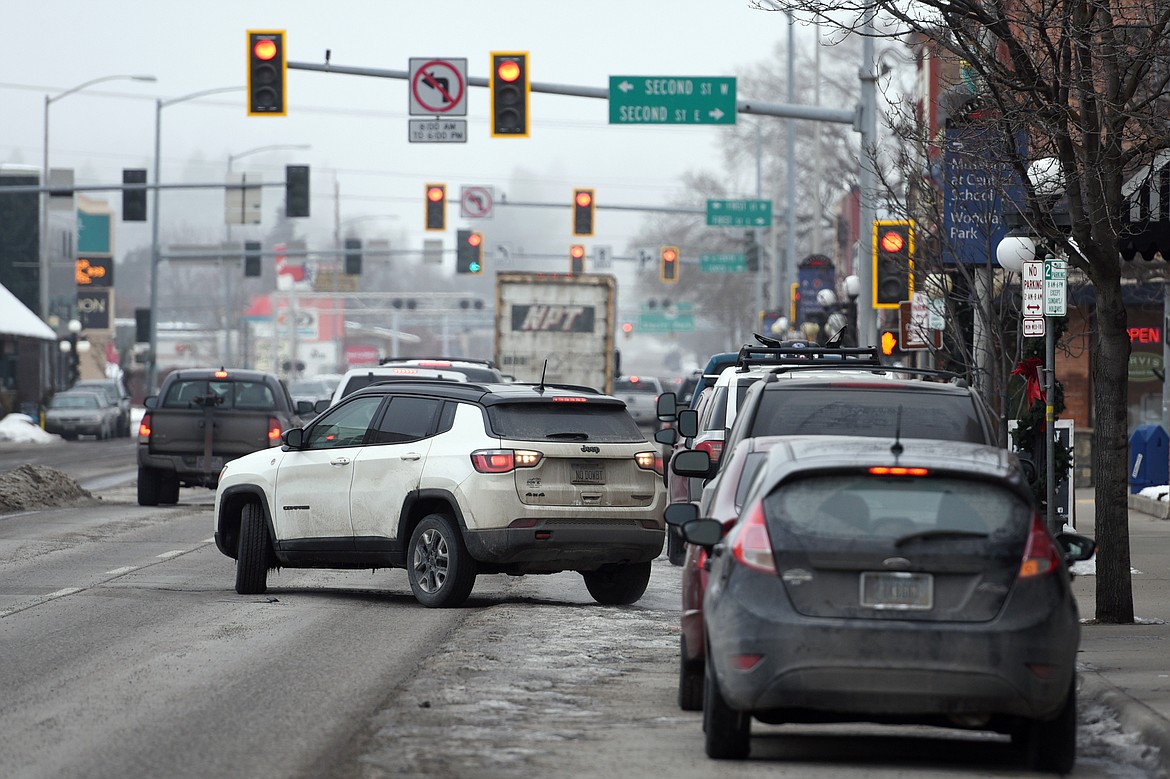
A driver parallel-parks along South Main Street in downtown Kalispell in this Jan. 30, 2019, file photo. (Casey Kreider/Daily Inter Lake)
KALISPELL GOVERNMENT, HOUSING AND TRANSPORTATION REPORTER Jack Underhill covers Kalispell city government, housing and transportation for the Daily Inter Lake. His reporting focuses on how local policy decisions affect residents and the rapidly growing Flathead Valley. Underhill has reported on housing challenges, infrastructure issues and regional service providers across Montana. His work also includes accountability reporting on complex community issues and public institutions. Originally from Massachusetts, Underhill graduated from the University of Massachusetts, Amherst with a degree in Journalism before joining the Inter Lake. In his free time, Underhill enjoys mountain biking around the valley, skiing up on Big Mountain or exploring Glacier National Park. IMPACT: Jack’s work helps residents understand how growth, housing and infrastructure decisions affect the future of their community. | August 27, 2026 12:00 AM
Advocates for downtown business owners on Monday aired frustration over Kalispell City Council's seemingly last-minute decision to pull money for a license plate reader from its budget.
The technology was intended to improve parking enforcement downtown and near Flathead High School, but Council on Aug. 17 voted against funding it for fiscal year 2027. The decision came amid growing public opposition fueled by concerns over privacy and the technology’s potential to be misused.
But several councilors appeared willing to take a second look at the technology after hearing grievances from downtown business leaders during Council’s Aug. 24 meeting.
Downtown Kalispell Forward recommended using automated license plate readers in March. The coalition, which includes the Kalispell Business Improvement District, Northwest Montana Association of Realtors and the Kalispell Chamber of Commerce, was formed in November 2025 to more effectively advocate for solutions to issues affecting downtown.
But the group's effort to become a more influential voice was overshadowed by public opposition. Downtown business advocates told Council during its Aug. 24 meeting that the decision caught them by surprise.
"We thought all systems were a go," Kalispell Chamber President Lorraine Clarno said.
The license plate reader camera would have been strapped to a single parking enforcement vehicle that would drive around electronically tracking cars parked in on-street spaces and in permit lots.
Kalispell Police Department officials initially said two vehicles would be equipped with cameras and operate in tandem, but City Manager Jarod Nygren later clarified that the proposed $70,000 budget item would have funded a single camera and ongoing contract services.
Police officials said the system would not be linked to any criminal justice databases and would only record the vehicle's license plate number, type, how long it's been in a space or whether it has an electronic parking permit.
After surveying 196 downtown property owners through online questionnaires, door-to-door outreach and community events, Downtown Kalispell Forward found that parking ranked as the top concern, according to Clarno.
That feedback shaped the organization's parking strategy, which was published in March. The city's Parking Advisory Board drew upon the report when it recommended that Council increase parking infraction fees and adopt license plate reader technology to free up on-street spaces for business patrons and crack down on chronic offenders.
"We went through an extensive process in the development of the parking study," said Bill Moseley, board chair of Downtown Kalispell Forward.
"If you want to harness the talent of people like this that participate in this process, then you need to provide a fair and open means for them to participate," he added.
Council in July approved higher fines for parking infractions and an ordinance targeting people who evade the downtown two-hour parking limit by periodically moving their vehicles. But downtown advocates questions how the rules would be enforced without a license plate reader.
"You took what recommendations we made, and you shredded the ones you didn't like and you kept the ones you did. But now we don't have any enforcement for those," Kalispell Business Improvement District board member Kisa Davison said.
Kalispell had originally relied on a parking enforcement officer who chalked tires, but Nygren said that it was ineffective in enforcing parking because the officer could only make two rounds per day at best, effectively turning two-hour parking spaces into four-hour spaces.
Since the former parking officer retired over the winter, downtown parking has been left largely unenforced.
SOME COUNCILORS during the Aug. 24 meeting said that the decision overlooked the efforts Downtown Kalispell Forward made in crafting the parking reform recommendations.
"I think we kind of crapped on downtown last week," said Councilor Jed Fisher, who originally voted to strike funding for the license plate reader.
Councilor Kari Gabriel echoed Fisher's concerns, adding that Council should have given more weight to the support expressed by the city manager and police chief for the technology.
Fisher said Council got sidetracked by public opposition, some of which came from people who live outside city limits.
"Although it's our job to listen to everybody, we really need to home in on who we are listening to," Fisher said.
Councilors agreed that a policy governing the technology's use should have been created before budgeting for it.
"I think one thing we were incorrect about was not having a policy in place first. I think the prevalence of disinformation that existed online was in part predicated on us not being very clear about what we were doing," Councilor Dustin Leftridge said.
Councilor Lisa Blank, however, argued that residents would likely remain uneasy about the technology even with a policy in place.
"I just think we need to be mindful that there are reasons why people are frightened and uncomfortable and I don't want to walk away from them. And there are other solutions for parking that aren't chalk," Blank said.
Automated license plate readers— particularly those made by Flock — have faced national scrutiny amid concerns about misuse by law enforcement and threats to personal privacy.
"We are looking at a license plate reader at the worst possible time in history," Councilor Sid Daoud said.
Although absent for the vote that cut the technology from the budget, Hunter said he was frustrated by misinformation about the proposal and the public's focus on national headlines.
He suggested holding a future meeting to further discuss how the city would tackle parking enforcement and what a potential policy for license plate readers could look like.
"Even if we don't move forward with the license plate reader, let's develop a policy for using this type of technology so that we have it in place if we ever decide to go there in the future," Hunter said.
Reporter Jack Underhill can be reached at 406-758-4407 or [email protected]. If you value local journalism, pledge your support at dailyinterlake.com/support.
ARTICLES BY JACK UNDERHILL
Kalispell clears way for tiny homes by adopting building standards
Councilors on Monday added tiny homes to Kalispell's city code in a bid to make it easier to build the simpler, low-cost housing alternatives.

Glacier Park International Airport earns spot among nation’s resort airports
Glacier Park International Airport was named one of the nation’s top resort airports in USA Today’s 10BEST Readers’ Choice Awards.

Kalispell City Council to consider tiny home regulations
Kalispell City Council on Monday will vote on whether to add tiny homes to city code, allowing the municipality to inspect them and enforce building standards.