
Kellogg sees progress in FEMA flood map dispute
JOSH McDONALD | Hagadone News Network | UPDATED 2 days, 19 hours AGO
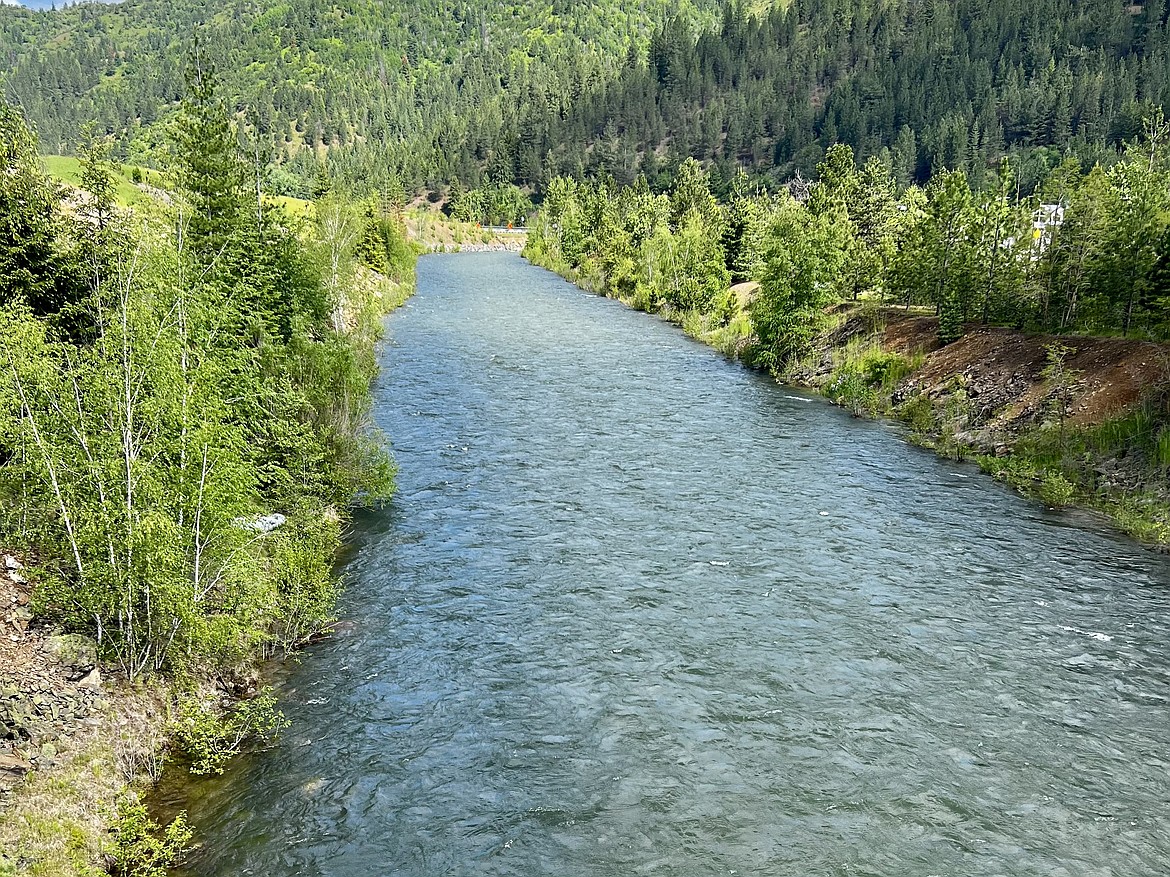
The South Fork of the Coeur d’Alene River flows through a channel in Kellogg. City officials say updated river data shows flood risks along the corridor are lower than those reflected on current FEMA flood maps.
JOSH McDONALD
Mayor Rod Plank said there is “light at the end of the tunnel" as Kellogg revises federal flood maps it says are outdated and inaccurate, forcing hundreds of property owners to carry mandatory flood insurance.
Plank said the revision would reduce the number of parcels in the mapped floodplain from 1,118 to 523 and shrink the designated floodplain area from about 2,500 acres to 760 acres.
He highlighted support from U.S. Sens. Jim Risch and Mike Crapo of Idaho, who backed the LOMR during the most recent submission.
“This took a major turn when Risch and Crapo’s office got involved and we’re very thankful for their support,” Plank said.
The dispute centers on the Federal Emergency Management Agency’s National Flood Insurance Program maps for the South Fork of the Coeur d’Alene River corridor, which designate significant areas of Kellogg, Smelterville and Pinehurst as subject to 100‑ and 500‑year flood events. City and county officials argue the maps rely on incomplete historical data and overstate flood risk.
In 2020, Kellogg and neighboring municipalities sought updated river flow data from the U.S. Army Corps of Engineers, whose long‑term monitoring showed flood levels lower than those reflected in FEMA’s maps. Using that data, Kellogg submitted a Letter of Map Revision, or LOMR, to FEMA in early 2021, arguing that flood levels shown as 100‑year events would likely require flows closer to a 500‑year flood to reach projected elevations.
Each time a LOMR has been submitted, FEMA has responded by requesting additional data. Following the most recent submission Sept. 30, 2025, however, city officials say progress appears to be moving in the right direction.
Plank said FEMA recently changed contractors, something the agency has done several times during the process. Unlike previous contractor changes, which required the city to resubmit its letter, Plank said it now appears the new contractors may be satisfied with the data and information provided.
Mike Fitzgerald, the city’s public works superintendent, said Kellogg had historically relied on local engineering firm Alta Science and Engineering for much of the LOMR work. After recent communication with FEMA, however, the city determined additional specialized expertise was needed.
“We had a long laundry list of questions when the contractors got on board,” Fitzgerald said. “We were given some advice by Alta that this was out of their league now, so we hired JE Fuller on as subcontractor.”
JE Fuller is an engineering firm based in Tempe, Ariz., that specializes in hydrology and geomorphology.
“When Alta engaged with these guys (JE Fuller) that long list got shrunk down significantly,” Fitzgerald said. “I think this is the most encouraging thing that has happened in a long time.”
Along with the added expertise, Fitzgerald said FEMA’s current technical team appears to be narrowing the remaining issues toward a conclusion.
There remains no timeline for the LOMR’s approval, but both Plank and Fitzgerald said this is the closest the city has been to a resolution since the process began in 2020.
ARTICLES BY JOSH MCDONALD

I‑90 pursuit from Pinehurst ends with arrest, dogs seized
Stanton reported locating the vehicle and observing multiple traffic violations, including failure to stop before entering roadways, failure to signal turns and erratic driving through parking lots, campgrounds and city streets. When Stanton activated his overhead lights to initiate a traffic stop, Warnock did not stop and instead continued driving at slow speeds while repeatedly changing direction before entering Interstate 90 eastbound.
I‑90 pursuit from Pinehurst ends with arrest, dogs seized

Kellogg sees progress in FEMA flood map dispute
In 2020, Kellogg and neighboring municipalities sought updated river flow data from the U.S. Army Corps of Engineers, whose long‑term monitoring showed flood levels lower than those reflected in FEMA’s maps. Using that data, Kellogg submitted a Letter of Map Revision, or LOMR, to FEMA in early 2021, arguing that flood levels shown as 100‑year events would likely require flows closer to a 500‑year flood to reach projected elevations.