
Rediscovering home: Keeping rural health care intact
BRUCE MOATS Mineral Independent | Valley Press-Mineral Independent | UPDATED 9 months, 4 weeks AGO
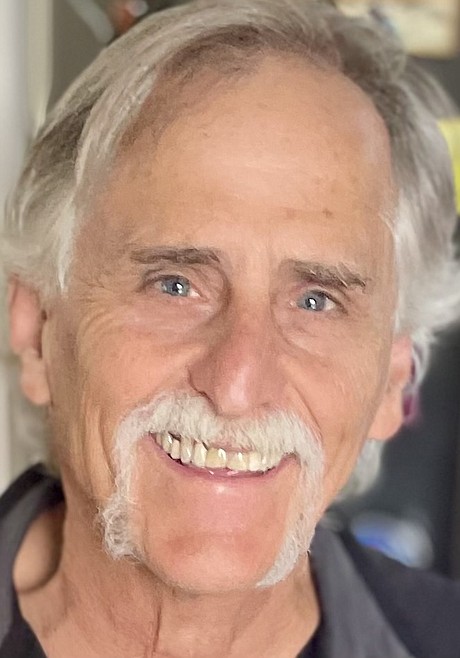
Bruce Moats
Dr. Doyle’s mint green Chevrolet coupe sped toward Missoula, with 2-year-old Bruce Moats in the back seat with his head in mom ‘s lap and an intense pain in his gut.
The next memory reveals a 2-year-old’s confusion as he wakes up with what he imagines might be worms growing out of his stomach. No, the worms were the stitches holding together the incision where doctors had removed an infected appendix.
A little girl shared my St. Patrick’s hospital room. And she would not stop crying. I did not know why. And, frankly, it did not matter.
“Mom, I can’t sleep. Can’t I move?”
Mom made it happen, and I was moved to a room with a view of the Safeway store to the west.
I was soon allowed to walk down the hallway to the TV room. No TVs in the rooms in those days. “What’s your favorite cartoon, Yogi Bear?” my doctor asked. “No, Huckleberry Hound.”
Released from the hospital, I went with mom and grandpa, Charlie Dobesh, to Castles grocery store when it was across the bridge. Grandpa bought me a plastic stagecoach, complete with a team of six horses. Once home, I went with dad to milk the cows. When I returned, the stagecoach had suffered a crushing blow, mostly likely from a heavy foot. It was in the middle of the floor, mom gently reminded me. But the big foot is yet to confess.
I do not know how fast Dr. Doyle was driving that day. But it apparently was fast enough. Doctors removed the inflamed appendix just before it burst, spreading poison. Even today, a burst appendix is bad news. Survival time is critically short — typically 24-72 hours. Untreated, major organs fail.
I owe my life to an intuitive mother, to a country doctor and a Chevy coup. I owe it to the fact we had medical care here.
The medical system was not able to save my dad, however.
A massive heart attack ended his life at age 51. The year was 1974, and I was a week away from leaving for the University of Montana. Dad had suffered a milder attack about five years earlier. If dad had only waited a couple of years when stents began saving heart patients. Instead, they sent him home to rest for five months.
I was retrieving an escaped equine when our green, two-toned picked raced by on the interstate, honking ferociously. I never imagined dad was lying in the bed. Ed and Lucille Samson were with my folks and two youngest siblings collecting firewood in the mountains dad loved. Lucille roared into the driveway, jumped from the car, leaving the door open as she frantically implored me to go immediately to my mother, alone at the hospital. “He’s gone. Your dad. I’m afraid, he’s gone.”
Mom was in the lobby. She pointed down the hallway to the left. She wanted me to go see. I looked down at my strides crossing the floor tiles of alternating shades of green. Dad was lying on a bed with a large needle of adrenalin hanging out of his chest. The doctor turned toward me: “We couldn’t save him. There is nothing we could do.” Mom was right behind me, looking over my shoulder.
My survival and dad’s death both reinforced how important medical care is to individuals, families and communities.
Medical care is fast disappearing from small towns across America. The Department of Public Health and Human Services reports, “Montana has 77 physicians per 100,000 people in rural counties compared to 233 per 100,000 in urban counties and 134 physicians per 100,000 in rural areas nationally. Individuals in Montana’s rural counties bear a 30-40% greater chronic disease burden than those in urban counties. Further, 89% of rural hospitals in Montana operate at a negative profit margin.”
So, I plan to check in intermittently with our hospital, given the recent changes in Medicare/Medicaid payments, and the burst in one-time funding from the federal government.
“The hospital itself is currently still in a good place financially,” Chief Financial Officer Stacy Conrow-Ververis reported.
“We still haven’t seen any real fluctuations financially with the Medicaid/Medicare changes. Because of billing cycles, etc. it usually takes at least six months to see any impact with payors,” she said. “We personally do know of several people who were not able to afford their insurance through the Marketplace because their premiums were double and triple to what they have been due to there being no subsidies.”
Revenue so far for the fiscal year (July 1, 2025 to June 30, 2026) has come in $120,336 less than the $7,078,315 projected in the budget. However, net income as of Dec. 31, 2025, exceeds the prior fiscal year by $191,441. The hospital has a little more than $4.9 million in cash.
Conrow-Ververis said “the state is working hard” on allocating funding from the $50 billion fund Congress earmarked for rural medical facilities, and expects to start dispersing the Rural Transportation Funds by the end of March. Montana will receive $233 million this year, and $1.2 billion during the five-year program. The funding Mineral County will receive is not yet known.
The funds cannot be used for operations. The MPHHS website states its plan has “five integrated initiatives that strengthen the workforce, secure financial solvency, modernize care delivery, embed prevention and community health at the center of care, and expand technology use.”
My biggest concern is “right-sizing” of rural medical care by “developing and incentivizing implementation of county- and facility-level restructuring plans aligning service supply with local health needs.”
The plan points to increased use of telemedicine and mobile clinics. It looks to use “comprehensive facility analysis and restructuring to achieve positive operating margins by FY2031.” That usually means shedding services that lose money and emphasizing those that do.
When I was editor of The Sheridan Press in Wyoming, the hospital did not want the public to see its financial records, because the administration said doctors would “cherry-pick” the money-makers and offer those services themselves. The money-making programs enabled the hospital to fund less lucrative services, it argued.
The plan envisions a regular program, using technology-driven data, “for Medicaid interventions, linking funding to outcomes. . .” Advocates have long argued that hospitals and providers should be paid according to outcomes achieved with patients rather than paying according to the procedures/visits/services provided.
The plan goals sound good, but any implementation must make sure little boys survive life-threatening illnesses and fathers do not have to die of heart attacks.