
JFAC mulls spending cuts
ROYCE MCCANDLESS / Coeur d'Alene Press | Coeur d'Alene Press | UPDATED 1 month, 4 weeks AGO
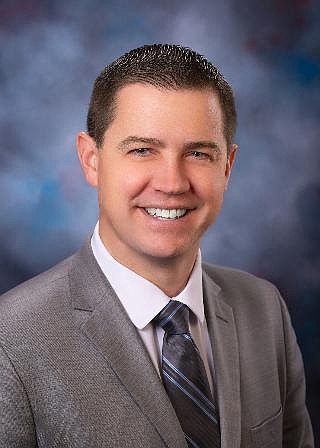
Ehlers
BOISE — As the budget-setting process progresses, the Joint Finance-Appropriations Committee will soon enact budget cuts for state agencies, which will result in layoffs.
Idaho’s state agencies provided reports to the Legislative Services Office on Friday detailing how 1-2% cuts would impact their operations if adopted by the Joint Finance-Appropriations Committee. With these reports now in hand, JFAC reviewed a slate of potential agency cuts and recommendations from Gov. Brad Little to address the state's budget picture.
JFAC members acknowledged Tuesday that while current revenue and spending projections avoid a deficit, this could reverse if the cost of implementing the One Big Beautiful Bill tax cuts, which passed the House on Tuesday, reduces state tax revenues more than anticipated.
Utilizing analysis from the Idaho State Tax Commission, Rep. Jeff Ehlers, R-Meridian, who authored the House’s conformity legislation, predicted the federal tax changes would cost the state $155 million for this fiscal year.
Ehlers estimated that many businesses in Idaho have already adjusted their tax filings in recent months. Sen. Scott Grow, R-Eagle, who co-sponsored Ehlers' bill, said Tuesday there still “remains so much uncertainty” in the cost of the tax cuts. He highlighted the changes to the research months, assuming the state would adopt the federal tax code changes. If this is the case, Ehlers said making a change around this credit is “about a wash” for this fiscal year.
Grow was more cautious, saying the provision could cost the state as little as $0, as Ehlers anticipates, or as high as $80 million for this fiscal year alone.
Sen. Melissa Wintrow, D-Boise, questioned why the state was seeking to implement the tax cuts retroactively, a move that deviates from Little’s recommendation to begin in the 2026 tax year rather than the 2025 tax year.
The governor’s budget recommendations, through a series of one-time transfers and targeted ongoing reductions, already provided a balanced budget without requiring the added 1-2% state agency cuts JFAC is considering. Why further cuts were needed for agencies when Little already offered a balanced budget plan was unclear, Wintrow said.
Like Grow, Rep. Josh Tanner, R-Eagle, pointed to the "uncertainty" around implementing the federal tax changes, which could wipe out the roughly $30 million surplus JFAC is projecting for this fiscal year.
A report from the LSO calculated the impact of 1-2% cuts if added onto Little's 3% holdbacks ordered in the fall. If 1% cuts were adopted, the state would save another $15.3 million in its general fund. If 2% cuts are enacted, these savings would grow to $28.9 million.
On the employee side, 1% cuts would eliminate more than 17 full-time positions, while 2% cuts would eliminate more than 42 full-time positions, according to the LSO report.
These reductions reflect several agencies recommended for exemption from further cuts.
These include K-12 public schools, the Idaho Department of Correction and the Idaho State Police. Keith Bybee, budget and policy division manager of LSO, added that Medicaid services have been held “effectively harmless” by not touching trustee benefits, but making cuts to staff and the administration of the program.
These carve-outs follow IDOC and ISP reports to LSO last week, indicating that further cuts would jeopardize public safety across the state, as previously reported by the Idaho Press.
Administrator of Idaho's Division of Financial Management Lori Wolff reiterated Tuesday that Little ordered the 3% cuts to "avoid structural damage to government systems and services that people rely on." Going beyond the governor's recommendations, she said, would enter this territory.
"It's not just a number on the bottom of the spreadsheet," Wolff said. "There are a lot of implications within that number that hopefully are very transparent to both the representatives and senators that are going to be voting on it and to the communities who are going to feel it."
Responding to suggestions from JFAC leadership that the agency cuts would be an ongoing reduction, Wolff said she did not understand the need, given that the state's bottom line projects to exceed $150 million by fiscal year 2027, according to JFAC's projections.
Although the state remained "pretty tight" on its bottom line for this fiscal year, it is a "one-time problem" that should be addressed with "one-time solutions," Wolff said.
JFAC’s coming decisions
JFAC will make a variety of decisions at its Friday meeting beyond whether to enact the 1% or 2% agency cuts as presented in LSO’s plans.
The committee will also consider aligning itself with some of Little’s recommended budget adjustments unveiled in his “Enduring Idaho” plan at the outset of the legislative session.
To achieve a balanced budget, Little recommended several one-time cash transfers for this fiscal year, including:
• $10 million from the In-demand Career Fund
• $15 million from the Water Pollution Control Fund
• $45 million from the Idaho Transportation Department’s Strategic Initiatives Fund
• $3 million from the Opportunity Scholarship Fund
• $33.7 million from the Permanent Building Fund
Each recommendation will be voted on individually during the committee’s Friday meeting. While not necessarily indicative of the JFAC voting one way or the other, Grow, who serves as co-chair, characterized the transfers as “great decisions."
Another vote by the body Friday will affect how agency budgets are structured going forward, including how much of the cost of employee health insurance is covered by the state.
JFAC can either follow the governor's recommendation to fund the full 14.4% increase or adopt the recommendations of the Department of Government Efficiency Task Force.
Their recommendations include either funding 95% of the insurance cost increase for agencies with more than 125 full-time employees, or insurance of the financing increases at agencies of the same size that account for cost savings from "natural turnover," JFAC documents said.